
The Ragamuffin's Night When Lloyd Honeyghan Dethroned Unbeaten Donald Curry in Atlantic City, 1986
Unbeaten, ranked among the best fighters in the world and a heavy favourite, Donald Curry retired on his stool after six rounds against Lloyd Honeyghan on 27 September 1986. It handed the Londoner the undisputed welterweight title in one of British boxing's greatest upsets.

On 27 September 1986 at Caesars in Atlantic City, Donald Curry walked in as the unbeaten undisputed welterweight champion and one of the best fighters on the planet. Six rounds later he sat on his stool with a broken nose and a split eyebrow, and Lloyd Honeyghan, a Londoner most American fans had never seen, owned every major belt at 147 pounds.
A Champion Spoken of in Hagler's Company
By the autumn of 1986, Donald Curry of Fort Worth, Texas, was 25-0 with 20 knockouts. Ten months earlier, on 6 December 1985, he had settled the welterweight division by flattening Milton McCrory in two rounds, first with a left hook and then with a right hand, to unify the titles. Writers routinely ranked him as the best pound-for-pound boxer in the world, with Marvelous Marvin Hagler the only serious rival for that billing.
The talk around Curry had already drifted past his own division. Boxing News later recalled that he had discussed moving up to challenge Hagler at middleweight. A defence against a British challenger was widely treated as a stop on the way to bigger nights.
The Londoner Who Earned His Shot at Wembley
Lloyd Honeyghan, Jamaican-born and raised in London, arrived just as unbeaten. He held the British, Commonwealth and European welterweight titles, but his reputation barely reached across the Atlantic. On 20 May 1986 at Wembley Arena he became the mandatory challenger by stopping Horace Shufford in the eighth round, finishing him with a left hook. UPI reported that this was his 27th straight win. In the same report his manager, Mickey Duff, was already pressing for a Curry fight and said he wanted no "messing around" now that his man was the leading contender.
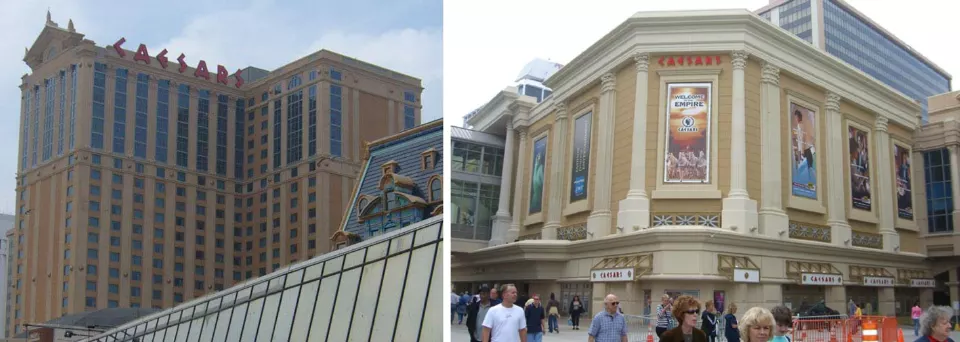
Duff had hoped to stage the fight in London. Instead it went to Atlantic City, with the WBA, WBC, IBF and The Ring titles on the line over 15 rounds. Curry's purse, as listed on the Wikipedia page for the bout, was $300,000 against $162,750 for Honeyghan.
"Ragamuffin" and a Wager on Himself
The build-up gave Honeyghan a ring name. At a pre-fight press event, Curry mocked the challenger's casual clothes and called him a ragamuffin. Sources quote the line slightly differently, but they agree on what happened next: Honeyghan took the insult and fought as "the Ragamuffin Man" for the rest of his career.
The betting market was just as dismissive. Accounts of the odds disagree. The WBC's anniversary feature puts Curry at 6-1, one Wikipedia article gives 7-1 and another 7.5-1, and some retellings say certain bookmakers would not post a line at all. Who placed the famous bet is also told two ways. The WBC says Honeyghan put $5,000 on himself. Wikipedia's Honeyghan biography credits Duff with the wager and says a second $5,000 went on after the price shortened to 6-1, with the winnings going to the fighter. All of these versions agree that Honeyghan's camp backed him with real money while almost nobody else did.
Warning Signs on the Scale
Curry's problems began before the opening bell. According to accounts gathered on his Wikipedia biography, he was about nine pounds over the 147-pound limit less than a week before the fight and had to shed eleven pounds in the last three days. He also came in with little recent action. The Fight City noted that he had boxed only four rounds in more than a year. Both men made the weight, but Curry's later explanation of the night left little doubt about what it had cost him. "I was weak and sluggish," he said afterwards, as quoted on his Wikipedia biography.
Months later, a UPI report from Las Vegas said Curry blamed the defeat on two things: making weight, and a dispute with his manager, Dave Gorman.
Rounds One and Two: The Challenger Sets the Terms
Honeyghan did not spend time feeling out the champion. He came out throwing hard shots from the first bell, and by round's end he had banked it on aggression alone. Speaking after the fight, he said the opening round had told him everything: "Donald Curry showed me respect in the first round," he told reporters, as quoted by the WBC.
In the second, a lead right hand shook Curry and bloodied his mouth. Several accounts say Curry came close to going down and had to hold to get through the round. In two rounds the challenger had already done something no one had managed against the Cobra in 25 fights.
Rounds Three to Five: A Brief Reply, Then More Damage
Curry had his best spell in the third and fourth. He landed a sharp left hook to the body and some solid rights, and Honeyghan's pace eased a little. Wikipedia's account of the bout gives Curry both of those rounds. The Fight City's round-by-round account notes that Honeyghan kept answering with heavy hooks of his own.
The recovery did not last. In the fifth, a jab and straight right combination hurt Curry badly, and another right landed later in the round as the champion clinched to survive. The WBC records that his lower lip was gashed during this round.
Round Six: The Cut and the Stool
The end came out of a clash of heads. Midway through the sixth, an accidental butt opened a deep cut around Curry's left eye. Sources place it slightly differently: the WBC and The Fight City put it above the eye, while Wikipedia's fight page describes a gash beneath the eyebrow. Honeyghan kept punching through the round and buckled Curry's legs with a right-left-right combination.
Curry did not come out for the seventh. Accounts differ on who made the call. Curry's Wikipedia biography and The Fight City say the ringside doctor stopped it, and the WBC says his corner pulled him out. The official result is the same in every source: Honeyghan won when Curry retired at the end of the sixth round. Curry needed 20 stitches and had suffered a broken nose and cuts to his eye and lip. Promoter Bob Arum, quoted by the WBC, later said Curry "looked emaciated" that night.
Undisputed, Then Divided Again
At 28-0, Honeyghan was the undisputed welterweight champion. The Ring and KO Magazine both named the fight their Upset of the Year for 1986. Boxing News, which put the crowd at roughly 1,100, later ranked it the fifth-biggest upset in boxing history and asked whether any British fighter had ever pulled off a bigger one.
The unified title did not stay together for long. In early 1987 Honeyghan gave up the WBA belt over the organisation's policy on South African boxers. The WBA title went to Mark Breland, who beat South Africa's Harold Volbrecht for the vacancy, while Honeyghan kept the WBC and IBF titles and knocked out Johnny Bumphus in two rounds in February 1987. According to Wikipedia, no one held all the major welterweight titles at once again until the Ricardo Mayorga and Cory Spinks fight in 2003.
Curry moved up to light middleweight. In July 1987 he challenged WBA champion Mike McCallum and was knocked out in the fifth round. The Fight City concluded that he never again looked like the fighter he had been before Atlantic City.
For Honeyghan, the night made both his name and his nickname. He had been mocked at a press event and priced as a long shot, and his camp had put money on him anyway. Six rounds later he left Caesars as the only welterweight in the world with every major belt.
Sources
- Donald Curry vs. Lloyd Honeyghan, Wikipedia, accessed October 2026
- Lloyd Honeyghan, Wikipedia, accessed October 2026
- Donald Curry, Wikipedia, accessed October 2026
- Thirty-fifth anniversary of Cobra Curry in a pickle, World Boxing Council (wbcboxing.com), 2021
- Sept. 27, 1986: Curry vs Honeyghan, The Fight City
- Lloyd Honeyghan vs Donald Curry: boxing's fifth biggest upset, Daniel Herbert, Boxing News, 9 September 2015
- Lloyd Honeyghan of Britain earned the right to face Donald Curry, UPI, 20 May 1986
- A fit of post-fight temper might cost Donald Curry, UPI, 7 February 1987
- Welterweight champion Lloyd Honeyghan put the controversy surrounding his title behind him, UPI, 23 February 1987


