
LaMotta Beat a One-Armed Cerdan in Detroit and the Rematch Never Came
Jake LaMotta won the middleweight title at Briggs Stadium on June 16, 1949, after Marcel Cerdan hurt his shoulder in the first round. The rematch was postponed, and Cerdan died in the Air France Flight 009 crash in the Azores that October.

On June 16, 1949, Jake LaMotta took the world middleweight title from Marcel Cerdan at Briggs Stadium in Detroit, beating a champion who spent most of the night fighting with one working arm. A rematch was booked for September, then moved to December. Cerdan died on his way back to America for it.
A Champion From Casablanca and a Challenger With a Debt
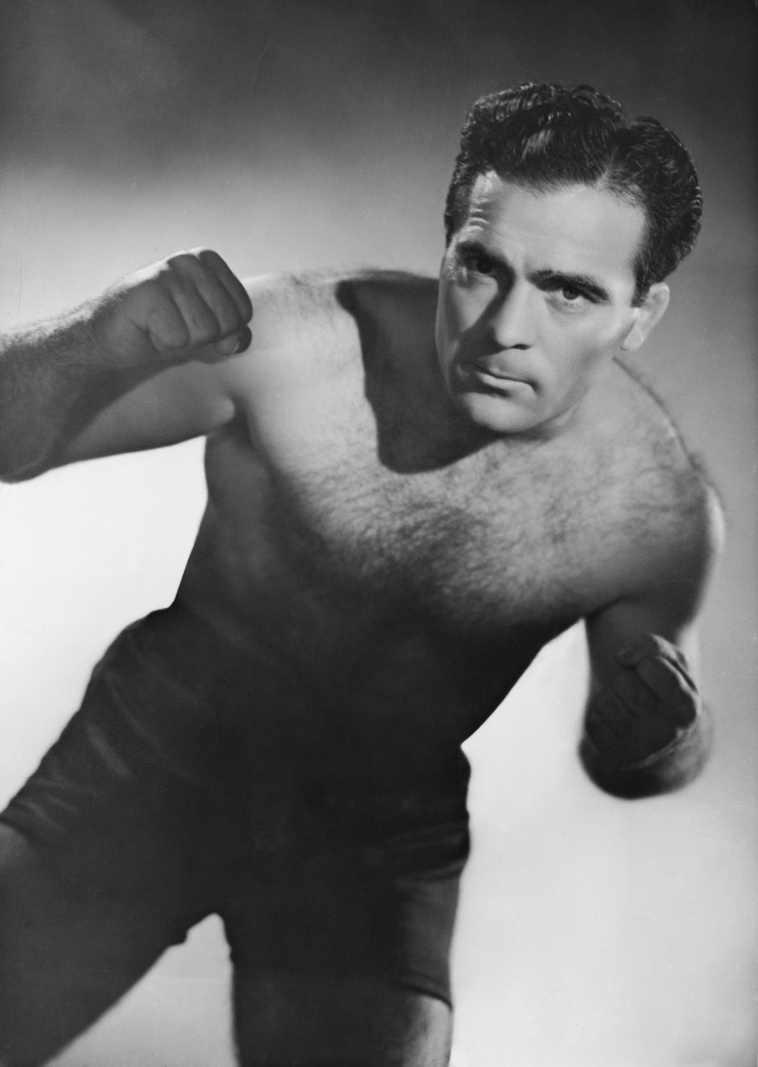
Marcel Cerdan arrived in Detroit as one of the most accomplished middleweights of his time. Born in Sidi Bel Abbès in French Algeria in 1916 and raised in Morocco, he had won the world title on September 21, 1948, at Roosevelt Stadium in Jersey City, where Tony Zale failed to survive the twelfth round. The record Wikipedia gives for his whole career is 110 wins and four losses, two of them on disqualifications. Before Detroit, no opponent had stopped him.
Jake LaMotta came to the fight by a darker road. On November 14, 1947, at Madison Square Garden, he lost to Billy Fox in four rounds, and he later admitted the fight was fixed. Wikipedia's account of his career says a $20,000 payment to the Mafia went with the dive and secured the title opportunity that followed. Decades later, the Associated Press obituary quoted his own admission that he had lost to Fox on purpose because he had been promised a shot at the championship in return.
Even with that arrangement in place, LaMotta's path through early 1949 was uneven. Writing in the IBRO Journal, Bobby Franklin notes that on February 21, 1949, in Montreal, the Frenchman Laurent Dauthuille outpointed LaMotta over ten rounds on all three cards. LaMotta then edged another Frenchman, Robert Villemain, at Madison Square Garden on a split decision that the crowd booed and that led the New York State Athletic Commission to suspend the judge and referee who voted for him. He got his title fight anyway.
Rain, a Thin Crowd and a $150,000 Gate
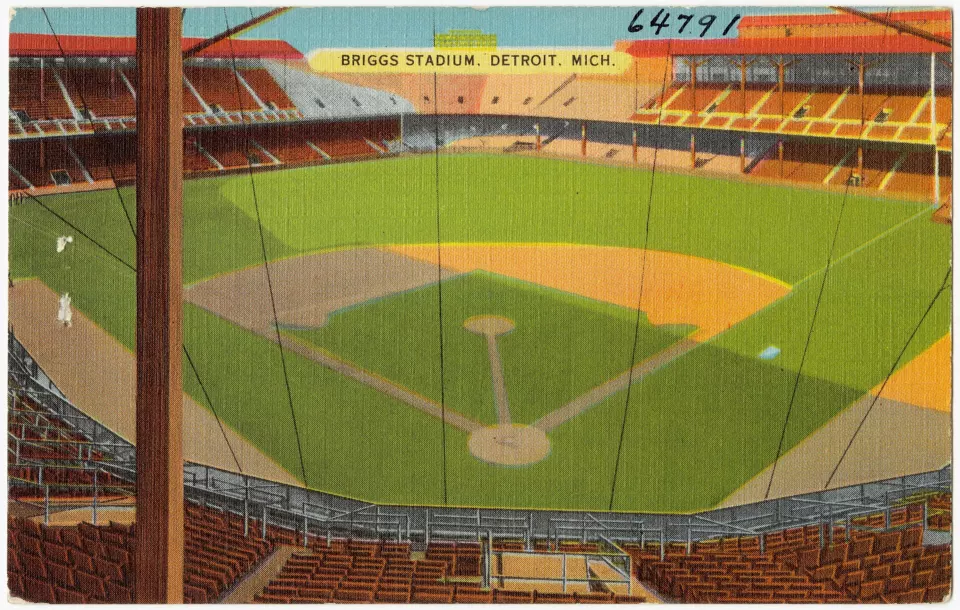
The bout was set for 15 rounds at Briggs Stadium. Rain pushed it back by a day, so the opening bell rang on Thursday, June 16. Patrick Connor's retrospective for Queensberry Rules describes the crowd as disappointingly small and the promotion as a financial letdown. Seats cost between $2 and $16, and the gate came to about $150,000. By the same account, Cerdan earned roughly $50,000. LaMotta, after all he had done to reach this point, collected a share of $14,000; how big a share is not known.
Johnny Webber was the referee.
The First Round That Decided the Night
LaMotta won the opening round decisively and put Cerdan on the floor. That knockdown is where accounts start to differ. Several sources, among them the Wikipedia article on Cerdan, an IBRO Journal piece and a 2018 post on the history site Boxing Over Broadway, say LaMotta threw or wrestled the champion to the canvas and that the fall wrecked his left shoulder. Queensberry Rules tells it a little differently. In its version, Cerdan first strained the shoulder on a missed punch, and a shove from LaMotta then dumped him on the canvas and made the injury worse. Wikipedia describes the injury as a dislocation.
The shoulder did not give out at once. For a few rounds Cerdan still competed. According to Queensberry Rules, Webber later said he heard something snap when Cerdan threw a left hand in the fourth round. After that, Cerdan threw very few punches with the left.
Fighting Back With One Arm
The rounds after the knockdown were not as one-sided as the result suggests. Red Smith, writing about the fight at the time and quoted in the IBRO Journal, scored the second round heavily for Cerdan and gave him the third and fifth by smaller margins. Wikipedia has Cerdan winning the second and calls the third even, which shows how differently ringside observers saw the early going.
LaMotta was hurt too. He damaged his left hand in the fifth round, and Queensberry Rules notes that the swelling on that hand afterward showed he was not the only injured man in the ring. He kept walking forward regardless. Cerdan could not jab him off, and one-handed he had no way to hold or turn him. In his column Smith said Cerdan could not even put his left out to keep LaMotta away.
By the late rounds the fight belonged entirely to the challenger. Queensberry Rules counts 75 punches from LaMotta in the eighth round. Both that account and Wikipedia put his total for the ninth at 104, against almost nothing coming back from Cerdan.
The Bell for the Tenth
Between the ninth and tenth rounds, Cerdan's American managers, Joe Longman and Lew Burston, brought the ringside physician to the corner. They decided to stop the fight as the bell for the tenth sounded, and Queensberry Rules writes that Cerdan objected to their decision. Afterward the beaten champion summed up his night in one line, quoted by the same outlet: "I did what I could. What do you do with one hand?"
The record books disagree on how to describe the ending. Cerdan's Wikipedia entry lists it as a retirement in the ninth round of a scheduled fifteen. LaMotta's entry explains that it was officially scored as a knockout in the tenth, because the tenth round had technically started when Cerdan quit. The Associated Press, in its 2017 obituary of LaMotta, wrote that Cerdan could not continue after the tenth. Whatever the wording, LaMotta left Briggs Stadium as middleweight champion of the world, and Cerdan had been stopped for the first time.
A Rematch Set, Then Pushed Back
Red Smith's verdict, as reproduced by the IBRO Journal, was that it was hard to believe LaMotta would have a chance against a two-handed Cerdan. A return bout followed naturally, and it was arranged quickly. Boxing Over Broadway reports that it was first set for September 28, 1949. Then the injury that had decided the first fight turned up in the champion's camp. LaMotta hurt his own shoulder in training only days before the date, according to Queensberry Rules, and the bout was moved to December 2.
The sources are not fully aligned here either. The IBRO Journal article refers only to the September 28 date and says Cerdan was travelling back to New York for the bout when he died. Boxing Over Broadway, Wikipedia and Queensberry Rules all describe a postponement, with Wikipedia and Boxing Over Broadway naming December 2 as the new date. During the delay, Cerdan went home to France.
Flight 009 and the Mountain on São Miguel
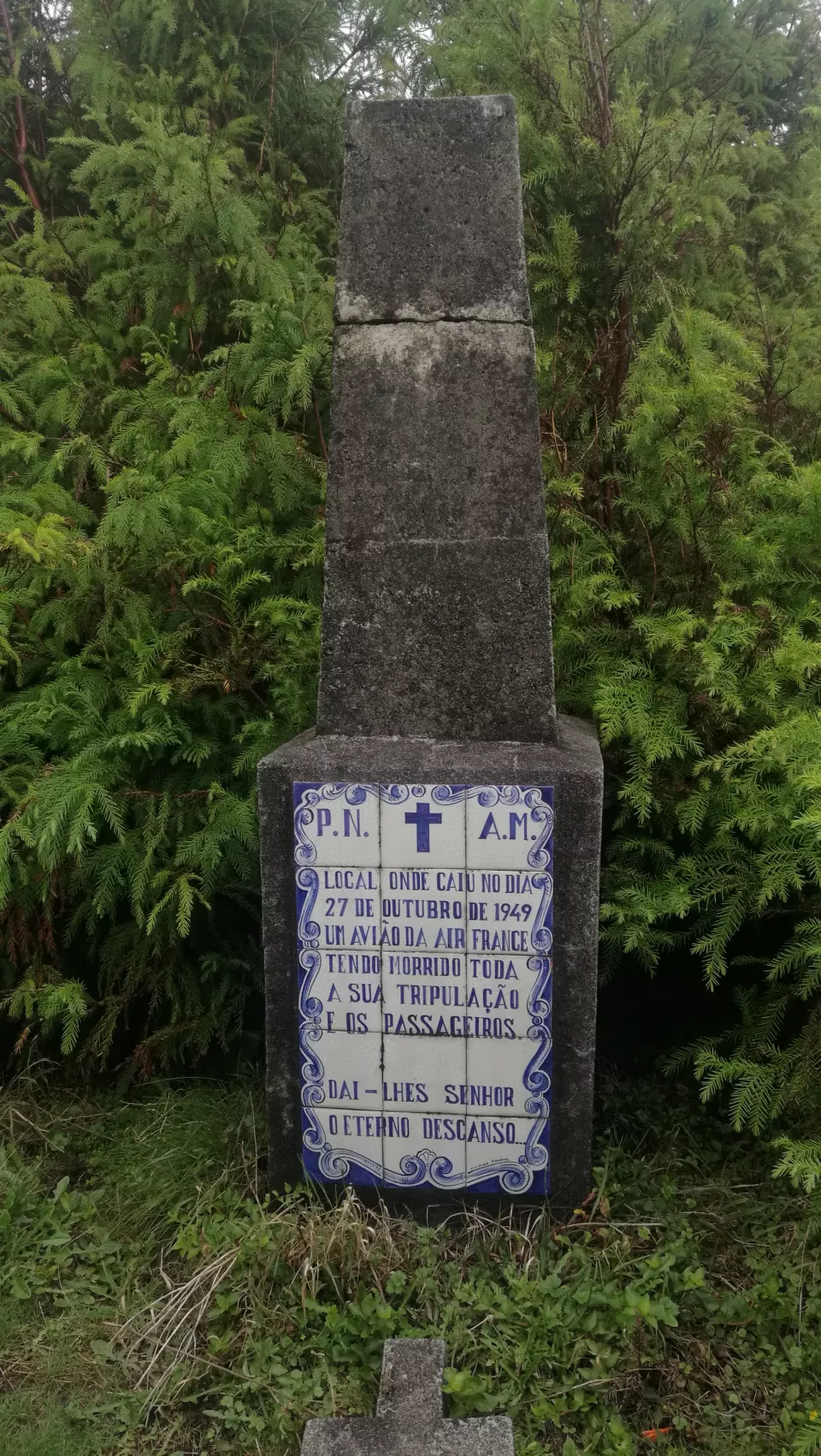
In late October, Cerdan boarded Air France Flight 009, a Lockheed Constellation registered F-BAZN, flying from Paris-Orly to New York with a scheduled stop at Santa Maria in the Azores. At 2:51 a.m. local time on October 28, 1949, the plane flew into a ridge between Pico da Vara and Pico Redondo on the island of São Miguel, roughly 60 miles from the airport where it was meant to land. All 48 people on board died, 37 passengers and 11 crew. The French violinist Ginette Neveu and the artist Bernard Boutet de Monvel were among the other victims. Investigators blamed poor navigation by the crew, who had sent inaccurate position reports and flown into terrain.
Cerdan was 33. He was buried in Casablanca and reinterred in Perpignan in 1995. Édith Piaf, with whom he had had a relationship since the summer of 1948 according to Wikipedia, dedicated "Hymne à l'amour" to him. The day after the crash, LaMotta paid tribute to his opponent in a statement recorded by Wikipedia: "You had to fight him as I did to know what a fine sportsman he was."
What the Bronx Bull Did With the Belt
With no Cerdan to face, LaMotta's first defenses came against other men. He outpointed Tiberio Mitri in July 1950. On September 13, 1950, he met Laurent Dauthuille in Detroit, this time at Olympia Stadium. Dauthuille was ahead on the scorecards going into the fifteenth round, and LaMotta knocked him out with 13 seconds remaining. The Ring named it the Fight of the Year for 1950. In his next fight, LaMotta lost the title to Sugar Ray Robinson.
The Detroit win over Cerdan remained the high point of LaMotta's career, and the fight people still argue about, because the loser lost his shoulder in the first round and never got his rematch.
Sources
- Marcel Cerdan, Wikipedia, accessed October 2026
- Jake LaMotta, Wikipedia, accessed October 2026
- Air France Flight 009, Wikipedia, accessed October 2026
- Laurent Dauthuille, Wikipedia, accessed October 2026
- Throwback Thursday, Jake LaMotta Halts Marcel Cerdan, Takes His Belt, Patrick Connor, Queensberry Rules, July 3, 2014
- Cerdan vs Robinson, Boxing Over Broadway, January 8, 2018
- So Close He Could Taste It, Laurent Dauthuille Was Seconds Away From Winning the Middleweight Title, Bobby Franklin, IBRO Journal no. 164
- Boxer LaMotta, immortalized in Raging Bull, dies at 95, The Associated Press (via CBS Austin), September 20, 2017


