
Zale vs Graziano from 1946 to 1948 Were the Three Fights That Defined Middleweight Violence
Tony Zale and Rocky Graziano met three times for the middleweight title between 1946 and 1948, and no fight went past the sixth round. Zale won in New York, Graziano won in Chicago, and Zale took the series in Newark.

Between September 1946 and June 1948, Tony Zale and Rocky Graziano fought three times for the middleweight championship of the world. None of the three fights reached the seventh round, and every one ended with a man knocked out or stopped. The first two were named Fight of the Year by The Ring, and decades later boxing writers still call the series the most violent rivalry the sport has produced.
A Steelworker From Gary and a Street Kid From the East Village
Tony Zale was born Anthony Florian Zaleski on May 29, 1913, in Gary, Indiana. He worked in the city's steel mills to make extra money before he turned professional in 1934, and that background gave him his ring name, "The Man of Steel." On July 19, 1940, he beat Al Hostak for the National Boxing Association middleweight title. On November 28, 1941, at Madison Square Garden, he got up from a first-round knockdown and beat Georgie Abrams over fifteen rounds, which added the New York commission's recognition and The Ring's belt to the NBA title.
Then the war took him away. Zale served in the U.S. Navy, and the sources give different figures for how long he was gone. Wikipedia says he had been inactive for four years when he returned. The National Polish-American Sports Hall of Fame says the war interrupted his career for five years. Either way, he came back as a champion who had not defended his title in years, and he was in his thirties.
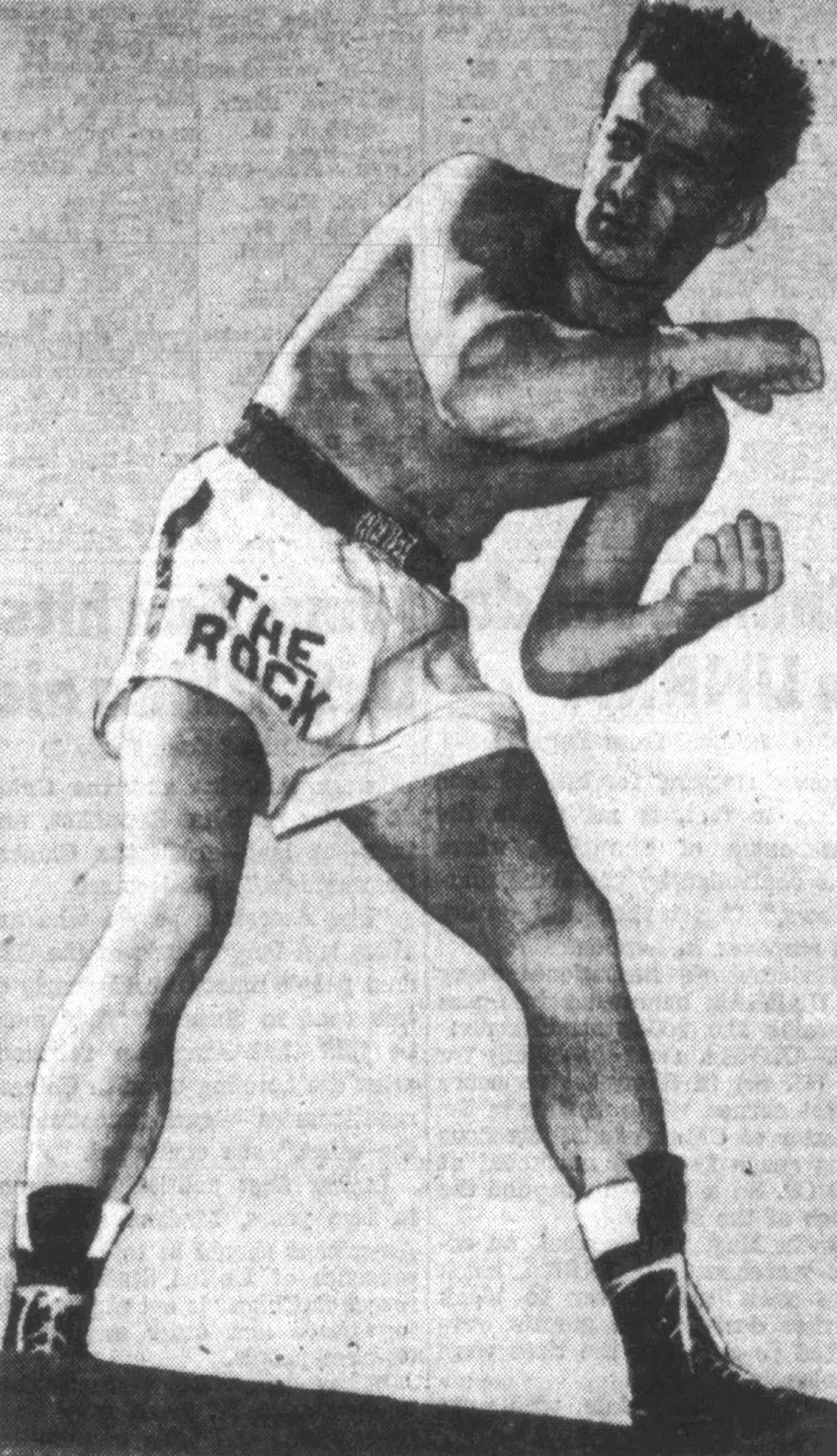
Rocky Graziano had a very different story. He was born Thomas Rocco Barbella in Brooklyn on January 1, 1919, and grew up in Manhattan's East Village. As a boy he went through reform schools and jails. He won a Metropolitan A.A.U. amateur title and then sold the gold medal for a few dollars. After he was drafted into the Army, he went AWOL after punching an officer and started fighting professionally under his grandfather's surname. He was court-martialed, given a dishonorable discharge and sent to the federal penitentiary at Leavenworth. He later won a pardon. By 1946 he was the most exciting puncher in New York.
Yankee Stadium, September 27, 1946: The Champion Survives
A crowd of 39,827 came to Yankee Stadium for the first fight, according to The Fight City. The Polish-American Hall of Fame puts the figure at nearly 40,000. ESPN reported that the bettors made Graziano an 11-5 favorite over the older, rusty champion.
Zale scored first, dropping Graziano with a left hook in the opening round. Graziano got up and turned the fight into a slugging match. In the second round his right hands put Zale on the floor, and over the next few rounds he hit the champion so hard and so often that the fight looked close to being stopped in Graziano's favor. Zale stayed on his feet. In the sixth round, as Graziano came forward, Zale landed a right hand under the heart, a punch ESPN described as paralyzing, and finished him with a left hook. Graziano was counted out and Zale kept all three versions of his title. The Ring named it the Fight of the Year for 1946.
A Suspension Sends the Rematch to Chicago
A rematch was the obvious next step, and it was planned for Madison Square Garden. The New York State Athletic Commission stopped it. According to ESPN, Commissioner Edward Egan suspended Graziano for failing to report an alleged $100,000 bribe offer to throw a bout against Cowboy Reuben Shank. The suspension kept Graziano out of New York but did not stop him from fighting elsewhere. The Fight City notes that the charge was later dismissed. The second fight went to the Chicago Stadium, a short trip from Zale's hometown of Gary.
Chicago Stadium, July 16, 1947: Graziano Comes Back From the Brink
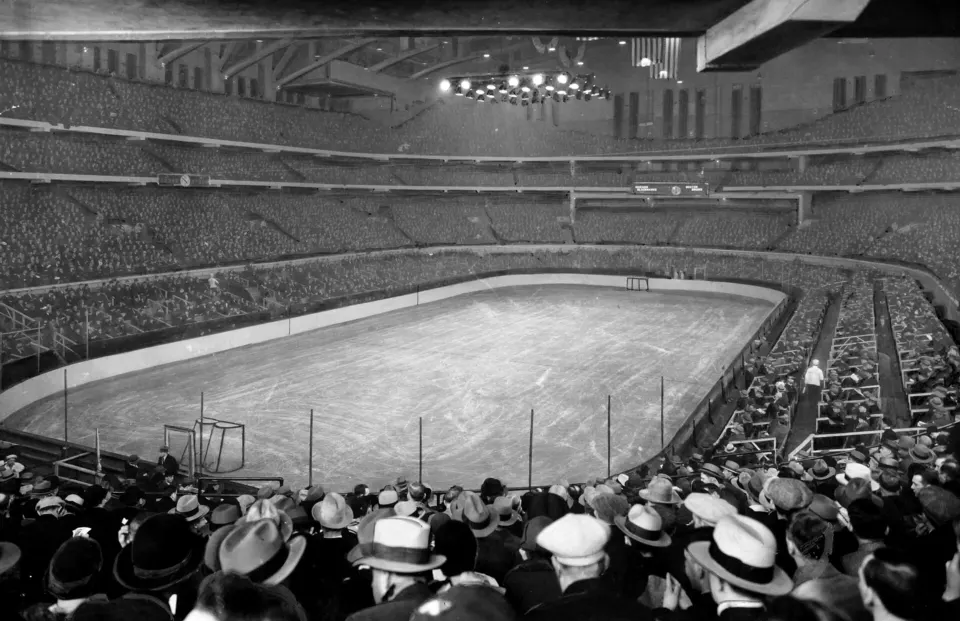
The Fight City reports that about 19,000 people filled the arena for a fight held in the middle of a Chicago summer, and that the receipts set a new record for an indoor boxing gate. The Polish-American Hall of Fame describes the house as sold out.
The rematch followed the same pattern as the first fight with the roles reversed. Zale controlled the first round, and Graziano's right eye began to swell shut. In the second, Graziano landed a right hand that hurt Zale so badly that, by The Fight City's account, the champion walked toward the wrong corner at the bell. In the third, Zale opened a bad cut over Graziano's left eye and knocked him down. The fight might have been stopped there. Graziano's cutman, Morris "Whitey" Bimstein, closed the wound between rounds, and Graziano's corner worked to restore his sight.
By the fifth round Graziano was attacking again. In the sixth he drove Zale across the ring with right hands. The accounts differ on the details of the finish. The Fight City says Zale went down three times in the round. ESPN's account describes a series of rights that dropped Zale, followed by a final assault on the ropes after he rose that led the referee to step in. The Fight City puts the stoppage at 2:10 of the sixth. Graziano was the middleweight champion of the world, and Wikipedia lists the NBA and The Ring titles as changing hands that night. The Fight City quotes his famous post-fight line: "Hey, mum, your bad boy done good. Somebody up there likes me." The Ring made it the Fight of the Year for 1947.
Newark, June 10, 1948: Zale's Last Great Night
The rubber match was held outdoors in Newark, New Jersey. Wikipedia names the venue as Ruppert Stadium. ESPN's profile of Graziano calls it Roosevelt Stadium, but Roosevelt Stadium was in nearby Jersey City, where Zale fought his next bout, so Ruppert Stadium is probably the correct venue. Zale was now the underdog, and ESPN reported him at 12-5 against the younger champion.
This time there was no long swing of momentum. Zale knocked Graziano down in the first round and kept control from there. In the third round he landed a right to the body and then a left hook to the jaw, the same combination that had won the first fight, and Graziano was knocked unconscious. ESPN gives the time as 1:08 of the third round. At 35, Zale had become the middleweight champion again.
What the Trilogy Cost Them
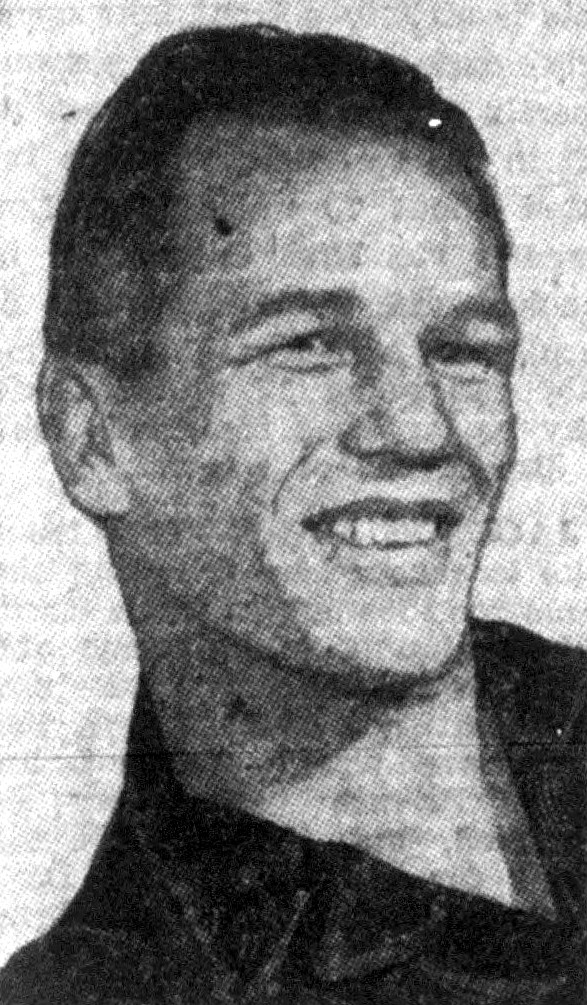
Zale did not hold the title long. On September 21, 1948, he fought Marcel Cerdan at Roosevelt Stadium in Jersey City and retired on his stool after the eleventh round. Wikipedia's account says his age and the punishment he had taken were plain to see. He never fought again. He spent the next decades teaching boxing to young people in Chicago, first through the Catholic Youth Organization from 1949 to 1970 and then with the Chicago Park District. He was inducted into the International Boxing Hall of Fame in 1991 and died on March 20, 1997, at the age of 83.
Graziano kept fighting for several more years. In 1955 he told his story in the autobiography Somebody Up There Likes Me. A year later it became a film starring Paul Newman, and the title came from the words he had spoken in Chicago. According to Wikipedia, he said that years after the fights he would still wake up sweating from a recurring nightmare of being back in the ring with Zale. He died in New York on May 22, 1990, at 71.
Across the three fights the two men boxed fewer than fifteen full rounds. Steve Farhood, the former editor-in-chief of The Ring, told ESPN: "Pound-for-pound, punch-for-punch, violence-for-violence, Graziano-Zale was by far the greatest rivalry in boxing history."
Sources
- Tony Zale, Wikipedia, accessed October 2026
- Rocky Graziano, Wikipedia, accessed October 2026
- Rocky was a champ... and a character, Bob Diskin, ESPN Classic, undated
- July 16, 1947: Zale vs Graziano II, Robert Portis, The Fight City, July 16 (anniversary feature)
- Tony Zale, National Polish-American Sports Hall of Fame, undated


