
How Rocky Graziano Went From Reform School and Leavenworth to Middleweight Champion
Rocky Graziano went from Lower East Side street crime, reform school and an Army court-martial to the 1947 middleweight title. His wars with Tony Zale and the memoir that became a Paul Newman film made him one of boxing's best-known names.

Rocky Graziano came out of the tenements of Manhattan's Lower East Side with a rap sheet, a dishonorable discharge and a right hand that could end a fight in a heartbeat. He held the world middleweight title for less than a year, yet his three wars with Tony Zale, a best-selling memoir and a Paul Newman film turned him into one of the most recognizable fighters of his century.
Thomas Rocco Barbella of the Lower East Side
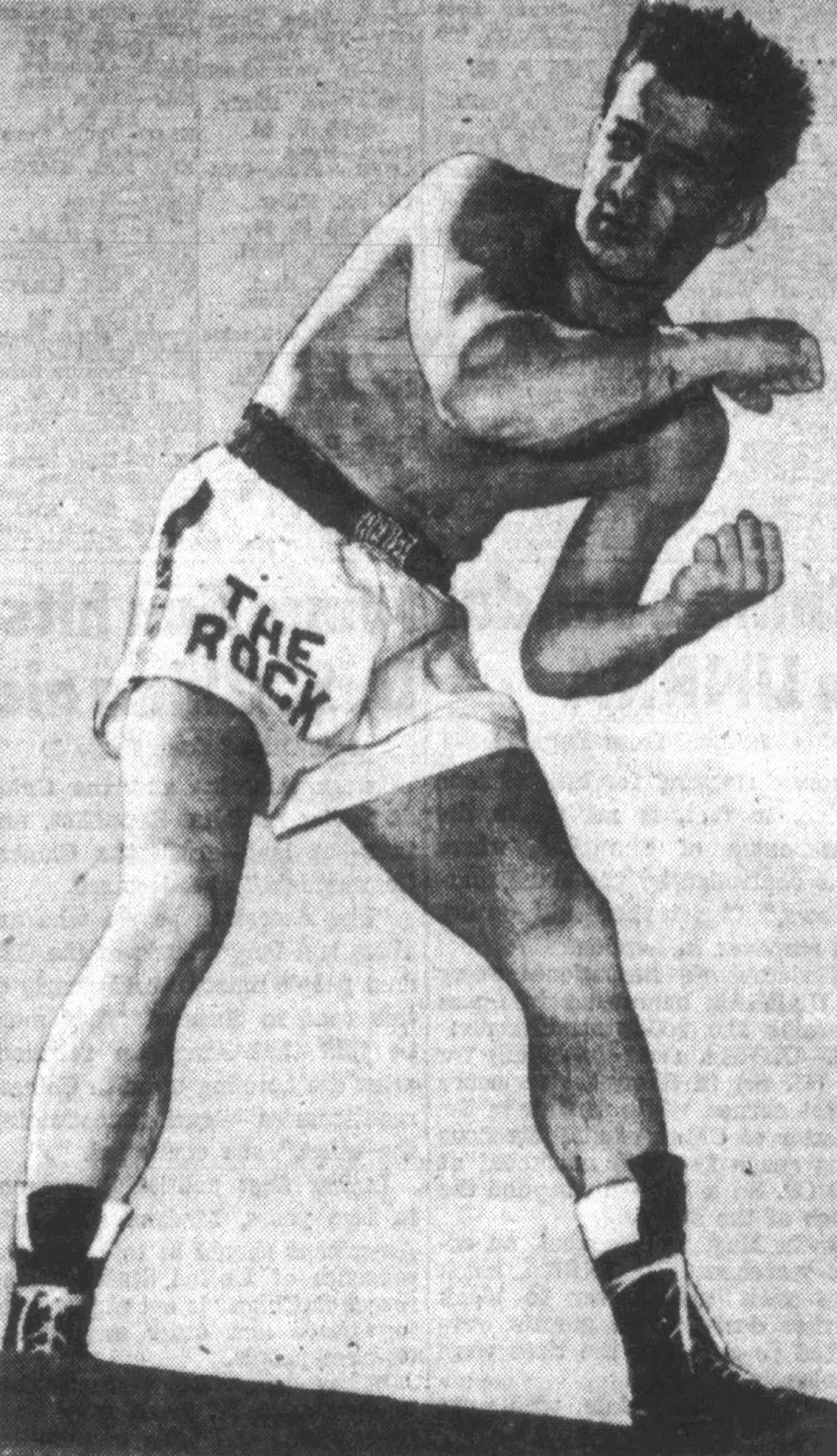
He was born Thomas Rocco Barbella in New York City on January 1, 1919, and grew up on Manhattan's Lower East Side. Boxing ran in the family before it ran in him: his father, Nicola Barbella, had fought under the name "Fighting Nick Bob." EBSCO's biographical summary describes the father as a former boxer who drank heavily, while his mother, Ida, took in neighbors' washing to keep the household going.
The streets did the rest. ESPN's biography says that by the age of 12 he had already been sent to reform school, caught with friends prying open a gum machine, and that one of those neighborhood companions was a future champion, Jake LaMotta. Looking back years later, Graziano summed up the group with a line ESPN preserves: "We were the first juvenile delinquents."
Reform School, Rikers Island and a Life on the Edge
His teenage years and early twenties were a cycle of arrests. EBSCO notes that he drifted into petty crime, drugs and alcohol and was repeatedly locked up during the 1930s. Wikipedia lists specific stops along the way: a short stretch at the Coxsackie correctional facility, about five months at the New York City Reformatory after a theft from a school, and later a term on Rikers Island for violating probation. By the time the United States went to war, the young man who would become Rocky Graziano was well known to the city's juvenile and penal systems.
Desertion, Court-Martial and Leavenworth
The Army drafted him in 1942, and the arrangement collapsed almost immediately. Accounts agree on the core: he struck an officer and went absent without leave. ESPN states that he went AWOL more than once, served seven months in the federal penitentiary at Leavenworth, Kansas, and received a dishonorable discharge dated April 29, 1943. EBSCO adds that he was court-martialed and confined in a military prison before the discharge. Wikipedia's account places his escape at Fort Dix, New Jersey, and gives 1941 as the year of the court-martial, a date that does not fit the 1942 draft reported by the other sources.
The detail that shaped the rest of his life came while he was running from the Army. To avoid being spotted by military authorities, he began boxing professionally under a borrowed surname. ESPN says "Graziano" belonged to his sister's boyfriend. Wikipedia records his professional debut as a technical knockout of Curtis Hightower on March 31, 1942. According to ESPN, he went 35-6-5 with 25 knockouts between 1942 and 1944, much of it compiled while his real identity and his military status were catching up with him.
A Puncher New York Could Not Ignore
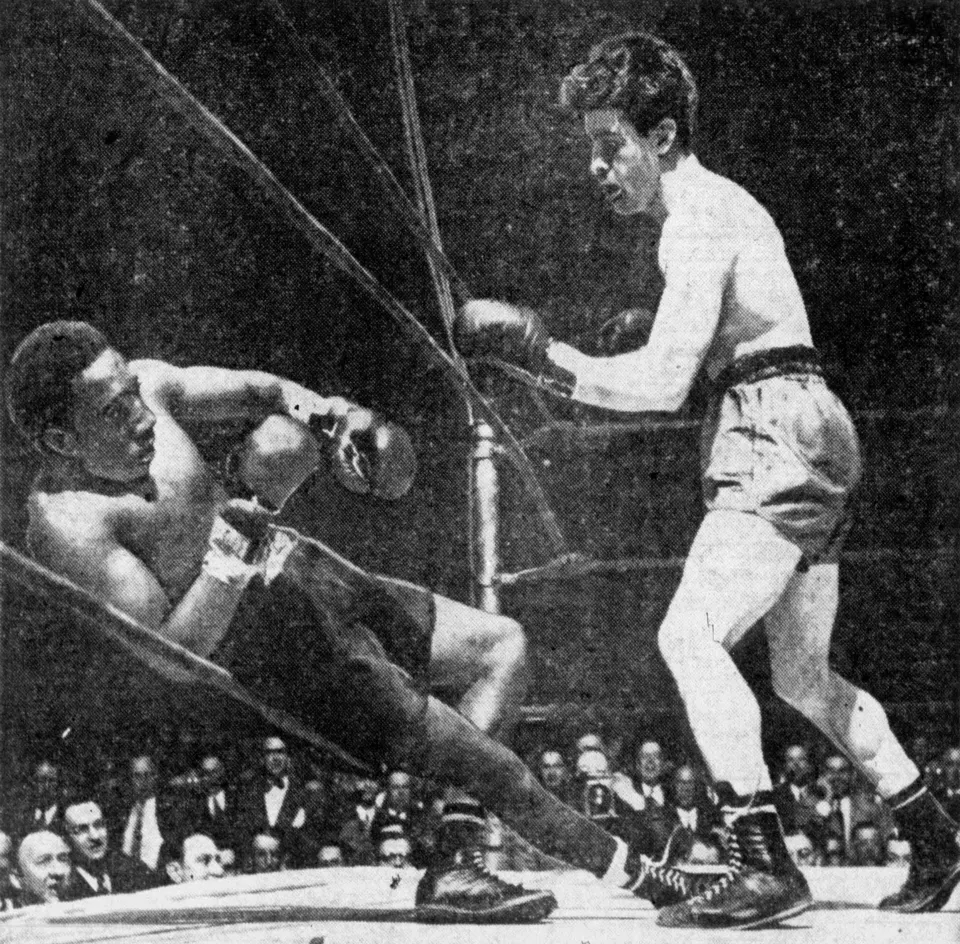
Once his legal troubles were settled, Graziano's career took off in 1945 and 1946, when ESPN credits him with a run of wins over leading contenders. He fought with little regard for defense and enormous faith in his right hand. A newspaper photograph from March 9, 1945, preserved on Wikimedia Commons, shows Billy Arnold tumbling through the ropes at Madison Square Garden; Graziano, the underdog that night, stopped him in the third round. Wins like that made him a box-office attraction and set up a title fight with the middleweight champion, Tony Zale of Gary, Indiana.
The Zale Trilogy in Three Nights
The three fights between Graziano and Zale are still cited among the most violent rivalries in the history of the weight class. The first, at Yankee Stadium on September 27, 1946, ended with Zale knocking Graziano out in the sixth round.
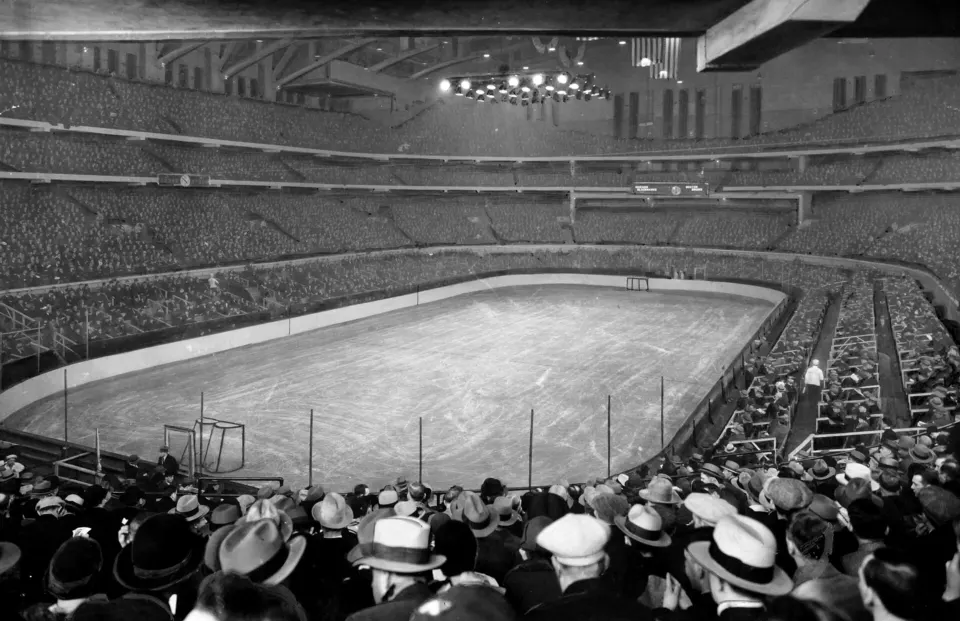
The rematch nearly did not happen in the planned place. On February 7, 1947, the New York State Athletic Commission revoked Graziano's license for failing to report bribe offers, reportedly connected to a scheduled tune-up bout. Sources describe the sums and details differently, but The Fight City notes that the bribery accusations were later dismissed. New York's ban did not bind the National Boxing Association, so the bout moved from Madison Square Garden to Chicago.
At Chicago Stadium on July 16, 1947, in front of roughly 19,000 people, Graziano took a beating early, with his right eye badly swollen and cut. The Fight City recounts that his corner worked on the eye before the fifth round, restoring enough vision for him to turn the fight. In the sixth he dropped Zale three times and forced the stoppage at 2:10, becoming middleweight champion of the world. His post-fight words, quoted by The Fight City, later gave his life story its title: "Hey, mum, your bad boy done good. Somebody up there likes me."
The reign was short. On June 10, 1948, in Newark, New Jersey, Zale knocked him out in the third round and reclaimed the championship.
Sugar Ray Robinson and the Final Bell
Graziano kept fighting and kept winning. ESPN reports that after a year away he went 20-0-1 before getting another title opportunity, this time against Sugar Ray Robinson at Chicago Stadium on April 16, 1952. ESPN quotes Robinson as saying that "no one ever stung me more than Rocky did," but Robinson knocked him out in the third round. Graziano's last fight came on September 17, 1952, a ten-round decision loss to Chuck Davey, according to Wikipedia. His final record is listed by ESPN, EBSCO and Wikipedia as 67 wins, 10 losses and 6 draws, with 52 knockouts according to EBSCO and Wikipedia.
Somebody Up There Likes Me: The Book and the Film
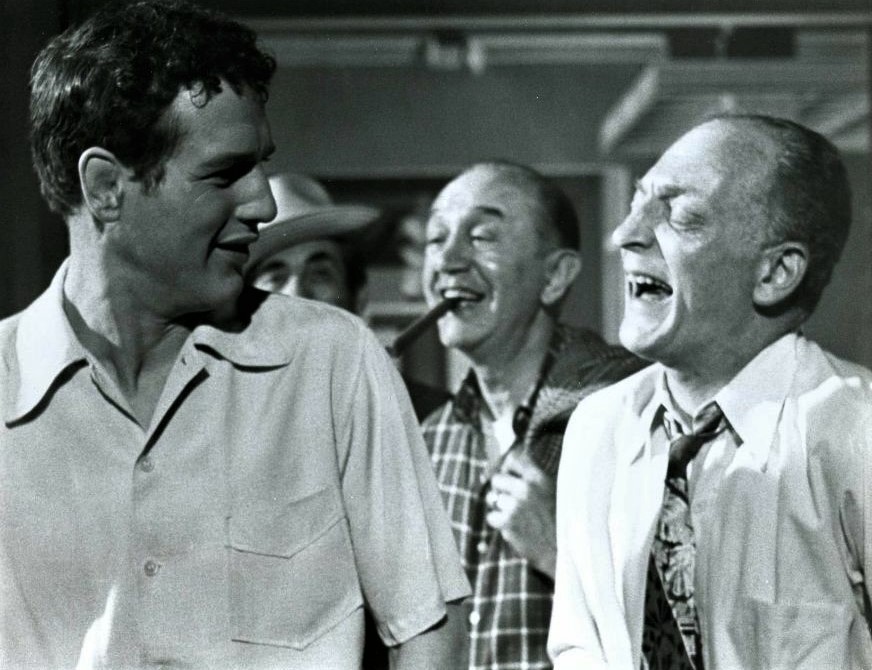
Graziano's second career began with his own story. Written with Rowland Barber, the autobiography Somebody Up There Likes Me appeared in 1955, the date given by Wikipedia and EBSCO (ESPN dates it to 1956). Metro-Goldwyn-Mayer turned it into a 1956 film directed by Robert Wise from a screenplay by Ernest Lehman. James Dean had been set to play Graziano but died before filming began, so the part went to Paul Newman. The cast included Pier Angeli, Sal Mineo and, in an uncredited early role, Steve McQueen. The film won Academy Awards for black-and-white cinematography and black-and-white art direction.
A Familiar Face on Television
The former delinquent proved a natural in front of a camera. Wikipedia records that in 1955 he co-hosted The Henny and Rocky Show with comedian Henny Youngman and that he played Martha Raye's boyfriend on her variety program. He also turned up in series such as Car 54, Where Are You? and Naked City, and was a regular on Miami Undercover. EBSCO says he appeared on variety and game shows for about 25 years after retiring from the ring, and ESPN notes his steady presence in commercials. He also opened a pizza restaurant in the 1960s, according to Wikipedia.
Death and Legacy
Graziano suffered a stroke in April 1990 and died in New York on May 22, 1990, at the age of 71; Wikipedia attributes his death to cardiopulmonary failure. He is a member of the International Boxing Hall of Fame. Few champions held a title so briefly and remained so well known for so long. His fights with Zale gave him a place in boxing history, and the book and film carried the story of a Lower East Side street kid well beyond the sport.
Sources
- Rocky Graziano, Wikipedia, accessed October 2026
- Rocky Graziano (ESPN Classic biography), ESPN, undated
- Rocky Graziano, EBSCO Research Starters, undated
- July 16, 1947: Zale vs Graziano II, The Fight City, undated
- Somebody Up There Likes Me (1956 film), Wikipedia, accessed October 2026
- Billy Arnold vs Rocky Graziano 1945 (file description, from Los Angeles Daily News), Wikimedia Commons, accessed October 2026


