
Holyfield vs Qawi in 1986 Went Fifteen Rounds in Atlanta and Is Called the Greatest Cruiserweight Fight Ever
In his twelfth pro fight, 23-year-old Evander Holyfield outlasted Dwight Muhammad Qawi over 15 brutal rounds at the Omni to win the WBA cruiserweight title by split decision, then spent the night in hospital with severe dehydration.

On 12 July 1986, at the Omni Coliseum in Atlanta, a 23-year-old Evander Holyfield fought only the twelfth professional bout of his life and took the WBA cruiserweight title from Dwight Muhammad Qawi. The fight went the full 15 rounds without a knockdown and ended in a split decision. Holyfield finished it in a hospital bed, and it is still the fight most often named as the best the cruiserweight division has ever produced.
The Buzzsaw From Camden
Dwight Muhammad Qawi was born Dwight Braxton in Baltimore in January 1953 and grew up in Camden, New Jersey. As a young man he was convicted of armed robbery and spent about five years in prison. He took up boxing at Rahway State Prison, which ran a well-known boxing program, and turned professional in 1978 as soon as he got out. In the early 1980s he took the name he would fight under for the rest of his career.
His rise was quick. In December 1981 he stopped Matthew Saad Muhammad in the tenth round to win the WBC light heavyweight title, and he defended it before losing to Michael Spinks. He then moved up in weight and, in July 1985, knocked out Piet Crous in South Africa to take the WBA belt at cruiserweight, the 190-pound class the WBA then called junior heavyweight. The Holyfield fight was his second defense of that title. He went in with a record of 26-2-1 and 15 knockouts. He was 33 years old and stood about 5 feet 6 inches. The Fight City lists him half an inch taller. Short, thick and always moving forward, he had earned the nickname "the Camden Buzzsaw."
An Olympian in His Twelfth Fight
Holyfield's amateur career had ended in a famous controversy. At the 1984 Los Angeles Olympics he was disqualified in the light heavyweight semi-final against New Zealand's Kevin Barry and had to settle for bronze. He turned professional afterward, moved up to cruiserweight, and won his first 11 fights.
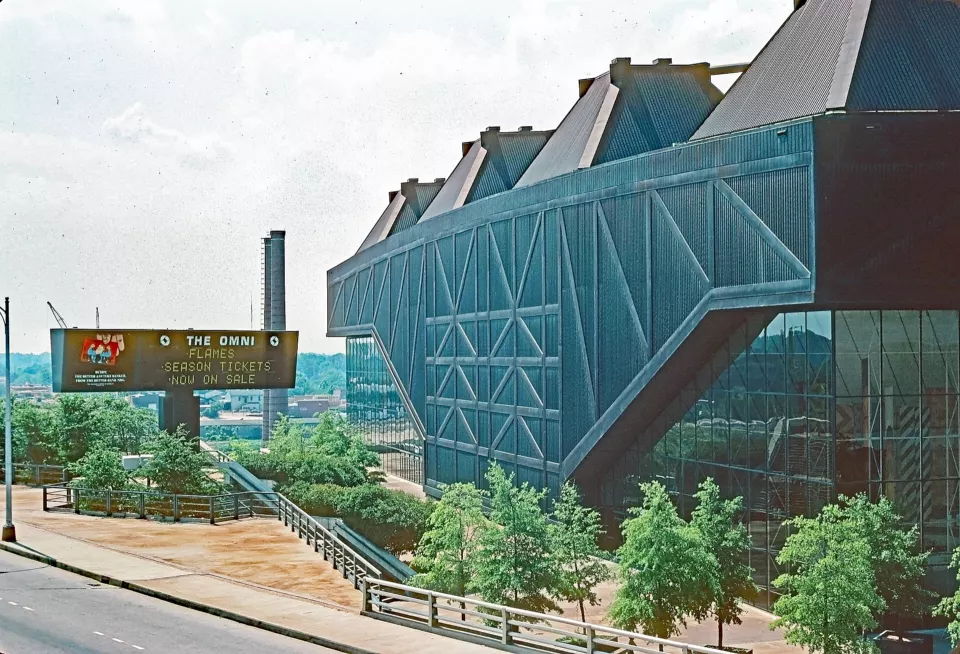
The record was clean, but it was short. According to The Fight City, he had never gone past the eighth round, and he was now taking on a former world champion over 15. He did have two things going for him. The fight was in his hometown of Atlanta, and he was trained by Lou Duva. He also had the physical edge. He stood a little over six feet and weighed 186 pounds. Qawi weighed in at 190, or 189 by UPI's count, and was seven inches shorter. ABC carried the bout in the United States on Wide World of Sports, with Al Trautwig and Alex Wallau calling it.
Fifteen Rounds at the Omni
For the first two rounds Holyfield boxed the way a taller man usually does against a pressure fighter. He kept his distance and tried to stay off the ropes. From the third round on, he stopped doing that. He started standing and trading, and the fight turned into a close-range war. In that kind of fight Holyfield's punches were usually the cleaner ones, while Qawi's were heavier and went to the body far more often.
In the fourth Qawi trapped Holyfield in a corner, and as Holyfield turned off the ropes a right hand hurt him. Through the middle rounds the older champion looked like the fresher man. Holyfield's title hopes seemed to be slipping away, and at times he looked like he was simply trying to last. In the eighth, pushed by Duva in the corner, he came out with a sudden burst. The Fight City counted at least a dozen punches in a row without a reply from Qawi.
The thirteenth round is the one people remember. Holyfield threw fast combinations and Qawi kept firing back. One right uppercut, left hook and right hand snapped Qawi's head back and forth, and Qawi answered by dropping his hands to show it hadn't hurt him. In the fifteenth both men emptied what they had left. No one was knocked down all night. Both fighters were hurt, and both were exhausted, more than once.
The punch counts show how hard the pace was. UPI reported that Holyfield threw 1,290 punches and landed 629, and that Qawi landed 569 of 1,108. The Fight City gives the same total for Holyfield but has Qawi throwing 1,018. The two counts do not agree on that figure.
A Split Decision for the Hometown Challenger
The judges split. Harold Lederman scored it 144-140 for Holyfield, and Neffie Quintana had him far ahead at 147-138. UPI reported that Quintana gave Holyfield each of the last seven rounds. The third judge, Gordon Volkman, scored it 143-141 for Qawi. Holyfield was the new WBA champion, his first world title, and his record went to 12-0. Qawi, now 26-3-1, disputed the verdict. In his post-fight comments Holyfield said, as quoted by UPI, "I feel I can handle anybody," and he named Michael Spinks as the opponent he wanted next.
The Price: Headaches, Dehydration and Nine Quarts
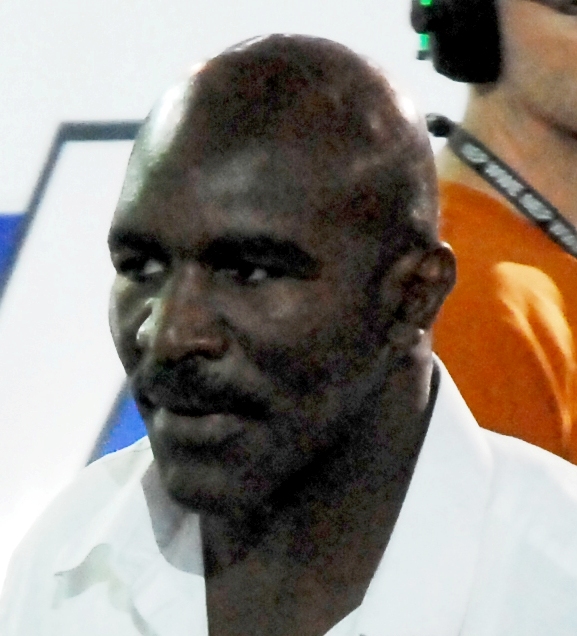
Holyfield complained of headaches soon after the decision was read. He was taken to Crawford Long Hospital in Atlanta with severe dehydration. UPI reported that his kidneys were not working properly when he was admitted and that he was given nine quarts of intravenous fluid. The doctor treating him, Ron Stephens, told the agency there would be no lasting damage, and UPI reported that he was discharged the next afternoon, a Sunday.
Holyfield later said the fight cost him about fifteen pounds and nearly drove him out of boxing. The Ring has also reported his admission that he came close to quitting during the bout. Those figures are his own memories, given years afterward. None of the sources consulted gives a measured weight from after the fight.
Unification, the Rematch and the Move Up
The win started Holyfield's run through the division. He beat Ricky Parkey for the IBF title. In 1988 he stopped Carlos De León in eight rounds in Las Vegas to take the WBC belt and become the first undisputed cruiserweight champion. Before that he gave Qawi a rematch. On 5 December 1987, at Convention Hall in Atlantic City, the two met again in one of the last 15-round title fights ever sanctioned. This one wasn't close. Holyfield knocked Qawi down twice in the fourth round, and Qawi could not beat the count after the second knockdown, at 2:30 of the round. Soon afterward Holyfield moved up to heavyweight, where he went on to win the world title four times.
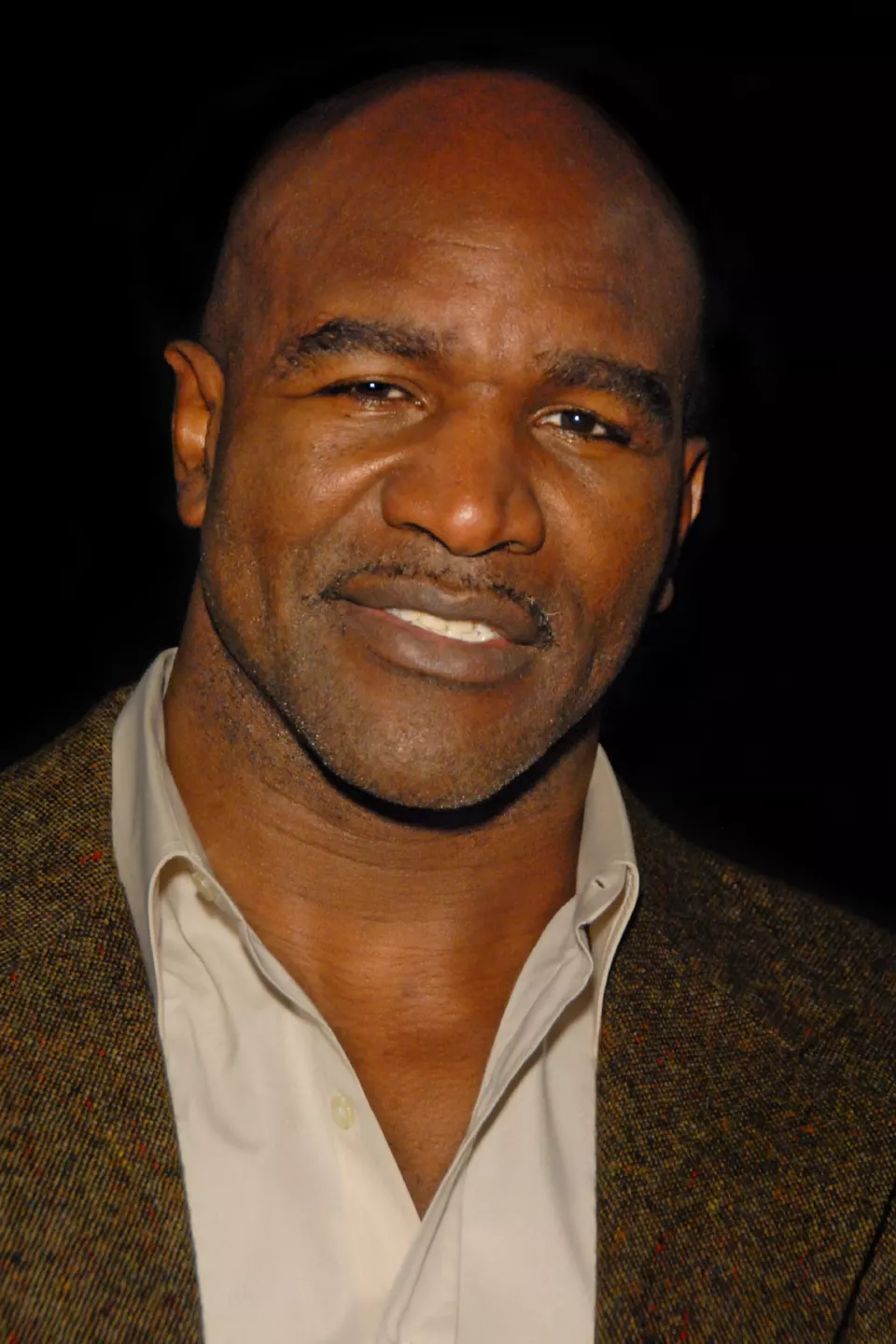
Qawi kept fighting until 1999 and retired with a record of 41-11-1 with 25 knockouts. He was inducted into the International Boxing Hall of Fame in 2004 and died in July 2025 at the age of 72.
Why It Still Leads the Cruiserweight List
The Ring named the first fight the best cruiserweight bout of the 1980s and called it one of the last great 15-round title fights. It also placed it 46th on its list of the greatest title fights in history, as cited by The Fight City. Writers have compared it to Ali and Frazier in Manila, another fight in which a shorter, relentless attacker walked through cleaner combinations from a taller, more skilled opponent to get close. Some have argued that James Toney's 2003 decision over Vassiliy Jirov comes close, but the Atlanta fight is still the usual answer when people name the best cruiserweight fight of all time.
Sources
- Former Olympic medalist Evander Holyfield, who outpunched veteran Dwight Muhammad Qawi..., UPI, 13 July 1986
- Dwight Muhammad Qawi vs. Evander Holyfield, Wikipedia, accessed October 2026
- Evander Holyfield vs. Dwight Muhammad Qawi II, Wikipedia, accessed October 2026
- Dwight Muhammad Qawi, Wikipedia, accessed October 2026
- Evander Holyfield, Wikipedia, accessed October 2026
- July 12, 1986: Holyfield vs Qawi I, Alden Chodash, The Fight City


