
How Dwight Muhammad Qawi, the Camden Buzzsaw, Learned to Box in Rahway Prison
Dwight Braxton took up boxing while serving time in Rahway State Prison and became Dwight Muhammad Qawi, WBC light heavyweight champion, WBA cruiserweight champion and a Hall of Famer. This is his story from Camden to the 1986 war with Evander Holyfield and beyond.

He stood barely five feet seven, learned his trade behind the walls of a New Jersey prison and turned professional at an age when many fighters are already peaking. Within four years Dwight Braxton, later Dwight Muhammad Qawi, was light heavyweight champion of the world, and before he was done he had won a second title at cruiserweight and dragged a young Evander Holyfield through fifteen of the hardest rounds of the 1980s.
From Baltimore to the Streets of Camden
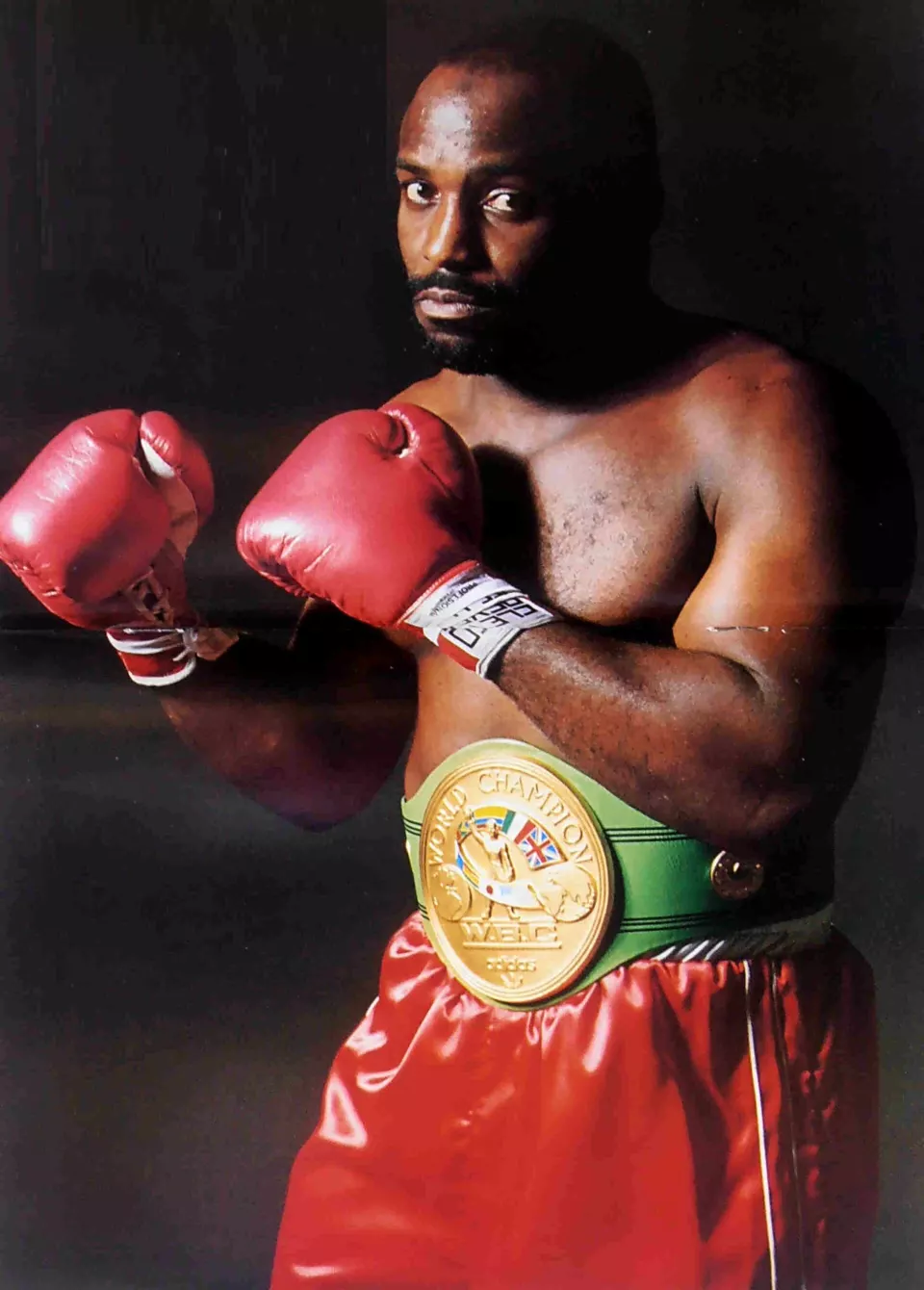
He was born Dwight Braxton in Baltimore, Maryland, on January 5, 1953, but the city that shaped him was Camden, New Jersey, across the Delaware River from Philadelphia. CBS Sports described Baltimore as his birthplace and Camden as the place where he spent most of his childhood and most of his life.
His youth went badly wrong. According to the Associated Press and Dan Rafael's obituary, he was sent to Rahway State Prison for armed robbery; Rafael dates the sentence to 1973, and Wikipedia and CBS Sports put his time inside at roughly five years. It was there, far from any amateur circuit or Olympic program, that he found the sport that would define him.
Learning to Fight Inside Rahway State Prison
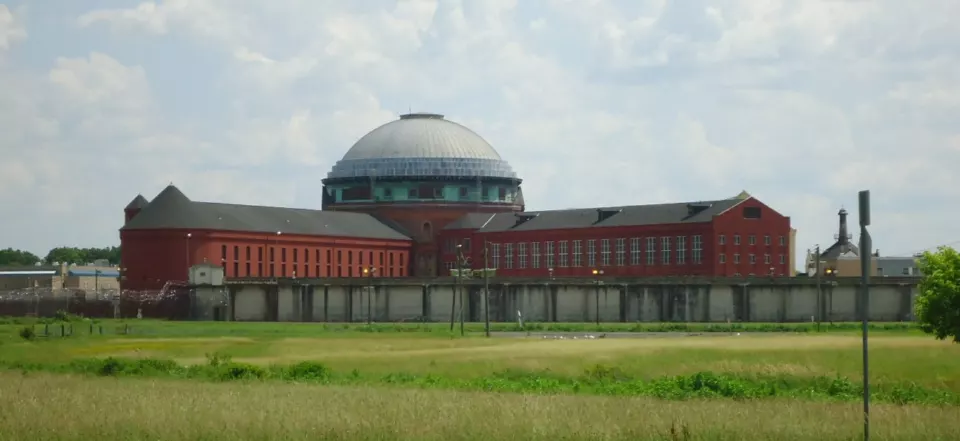
Rahway ran its own boxing program, and Braxton joined it. Wikipedia credits the influence of a fellow inmate, James Scott, a light heavyweight contender who fought his own bouts inside the prison. CBS Sports notes that bouts at the facility were broadcast nationally, which gave the prison program an unusual public profile for the era.
Braxton walked out of Rahway in 1978 and, as the AP reported, turned professional at 25, soon after his release. He did not have the long amateur pedigree of most title challengers, so he went looking for an education. He found one in Philadelphia at the gym of Joe Frazier, whose bobbing, smothering pressure style became the obvious comparison for Braxton's own. Wikipedia describes his approach in those terms: infighting, feints, constant head movement, a tight defensive shell and relentless forward pressure.
The beginning was rocky. CBS Sports records that he opened his career 1-1-1 before reeling off fourteen straight wins. The crowds in South Jersey and Philadelphia took to the compact, bull-necked attacker, and the nickname followed: "The Camden Buzzsaw."
Back to Rahway to Beat James Scott
The most unusual win of his rise came in a setting he knew far too well. On September 5, 1981, Braxton returned to Rahway State Prison to face James Scott, the inmate whose presence had helped steer him toward the sport. According to Wikipedia, Braxton won a unanimous ten-round decision. Earlier that year, on May 31, he had knocked out Mike Rossman in the seventh round. The two results made him a natural challenger for the WBC title.
Dethroning Matthew Saad Muhammad in 1981
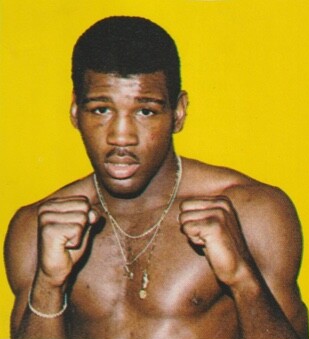
The champion was Matthew Saad Muhammad, a Philadelphia fighter famous for surviving terrible punishment and rallying to win. On December 19, 1981, in Atlantic City, Braxton gave him no room for one of those comebacks. He stopped Saad Muhammad in the tenth round to take the WBC and The Ring light heavyweight championships.
He was a busy and dangerous champion. Wikipedia lists a sixth-round stoppage of Jerry Martin on March 21, 1982, and then a rematch with Saad Muhammad on August 7, 1982, which ended even more quickly than the first meeting, in the sixth round. On November 20, 1982, he stopped Eddie Davis in the eleventh. Around this time he completed his conversion to Islam; the AP reports that he legally changed his name to Dwight Muhammad Qawi in 1982, while CBS Sports dates the conversion itself to 1981.
Michael Spinks and the Light Heavyweight Unification
The division had two champions, and the showdown came on March 18, 1983. Qawi met WBA titleholder Michael Spinks with the undisputed championship on the line. The bout went the full fifteen rounds, and Spinks won a unanimous decision. It was Qawi's first defeat as champion and it ended his reign at 175 pounds.
A Second Title at Cruiserweight
Rather than chase Spinks, Qawi moved up to the cruiserweight division, then still a young weight class. On July 27, 1985, in Sun City, South Africa, he challenged WBA champion Piet Crous and knocked him out in the eleventh round, making Qawi a two-division world champion.
His first defense, according to Wikipedia, came on March 22, 1986, against another former heavyweight king, Leon Spinks, brother of the man who had beaten him at light heavyweight. Qawi stopped him in the sixth round.
Fifteen Rounds With Evander Holyfield in Atlanta, 1986
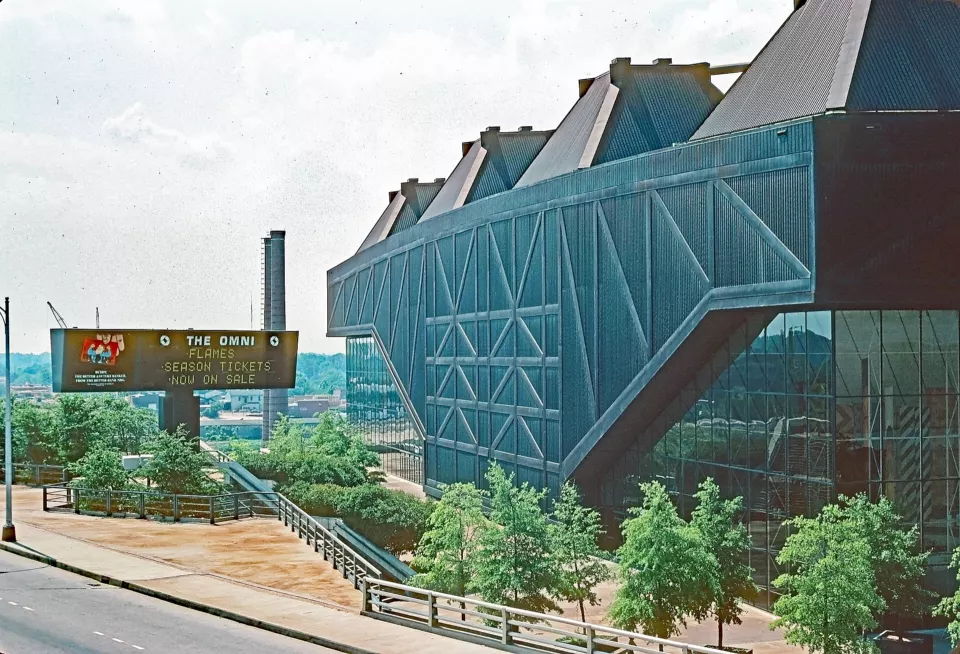
Next came the fight for which many fans remember him best. On July 12, 1986, at the Omni Coliseum in Atlanta, Qawi defended against Evander Holyfield, a young contender fighting in his home city of Atlanta. Dan Rafael notes that the fight was televised on ABC. (Rafael's obituary dates it to June 1986; Wikipedia, the AP and other sources give July, which matches the record.)
It became a war of attrition. Qawi pushed forward behind his head movement and short punches, and Holyfield had to stay with him for the full fifteen rounds. The judges were divided, and Holyfield won a split decision and the WBA belt. Holyfield would go on to become heavyweight champion of the world; for Qawi it was a loss that enhanced his reputation rather than diminished it.
They met again on December 5, 1987, at Convention Hall in Atlantic City, this time with Holyfield's WBA and IBF cruiserweight belts at stake. The younger man had grown into his power, and he knocked Qawi out in the fourth round.
Foreman, the Long Tail and the Final Bell
Qawi tried his luck among the heavyweights. On March 19, 1988, he faced George Foreman, then early in his famous comeback, and was stopped in the seventh round. He kept fighting for another decade without regaining a world title. Wikipedia's record lists his last bout as a decision loss to Tony LaRosa on November 25, 1998. The AP and Dan Rafael give 1998 as the end of his career, at 46, while one passage in Wikipedia says he retired in 1999; the sources agree on his final record of 41 wins, 11 losses and one draw, with 25 knockouts.
Counselor, Trainer and Hall of Famer
Outside the ring, Qawi used his own history to help others. The AP and CBS Sports describe his later work as a boxing trainer, youth advocate and drug and alcohol counselor in New Jersey. Wikipedia specifies that from 1998 he worked as a patient advocate at the Lighthouse, a drug and alcohol rehabilitation center in Mays Landing, New Jersey.
In 2004 he was inducted into the International Boxing Hall of Fame. When he died, the Hall's executive director, Ed Brophy, said in a statement quoted by Dan Rafael that Qawi's relentless style made him "a fan favorite and one of boxing's most popular stars of the 1980s."
Death in 2025
Qawi died on Friday, July 25, 2025, at the age of 72. His sister, Wanda King, told the AP that he had been living with dementia for five years. Wikipedia places his death in a Baltimore nursing home, while the AP report carried a Camden dateline, so the two cities that framed his early life also framed his last headlines. He left behind a story that boxing rarely produces: a man who learned to fight in a cell block and finished in the Hall of Fame.
Sources
- Dwight Muhammad Qawi, Wikipedia, accessed October 2026
- Dwight Muhammad Qawi, boxer who went from prison to champion, dies at 72, The Associated Press (via WRDW), July 28, 2025
- Dwight Muhammad Qawi, Hall of Fame boxer, dies at 72, ESPN (Associated Press), July 28, 2025
- Two-division champion, Boxing Hall of Famer Dwight Muhammad Qawi dies at 72, Brian Campbell, CBS Sports, July 28, 2025
- Dwight Muhammad Qawi, from prison to champ to HOF, dies at 72, Dan Rafael, Fight Freaks Unite, July 28, 2025


