
How Joe Frazier Went From a Beaufort Farm and a Philadelphia Slaughterhouse to Heavyweight Champion
The life of Smokin' Joe Frazier, from sharecropping in South Carolina and punching beef in Philadelphia to Olympic gold, the undisputed heavyweight title, the Ali and Foreman wars, his North Broad Street gym and his death in 2011.

Joe Frazier grew up the son of sharecroppers in the South Carolina Lowcountry, punched sides of beef in a Philadelphia slaughterhouse, won Olympic gold in Tokyo with a broken thumb and became the first man to beat Muhammad Ali. This is the full arc of Smokin' Joe, from Beaufort to the foot of the Rocky Steps.
A Sharecropper's Son in Laurel Bay
Joseph William Frazier was born on January 12, 1944, in Beaufort, South Carolina, and raised in nearby Laurel Bay. He was the twelfth child of Rubin and Dolly Frazier, a family that worked farmland as sharecroppers. The year Joe was born, his father lost his left hand and forearm in a tractor accident.
Boxing reached the farm through a television set. In the early 1950s the family gathered to watch fights on TV, and the young Frazier decided that was what he wanted to do.
At 15 he left Beaufort after a run-in with an employer named Jim Bellamy. In 1959 he boarded a Greyhound bus heading north. He had family in New York, where his brother Tommy lived, but the city that would claim him was Philadelphia.
North Philadelphia and the Slaughterhouse
In Philadelphia the teenager needed work more than he needed a plan. According to the Pennsylvania State Historic Preservation Office, he found a job in a slaughterhouse at 16. When he started training, the hanging carcasses in the cold room became his heavy bag. He took up the sport properly at a Police Athletic League gym, where the trainer Yancey "Yank" Durham took him on.
The details of that routine later sounded very familiar to moviegoers. Rocky Balboa, Sylvester Stallone's fictional Philadelphia heavyweight, also hits frozen beef and sprints up the Art Museum steps. The state preservation office says these parallels suggest Stallone's character may have been based partly on Frazier. Frazier himself said his workouts inspired the famous training montage. He also made a cameo in Rocky, released in 1976.
Under Durham he became one of the best amateur heavyweights in the country. He won Golden Gloves heavyweight championships in 1962, 1963 and 1964 and finished his amateur career at 38-2. His most important defeat came in the summer of 1964, when Buster Mathis beat him in the final of the U.S. Olympic trials.
Tokyo 1964: Gold With a Broken Thumb
That loss should have ended his Olympic hopes, but Mathis was injured and Frazier went to Tokyo as his replacement. He knocked out George Oywello of Uganda and Athol McQueen of Australia. In the semifinal against Vadim Yemelyanov of the Soviet Union he broke his left thumb, but the Soviet corner threw in the towel at 1:49 of the second round.
Frazier fought the final on that damaged hand and beat Hans Huber of Germany by a 3-2 decision. He was 20 years old.
Cloverlay and the Climb to the Title
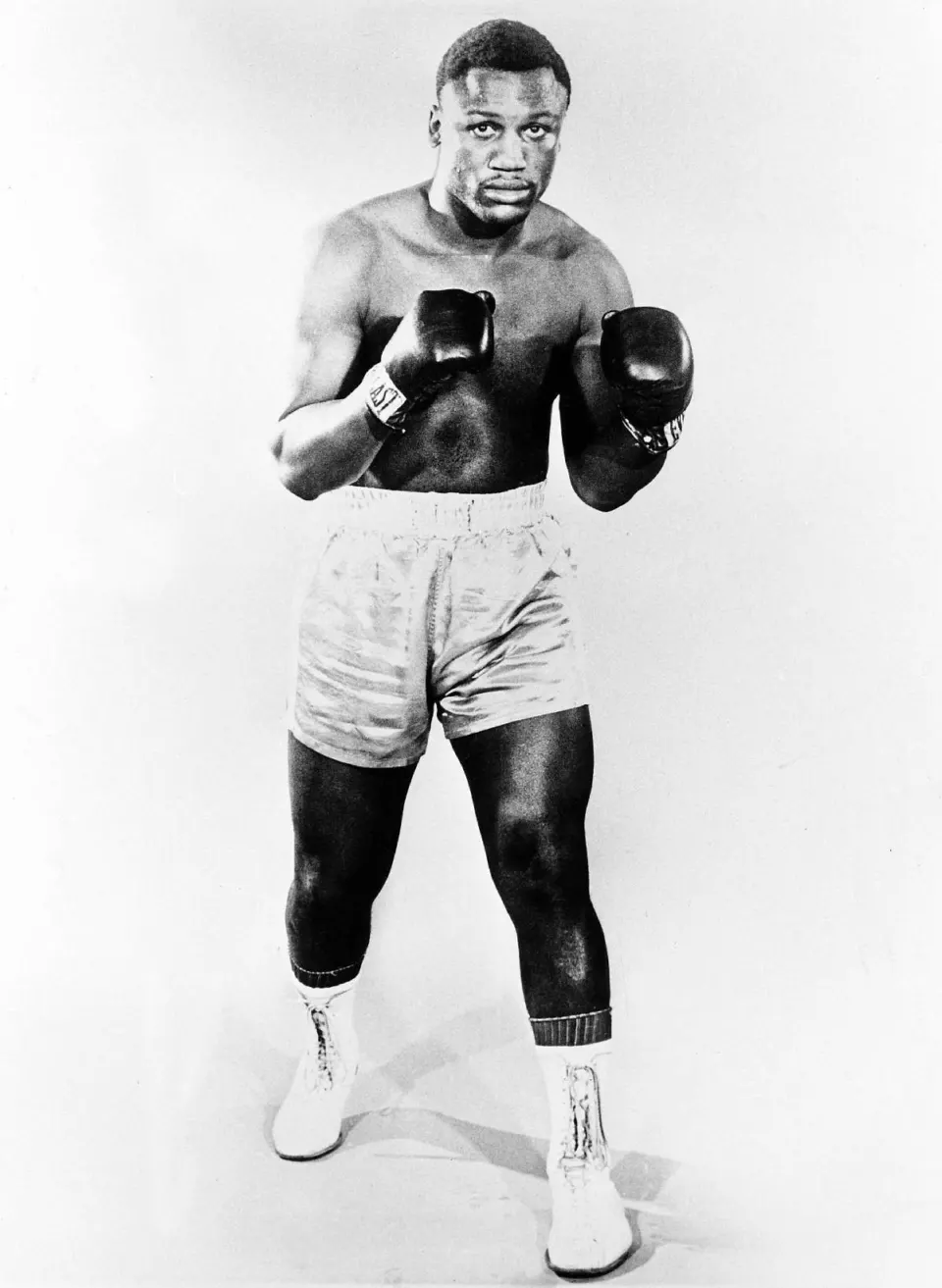
Frazier's professional career was funded by Cloverlay, a group of local businessmen whose investors included a young Larry Merchant. Durham stayed on as trainer.
He turned professional on August 16, 1965, stopping Woody Goss in the first round. In a training accident that same year he was left legally blind in his left eye. He won his first 11 fights inside the distance and kept moving forward. In 1966 and 1967 he got past Oscar Bonavena on a split decision, stopped Eddie Machen, knocked out Doug Jones and stopped the durable George Chuvalo in four rounds.
Because of the dispute over Ali's refusal of the draft, the heavyweight title was split. On March 4, 1968, at Madison Square Garden, Frazier stopped his old amateur rival Buster Mathis in the 11th round to win the vacant New York State Athletic Commission title. He defended it against Manuel Ramos, Bonavena again, Dave Zyglewicz and Jerry Quarry, whose corner retired him after seven rounds in June 1969.
Undisputed: Ellis, Foster and the Fight of the Century
On February 16, 1970, Frazier faced WBA champion Jimmy Ellis at the Garden. He knocked Ellis down twice in the fourth round, and Ellis's corner did not let him come out for the fifth. With the WBA and WBC belts added to his New York title, Frazier was undisputed champion. That November in Detroit he knocked out light heavyweight king Bob Foster in the second round.
His fights with Muhammad Ali are covered in separate RingTalk features, so a short summary is enough here. On March 8, 1971, at Madison Square Garden, Frazier floored Ali with a left hook in the 15th round and won a unanimous decision. It was Ali's first professional defeat, and according to the Associated Press each man was paid $2.5 million. Ali won their non-title rematch on points in January 1974. In the Philippines in October 1975, Eddie Futch, by then Frazier's trainer, stopped the fight before the 15th round because his fighter could barely see.
"Down Goes Frazier": The Foreman Nights
After the Ali win Frazier defended against Terry Daniels in New Orleans and Ron Stander in Omaha in 1972. Sources disagree on the date of the Stander bout. Then he went to Kingston, Jamaica, on January 22, 1973, as a 29-0 champion against the unbeaten George Foreman. Foreman knocked him down six times, and the referee stopped it at 1:35 of the second round. Howard Cosell's repeated cry of "Down goes Frazier!" became one of the best-known calls in sports broadcasting.
Frazier kept fighting. He stopped Quarry again in 1974 and Ellis again in Melbourne in 1975 before the third Ali fight. On June 15, 1976, he met Foreman again at Nassau Veterans Memorial Coliseum on Long Island. Foreman knocked him down twice and won by fifth-round stoppage. Frazier retired after that fight.
One Last Night in Chicago
He came back once, on December 3, 1981, in Chicago against Floyd "Jumbo" Cummings. After ten hard rounds it was scored a draw, and this time the retirement was final. His professional record was 32 wins, 4 losses and 1 draw, with 27 knockouts. All four losses came against Ali and Foreman.
Outside the ring he had a music career as a singer. He recorded singles between 1969 and 1976, some written with Van McCoy, and toured the United States and Europe with his soul-funk group, Joe Frazier and the Knockouts.
The Gym on North Broad Street
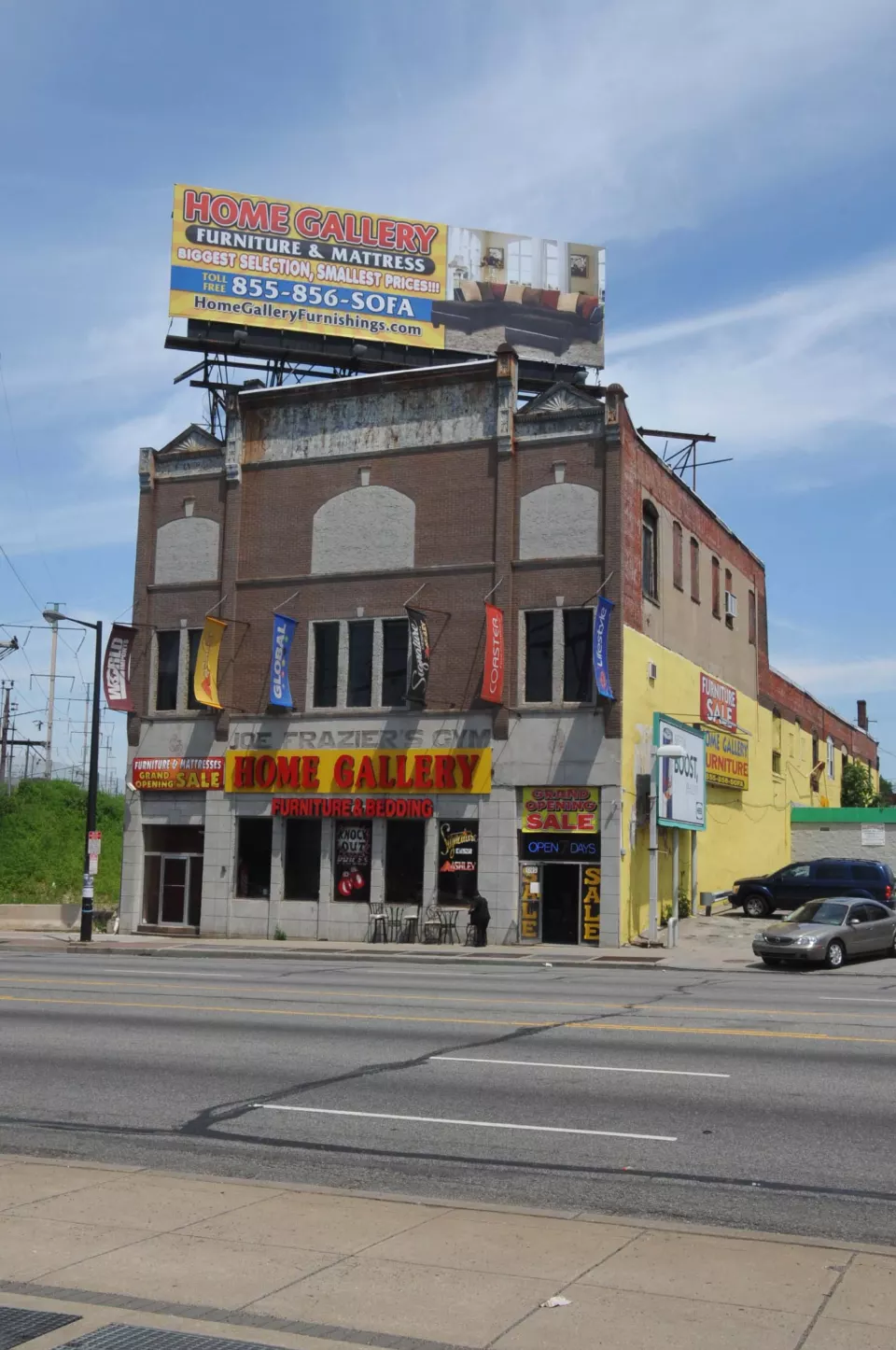
The three-story brick building at 2917 North Broad Street dates from the 1890s. Cloverlay had set it up as Frazier's training base in 1968. The Philadelphia Inquirer reports that he bought it in 1973. The state preservation office places the purchase after he retired. Either way, it became Joe Frazier's Gym, where he trained young fighters from the neighborhood. Among them were his son Marvis, who later challenged for the heavyweight title, and his daughter Jacqui Frazier-Lyde, who became a light heavyweight world champion.
His finances got worse in later years. The state preservation office says he sold the building in 2008. According to the Inquirer, the gym closed in 2010 and the space later became a discount furniture store, though the etched boxing gloves are still above the door. In May 2013 the building was listed on the National Register of Historic Places.
Death in Philadelphia and a Statue at the Steps
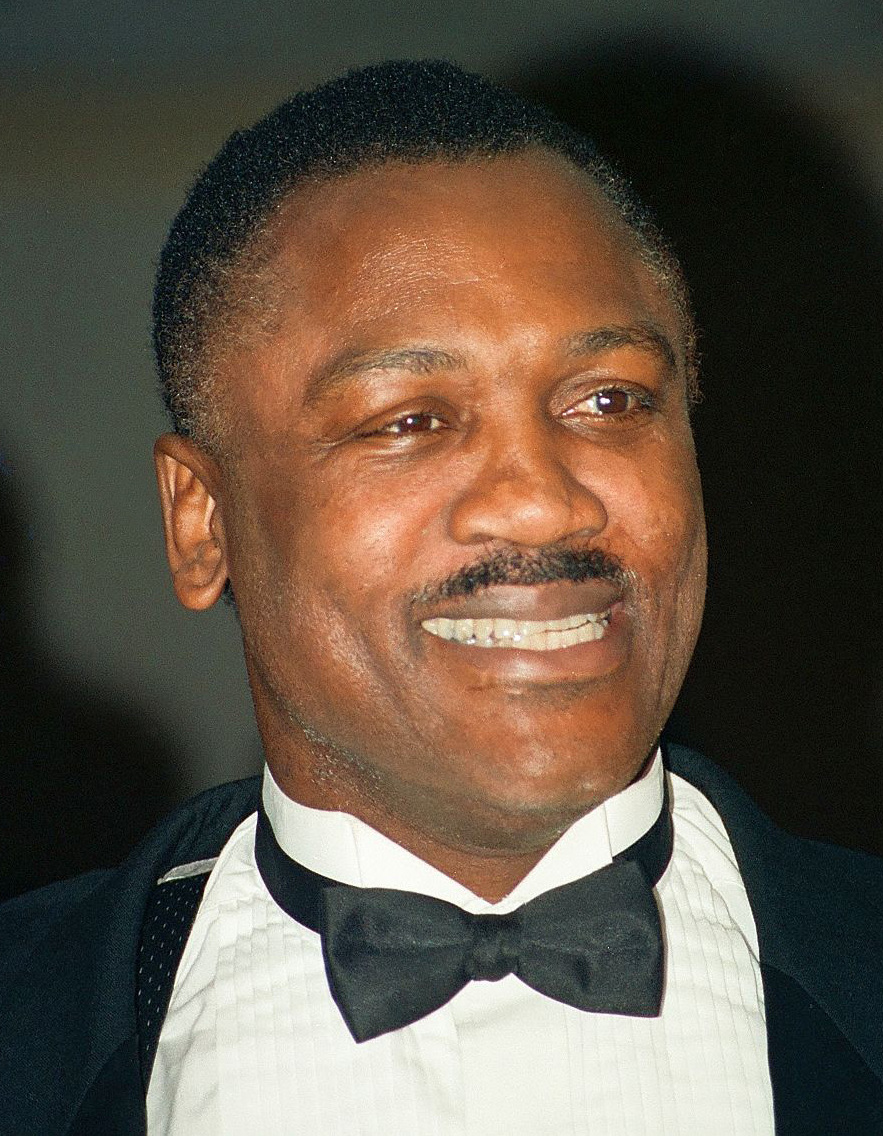
Frazier was diagnosed with liver cancer in late September 2011 and moved into hospice care in Philadelphia. He died on the night of November 7, 2011, at age 67. Some reports, published the next day, give November 8. In a statement carried by the Associated Press, Ali said he would always remember Frazier "with respect and admiration." Ali was among the mourners at the private funeral at Enon Tabernacle Baptist Church on November 14, and Frazier was buried at Ivy Hill Cemetery.
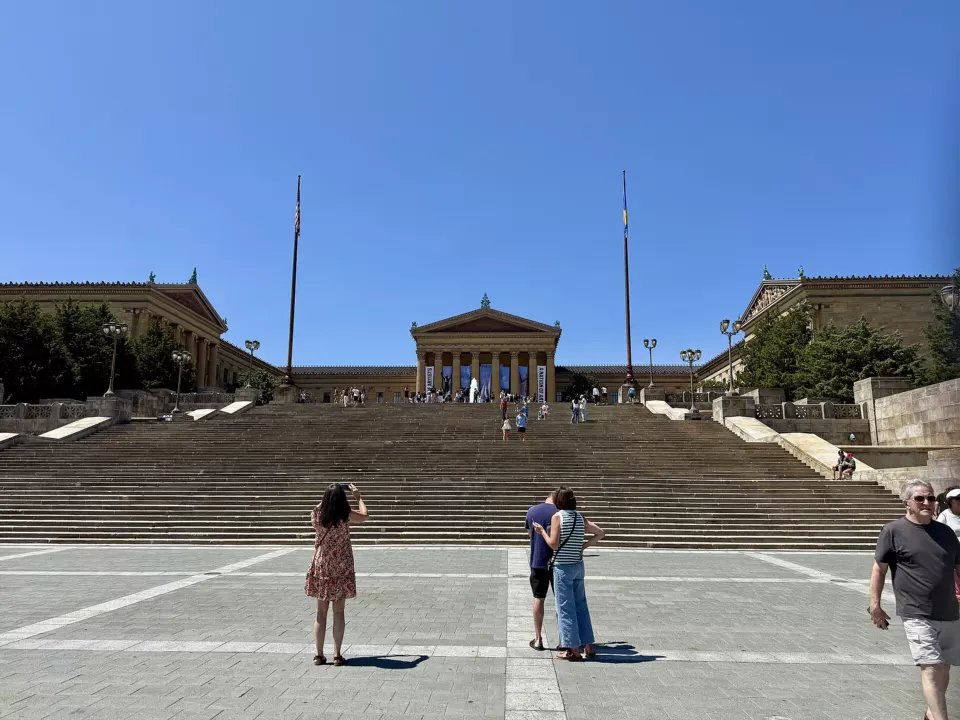
The city honored him slowly. On September 12, 2015, a 12-foot bronze by sculptor Stephen Layne was unveiled outside the Xfinity Live! complex in South Philadelphia. It shows Frazier just after the left hook that dropped Ali in 1971, and Bernard Hopkins personally gave more than $40,000 toward it. On June 29, 2026, the statue was moved to the base of the Philadelphia Museum of Art steps, where the Rocky statue had stood. Mayor Cherelle Parker and Jacqui Frazier-Lyde attended the rededication. Frazier had been in the International Boxing Hall of Fame since its first class in 1990.
Sources
- Joe Frazier, Wikipedia (accessed October 2026)
- Joe Frazier vs. George Foreman, Wikipedia (accessed October 2026)
- Joe Frazier obituary, The Associated Press via WBUR News, November 8, 2011
- Smokin' Joe Frazier and Pennsylvania's Boxing History, Pennsylvania State Historic Preservation Office blog, April Frantz
- At Joe Frazier's former gym, memories linger, Frank Fitzpatrick, The Philadelphia Inquirer, May 2013
- Statue of boxing legend Joe Frazier unveiled in Philly, PhillyVoice, September 2015
- Joe Frazier statue relocated to Philadelphia Museum of Art steps, NBC10 Philadelphia, June 2026
- Ron Stander lost to Joe Frazier, won over a region, The Sweet Science


