
Corbett vs Fitzsimmons in 1897 Brought the Solar Plexus Punch and the First Fight Filmed in Full
In Carson City on 17 March 1897, Bob Fitzsimmons dethroned heavyweight champion James J. Corbett with a 14th-round body blow while Enoch Rector's cameras recorded the whole fight. The resulting film ran over 100 minutes and helped prove cinema could be big business.

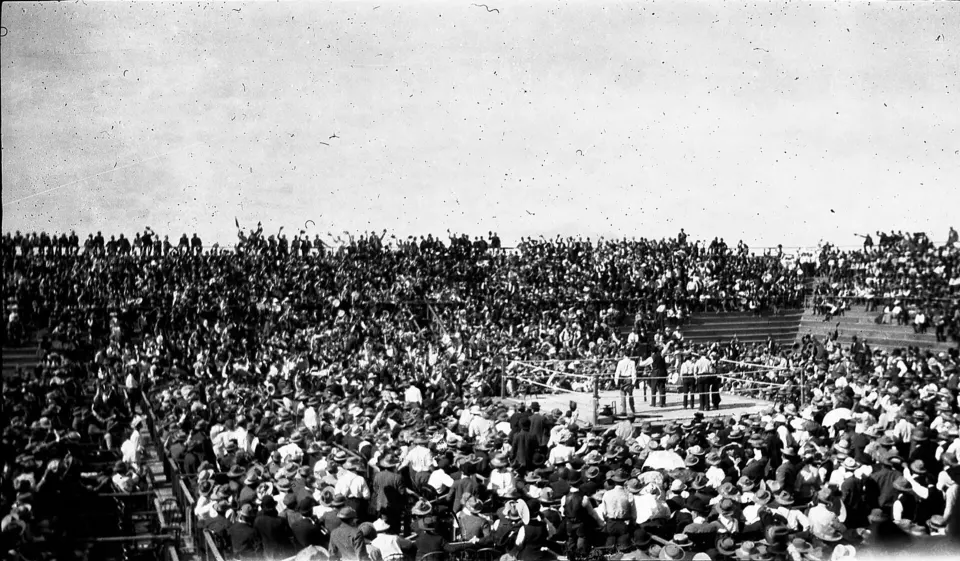
On St Patrick's Day 1897, in an open-air arena in Nevada's capital, Bob Fitzsimmons took the world heavyweight title from James J. Corbett with a body shot in the 14th round. A row of cameras beside the ring recorded every round, and the film that came out of Carson City ended up mattering to the movie business as much as the result mattered to boxing.
A Fight No Other State Would Take
Prizefighting in the 1890s lived on the edge of the law. The film's Wikipedia entry notes that 21 states banned it outright, and big bouts tended to land wherever a promoter could find a sympathetic sheriff or a quiet stretch of border. Fitzsimmons knew this better than most. In February 1896 he had stopped Peter Maher in Langtry, Texas, in a bout that Judge Roy Bean allowed to go ahead, and it gave him a disputed claim to the heavyweight crown. In December of that year he lost to Tom Sharkey in San Francisco when the referee, Wyatt Earp, ruled that Fitzsimmons' finishing blow had landed low.
Nevada offered a cleaner way through. The state legislature had only recently made prizefighting legal, and promoter Dan Stuart brought the championship to Carson City. The state's historical marker on the site says the decision drew harsh criticism from newspapers and pulpits in other states. Fans came anyway, by the thousands, and the marker describes it as Nevada's first world championship prizefight.
The Champion and the Blacksmith
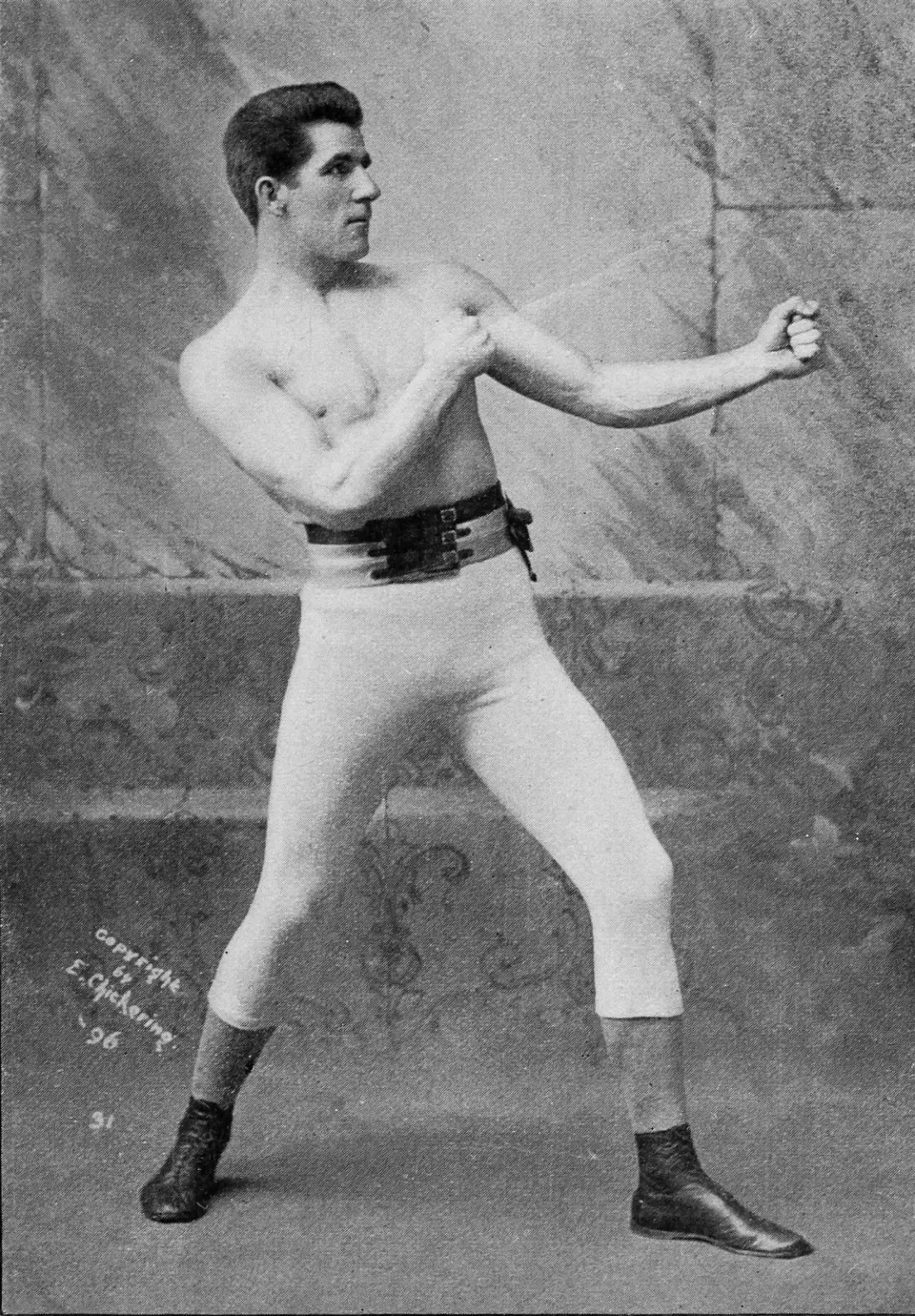
Corbett, born in San Francisco in 1866 and a bank clerk before he boxed for money, had held the title since September 1892, when he knocked out John L. Sullivan in the 21st round in New Orleans. Fans called him "Gentleman Jim," and he was known for footwork and timing where earlier champions had relied on brute force. He also knew what a camera could be worth. In 1894 he had boxed Peter Courtney at Thomas Edison's Black Maria studio in a bout staged for the Kinetoscope. Each round lasted only a minute because that was all the film the camera could hold, and the knockout in the sixth was arranged in advance.
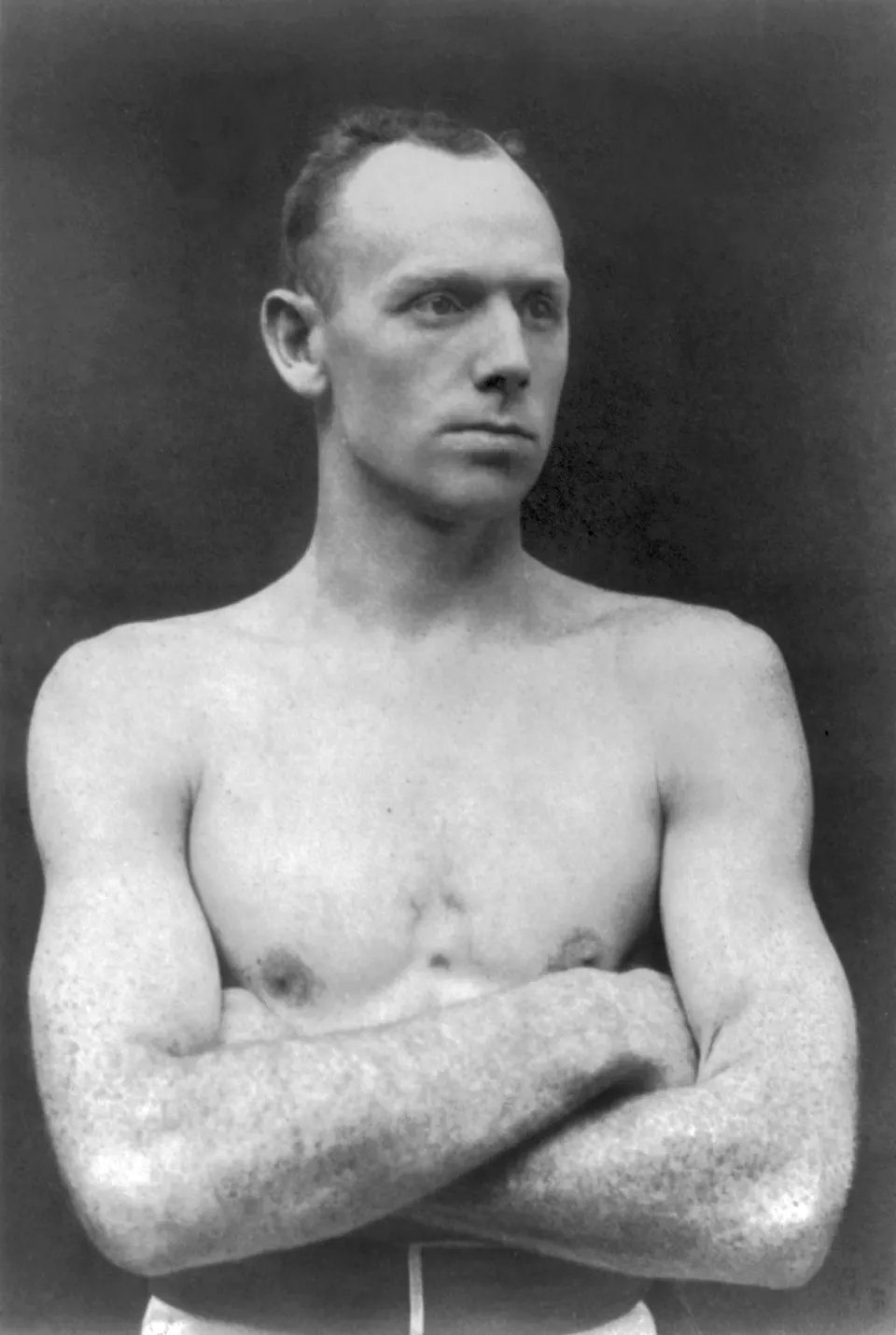
Fitzsimmons was born in Helston, Cornwall, in 1862 and grew up in New Zealand. He became world middleweight champion in 1891. Wikipedia's account of the Carson City fight puts Corbett about 17 pounds heavier on the night. RingTalk's own biography of Fitzsimmons covers his whole career. This piece stays with the afternoon in Nevada and the film it produced.
Three Cameras at Ringside
The filming was run by Enoch J. Rector, who had worked for the Kinetoscope Exhibition Company, for the newly formed Veriscope Company, with William A. Brady producing. Rector shot on 63mm film in a frame wider than the usual one. Its ratio of roughly 1.65 to 1 has led film historians to call it perhaps the first true widescreen footage ever shown in public. He brought 48,000 feet of film stock to Carson City, a record amount for the time, and used three cameras set side by side. Around 11,000 feet were exposed during the fight. Rector is often credited with the Latham loop, the device that let a camera run film continuously for long stretches, but that claim is contested.
The cameras affected the event itself. Stuart shrank the ring from 24 feet to 22 so it would fit the camera's view, and the referee, George Siler, made him restore the full size. Money was arranged around the film as well. Brady first agreed that a quarter of the film's earnings would go to him and Corbett. After Fitzsimmons objected, each boxer and his manager were given 25 percent, and Rector, Stuart and their backer Samuel J. Tilden Jr. split the other half. The Victorian Cinema database, which documents early film, links the $10,000 purse directly to the commercial interest in a motion picture.
Fight films had failed before. That same database records that an earlier attempt to film a Fitzsimmons bout in 1896 was ruined by dark skies and rain. Carson City gave Rector daylight, and he had the cameras in place to use it.
Thirteen Rounds of Corbett
Through most of the fight the champion was in control. Corbett boxed from long range, used his jab, and in the sixth round knocked Fitzsimmons down. Wikipedia's Fitzsimmons biography says Corbett badly marked his opponent's face with the jab, left hook and right hand. Fitzsimmons was bleeding but got up and kept pressing forward, and he began to target the body of a taller and heavier man who was hard to hit cleanly.
Fitzsimmons' wife, Rose, was at ringside. In a well-known story repeated in Wikipedia's Corbett biography, she shouted, "Hit him in the slats, Bob!", meaning the ribs and midsection. The story cannot be checked against the surviving film. It has stayed in the record because what followed fit it so well.
The Solar Plexus Punch
In the 14th round Fitzsimmons landed the blow remembered as the "solar plexus punch," a shot driven up under the ribs. It was essentially the punch Earp had ruled a foul against Sharkey three months earlier. This time it counted. Corbett went down doubled over and could not get up before the count of ten. Fitzsimmons was heavyweight champion of the world, and, according to Guinness as cited in RingTalk's Fitzsimmons biography, the lightest man ever to hold that title.
The film shows how the fight ended in an unplanned way. As the Wikipedia article on the film describes it, Corbett crawled out of frame after the knockout punch, so the camera no longer shows him above the waist at the moment he lost the title. The cameras also recorded the one-minute rests between rounds, along with an introduction featuring former champion John L. Sullivan and his manager, Billy Madden. Corbett later offered a $30,000 guarantee for a rematch. Fitzsimmons refused, and the Corbett entry suggests personal dislike was part of the reason.
A Hundred Minutes on a Theatre Screen
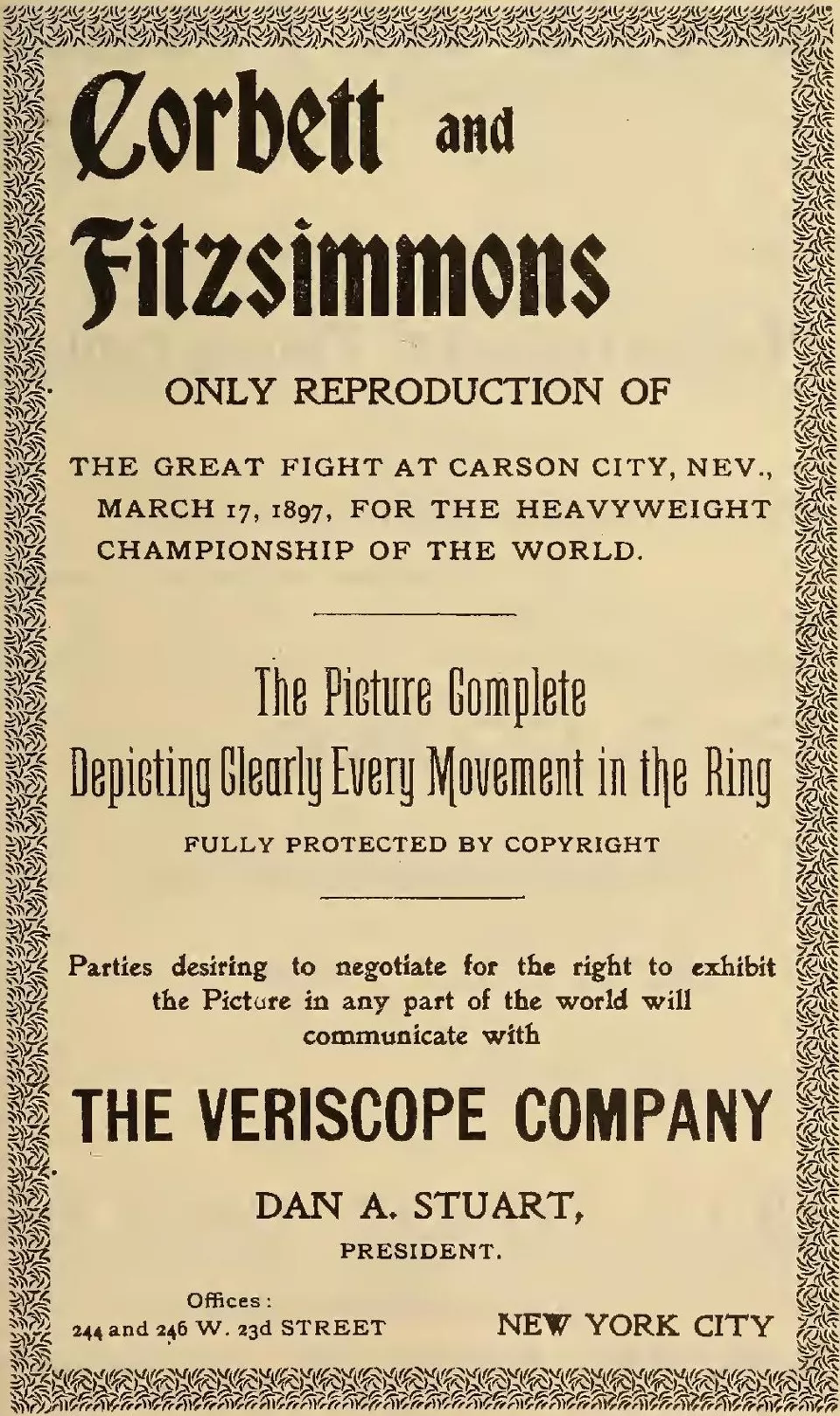
"The Corbett-Fitzsimmons Fight" premiered on 22 May 1897 at the Academy of Music in New York, with a live commentator narrating. It ran for more than 100 minutes, longer than any film released up to then, and some historians call it the world's first feature film. Eleven touring companies took it on the road. It reached Boston at the end of May, Chicago in June, San Francisco in July and London in September, and played Dublin in 1898. At Coney Island it was billed as "Corbett's Last Fight."
Estimates of its earnings differ widely. Brady put the net profit at $750,000, while film scholar Charles Musser estimated something nearer $100,000. Either way, the picture appears to have taken more at the box office than the fight took at the gate, which makes it an early version of pay-per-view.
The response was mixed. The Women's Christian Temperance Union pushed for a law to keep the film out of the mail, and a number of cities and states tried to ban it, mostly without success. A New York Times editorial found it "not very creditable to our civilization" that one of the most talked-about uses of the new veriscope was a prizefight. Who was buying tickets is also debated. Some accounts say women made up as much as 60 percent of the audience in Chicago. Historian Dan Streible has argued that figures like that largely came from the exhibitors' own publicity copy.
What Survives
Most of the film is gone. Only fragments remain, transferred to 35mm in the 1980s from a print owned by Jean A. LeRoy of New York using a specially built optical printer. In 2012 the Library of Congress added the film to the National Film Registry as culturally, historically or aesthetically significant. The arena itself is long gone. Nevada state marker No. 243 stands on the site and says the clean, well-run show helped other states loosen their prizefight laws. Film historian Luke McKernan later went further and wrote that "it was boxing that created the cinema."
Sources
- The Corbett–Fitzsimmons Fight, Wikipedia, accessed October 2026
- James J. Corbett, Wikipedia, accessed October 2026
- Bob Fitzsimmons, Wikipedia, accessed October 2026
- Corbett-Fitzsimmons Fight, Historical Marker No. 243, Nevada State Historic Preservation Office, accessed October 2026
- James J. Corbett, Who's Who of Victorian Cinema (victorian-cinema.net), accessed October 2026
- Robert Fitzsimmons, Who's Who of Victorian Cinema (victorian-cinema.net), accessed October 2026
- The Corbett-Fitzsimmons Fight (1897), Silent Era Progressive Silent Film List, accessed October 2026


