
How 42-1 Buster Douglas Knocked Out Mike Tyson in Tokyo
On 11 February 1990 Buster Douglas, grieving his mother and a 42-1 outsider, survived a disputed eighth-round knockdown and stopped the unbeaten Mike Tyson in the tenth round at the Tokyo Dome.

On 11 February 1990, in the Tokyo Dome, a 29-year-old from Columbus, Ohio who had been given almost no chance by anyone climbed off the canvas in the eighth round and knocked out the undefeated, undisputed heavyweight champion of the world two rounds later. James "Buster" Douglas against Mike Tyson remains the yardstick by which every boxing upset since has been measured.
An Unbeaten Champion and a Forgotten Contender
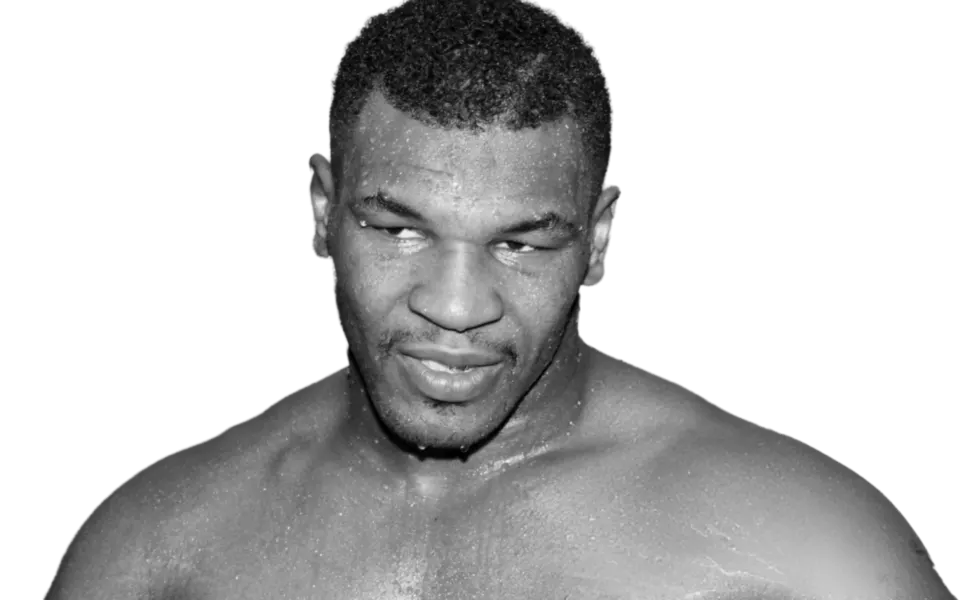
Mike Tyson arrived in Japan with a record of 37 wins and no defeats, 33 of them by knockout, and with all three major belts, the WBC, WBA and IBF, in his possession. The Ring ranked him the best fighter in the world regardless of weight. His previous outing, against Carl "The Truth" Williams, had lasted 93 seconds, and the Tokyo date was widely treated as a stop on the way to a far bigger night against Evander Holyfield, who sat at ringside.
Away from the ring, however, the champion's world had been coming apart. His marriage to Robin Givens had collapsed in public, his management was contested between Bill Cayton and Don King, and he had parted ways with Kevin Rooney, the trainer who had shaped him since his teenage years. According to Wikipedia's account of the fight, Tyson was even dropped in sparring by former champion Greg Page roughly three weeks before the bout.
Douglas, by contrast, was ranked seventh by The Ring and carried a record of 29-4-1 with 19 knockouts. The son of former professional fighter William "Dynamite" Douglas, he had already had one title shot, against Tony Tucker in 1987, and had been stopped in the tenth round. A run of six straight wins, including victories over former champion Trevor Berbick and future champion Oliver McCall, had earned him a second chance. Few believed he would make much of it.
Forty-Two to One at the Mirage
The fight was considered so lopsided that, according to Douglas's Wikipedia biography, only one Las Vegas sportsbook bothered to post a line at all. That book was at the Mirage, run by veteran oddsmaker Jimmy Vaccaro. As InGame recounted on his retirement in 2025, Vaccaro opened Tyson as a 27-1 favourite; heavy money on the champion pushed the price upward until Douglas stood at 42-1, the number that has since become part of betting folklore.
Purses reflected the same expectation. Tyson was paid $6 million, Douglas $1.3 million. Even the broadcast team for HBO, according to the Wikipedia summary of the telecast, spent part of the evening anticipating another early finish rather than examining the challenger's chances.
A Fighter Carrying Grief Into the Ring
What the betting markets could not price was what Douglas had lived through in the weeks before the fight. His mother, Lula Pearl Douglas, died of a stroke at the age of 46. The Associated Press, in its fight-night report, gave the date as 18 January 1990; Wikipedia places it 23 days before the bout, which would be a day later. Either way, Douglas buried his mother roughly three weeks before the biggest night of his career.
The trouble did not end there. The mother of his son was seriously ill with a kidney ailment, and, according to Wikipedia, Douglas himself came down with influenza the day before the fight. He went to Tokyo anyway, and he went with a plan built around his height, his reach and his jab.
Seven Rounds of the Jab
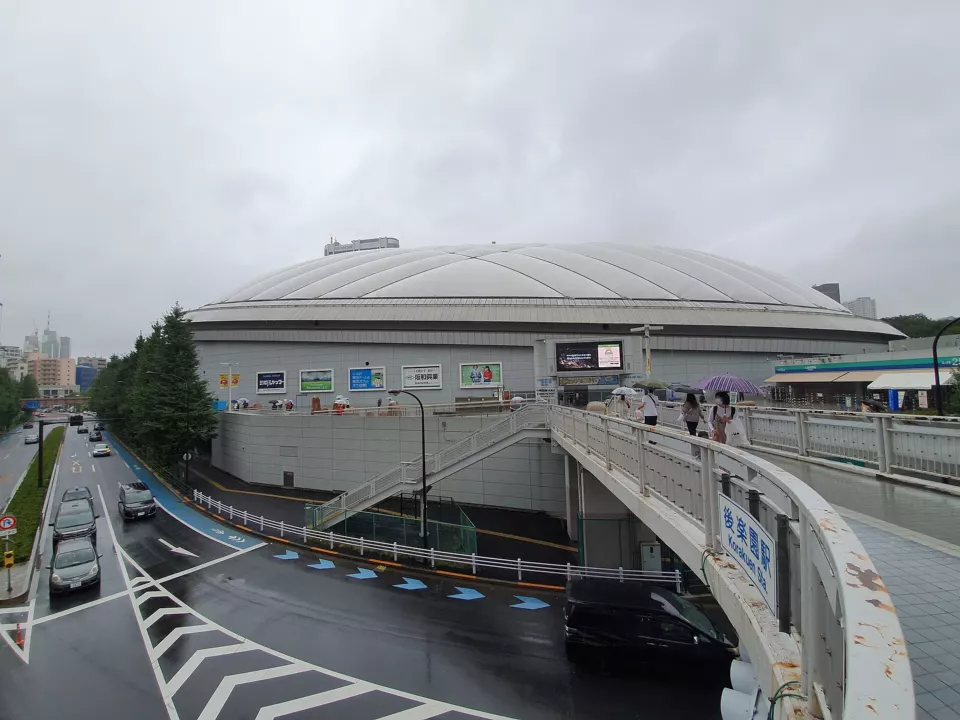
In front of a crowd that the AP put at about 40,000 and that AFP, looking back in 2024, described as more than 45,000, the fight did not follow the script from the first bell. Douglas kept Tyson at the end of a long, stiff right-handed jab and followed it with right hands whenever the champion tried to close the distance. Tyson, normally relentless in cutting off the ring, spent long stretches walking forward without throwing in combination.
Round by round, the damage accumulated around Tyson's left eye. By the middle rounds it was badly swollen, and his corner was exposed in a way that later drew heavy criticism. Lacking an enswell, the small metal tool cornermen press against swelling, Tyson's seconds, led by Aaron Snowell and Jay Bright, filled a latex glove with ice water and held it to the eye between rounds. James Sterngold, who covered the fight for The New York Times, later told AFP that the champion appeared not to care, a sense shared by many who watched him that night.
The Eighth-Round Knockdown and the Long Count
Late in the eighth round, with Douglas apparently in control, Tyson found the punch he had been looking for all night. With fewer than ten seconds left in the round, he landed a heavy right uppercut that put Douglas on the canvas for the first time in the fight.
What happened next became the most argued-over count in modern heavyweight history. Mexican referee Octavio Meyran picked up the count, and Douglas rose as Meyran reached nine; the bell then ended the round before Tyson could follow up. The problem was timing. The official knockdown timekeeper had started counting the moment Douglas hit the floor, while Meyran, according to Wikipedia, began his own count roughly two beats behind. By that reading, Douglas was on the canvas for longer than ten seconds. Douglas himself, quoted by the AP, put the knockdown down to his own lapse: "I got careless and he hit me with a good shot."
The Ninth and the Tenth
If the knockdown had changed the fight's momentum, it did not show. Douglas came out for the ninth round and went straight back to work, landing a four-punch combination and closing Tyson's damaged eye completely. Tyson survived the round, but only just.
In the tenth, a little past the one-minute mark, Douglas landed a right uppercut that snapped Tyson's head back, then followed with a left and a right to the head. Tyson went down in Douglas's corner for the first time in his professional career. As he searched the canvas for his mouthpiece and tried to push it back in, Meyran counted him out. The AP recorded the time as 1:23 of the tenth round.
At the moment of the stoppage, the fight was close on two of the three official cards. The AP reported that Japanese judge Ken Morita had Tyson ahead 87-86, Masakazu Uchida had it even at 86-86, and American judge Larry Rozadilla had Douglas ahead by a wide margin. The AP gave Rozadilla's card as 88-82; Wikipedia lists it as 88-83.
"I wanted it for my mother. God bless her," Douglas said afterwards, according to the AP.
Don King's Protest
The result was not immediately accepted. Tyson's promoter, Don King, lodged a protest arguing that Douglas had been knocked out in the eighth round and that the referee's late start had saved him. "He was down for 12 seconds," King said, as reported by the AP. Initially the WBA and WBC suspended recognition of Douglas as champion while the complaint was reviewed. The IBF, by contrast, recognised the new champion at once.
The reaction against the protest was swift and widespread. Four days after the fight, amid public outcry, the protest was withdrawn and Douglas was recognised by all three organisations as the undisputed heavyweight champion.
A Short Reign and a Lasting Upset
Douglas's time at the top was brief. He made his first defence against Holyfield in Las Vegas on 25 October 1990, came in 15 pounds heavier than he had been in Tokyo, at 246 pounds, and was knocked out in the third round. His purse that night was reported at $24.6 million.
Tyson's loss, meanwhile, prompted a long reckoning over what had gone wrong. Commentators including HBO's Larry Merchant pointed to the departure of Kevin Rooney and the makeshift corner that replaced him. Many observers regarded the result as an aberration rather than proof that Douglas was the better fighter. None of that changes the record. At 42-1, with a broken heart and a fever, Douglas did what no one before him had done, and the Tokyo Dome night is still the first fight named whenever boxing talks about upsets. When the Dome hosted a world title fight again in 2024, AFP quoted Japanese boxing writer Shoji Tsue recalling that everyone had assumed Tyson simply could not lose.
Sources
- Mike Tyson vs. Buster Douglas, Wikipedia, accessed October 2026
- Buster Douglas, Wikipedia, accessed October 2026
- Tyson, Boxing World Floored -- Douglas' 10th-Round KO Among Biggest Upsets, The Associated Press via The Seattle Times, 11 February 1990
- No place like Dome: Boxing back at Tyson-Douglas Tokyo upset venue, AFP via Gulf News, 2 May 2024
- Jimmy Vaccaro Retires After 50 Years in Las Vegas Sports Betting, Jill R. Dorson, InGame, 20 August 2025


