
Buster Douglas Biography, Age, Hometown and the Night He Beat Mike Tyson
Buster Douglas, born in Columbus, Ohio, in 1960, knocked out Mike Tyson as a 42-1 underdog in 1990 and retired with a 38-6-1 record, 25 by KO.
James "Buster" Douglas was born in Columbus, Ohio, on April 7, 1960, and he is 66 years old as of November 2026. He is the heavyweight who knocked out Mike Tyson in Tokyo on February 11, 1990, ending Tyson's unbeaten run in what is widely called the biggest upset in boxing history. Douglas was a 42-1 underdog that night. He lost the title in his first defense, to Evander Holyfield, and retired with a record that Wikipedia lists as 38 wins, 6 losses and 1 draw, 25 of the wins by knockout.
A Columbus Kid with a Boxing Father
Douglas was born James Douglas in Columbus. His father, William "Dynamite" Douglas, was a professional boxer, and the son grew up around the sport. He was also a serious basketball player. His Linden McKinley High School team won the Class AAA state title in 1977, and he went on to play at Coffeyville Community College, Sinclair Community College and Mercyhurst University on a scholarship before he came back to Columbus and committed to boxing.
That background matters for how he fought. Douglas was tall, with a reach Wikipedia puts about twelve inches longer than Tyson's, and at his best he used a stiff jab and his size to keep opponents at the end of his punches.
Early Professional Years and the Setbacks
He made his professional debut on May 31, 1981, with a win over Dan O'Malley. His first loss came the same year, a second-round knockout by David Bey. In October 1982 he fought Steffen Tangstad of Norway to a draw, and Wikipedia notes that a two-point penalty decided the scorecards. Mike White stopped him in the ninth round in December 1983, and Jesse Ferguson beat him by majority decision in 1985.
The most important defeat of that stretch came in 1987. Douglas fought Tony Tucker for the vacant IBF heavyweight title and was stopped in the tenth round. He had shown he could reach a title fight but had not shown he could finish one.
The Road to Tokyo
In 1989 Douglas beat Trevor Berbick and Oliver McCall, both by unanimous decision, and those wins put him in line to face the undisputed champion. Tyson was then 37-0 and carried the WBA, WBC and IBF belts. The fight was set for the Tokyo Dome on February 11, 1990. Wikipedia reports that the Mirage was the only Las Vegas casino to post odds, and that Douglas was a 42-1 underdog.
His preparation was overshadowed by loss. His mother, Lula Pearl Douglas, died of a stroke on January 18, 1990, 23 days before the fight. She was 46. Douglas later told ESPN that when Larry Merchant asked him about her in the post-fight interview, it "broke it all down."
Tyson vs. Douglas, February 11, 1990
Douglas boxed the fight the way his corner had hoped. He jabbed, moved his head, tied Tyson up when the champion got inside, and used a reach advantage of about twelve inches. By the fifth round Tyson's left eye was swelling shut. Tyson had trouble getting past the jab and was losing the rounds.
In the eighth round Tyson landed an uppercut and Douglas went down. Douglas said later that he stopped fighting for a moment and just looked at Tyson. The count became a controversy. Wikipedia says that both men received long counts during the fight, and ESPN reports that promoter Don King argued that referee Octavio Meyran gave Douglas one, which led to lawsuits and a long break between King and Douglas. Douglas got up and finished the round, and he came back in the ninth round to take control again.
The finish came in the tenth. Douglas landed a four-punch combination, and Tyson went down and could not beat the count. Sources disagree by a second on the time: Wikipedia gives 1:22 of the tenth round, while a UPI report and BoxRec's listing give 1:23. Douglas took the WBA, WBC and IBF titles. King's protest was withdrawn four days later, and Douglas was recognized as undisputed champion. Merchant said on air that the result made Cinderella look like a sad story.
Parades, a Referee's Whistle and a Short Reign
Thousands met Douglas at the airport in Columbus, and the city held a parade for him. He also worked as the special guest referee at the WWF's The Main Event III on February 23, 1990, a match between Hulk Hogan and Randy Savage.
His reign lasted just one fight. On October 25, 1990, at the Mirage in Las Vegas, Douglas defended against Evander Holyfield. He weighed about 246 pounds and looked slow. Holyfield caught him with a right hand after a telegraphed uppercut and knocked him out at 1:10 of the third round. Wikipedia reports a payday of $24.6 million, and Douglas retired after the fight. In the ESPN interview he named it the loss he regrets most from that period.
Illness and the Comeback
Away from the ring, Douglas gained weight until he was close to 400 pounds. In 1994 he fell into a diabetic coma, which ESPN and Wikipedia both report along with the weight gain. He returned to boxing in 1996.
The second career was uneven. In 1997 he beat Louis Monaco by disqualification after Monaco hit him after the bell. In 1998 Lou Savarese knocked him out in the first round of a fight for the vacant IBA heavyweight title. Douglas won his last two fights and retired in 1999.
Family and Life After the Ring
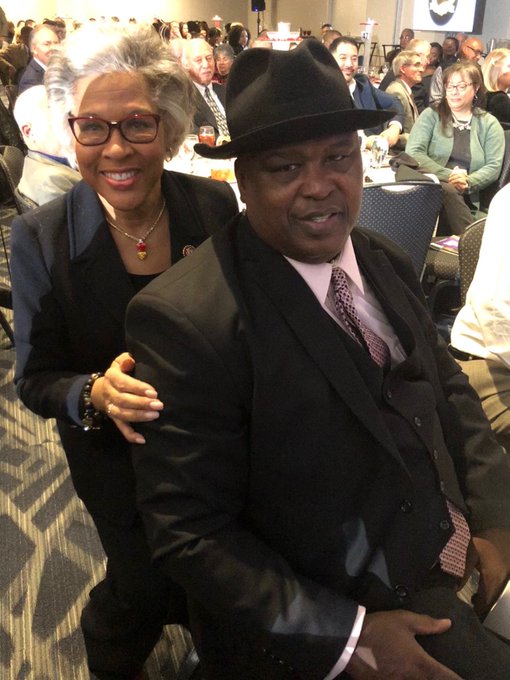
Douglas married Bertha M. Paige on July 2, 1987. He filed for divorce in April 1990, but the two reconciled, and they have four sons. He was inducted into the Columbus Hall of Fame in 1991 and the Atlantic City Boxing Hall of Fame in 2024. As of 2020, he coached youth boxing at the Thompson Community Center in Columbus.
The Tyson fight kept its place in popular culture. HBO's 1995 film Tyson featured Duane Davis as Douglas, The Killers wrote the song "Tyson vs Douglas," and ESPN's 30 for 30 film 42-1 premiered on December 11, 2018.
Professional Record and Titles
Wikipedia's infobox lists 38 wins, 6 losses and 1 draw, with 25 wins by knockout. The article is not fully consistent with itself, because its record section gives 45 fights and 37 wins while the infobox gives 46 fights and 38 wins, so treat the exact totals as approximate. Douglas won the WBA, WBC and IBF heavyweight titles by knocking out Mike Tyson on February 11, 1990, and he lost all three to Evander Holyfield on October 25, 1990. His six defeats came against David Bey, Mike White, Jesse Ferguson, Tony Tucker, Evander Holyfield and Lou Savarese.
Sources
- Buster Douglas, Wikipedia, accessed November 22, 2026
- James 'Buster' Douglas recounts the biggest upset in boxing history, ESPN, 2018
- Buster Douglas saw something of life's cycles in 1990, UPI, December 27, 1990
- Mike Tyson vs. James (Buster) Douglas, BoxRec fight listing, accessed November 22, 2026


