
Hatton vs Tszyu in 2005 Was the Night Manchester Stayed Up to Crown Ricky Hatton
In the early hours of a June morning in 2005, Ricky Hatton wore down long-reigning champion Kostya Tszyu before 22,000 fans at the MEN Arena. Tszyu stayed on his stool after eleven rounds, handing Hatton the IBF light-welterweight title.

On a June night in 2005, 22,000 people stayed awake in Manchester to watch Ricky Hatton, an unbeaten local favourite with only a minor belt, take on Kostya Tszyu, the long-reigning king of the 140-pound division. After eleven punishing rounds Tszyu stayed on his stool, and Hatton left the ring as IBF light-welterweight champion of the world.
A Champion From Sydney, a Challenger From Manchester
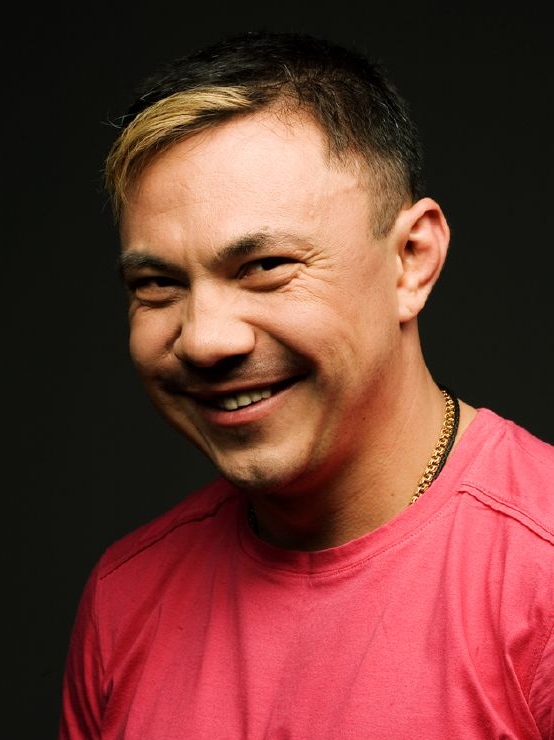
By the summer of 2005 Kostya Tszyu had been the reference point of the light-welterweight division for the better part of a decade. Born in Russia and settled in Australia, where he was treated as a national sporting hero, he arrived in England at 35 years old with a record of 31 wins, 25 by knockout, and a single defeat. That loss had come in 1997 against Vince Phillips, and in the years since he had beaten names such as Zab Judah and Julio César Chávez. Going into Manchester he held the IBF title and The Ring magazine's championship at 140 pounds, and he was widely ranked among the best fighters in the world regardless of weight.
Ricky Hatton was 26 and undefeated in 38 professional fights. He was a hugely popular attraction at home, but his WBU belt was regarded as a lesser title, and much of the boxing world still saw him as a big-hearted British crowd favourite rather than a genuine rival for an elite champion. Most observers made Tszyu the clear favourite.
Fighting in the Small Hours for American Television
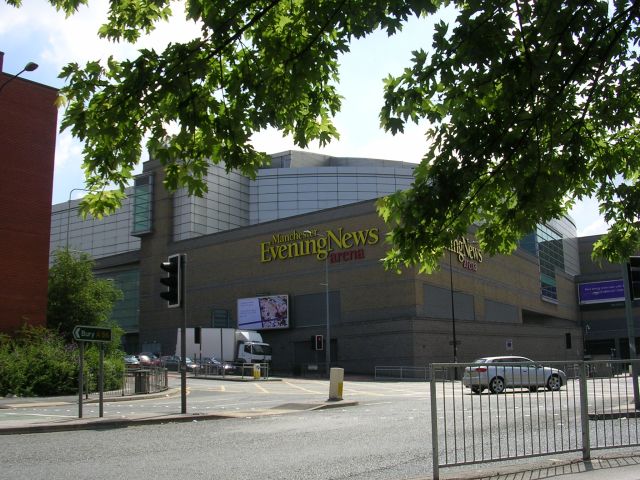
The fight was billed for Saturday, 4 June 2005, at the MEN Arena, but the schedule was built around the American broadcaster Showtime. Contemporary ringside reports from The Sweet Science and Boxing News put the start at around or after 2am Manchester time, so that the bout could reach US viewers in their evening, which is why some accounts date the result to 5 June. The Wikipedia article on the fight gives a different figure, 11pm local time; the reporters who were in the building describe the later, early-morning start.
The hour did not thin out the crowd. The arena was sold out with about 22,000 spectators, most of them there for Hatton, and ringside guests reported by Sky Sports included the actor Russell Crowe and the former heavyweight champion Frank Bruno. Accounts of the build-up also note that Hatton had prepared for the late start by training at 2am, getting his body used to working at the hour he would actually fight.
Rounds One to Six: Hatton Starts Fast, Tszyu Finds His Range
Hatton came out at the pace that had made him popular, crowding the champion, digging left hooks to the body and throwing uppercuts on the inside. The opening two rounds went his way in the main ringside reports, though they were also full of clinching, and referee Dave Parris warned Hatton for hitting behind the head.
From the third round Tszyu began to settle. He measured Hatton with his right hand, worked the body himself and started timing the challenger as he came forward. The Sweet Science's round-by-round account has Hatton catching a short right in the fourth and then producing some of his best work in the fifth, countering Tszyu's punches instead of simply walking through them. The middle of the fight was close and competitive, and the champion's composure suggested the early burst might fade.
Rounds Seven to Nine: Low Blows and a Rough Turn
The seventh round belonged largely to Tszyu, who controlled distance with his jab and lead left hook. Late in the round one of his left hooks to the body strayed below the belt and Hatton sank to his haunches. Sources describe this moment differently: Wikipedia calls it an illegal low blow that put Hatton down, while Boxing News records that the punch went low but that the action was not held up for long, and neither ringside report treats it as an official knockdown.
The eighth was messy, with plenty of holding, and late in the round Tszyu tripped Hatton and pushed him to the canvas near the ropes. In the ninth Hatton raised his output again and pushed the champion back to the ropes. Tszyu was warned after body shots drifted low, and soon afterwards Hatton sank a left hook into Tszyu's protective cup that sent the champion to the floor. Tszyu was given time to recover and Hatton was admonished. Wikipedia describes Hatton's punch as a deliberate retaliation; the ringside reports record the warnings to both men without settling the question of intent.
Rounds Ten and Eleven: The Pressure Breaks Through
Whatever the merits of the fouls, the fight swung decisively after the ninth. Hatton was clearly the fresher man. In the tenth he landed a series of leaping left hooks, and Tszyu showed signs of exhaustion along with swelling under his left eye. In the eleventh Hatton found a home for right hands and kept the champion pinned on the ropes, and Boxing News noted Tszyu was bleeding from the mouth. The reports describe the final stretch as Hatton bullying the older man around the ring, leaning on him, smothering his counters and never allowing a pause.
The Decision in Tszyu's Corner
When the eleventh round ended, the fight was still officially undecided, with one round left. According to Boxing News, Parris went first to Hatton's corner to remind them that a round remained and then crossed the ring to Tszyu's. There, trainer Johnny Lewis told his fighter it was time to stop. The Sweet Science reported that Lewis asked whether Tszyu wanted to continue and, receiving no answer, made the decision for him. The champion did not come out for the twelfth, and the result went into the record as a retirement after eleven rounds.
Hatton was ahead on all three scorecards when it ended: 107-102, 106-103 and 105-104.
Aftermath: A New Champion and an Old One Walks Away
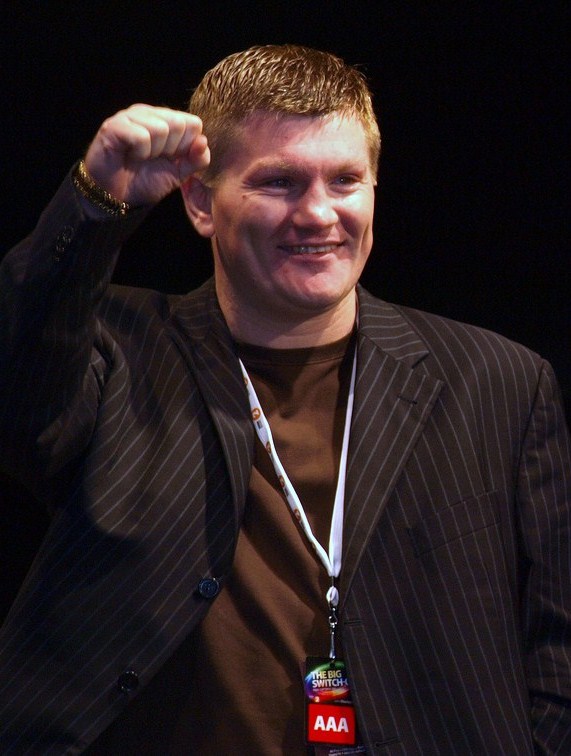
Both men were gracious afterwards. Tszyu admitted to reporters that he had been beaten by the better fighter on the night and spoke of being hurt early and tiring as the fight went on, while Hatton described beating a fighter of Tszyu's standing as the realisation of everything he had worked for. Tszyu never boxed again; the Manchester defeat proved to be the last fight of his career.
For Hatton the night was transformative. The Ring named him its Fighter of the Year for 2005, an award covering this win and his later victory over Carlos Maussa that year, and the performance remains, in most retrospective accounts, the peak of his career. Fifteen years later Sky Sports' Adam Smith still described it as the night Hatton conquered the world, and Boxing News marked the anniversary with a headline saying Hatton had defied belief. It was a win built on volume, nerve and conditioning, achieved in the early hours of the morning in front of his own city.
Sources
- Ricky Hatton vs. Kostya Tszyu, Wikipedia, accessed October 2026
- Hatton Stops Tszyu in Stunner, Jake Donovan, The Sweet Science, 5 June 2005
- Ricky Hatton Shocks Kostya Tszyu with TKO Victory, The Sweet Science, 5 June 2005
- On this day: Ricky Hatton defies belief to stop the great Kostya Tszyu, Claude Abrams, Boxing News, 3 June 2018
- Ricky Hatton toppled Kostya Tszyu to conquer the world 15 years ago, Adam Smith, Sky Sports, 5 June 2020


