
How Julio César Chávez Went From a Railroad Car to Mexico's Greatest Champion
The life of Julio César Chávez, from his railway-family childhood in Ciudad Obregón and Culiacán to an unbeaten run of 90 fights, titles at three weights and a long recovery from addiction.

Julio César Chávez came out of a railway family in northwestern Mexico, went unbeaten through his first 90 professional fights, won world titles at three weights and drew one of the largest crowds in boxing history. His later years brought defeats, addiction and, eventually, a long recovery that he now tries to pass on to others.
A Railroad Boyhood in Ciudad Obregón and Culiacán
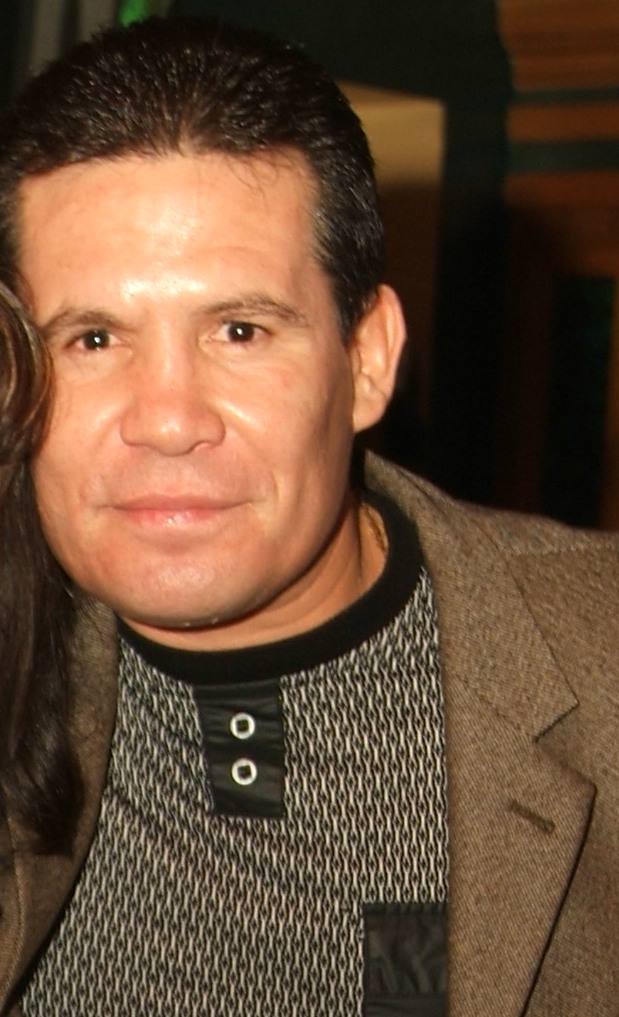
Chávez was born on July 12, 1962, in Ciudad Obregón, in the state of Sonora. His father, Rodolfo Chávez, worked for the railroad and had been transferred to Obregón, and the World Boxing Council's own birthday tribute to the fighter says he was born in a train wagon. Wikipedia's account describes the family, with ten children in all, living in an abandoned railroad car before money allowed them to rent a small house. The household eventually settled in Culiacán, Sinaloa, the city Chávez would always treat as home.
He was not a boy who lived for boxing alone. The WBC describes him as a gifted all-round athlete who played baseball, soccer and volleyball. What drew him into the gym was family: his older brothers boxed. His first trainer was a local coach known as El Zurdo López, and Ramón Félix became his manager. The amateur phase was brief, around 14 bouts according to the WBC, and Chávez turned professional at 17.
From Culiacán Undercards to a World Title
Chávez made his professional debut on February 5, 1980. For his first few years he fought mostly in Culiacán and Tijuana, building a record far from the main television markets while climbing the regional rankings in California. Boxing News reports that, as a teenager starting out, he promised his mother he would quit the sport after his first defeat. It was a promise that would not be tested for 14 years.
The breakthrough came on September 13, 1984, when he stopped Mario "Azabache" Martínez in the eighth round to win the vacant WBC super featherweight title. He held that belt for more than three years and defended it nine times. In 1987 the Boxing Writers Association of America named him its Fighter of the Year.
Lightweight and the Rise to Pound-for-Pound No. 1
On November 21, 1987, Chávez moved up to lightweight and took the WBA title from Edwin "El Chapo" Rosario. Less than a year later, on October 29, 1988, he added the WBC lightweight belt, and The Ring recognised him as its lightweight champion as well. He did not stay long. On May 13, 1989, he won the WBC light welterweight title, completing championships in three divisions before his 27th birthday.
By February 1990 The Ring ranked him the best fighter in the world, pound for pound, a position its records show he held until September 1993. The style behind that ranking was relentless pressure and a punishing body attack, and his inspiration, by Boxing News' account, came from earlier Mexican champions such as Salvador Sánchez and Raúl Macías.
Two Seconds Against Meldrick Taylor, 1990
The fight that defined his reputation took place on March 17, 1990, at the Las Vegas Hilton. Billed as "Thunder Meets Lightning," it matched Chávez's WBC light welterweight title against the IBF belt held by Meldrick Taylor, the 1984 Olympic gold medallist. For most of the night Taylor's hand speed earned him the rounds. Entering the final seconds, two of the three judges had him ahead, Dave Moretti by 107-102 and Jerry Roth by 108-101, while Chuck Giampa had Chávez in front by 105-104.
In the 12th round Chávez dropped the exhausted Taylor. Taylor rose, but referee Richard Steele judged that he had not responded properly and waved the fight off with two seconds left on the clock. The stoppage has been argued about ever since. The Ring named the bout its Fight of the Year for 1990 and later its Fight of the Decade, and that same year it chose Chávez as its Fighter of the Year. Taylor later wrote a memoir titled "Two Seconds From Glory."
The Azteca Crowd and Greg Haugen, 1993
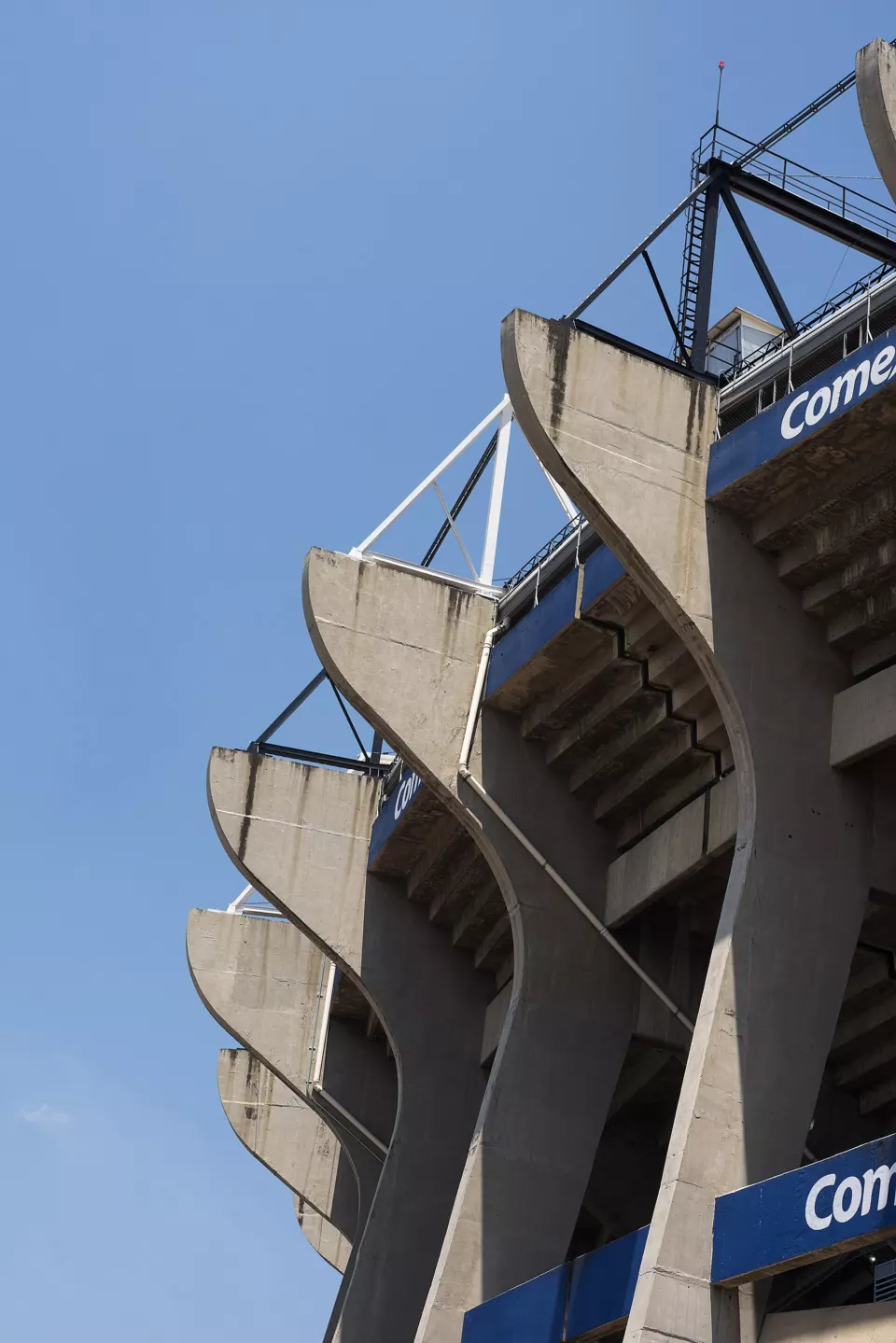
On February 20, 1993, Chávez defended his title against the American Greg Haugen at the Estadio Azteca in Mexico City, the national football stadium. The attendance is usually treated as a record for a boxing event, but the published figures do not match exactly. Wikipedia gives 136,274, the WBC says more than 136,000 and calls it a Guinness record, and Boxing News uses 132,247. All of them describe a crowd of well over 130,000. Chávez stopped Haugen in the fifth round.
The Whitaker Draw in San Antonio
Seven months later, on September 10, 1993, Chávez moved up to welterweight to challenge Pernell Whitaker for the WBC title at the Alamodome in San Antonio, Texas. He had won 87 straight fights. Whitaker outboxed him for long stretches, but the official result was a majority draw: judge Jack Woodruff scored it 115-113 for Whitaker, and Mickey Vann and Franz Marti both had it 115-115. Whitaker kept his belt and Chávez kept his unbeaten record.
Few people agreed with the verdict. Showtime's commentary team had Whitaker winning clearly. According to Wikipedia, which also cites unofficial cards from the Associated Press, The Ring and Sports Illustrated all favouring Whitaker, punch statistics showed him landing 311 punches to Chávez's 220. Boxing News reports that Vann later said he had deducted a point from Whitaker for a low blow in the sixth round without telling anyone officially, and that Whitaker's camp protested to the Texas licensing authorities. There was never a rematch. Years later, according to Boxing News, Chávez said Whitaker had "probably" been his toughest opponent.
Frankie Randall and the End of the Streak
The unbeaten run ended on January 29, 1994, at the MGM Grand Garden Arena in Las Vegas, where Frankie Randall won a split decision and took the WBC light welterweight title. Chávez was 89-0-1 going in. He won the belt back from Randall on May 7, 1994, and later that year met Meldrick Taylor a second time, a fight Boxing News describes as coming against a much-diminished Taylor. He and Randall would eventually meet three times.
Oscar De La Hoya ended his second title reign on June 7, 1996, stopping him in four rounds after a cut from training reopened. They met again on September 18, 1998, for De La Hoya's WBC welterweight title, and Chávez was stopped after eight rounds. Boxing News calls both fights one-sided.
The Long Goodbye
Chávez kept fighting well past his peak. His final bout came on September 17, 2005, against Grover Wiley, when he retired on his stool between the fourth and fifth rounds. His final record over 115 professional fights was 107 wins, 6 losses and 2 draws, with 86 wins inside the distance. Boxing News notes that from 1980 to 1998 he had gone 99-2-2. He took part in 37 world championship fights, 35 of them under the WBC banner, according to the sanctioning body.
The International Boxing Hall of Fame announced his election in 2010 and he was inducted with the class of 2011. ESPN placed him 24th on its list of the 50 greatest boxers, and The Ring ranked him 18th among the best fighters of its first 80 years.
Addiction and Recovery
Away from the ring, Chávez struggled for years with cocaine and alcohol and went through rehabilitation more than once. The sources do not agree on a precise starting date for his sobriety: Boxing News says he has been sober since 2011, while the WBC, writing in July 2022, described him as 13 years sober. Both present him as having stayed clean for well over a decade.
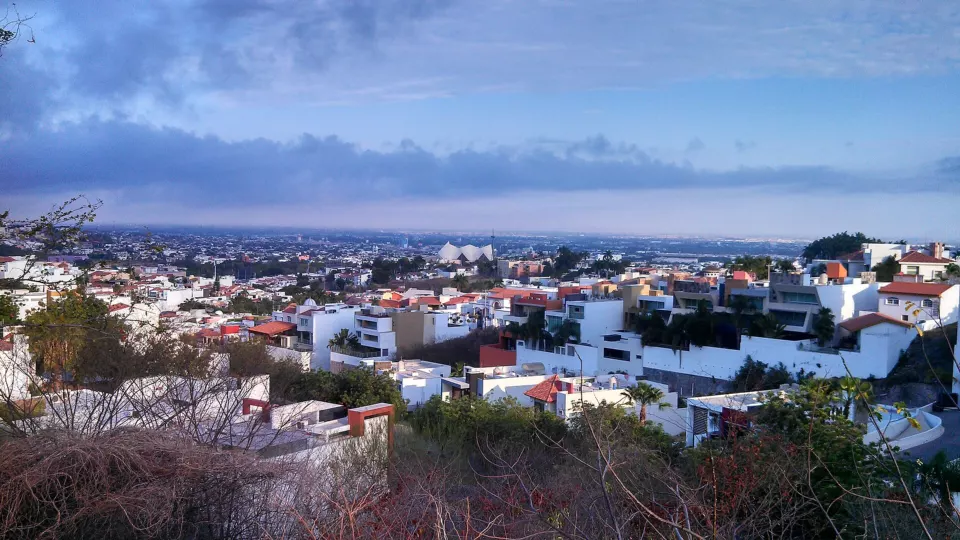
He has made recovery part of his public work. The WBC reports that he runs two rehabilitation clinics called Baja del Sol, one in Tijuana and one in Culiacán, aimed at helping people overcome addiction. He also works as a television analyst for ESPN and TV Azteca. His sons Julio César Chávez Jr., a former WBC middleweight champion, and Omar Chávez also became professional boxers. In 2017 tragedy reached the family again when his brother Rafael was killed during a robbery.
Asked about life after boxing, Chávez told Boxing News: "I don't miss anything as a boxer."
Sources
- Julio César Chávez, Wikipedia, accessed October 2026
- Julio César Chávez vs. Meldrick Taylor, Wikipedia, accessed October 2026
- Pernell Whitaker vs. Julio César Chávez, Wikipedia, accessed October 2026
- Round 12: Julio César Chávez, el gran campeón mexicano, 60th birthday, World Boxing Council, July 2022
- Long read: The one and only Julio Cesar Chavez, Boxing News
- On this day: Julio Cesar Chavez salvaged controversial draw with Pernell Whitaker, Boxing News


