
Pernell Whitaker Was the Norfolk Southpaw Who Made Defense an Art
From Norfolk to Olympic gold in 1984, undisputed lightweight rule and titles in four divisions, Pernell 'Sweet Pea' Whitaker became one of boxing's greatest defensive fighters, despite the disputed Chávez draw, the De La Hoya decision and a troubled life after the ring.

Pernell Whitaker made a career out of not getting hit. The southpaw from Norfolk, Virginia, won Olympic gold in 1984, ruled the lightweight division outright, collected world titles in four weight classes and walked away from his most famous night with a draw almost nobody believed. His life outside the ring was harder, and it ended on a Virginia Beach roadway in July 2019.
Norfolk Beginnings and a Long Amateur Apprenticeship
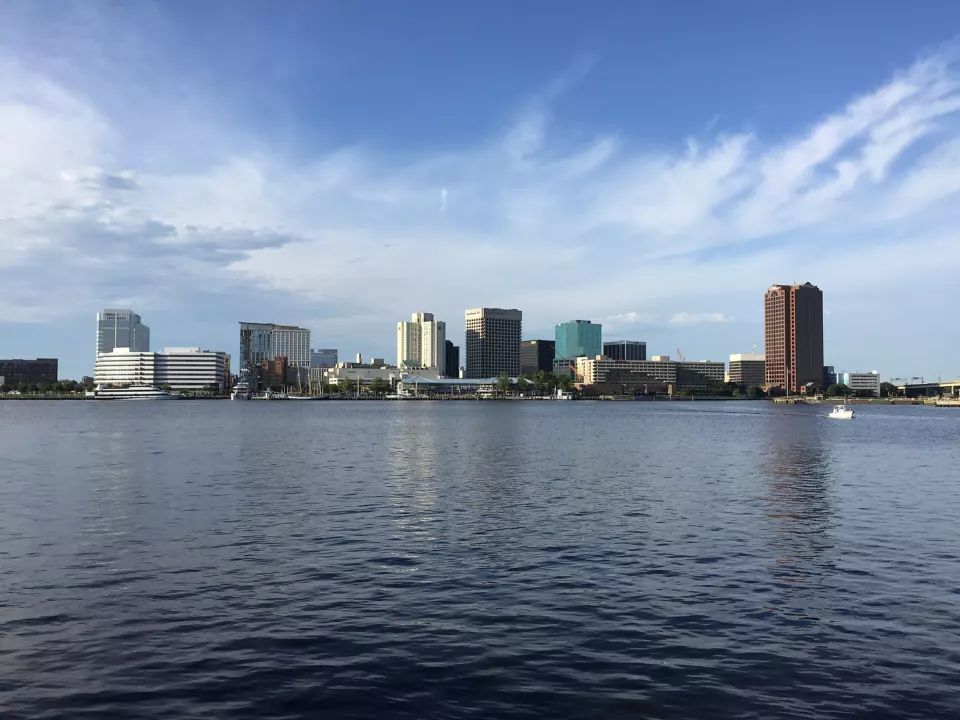
Whitaker was born in Norfolk, Virginia, on January 2, 1964, one of seven children of Raymond Whitaker Sr. and Novella Whitaker. He came to be known everywhere as "Sweet Pea." He graduated from Booker T. Washington High School in 1982, and by then boxing had already taken over his life.
The official amateur ledger credits him with 201 wins in 214 bouts, 91 of them by knockout, although Whitaker himself liked to say he had fought as many as 500 times. At 18 he reached the final of the 1982 World Championships at lightweight and came away with silver. A year later in Caracas he won gold at the Pan American Games.
Gold in Los Angeles, 1984
At the 1984 Los Angeles Olympics, Whitaker beat Puerto Rico's Luis Ortiz in the lightweight final to win gold. He shared that American team with a group of future professional stars, Evander Holyfield among them. When Whitaker died, Holyfield remembered his old teammate for ESPN as a man who was "small in stature but yet so big in heart and skills inside the ring."
He turned professional almost at once under the Main Events promotional banner, with Lou Duva and George Benton in his corner and Shelly Finkel as his manager. Benton is generally credited with refining the shoulder-roll defense, often called the Philly Shell, that became his signature. Whitaker debuted on November 15, 1984, at Madison Square Garden, stopping Farrain Comeaux in the second round.
The Road to Undisputed Lightweight Champion
He moved quickly. On December 20, 1986, he beat the former champion Alfredo Layne, and on March 28, 1987, he outpointed Roger Mayweather. His first world title shot came on March 12, 1988, in Levallois-Perret, France, against WBC lightweight champion José Luis Ramírez. Ramírez got a split decision that much of the boxing press regarded as a bad call. It went down as Whitaker's first professional loss.
The next two years made up for it. On February 18, 1989, he won the IBF lightweight belt from Greg Haugen by unanimous decision. On August 20 of the same year he met Ramírez again and won, taking the vacant WBC title. The Ring and the Boxing Writers Association of America both named him Fighter of the Year for 1989. On August 11, 1990, he knocked out WBA champion Juan Nazario in the first round. That made him the undisputed lightweight champion, the first since Roberto Durán.
Climbing Through the Divisions
Having run out of lightweight opponents, Whitaker went up in weight. On July 18, 1992, he beat Rafael Pineda for the IBF light welterweight title. On March 6, 1993, he outpointed Buddy McGirt and became WBC and lineal welterweight champion. That was his third division, and it set up the fight that defined his career.
His style was easy to see and hard to solve. He fought out of a southpaw stance and liked to keep his hands low, slipping punches with his head and upper body and countering as opponents missed. His punching power was modest; he finished with only 17 knockouts. He won by making opponents miss and making them look foolish while they did it.
September 10, 1993: The Alamodome Draw
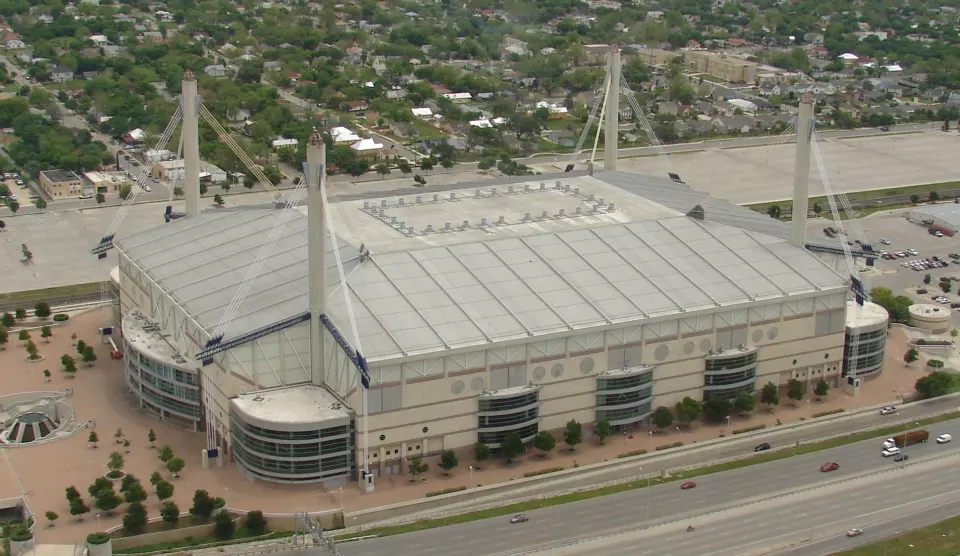
Julio César Chávez came into the fight unbeaten in 87 professional bouts and was widely regarded as the best fighter in the world. Whitaker was 32-1. They met at the Alamodome in San Antonio, Texas, for Whitaker's WBC welterweight title, with the weight set at a 145-pound catchweight. The crowd was huge and heavily on Chávez's side: Wikipedia puts it at more than 60,000, and ESPN's obituary of Whitaker gives about 65,000.
Whitaker boxed the fight his own way. He moved, jabbed and countered, and a reported 130 jabs found Chávez's face. In the punch count compiled for the fight, he out-landed Chávez 311 to 220. According to Boxing News, a crisp uppercut midway through the fight visibly shook the Mexican star, and Chávez was bleeding from the nose at the final bell. The Showtime broadcast team of Steve Albert, Bobby Czyz and Ferdie Pacheco agreed on air that Whitaker had won.
The judges did not agree. Jack Woodruff scored it 115-113 for Whitaker, while Mickey Vann and Franz Marti both had it 115-115. The result was a majority draw. Chávez kept his unbeaten record and Whitaker kept his belt. Sports Illustrated put Whitaker on its September 20 cover under one word: "Robbed!" Lou Duva accused the WBC judges of bias and Whitaker's side lodged a protest, which was withdrawn the following month. A rematch never happened.
A Fourth Title and the De La Hoya Decision
Whitaker kept winning. On March 4, 1995, he outpointed Julio César Vásquez for the WBA super welterweight title, joining Thomas Hearns, Sugar Ray Leonard and Roberto Durán as the only men at that point to win genuine world titles in four weight classes. Boxing News dates this win to 1994, but other records place it in March 1995. Rather than stay at 154 pounds, he went back to welterweight.
On April 12, 1997, in Las Vegas, he defended the WBC welterweight title against Oscar De La Hoya, boxing's rising star. Whitaker put De La Hoya down in the ninth round and, according to CompuBox figures cited by Wikipedia, out-landed him overall. The judges still gave De La Hoya a unanimous decision: 115-111, 116-110 and 116-110. Many ringside observers thought it was closer than that. Years later, De La Hoya told ESPN that for defense and ring generalship, Whitaker was the best fighter he ever faced.
Cocaine, Decline and the Last Fights
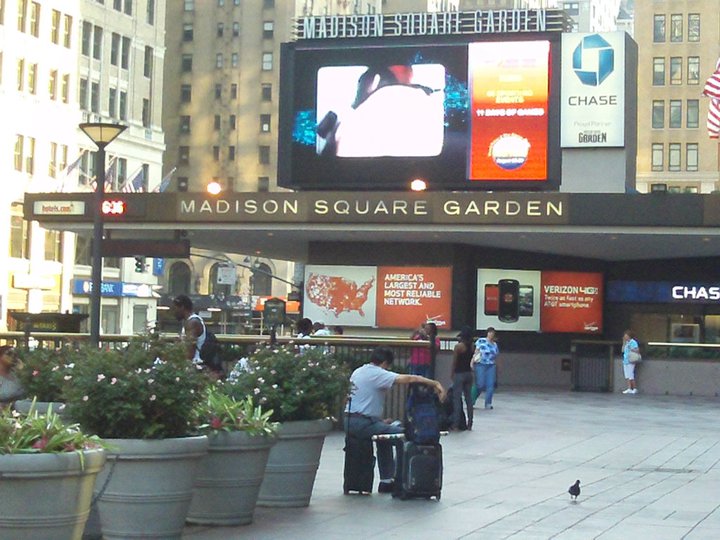
Whitaker struggled with drug addiction during his career and after it. He beat Andrey Pestryayev by decision on October 17, 1997, but the result was changed to a no contest after he tested positive for cocaine, and a later failed test led to a suspension. On February 20, 1999, at Madison Square Garden, he challenged Félix Trinidad for the IBF welterweight title. Trinidad dropped him in the second round and won a wide decision, the first loss of Whitaker's career that nobody disputed.
His last fight came on April 27, 2001, at Caesars Tahoe in Stateline, Nevada, against Carlos Bojorquez. Whitaker broke his clavicle and the fight was stopped in the fourth round with him behind on the cards. He finished with a professional record of 40 wins, 4 losses and 1 draw, with 17 knockouts. In 2002 he was convicted of cocaine possession after an overdose earlier that year, and in 2014 money problems led him to evict his mother from a house he had bought for her, citing unpaid taxes.
Trainer, Hall of Famer and a Sudden End
From late 2005 Whitaker worked as a trainer. Among the boxers he trained were Calvin Brock, Joel Julio, Paul Spadafora and Zab Judah, who won the vacant IBF light welterweight title against Kaizer Mabuza in March 2011. The Ring ranked him tenth on its 2002 list of the greatest fighters of the previous 80 years. He was voted into the International Boxing Hall of Fame in December 2006, his first year of eligibility, and some outlets date his induction to the 2007 ceremony.
On the night of July 14, 2019, at about 10 p.m., Whitaker was struck by a car while crossing at the intersection of Northampton Boulevard and Baker Road in Virginia Beach. He died at the scene, aged 55. Police said the driver stayed at the scene. Some reports dated his death to July 15, the day the news broke. The autopsy listed multiple blunt force trauma as the cause.
His record shows four losses and one draw, but the defeat to Ramírez and the draw with Chávez are among the most disputed verdicts of their era. Whitaker is remembered as one of the best defensive fighters boxing has produced.
Sources
- Pernell Whitaker, Wikipedia, accessed October 2026
- Pernell Whitaker vs. Julio César Chávez, Wikipedia, accessed October 2026
- Pernell Whitaker, Hall of Fame boxer, dies at 55 after being struck by vehicle, ESPN, July 15, 2019
- Legendary Boxer Pernell 'Sweet Pea' Whitaker Dies After Being Hit By A Vehicle, CBS News Baltimore, July 15, 2019
- On this day: Julio Cesar Chavez salvaged controversial draw with Pernell Whitaker, Boxing News, September 10


