
Griffith vs Paret III in 1962 Brought a Weigh-In Slur, a 12th-Round Barrage and the Night That Shook Boxing
On 24 March 1962 Emile Griffith stopped Benny 'Kid' Paret in the 12th round at Madison Square Garden; Paret died ten days later, putting referee Ruby Goldstein, New York boxing and network TV coverage under scrutiny.

On the night of 24 March 1962, Emile Griffith and Benny "Kid" Paret met for a third time at Madison Square Garden with the welterweight championship at stake and a national television audience watching on ABC. The fight ended at 2:09 of the 12th round with Paret trapped in a corner. He never woke up. His death ten days later put a referee's judgement, a state's boxing rules and network television's appetite for the sport under examination at once.
A Rivalry Built in Twelve Months
The two men already knew each other's styles in detail. Paret, born Bernardo Paret in Santa Clara, Cuba, in March 1937, had taken the welterweight title from Don Jordan on a unanimous decision in Las Vegas in May 1960. Griffith, a native of the U.S. Virgin Islands who had come to boxing from a job at a Manhattan hat factory, took it away from him on 1 April 1961 in Miami Beach, knocking him out in the 13th round. Six months later, on 30 September 1961 at the Garden, Paret won the belt back on a split decision.
Paret did not rest after that. In December 1961 he moved up to challenge Gene Fullmer for the NBA middleweight title in Las Vegas and was knocked out in the tenth round. Barely three months after that beating, he was booked to defend the welterweight title against Griffith again. By the count in later accounts, it was his fourth hard fight inside a year, and the New York authorities who licensed him would later be criticised for clearing him at all. Boxing News, in a 2019 retrospective, reported that Paret had suffered severe headaches before the bout and wanted it postponed, but that his manager, Manuel Alfaro, would not agree because of the television money involved. That account comes from a single source and was not independently confirmed for this article.
The Weigh-In on the Morning of the Fight
The third fight carried a personal charge that the first two had not. At the morning weigh-in, Paret taunted Griffith with the Spanish slur "maricón", a crude term for a gay man; Wikipedia's account of the bout adds that he touched Griffith from behind as he said it. Griffith had to be held back. In 1962 such an insult carried the threat of ruin for a professional athlete, and the newspapers of the day softened or avoided the word when they reported the scene. Griffith's own reply at the scale, as recorded in that account, was a warning that he was liable to swing on the spot if he stayed.
Sports Illustrated would revisit the incident in 2005, and the Associated Press later summarised that reporting as suggesting the slur may have fuelled Griffith's aggression that night. Boxing News noted another layer: the two men had been friends as teenagers in upper Harlem.
Round Six: Paret Comes Close
Both fighters stood five feet seven and a half. Paret came in at 146¼ pounds with a record of 35-11-3; Griffith weighed 144 and was 28-3. The bookmakers made Griffith the favourite. For much of the night the contest was tight and hard. In the sixth round Paret landed a combination that had Griffith in serious trouble, and only the bell spared the challenger from a possible stoppage.
Griffith recovered. His trainer, Gil Clancy, had told him to keep throwing punches until Paret either held on or the referee pulled them apart, and in the later rounds that instruction became the shape of the fight.
Twenty-Nine Punches in the Corner
The 12th round began quietly enough that the ABC commentator, Don Dunphy, told viewers: "This is probably the tamest round of the entire fight." Seconds later Griffith drove Paret into a corner and opened up. Paret, stunned by the first shots, stopped defending himself. His head slumped outside the ropes as Griffith held him with one hand and kept throwing uppercuts with the other. A later slow-motion count put the sequence at 29 unanswered punches.
Referee Ruby Goldstein, a veteran of dozens of title fights, stepped in at 2:09 of the round and waved it off as a technical knockout for Griffith. Paret stayed upright for a moment and then sank down in the corner. "I screamed for Goldstein to stop it, but apparently he didn't hear me," his manager Alfaro said afterwards, as quoted in Wikipedia's account of the bout.
In the ring, Griffith gave Dunphy a short interview in which he said he was proud to be champion again and hoped Paret was feeling well. The broadcast then showed the finishing sequence again, an early use of instant replay on American television.
Ten Days at Roosevelt Hospital
Paret was carried out in a coma and taken to Roosevelt Hospital in Manhattan. He never regained consciousness. He died on 3 April 1962 of massive bleeding in the brain, aged 25, and was buried at St. Raymond's New Cemetery in the Bronx on 7 April. His career record closed at 35 wins, 12 losses and three draws.
Griffith tried for hours to get into the hospital room and was turned away. He was abused by strangers in the street and received hate mail from people convinced he had meant to kill his opponent. Speaking to the Associated Press in 1993, he described how frightened he had been: "People spit at me in the street." He also said he was never the same fighter afterwards and did only enough to win. For decades he reported nightmares about Paret.
The Referee Under Scrutiny
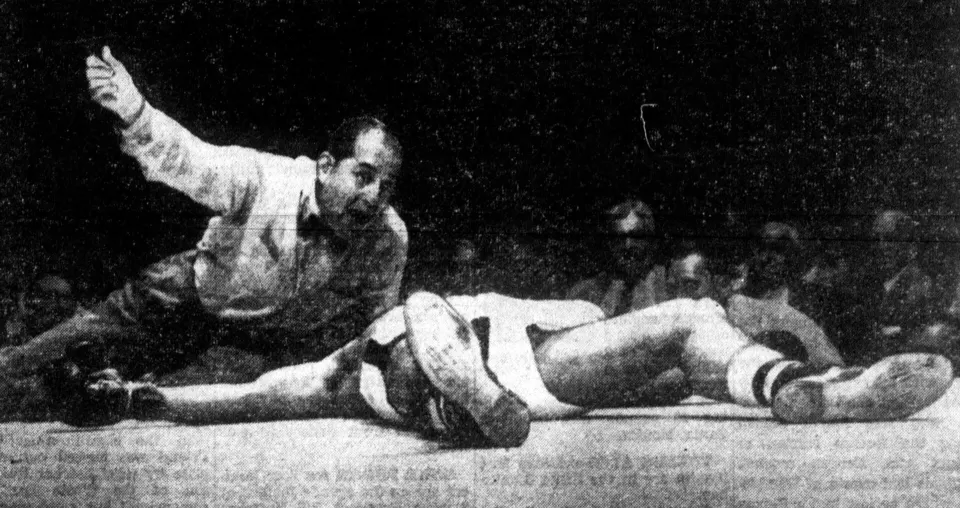
The sharpest criticism landed on Goldstein. A former lightweight and welterweight contender with 55 wins in 61 bouts, he had refereed 39 world title fights, including Robinson against Maxim in 1952 and Patterson against Johansson in 1959. The question was simple and painful: why had he let the barrage run so long?
Two explanations have circulated ever since. One holds that he hesitated because Paret had a reputation for playing hurt and then rallying, while Griffith was considered a poor finisher who often let opponents off the hook. Another suggests he feared trouble from Paret's supporters if he stopped the fight early. Goldstein himself, in a 1964 interview, defended his reading of the fighter: "Paret was a good, durable fighter, who'd look in trouble early in a round, but he'd come back to fire punches and win the round."
New York Governor Nelson Rockefeller set up a seven-man commission to examine the bout and the sport. The official inquiry cleared Goldstein of wrongdoing, but his career as a referee was effectively over. Sources differ on the detail: the Associated Press obituary of Griffith says Goldstein never worked another fight, while Wikipedia records that he refereed one more, in March 1964, before retiring for good. He later moved to Miami Beach and died there in 1984.
The Screens Go Dark
The fight had been carried live on ABC's Fight of the Week, and its consequences reached the networks. A year later, in March 1963, featherweight champion Davey Moore died after his bout with Sugar Ramos, and the two deaths together fed calls from politicians to ban the sport. ABC announced in December 1963 that it would end Fight of the Week in September 1964. Regular network boxing did not return until the 1970s, and prime-time slots on the major networks remained rare after that.
Accounts of the television fallout are not fully consistent. The 2013 Associated Press obituary states that NBC halted its live boxing broadcasts after the fight, whereas the Wikipedia articles on the bout and on Paret identify ABC as the broadcaster and give the 1964 cancellation of its weekly series as the key change.
What Remained
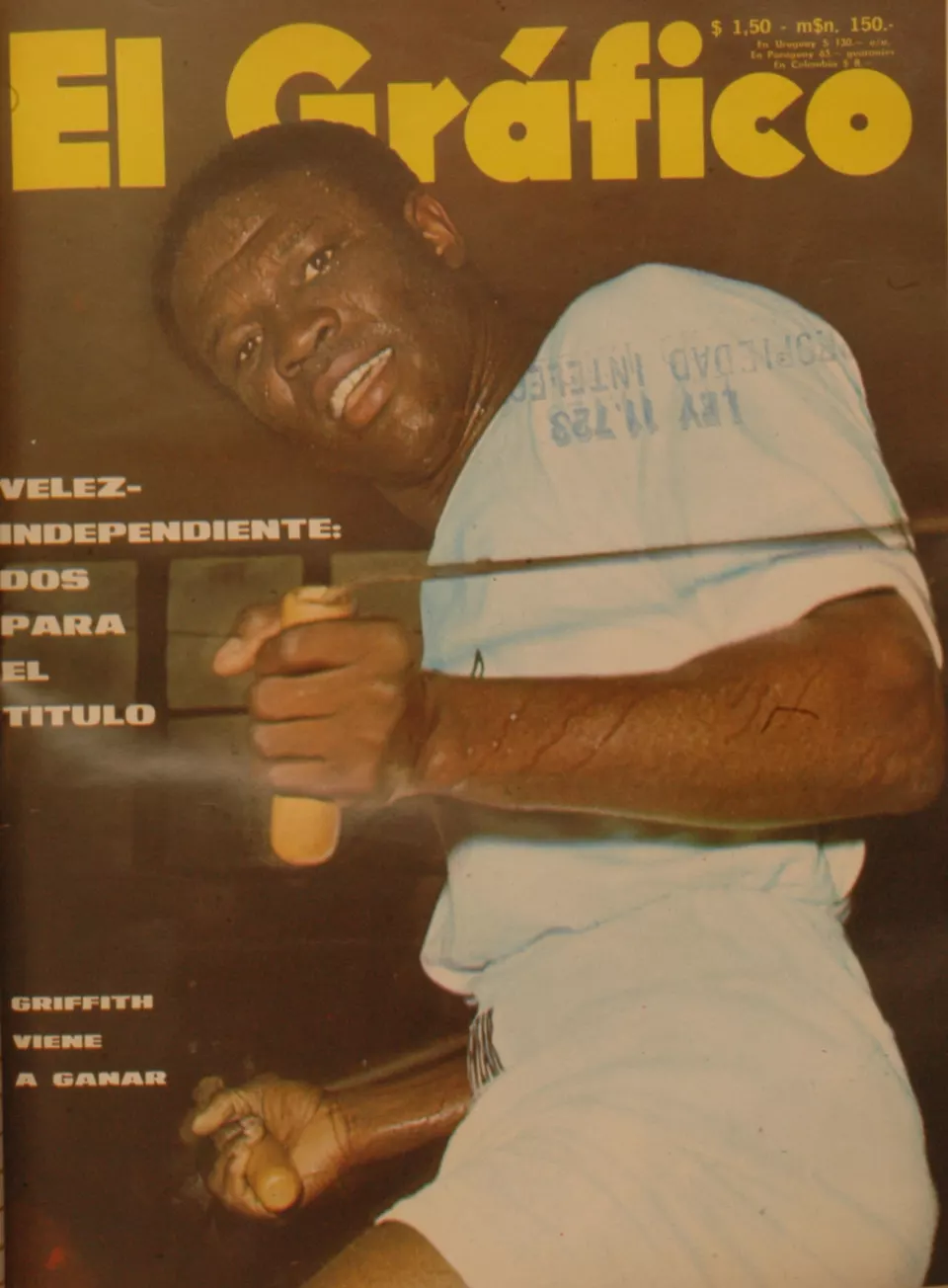
Griffith boxed on for years and won six world titles in a career of 112 fights before entering the International Boxing Hall of Fame in its first class in 1990. He told Boxing News that he had been angry that night but that it was never hate. The 2005 documentary Ring of Fire: The Emile Griffith Story closed with Griffith meeting and embracing Paret's son, who forgave him. The story later became the opera Champion, which premiered in St. Louis in June 2013, a month before Griffith died in Hempstead, New York, and reached the Metropolitan Opera in April 2023. RingTalk's full biography of Griffith covers his wider career.
Sources
- Benny Paret vs. Emile Griffith III, Wikipedia, accessed October 2026
- Benny Paret, Wikipedia, accessed October 2026
- Emile Griffith, Wikipedia, accessed October 2026
- Ruby Goldstein, Wikipedia, accessed October 2026
- Ex-boxing champion Griffith dies at 75, Associated Press (via HeraldNet and Fox Sports), 23 July 2013
- On This Day: The great Emile Griffith died aged 75, Ron Ross, Boxing News, 23 July 2019


