
How Emile Griffith Went From a Manhattan Hat Factory to Six World Titles, the Paret Tragedy and a Life Spoken Aloud
Emile Griffith left Saint Thomas for a New York hat factory and became a welterweight and middleweight champion. His career was shadowed by Benny Paret's death in 1962, and late in life he spoke openly about his sexuality.

Emile Griffith came to New York from the Virgin Islands as a teenager, stacked boxes of women's hats for a living, and left the sport nearly two decades later as a six-time world champion at welterweight and middleweight. One night at Madison Square Garden in 1962 shadowed everything that followed, and the private life he guarded for most of his career became, late on, part of how he is remembered.
From Saint Thomas to a Manhattan Stockroom
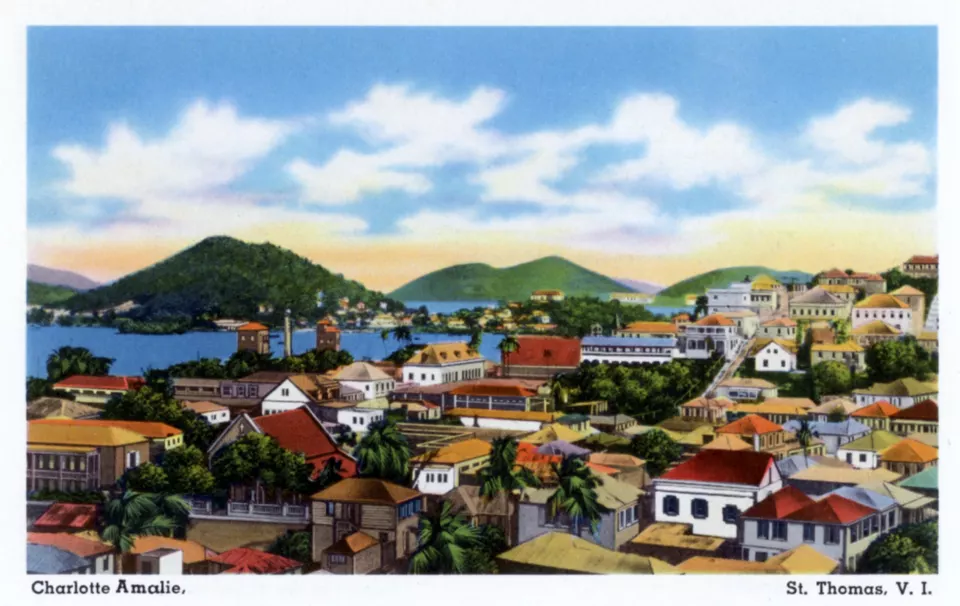
Griffith was born on February 3, 1938, on Saint Thomas in the U.S. Virgin Islands. As a teenager he joined his mother in New York, where he found work as a stock boy at a factory that made women's hats. The owner, Howard Albert, had boxed as an amateur himself. Accounts of the moment differ in small details, with one Associated Press telling describing Griffith pulling off his shirt on a hot day, but they agree on the essentials: Albert noticed the young worker's build, broad through the shoulders and narrow at the waist, and sent him to the trainer Gil Clancy.
Clancy worked out of a Parks Department gym on West 28th Street, and he turned the reluctant teenager into a fighter quickly. In 1958 Griffith won the New York Golden Gloves open title at 147 pounds, beating Osvaldo Marcano in the final, and he turned professional the same year. Clancy and Albert would stay in his corner for most of the years that followed.
Three Fights With Benny Paret
Griffith fought often in New York and rose fast through the welterweight division. On April 1, 1961, in Miami Beach, he challenged the Cuban champion Benny "Kid" Paret and knocked him out in the 13th round, becoming the first boxer from the U.S. Virgin Islands to hold a world title. The two met again on September 30 that year at Madison Square Garden, and Paret took the belt back on a split decision that Boxing News later described as disputed.
The rubber match was set for March 24, 1962, at the Garden, carried on national television. At the weigh-in, according to later reporting, Paret taunted Griffith with a Spanish anti-gay slur and touched him mockingly. Sports Illustrated reported in 2005 that the insult may have fed the intensity Griffith brought into the ring that night.
In the 12th round Griffith trapped Paret in a corner and landed a long, unanswered burst of punches while the champion sagged against the ropes. Published estimates of how many blows landed and over how many seconds vary widely, and no single count is settled. Referee Ruby Goldstein stopped the fight, and Griffith had regained the title. Paret never regained consciousness. He died on April 3, 1962, ten days after the bout.
A Champion Who Pulled His Punches
The death brought scrutiny down on the sport. New York Governor Nelson Rockefeller set up a commission to look into it, and Goldstein never refereed another fight. Griffith went on boxing and winning, and The Ring named him its Fighter of the Year for 1964. But by his own account the night changed how he fought. He told the Associated Press, "I was never the same fighter after that." He went on to say that he leaned on his jab and no longer wanted to hurt the man in front of him. Biographers and obituary writers have described decades of guilt and nightmares about Paret.
His rivalry with Luis Manuel Rodríguez ran to four fights, and Griffith won three of them. On April 25, 1966, he moved up in weight and took the world middleweight championship from Dick Tiger on a unanimous 15-round decision, and he later beat Tiger a second time.
The Nino Benvenuti Trilogy
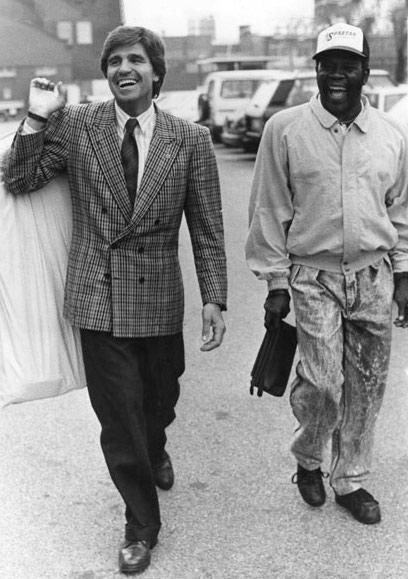
The Italian Nino Benvenuti came to Madison Square Garden on April 17, 1967, and took Griffith's middleweight title on a unanimous 15-round decision. The rematch moved outdoors to Shea Stadium in Queens on September 29, 1967, and Griffith won the belt back on a majority decision. It was his only win of the three.
The third fight returned to the Garden on March 4, 1968. Benvenuti dropped Griffith in the ninth round and won the decision, and with it the title for a second time. Benvenuti held the championship until Carlos Monzón knocked him out in Rome in November 1970. The two former rivals stayed on good terms, and photographs exist of them together in Rome in the late 1960s.
The Long Road Down
Griffith never got the middleweight title back. He challenged Monzón twice: in 1971 he was stopped in the 14th round, and on June 2, 1973, in Monaco, he lost a 15-round decision that drew controversy. In 1972 he beat the undefeated Armando Muniz in Anaheim, California. He also stepped in as a late replacement against the German junior middleweight champion Eckhard Dagge and lost a majority decision that was also disputed.
He retired in 1977 after three losses in a row. His record stood at 85 wins, 24 losses and 2 draws with 23 knockouts across 112 bouts, according to Wikipedia, which also lists one no contest. Boxing News counted 28 of those fights at Madison Square Garden. After retiring he trained fighters, and the Associated Press listed Wilfred Benítez and Juan Laporte among the champions he worked with. He also worked for a time as a corrections officer in New Jersey. In 1990 he was part of the first class inducted into the International Boxing Hall of Fame in Canastota, New York, and he went back there for the induction weekend year after year.
A Private Life Spoken Aloud
For most of his career Griffith kept his private life largely out of public view. In 1971 he married Mercedes "Sadie" Donastorg after a short courtship. The marriage did not last, though Boxing News reported that the two stayed friends. In July 1992 he was beaten by a group of attackers outside a gay bar near the Port Authority Bus Terminal in Manhattan. Wikipedia reports that he spent four months in hospital, and ESPN reported severe kidney damage.
He spoke about his sexuality in his own terms and never settled on one label. The Associated Press wrote that he described himself at different times as straight, gay and bisexual. Wikipedia cites his words to Sports Illustrated: "I like men and women both." In the biography Nine... Ten... and Out! The Two Worlds of Emile Griffith, Ron Ross recorded a line in which Griffith set the forgiveness he received for killing a man beside the condemnation he faced for loving one. Versions of that sentence differ from source to source, and the opera Champion, based on his life, used it as a central text.
Final Years in Hempstead
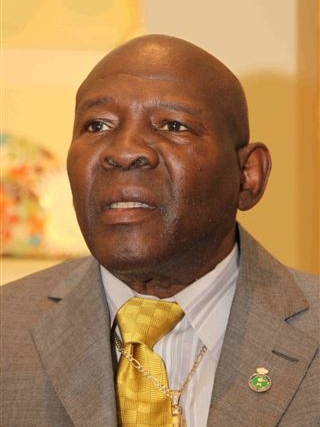
In his last years Griffith had pugilistic dementia and needed full-time care. His adopted son, Luis Rodrigo Griffith, was his main caregiver. Wikipedia also describes Luis as his partner. Boxing News also named an adopted daughter, Christine. While his health allowed, Griffith still turned up at fights at the Garden and at small New York boxing clubs.
He died on July 23, 2013, at an extended care facility in Hempstead, New York, aged 75, and was buried at St. Michael's Cemetery in Queens. He left behind six world titles, more than a hundred fights on five continents, and a story that grows harder to tell the more of it is known.
Sources
- Emile Griffith, Wikipedia, accessed October 2026
- Nino Benvenuti, Wikipedia, accessed October 2026
- Ex-boxing champ Emile Griffith dies, Associated Press via Fox Sports and Fox News, July 23, 2013
- On this day: the great Emile Griffith died aged 75, Boxing News, accessed October 2026
- When the cost of a championship is a man's life, ESPN, accessed October 2026
- Monzón vs Griffith II, 2 June 1973, BoxingOnly.net (search summary)


