
Mickey Walker the Toy Bulldog Ruled Two Divisions, Fought Heavyweights and Became a Painter
Elizabeth, New Jersey's Mickey Walker won the welterweight and middleweight titles in the 1920s, drew with Jack Sharkey as a blown-up heavyweight, and later built a second life as an exhibited painter.

Mickey Walker stood about five feet seven, held the world welterweight and middleweight titles in the 1920s, and then spent his last good years as a fighter trading punches with heavyweights. When the fighting stopped he took up a paintbrush, and by the 1950s his canvases were hanging in a Fifth Avenue gallery. This is the life of the man they called the Toy Bulldog.
A Boy from Keighry Head in Elizabeth
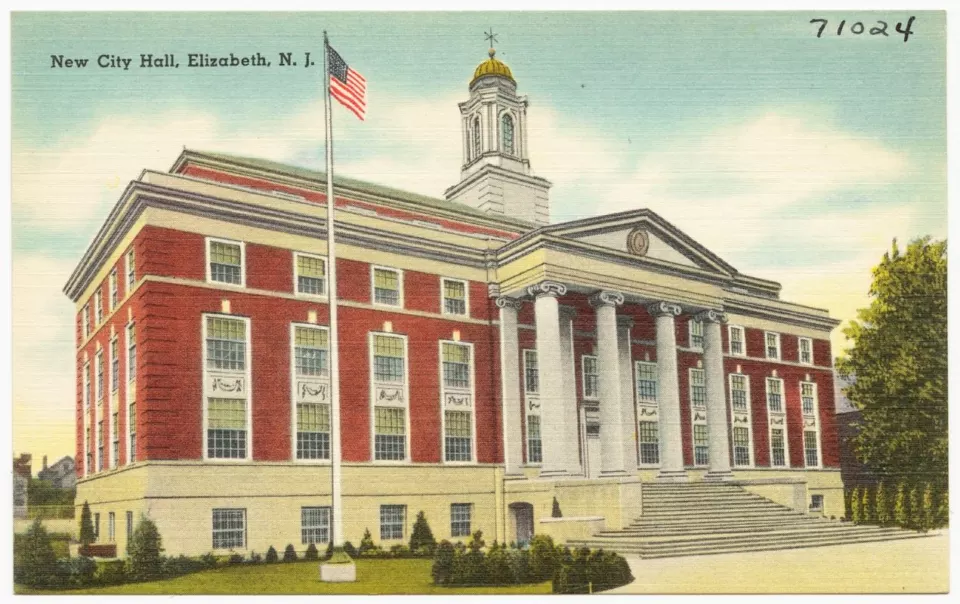
Edward Patrick Walker was born on July 13 in Elizabeth, New Jersey. The year is not settled: Wikipedia gives 1903 and notes that some sources say 1901, while the New Jersey sports history site njsports.com and the BOXRAW blog both use 1901. He grew up in Keighry Head, an Irish neighborhood of the city. In a 2026 profile for The Ring, Patrick Connor wrote that Walker liked to tell stories of smoking at age seven, and that most of his childhood tales involved drinking or smoking.
His father had boxed as an amateur and knew John L. Sullivan, according to njsports.com, but at first he did not want his son to box. Mickey started anyway. His first recorded professional bout came on February 10, 1919, a four-round no-decision against Dominic Orsini at the Foresters A.C. in his hometown. Under the newspaper-decision rules of the day, no official winner was named.
The 1922 Title Win over Jack Britton
Walker came up quickly. Njsports.com says he lost only twice in his first 40 fights and credits his heavy punching and nonstop pressure. At that size, he looked like a bulldog to the people who watched him, and the nickname stuck. Years later, after he settled near the Jersey Shore, he was also called the Rumson Bulldog.
On November 1, 1922, he met the veteran champion Jack Britton at Madison Square Garden and won the world welterweight title on a fifteen-round decision. Walker was managed by Jack "Doc" Kearns, who also managed Jack Dempsey. The Ring describes the pair as drinking companions as much as fighter and manager, and tells of one binge that went on for weeks while people searched for him.
Harry Greb and the Broadway Legend
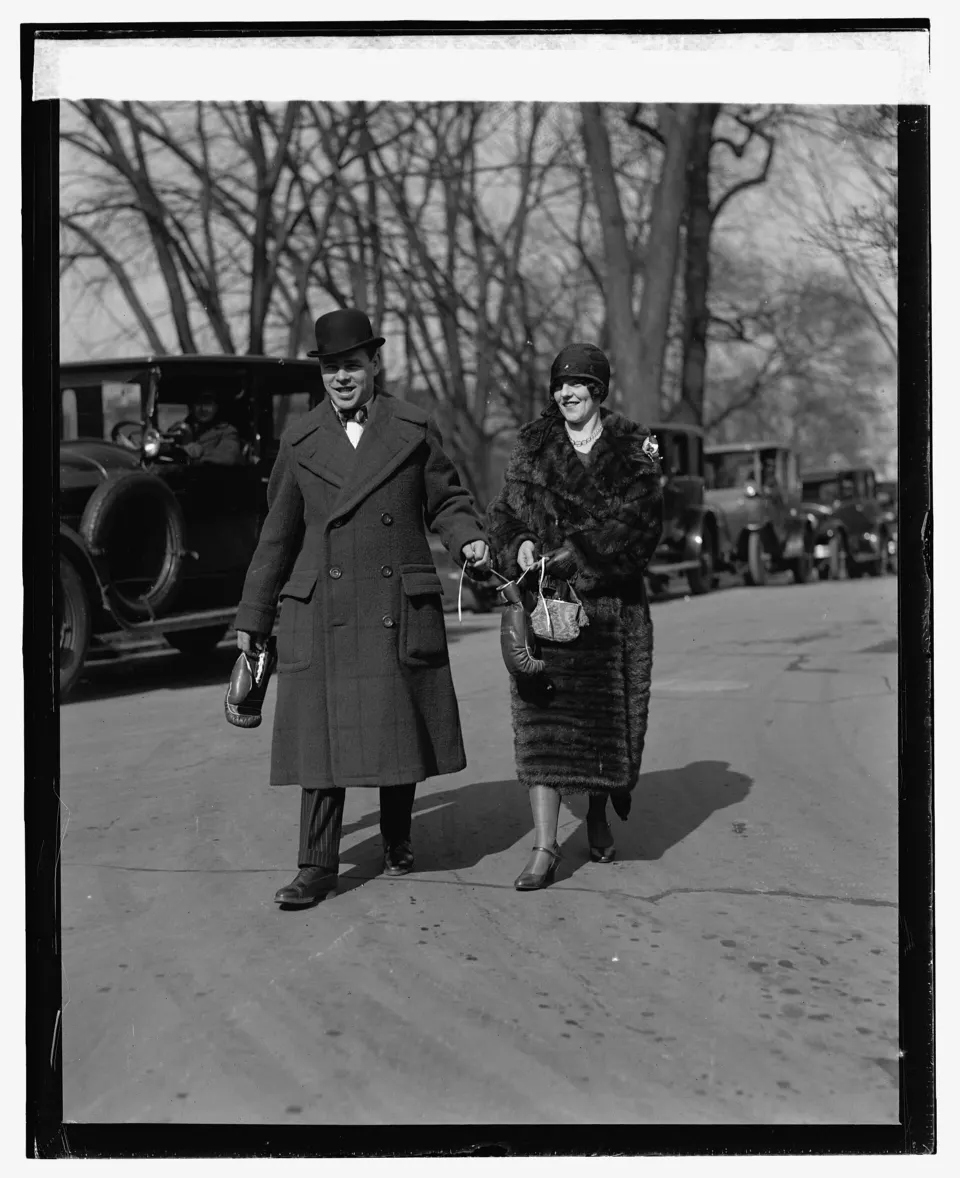
While still welterweight champion, Walker moved up to challenge the middleweight king Harry Greb. They fought on June 2, 1925, at the Polo Grounds in New York, and Greb won a fifteen-round decision. A story grew out of that night: the two men supposedly ran into each other on Broadway afterward and started fighting again in the street. Patrick Connor, writing in The Ring, calls the tale highly questionable and says the reason it lasted matters more than whether it happened. The BOXRAW blog also mentions the street fight but does not give a date or place.
From Scranton to Chicago: One Title Lost, Another Won
Walker's welterweight reign ended on May 20, 1926, when Pete Latzo beat him over ten rounds at the Watres Armory in Scranton, Pennsylvania. He did not stay without a title for long. On December 3, 1926, at the Coliseum in Chicago, he took a ten-round decision over the middleweight champion Tiger Flowers. Wikipedia and BOXRAW both call the decision controversial, and njsports.com calls it narrow. The sources consulted for this article do not explain the dispute in detail.
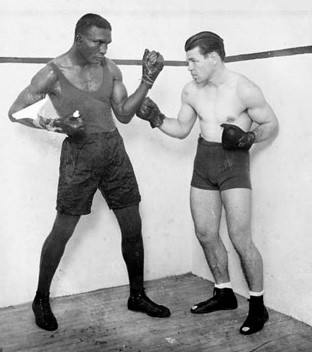
Walker held the middleweight title until June 19, 1931, when he gave it up to move toward the heavier divisions. Before that he had already tried for a third title. On March 28, 1929, in Chicago, he challenged light heavyweight champion Tommy Loughran and lost a close ten-round decision.
Giving Away Weight: Sharkey, Schmeling and the Big Men
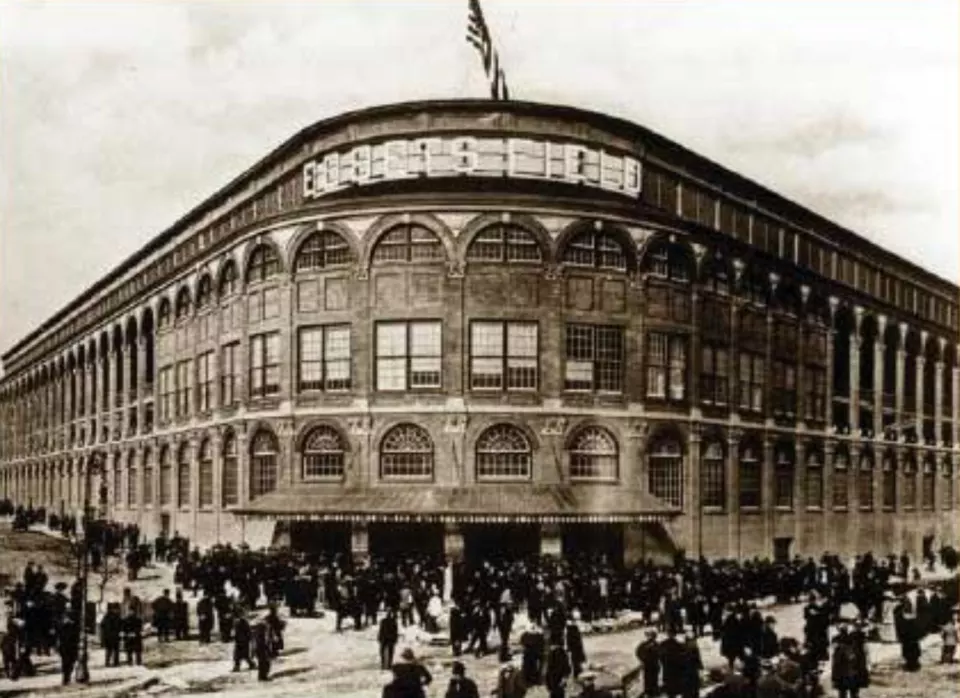
Walker's heavyweight debut came against one of the best heavyweights in the world. On July 22, 1931, at Ebbets Field in Brooklyn, he fought Jack Sharkey to a fifteen-round draw. In The Ring, Connor points out that Sharkey was only two fights away from winning the heavyweight championship, which he took from Max Schmeling in June 1932. Walker kept going in the division and fought Johnny Risko twice in 1931 and 1932, along with Paulino Uzcudun and King Levinsky. Njsports.com puts his record against men who outweighed him by 20 pounds or more at 10 wins, 1 loss and 2 draws.
The worst night of that run came on September 26, 1932, at the Madison Square Garden Bowl in Queens, against Schmeling. Accounts of the ending differ. Wikipedia's Walker article says Schmeling knocked him out in the eighth round. Its Schmeling article calls it an eighth-round technical knockout after Walker's corner threw in the towel. The Ring says Walker took such a beating that Schmeling reportedly asked the referee to stop it. All three agree it was over after eight rounds.
Walker made one more title attempt at light heavyweight. On November 3, 1933, he lost a fifteen-round decision to champion Maxie Rosenbloom. According to Wikipedia, he beat Rosenbloom in a later fight with no title at stake.
The Last Bell and a Second Career on Canvas
Walker's last fight was on December 2, 1935, at the St. Nicholas Arena in New York, where Eric Seelig stopped him in the seventh round. He then ran a restaurant in New York and saloons in several other places. He also tried acting. The Ring reports that in 1946 he played a fighter in the off-Broadway production "Walk Hard," and that he found it more frightening than boxing. "This is a lot worse than any fight," he said, as quoted by The Ring.
Painting stayed with him. The Ring dates the start of that interest to 1942, when he saw the film "The Moon and Sixpence," a story about an artist. What began as a hobby became serious work, done in a flat, blocky style that showed landscapes and scenes of American life. By 1955 his paintings were shown at the Associated American Artists Galleries on Fifth Avenue, and The Ring reports that one sold for close to $1,000. Wikipedia adds that his work was exhibited in galleries in both New York and London.
Final Years in Freehold
According to The Ring, Walker married six times, and his last marriage in 1956 made him happy for a while. In 1974 police found him unconscious on a street in Freehold, New Jersey. Doctors diagnosed Parkinson's syndrome, and Wikipedia and BOXRAW also mention arteriosclerosis and anemia. He died on April 28, 1981, in Freehold at the age of 79.
Weighing the Record and the Legacy
The sources do not agree on his numbers. Wikipedia lists an official record of 94 wins, 19 losses and 4 draws with 60 knockouts in 164 bouts, and 131-25-6 when newspaper decisions are counted. Njsports.com gives 109-22-5 with 58 knockouts. BOXRAW counts 165 documented professional fights. The gaps come from no-decision bouts and how each source scores them.
His standing is more settled. The Ring magazine's Hall of Fame inducted him in 1957 and the International Boxing Hall of Fame in 1990. ESPN ranked him 17th on its list of the 50 greatest boxers, and historian Bert Sugar placed him 11th. Njsports.com notes that Rumson, the town where he lived for years, named its high school teams the Bulldogs after him. When Walker talked about his own wild life, The Ring says, he usually said only that he had a good time.
Sources
- Mickey Walker (boxer), Wikipedia, accessed October 2026
- Max Schmeling, Wikipedia, accessed October 2026
- Why "Toy Bulldog" Mickey Walker always had a good time, Patrick Connor, The Ring, April 28, 2026
- Toy Bulldog: The Unique Life of Mickey Walker, BOXRAW blog, March 30, 2024
- Mickey Walker, njsports.com (New Jersey sports history), undated, accessed October 2026


