
Harry Greb the Pittsburgh Windmill Beat Tunney, Ruled the Middleweights and Fought Half-Blind
Harry Greb fought roughly 300 times, gave Gene Tunney his only defeat in 1922 and held the world middleweight title from 1923 to 1926 while secretly blind in one eye. He died after surgery in Atlantic City in 1926, aged 32.

Harry Greb boxed roughly 300 times in thirteen years, handed Gene Tunney the only defeat of his professional career, and ruled the middleweights from 1923 to 1926 while hiding the fact that one of his eyes no longer worked. He was dead at 32, two months after his last fight.
A Pittsburgh Kid Who Never Stopped Moving
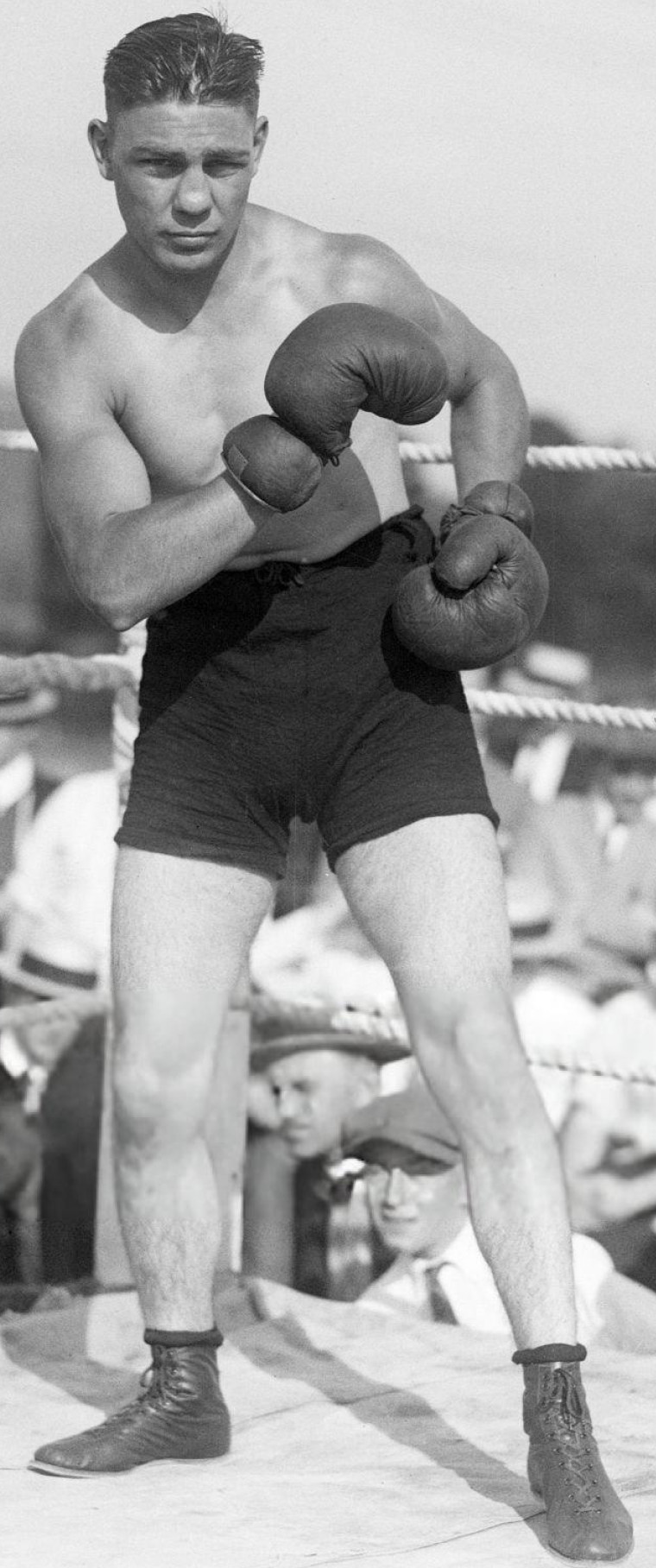
Edward Henry Greb was born in Pittsburgh, Pennsylvania, on June 6, 1894, and the city stayed stitched to his name for the rest of his life. Newspapers called him "The Pittsburgh Windmill" and "The Smoke City Wildcat," and both labels pointed at the same thing: a fighter who came forward in waves, throwing from every angle and refusing to settle into the measured rhythm that most of his opponents wanted.
He turned professional in 1913. As historian Kenneth Bridgham has written, knockout power was never his calling card. What overwhelmed people was volume and stamina, a seemingly endless supply of punches delivered while he kept changing position. Writers at the WBA have described him as a perpetual-motion machine, and the descriptions in period accounts suggest the phrase is hardly an exaggeration.
Hundreds of Fights in the No-Decision Era
Any attempt to count Greb's career runs straight into the rules of his time. A large share of his bouts were no-decision contests, in which the verdict was left to the newspapers that covered them. As a result, his record exists in two versions. Wikipedia's tally, drawn from modern record compilations, lists close to 300 bouts, with an official mark of around 108 wins, 8 losses and 3 draws and roughly 179 newspaper decisions left outside that count. Folding the newspaper verdicts in produces something near 261 wins, 18 losses and 19 draws. The WBA's own profile gives a range of roughly 290 to 305 fights and a somewhat different split of results. The exact totals vary from source to source, but every version describes an extraordinary workload.
The pace was relentless. According to Wikipedia's account, Greb took 45 fights in 1919 alone and was not beaten in any of them. Boxing News writer Bob Mee calculated that across his career he averaged roughly one fight every two weeks, and Greb fought middleweights, light heavyweights and heavyweights alike.
The Thumb That Took an Eye
The injury that shaped the rest of Greb's career came on August 29, 1921, in a bout in Pittsburgh against Kid Norfolk. Historian Kenneth Bridgham, writing for The Fight City, notes that Norfolk is alleged to have thumbed Greb in the right eye, and that the damage appears to have been a torn retina. Wikipedia adds that a later bout with Bob Roper worsened the injury and kept him out for close to two months.
The sight in that eye never came back. Greb told almost no one. By the accounts gathered on Wikipedia, he got through pre-fight physicals by memorizing the letters on the eye chart, and in later years his vision in the left eye began to fade as well. The WBA profile describes him as legally blind during the final years of his career. For most of his prime, then, the most active fighter in the sport was doing his work with one functioning eye.
May 23, 1922: Greb Breaks Gene Tunney
The fight that defined Greb took place at Madison Square Garden on May 23, 1922. His opponent was Gene Tunney, an undefeated boxer who held the American light heavyweight title. Greb had already been busy that year. The Fight City's reconstruction of his 1922 schedule lists a decision over Tommy Gibbons over 15 rounds at the Garden in March and a sixth-round stoppage of the heavyweight Al Roberts in April.
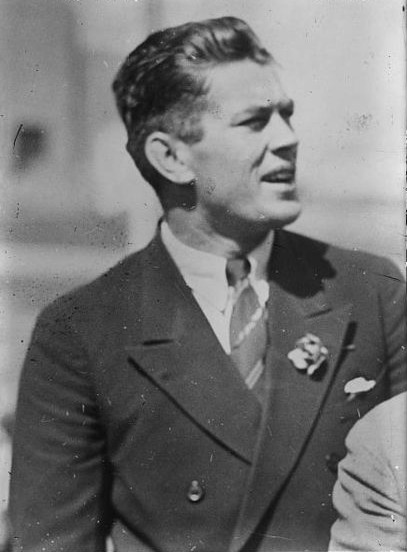
Against Tunney, Greb was savage from the opening round. Boxing News, recounting the bout, reports that Tunney's nose was broken in two places and that he suffered a deep cut over his left eye, with a further cut over the right eye in the third round, and that he had to be helped to his dressing room afterward. Tunney kept fighting for the full 15 rounds, and Greb took the decision and the American light heavyweight title. It was named Fight of the Year for 1922 by The Ring, and it remained the only loss on Tunney's professional record.
Tunney learned from it. In a rematch at the Garden on February 23, 1923, he won a decision that many considered disputed, and the WBA notes that he beat Greb again in March 1925. The two men met five times in all, and sources disagree on how to score the later no-decision meetings. Tunney was among those who attended Greb's funeral.
Middleweight Champion of the World
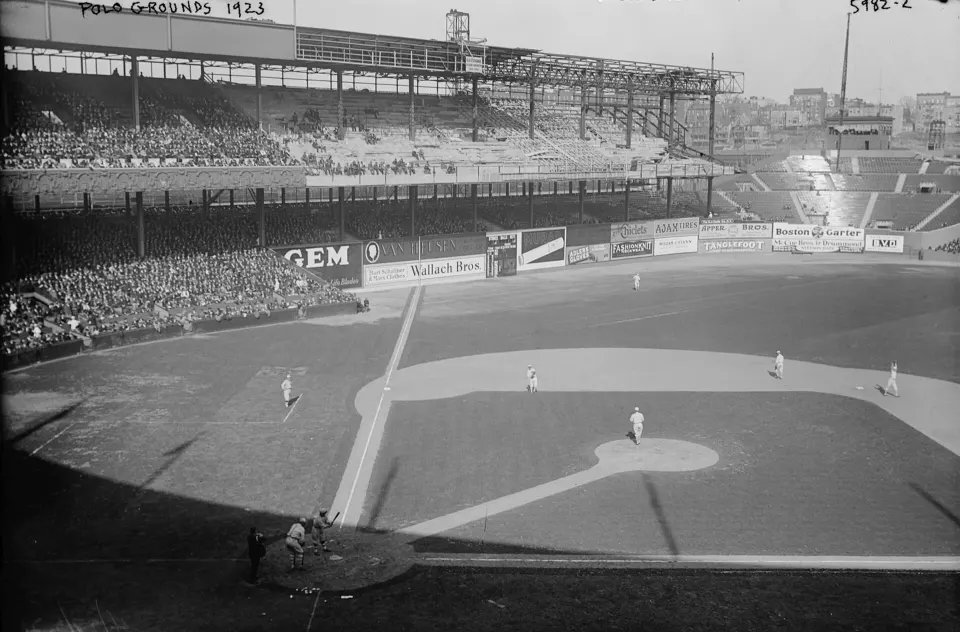
On August 31, 1923, at the Polo Grounds in New York, Greb outpointed Johnny Wilson over 15 rounds to become world middleweight champion. He then held the title for two and a half years. The WBA lists six successful defenses, every one won on points: Bryan Downey, Wilson again in January 1924, Fay Kaiser, Ted Moore, Mickey Walker in July 1925, and Tony Marullo.
Wikipedia's summary of his career makes a broader point about the quality of his opposition, noting that he defeated 16 of the 17 International Boxing Hall of Famers he faced.
Tiger Flowers and the End of the Road
The title finally went on February 26, 1926, at Madison Square Garden, when Greb lost a 15-round decision to Theodore "Tiger" Flowers, who became the first African American to hold the world middleweight championship. Greb got his rematch at the same venue on August 19, 1926, and lost again on points. He did not fight again.
His body was failing him. According to Wikipedia, the blind right eye was removed in September 1926 and replaced with a glass one. Boxing News reports that Greb had also been injured in a car accident, which he had been driving despite his poor sight, and that the crash left bone splinters at the back of his nose.
Death in Atlantic City at 32
In October 1926 Greb went into a clinic in Atlantic City, New Jersey, for an operation that Boxing News describes as supposedly minor, meant to remove those splinters and repair damage to his nose and breathing passages. He did not recover. He died on October 22, 1926, at the age of 32, with Wikipedia giving heart failure as the cause. The WBA's profile instead describes the operation as surgery on his damaged eye. The sources agree that he died after surgery in Atlantic City, 65 days after his last fight, but they differ on what the operation was for. He was buried at Calvary Cemetery in Pittsburgh.
Halls of Fame and Rankings
Greb's standing has only grown since his death. He entered The Ring's Hall of Fame in 1955 and was part of the first class inducted into the International Boxing Hall of Fame in 1990. Wikipedia notes that BoxRec's all-time pound-for-pound list has placed him fourth. A century after his death, the half-blind Pittsburgh brawler who fought nearly every two weeks is still routinely ranked among the greatest middleweights who ever lived.
Sources
- Harry Greb, Wikipedia, accessed October 2026
- Harry Greb: "The Pittsburgh Windmill", WBA (wbaboxing.com), undated
- On this day: middleweight legend Harry Greb dies at the age of 32, Boxing News (Bob Mee), October 22, 2019
- When Harry Greb dished out one of boxing history's most savage beatings, Boxing News (Nick Bond), May 22, 2018
- More Than A Century Ago: Harry Greb's Incredible 1922 (Part One), The Fight City (Kenneth Bridgham), April 28, 2026


