
How Gene Tunney Went From Greenwich Village and the Marines to the Heavyweight Title and a Shakespeare Lecture at Yale
The life of Gene Tunney, the Greenwich Village clerk who became a Marine champion, lost only once in his professional career to Harry Greb, twice beat Jack Dempsey and retired as undefeated heavyweight champion before turning to books, the Navy and business.

Gene Tunney came out of Greenwich Village with a longshoreman's son's prospects and left boxing as the undefeated heavyweight champion of the world. In between he won a military title in France, survived a savage beating from Harry Greb, solved Greb over four more fights, twice beat Jack Dempsey, and then walked away to a life of books, boardrooms and a lecture hall at Yale.
A Clerk from the West Side Docks
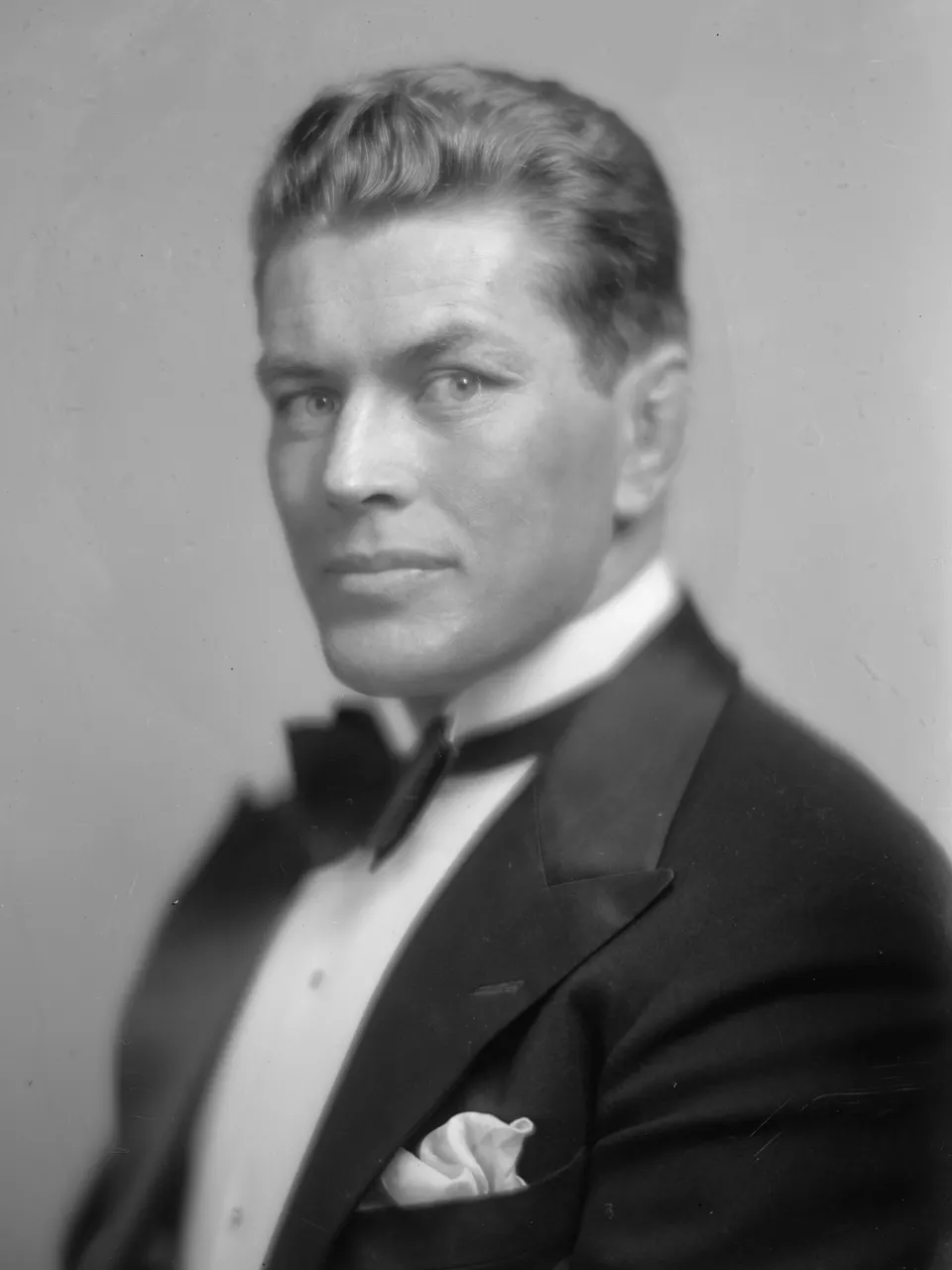
James Joseph Tunney was born in New York City on May 25, 1897, the date given by Wikipedia and EBSCO; one biographical profile on the Historical Voices site gives the year as 1898. His parents were Irish immigrants from Kiltimagh in County Mayo, and the family raised seven children. The New York Times, in its 2008 obituary of his widow, described him as growing up relatively poor in Greenwich Village, the son of a longshoreman.
The Historical Voices profile says he attended Catholic schools, finished at LaSalle Academy in 1915, and took a job as a rate clerk with the Ocean Steamship Company. He trained at the Village Athletic Club. Sources differ on when his professional career began: Wikipedia dates it to 1915, Historical Voices to July 1916.
A Marine Private Becomes a Champion in France
When the United States went to war, the Marine Corps first turned Tunney away because of an injured arm, according to Historical Voices; he was accepted in 1918. He served as a private with the 11th Marine Regiment in France and then in Germany during the occupation of the Rhineland in 1919. He never saw combat. What he did see was a great deal of boxing: much of his service was spent on the Marine team, and in 1919 he won the light heavyweight championship of the American Expeditionary Forces.
The military title gave him a reputation before he had a professional one. Wikipedia records that he spent the winter of 1921 working as a lumberjack in Northern Ontario for an Ottawa timber company, deliberately keeping quiet about being a boxing champion. On January 13, 1922, at Madison Square Garden, he outpointed Battling Levinsky over 12 rounds to win the vacant American light heavyweight title.
May 23, 1922: The Only Defeat
Four months later Tunney defended that title against Harry Greb of Pittsburgh, a relentless, unorthodox fighter who threw punches from every angle. The bout at Madison Square Garden on May 23, 1922, went the full 15 rounds and was a disaster for the champion. According to accounts gathered in Greb's Wikipedia biography, which draws on a 1967 Sports Illustrated feature, Greb broke Tunney's nose in two places in the opening round and cut him deeply over the left eye. Tunney bled for most of the night but refused to quit. Greb took a unanimous decision, and The Ring later named it the fight of the year for 1922.
It was the only loss of Tunney's professional career. Tunney himself later said he had also dropped a 10-round decision to Tommy Loughran during his military days, but that was not a professional fight.
Four More Nights with Greb
The rematch came on February 23, 1923, again at the Garden, and this time Tunney took the title back by split decision. It was one of the most disputed verdicts of the era. Many ringside reporters believed Greb had done enough to win, and the crowd booed the announcement. The New York Times headline the next morning reported that Tunney had regained his ring honors.
There was less argument about what followed. On December 10, 1923, Tunney beat Greb by unanimous decision over 15 rounds at Madison Square Garden. On September 17, 1924, in Cleveland, they fought a 10-round no-decision bout that the record books list as a draw; most newspapers there scored it for Greb. On March 27, 1925, in Saint Paul, Minnesota, Tunney took a clear newspaper decision, and this time it was Greb who absorbed the steady punishment. The series ended three wins to one, with one draw, in Tunney's favor. Greb died after surgery in Atlantic City on October 22, 1926, and Tunney served as one of the pallbearers at his funeral.
Moving Up: Carpentier, Gibbons and a Shot at Dempsey
By the mid-1920s Tunney was fighting heavyweights. At the Polo Grounds on July 24, 1924, he stopped the French idol Georges Carpentier in the 15th round. Back at the Polo Grounds on June 5, 1925, he knocked out Tommy Gibbons in the 12th, a result that carried weight because Gibbons had lasted 15 rounds with Jack Dempsey two years earlier.
Philadelphia, 1926, and Chicago, 1927
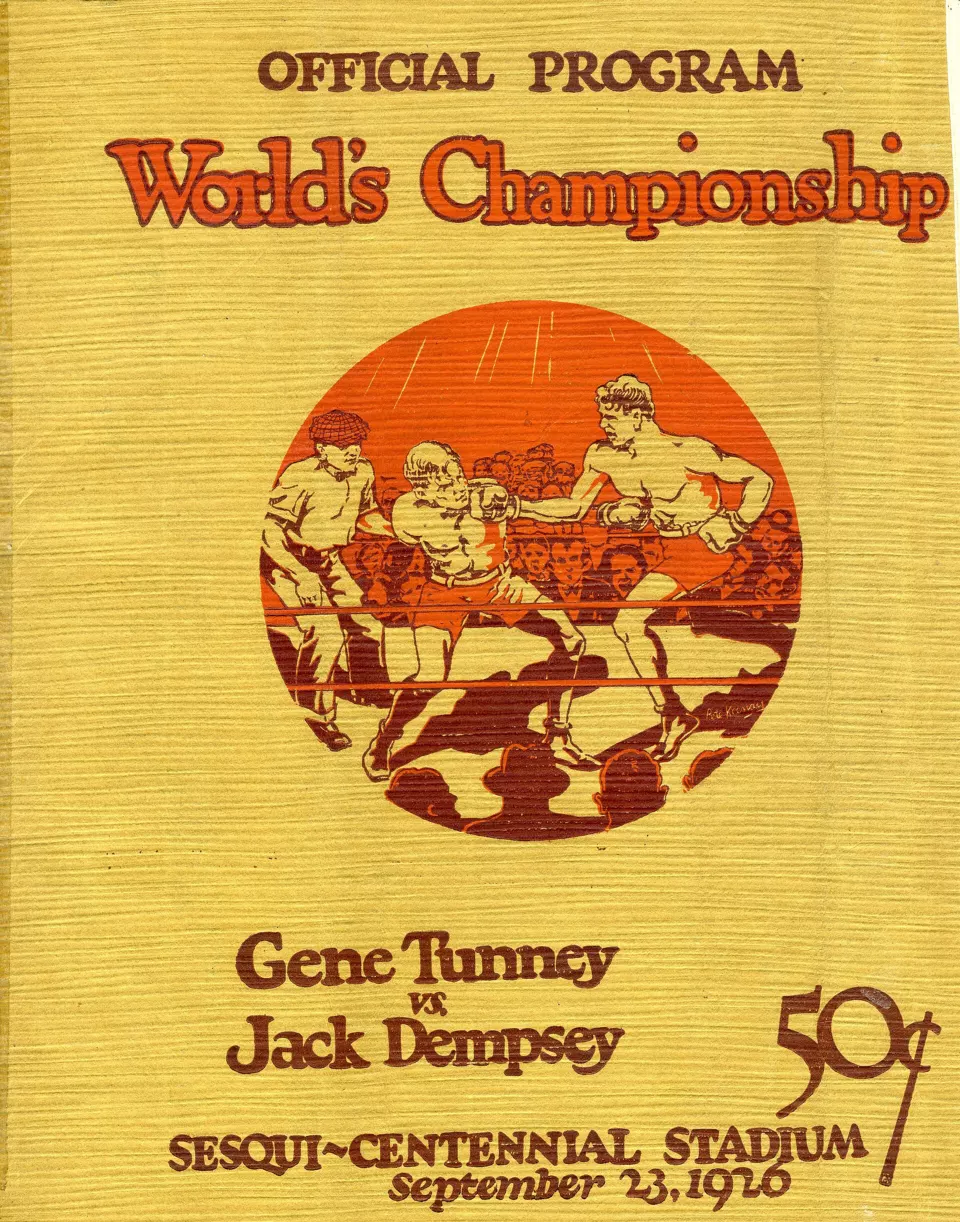
On September 23, 1926, Tunney challenged Dempsey for the heavyweight championship at Sesquicentennial Stadium in Philadelphia. Bookmakers made the champion a 13-to-5 favourite. Rain fell on a crowd that Wikipedia puts at about 120,557 paying customers, a figure the Historical Voices profile rounds to 120,000. Over 10 rounds Tunney outboxed a hesitant Dempsey, closing his left eye, and won a unanimous decision to become champion.
The rematch, on September 22, 1927, at Soldier Field in Chicago, produced the only knockdown Tunney ever suffered. Dempsey put him down in the seventh round, the referee's count was delayed while Dempsey was sent to a neutral corner, and Tunney got up to win on points. That fight has its own story, told in full in our article The Long Count: Dempsey, Tunney and the Seconds That Shaped Boxing History.
Leaving on His Own Terms
Tunney defended the title once more, against New Zealand's Tom Heeney at Yankee Stadium on July 26, 1928, winning when the fight was stopped in the 11th round. He then retired as champion, unbeaten as a heavyweight and never knocked out. The Ring named him its first Fighter of the Year for 1928. Wikipedia lists his official record as 65 wins, one loss and one draw, with a wider count that includes newspaper decisions of 80 wins, one loss and three draws.
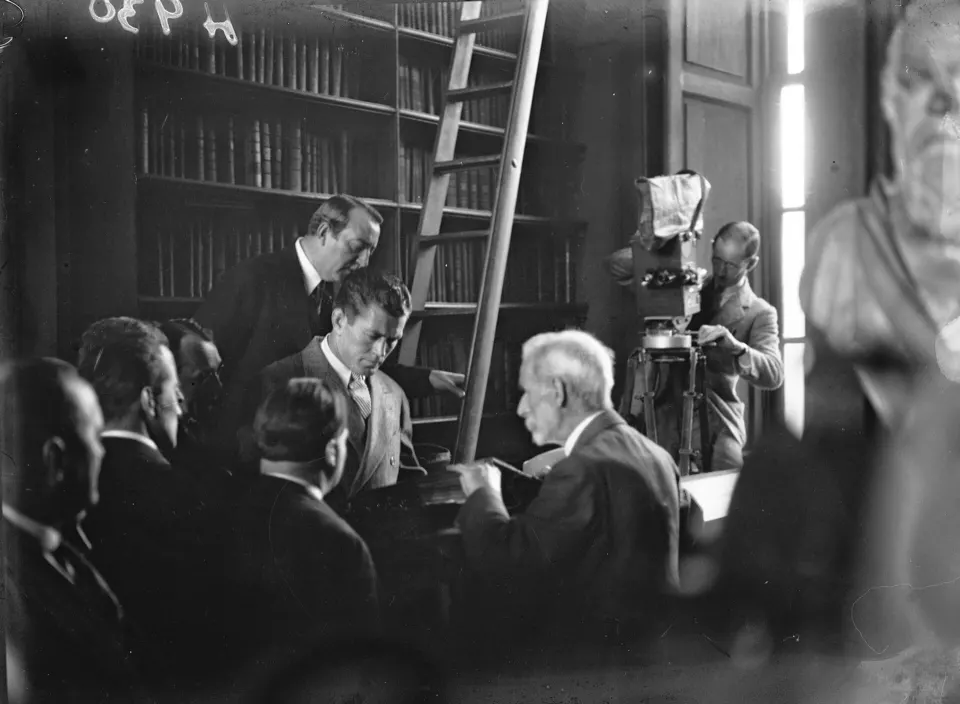
The same year he married Mary "Polly" Lauder, a Connecticut socialite whom the Times described as a Carnegie heiress, and he visited Ireland that summer. The couple settled in Stamford, Connecticut, and had four children. One son, John V. Tunney, served California in the U.S. House and then the Senate from 1965 to 1977.
Shakespeare in a Yale Lecture Hall
The champion's reading habits had long amused the sporting press, and the Ivy League took them seriously. William Lyon Phelps, the Yale English professor, invited Tunney to speak to his Shakespeare class. In Phelps's own account, quoted from his 1939 autobiography in a scholarly discussion-list posting, the auditorium was jammed with people standing, Tunney used no notes and spoke for about three-quarters of an hour, and his chosen subject was his favourite play, Troilus and Cressida, which he related to the passing nature of a champion's fame. That posting dates the talk to April 23, 1927, while the Historical Voices profile says the invitation came after his retirement; the year therefore remains uncertain.
The Times recalled that he befriended George Bernard Shaw and Thornton Wilder, and that his intellectual pursuits earned him the scorn of much of the boxing establishment. In 1932 he published a book about his career, A Man Must Fight.
Navy Fitness Chief and Corporate Director
When the United States entered the Second World War, Tunney accepted a commission in the Naval Reserve as a lieutenant commander, at the request of Navy Undersecretary James Forrestal, and ran the Navy's physical fitness program for the rest of the war, retiring with the rank of captain. In business, EBSCO's reference profile says he sat on the boards of a number of companies and banks and chaired the board of the American Distilling Company; the Historical Voices profile names Technicolor and Schick among the corporations he served.
Gene Tunney died at Greenwich Hospital in Connecticut on November 7, 1978, aged 81, and was buried in Stamford. He was elected to the International Boxing Hall of Fame in 1990. Polly Tunney outlived him by almost three decades, dying in 2008 at the age of 100.
Sources
- Gene Tunney, Wikipedia, accessed October 2026
- Harry Greb, Wikipedia (citing Sports Illustrated, March 27, 1967, and The New York Times, February 24, 1923), accessed October 2026
- Jack Dempsey vs. Gene Tunney, Wikipedia, accessed October 2026
- Polly Lauder Tunney, 100, Fighter's Widow, Dies, The New York Times (via History News Network), April 15, 2008
- Gene Tunney, EBSCO Research Starters, accessed October 2026
- Biography for Gene Tunney, Historical Voices (Michigan State University), accessed October 2026
- Heavy-weight Shakespeare (citing William Lyon Phelps, Autobiography with Letters, 1939), SHAKSPER Shakespeare Conference archive, March 26, 1999


