
How Larry Holmes Went From Ali's Sparring Partner to a Long Reign as Champion
How a seventh-grade dropout from Easton, Pennsylvania, learned his trade in Ali's camp, won the heavyweight title from Ken Norton in 1978 and held it for most of seven years behind one of history's great jabs.

Larry Holmes spent his early years in the ring holding pads and absorbing punches for other men, then stepped out of their shadows to rule the heavyweight division for most of seven years. The "Easton Assassin" built that reign on a left jab still ranked among the finest the sport has seen, yet for much of his career he fought as hard for respect as he did for belts.
From Cuthbert, Georgia, to the Streets of Easton

Holmes was born on November 3, 1949, in Cuthbert, Georgia, the fourth of twelve children of John and Flossie Holmes. In 1954 the family moved north to Easton, Pennsylvania, a small industrial city on the Delaware River that would later supply his ring name. His father took gardening work in Connecticut and came home only every few weeks, and the household relied on welfare to get by.
School did not hold him for long. Holmes left in the seventh grade and went to work washing cars for about a dollar an hour, later driving a dump truck and labouring in quarries. Boxing arrived relatively late. He learned the basics at a local youth centre under Ernie Butler, a former prizefighter, and began competing as an amateur around the age of eighteen.
His amateur run ended in 1972 with a frustrating Olympic qualifying campaign. After losing to Nick Wells in the trials semifinals in Fort Worth, Texas, he was still given a place in the box-offs at West Point, where he was disqualified for excessive holding in the third round against Duane Bobick. He left the amateurs with a record usually given as 19 wins and 3 losses.
An Education in Other Men's Training Camps
Holmes turned professional on March 21, 1973, outpointing Rodell Dupree over four rounds. For the next several years his most important work happened away from the spotlight. He hired himself out as a sparring partner to some of the most dangerous heavyweights of the decade, among them Muhammad Ali, Joe Frazier, Earnie Shavers and Jimmy Young. The work paid well, and it gave a raw young fighter a daily lesson in how elite heavyweights moved, feinted and punished mistakes.
A Sherdog retrospective notes that the green Easton fighter held his own in those sessions with Ali and absorbed a great deal about ring craft.
His breakthrough as a contender came on March 25, 1978, at Caesars Palace in Las Vegas, against Shavers, a puncher many regarded as the hardest hitter in the division. Holmes refused to trade with him and boxed his way to a lopsided twelve-round unanimous decision, sweeping every round on two scorecards and losing just one on the third.
Fifteen Rounds Against Ken Norton
That win earned Holmes a shot at Ken Norton's WBC heavyweight title on June 9, 1978, again at Caesars Palace. He arrived unbeaten, 26-0 with 19 knockouts according to the New Georgia Encyclopedia. The fight became one of the great heavyweight duels of the era. After fourteen rounds all three judges had it level, seven rounds apiece, so the championship came down to a single round.
Holmes rallied in the closing stretch of the fifteenth and won it on two of the three cards, taking the title by split decision. It was a narrow margin for a reign that would prove to be anything but fragile.
The Jab That Ran a Division
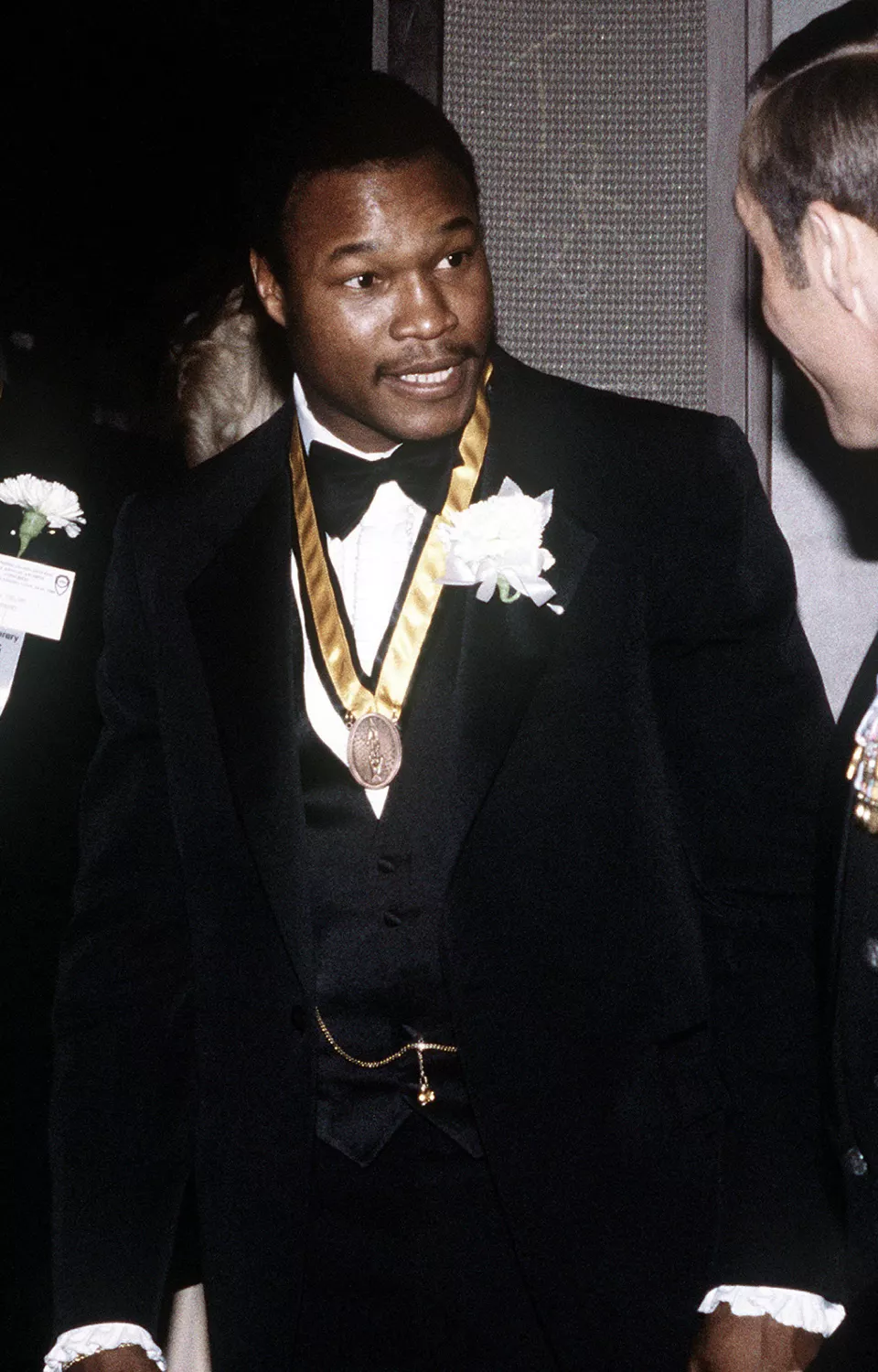
Holmes was not built like a brawler, and he did not fight like one. His left jab, fast, heavy and almost constant, set the terms of nearly every fight he was in. Wikipedia's summary of his career notes that it is often rated among the best jabs in heavyweight history, and an Associated Press profile at the time of his Hall of Fame election described it as one of the best in the sport, backed by a damaging overhand right and uppercut.
With that weapon he worked through a long line of challengers as WBC champion. He stopped Alfredo Evangelista and Ossie Ocasio in seven rounds each, came back to stop Mike Weaver in the twelfth on June 22, 1979, and finished Shavers in the eleventh in their rematch that September. Later defences included a fifteen-round decision over Trevor Berbick in April 1981 and a third-round stoppage of former champion Leon Spinks two months after that.
Caesars Palace, October 2, 1980
The most painful night of his reign was one he won without difficulty. On October 2, 1980, Holmes defended against Muhammad Ali, his former employer and the man whose style had helped form his own. Ali was 38 and long past his best. Holmes controlled the fight completely and won every round on all three official scorecards before Ali's corner pulled him out.
Records differ on how to log the ending. Wikipedia lists it as a retirement after the tenth round, while the New Georgia Encyclopedia describes it as an eleventh-round technical knockout, reflecting that Ali did not come out for the eleventh. Either way, there was no celebration. Holmes was visibly moved in his post-fight interview, with tears in his eyes as he spoke about the man he had just beaten.
Cooney, the IBF and the Chase for 49-0
On June 11, 1982, Holmes met unbeaten Gerry Cooney in a fight promoted with open racial overtones, Cooney being marketed as a "Great White Hope." Holmes complained publicly that the challenger's purse reflected his race. In the ring he answered decisively, stopping Cooney in the thirteenth round. A split decision over Tim Witherspoon followed in May 1983, then a first-round stoppage of Marvis Frazier that November.
In December 1983 Holmes gave up the WBC belt and accepted recognition as the first champion of the newly formed International Boxing Federation. Counting both titles, he made 20 successful heavyweight defences between 1978 and 1985, a figure the Associated Press noted had been exceeded only by Joe Louis. Sources count the WBC portion alone as 16.
By 1985 he had won his first 48 professional fights, leaving him one victory from Rocky Marciano's famous 49-0 mark.
Two Nights With Michael Spinks
That pursuit ended on September 21, 1985, at the Riviera in Winchester, Nevada, when light heavyweight champion Michael Spinks moved up and took a fifteen-round unanimous decision. Spinks became the first reigning light heavyweight champion to win the heavyweight title. The New Georgia Encyclopedia calls the verdict controversial. Holmes reacted bitterly afterwards, and a crude remark comparing himself with Marciano drew wide criticism.
The rematch on April 19, 1986, was closer still. One judge, Cortez, had Holmes ahead 144-141, but the other two scored for Spinks, 144-141 and 144-142, giving Spinks a split-decision win.
The Long Comeback
Holmes did not stay away. On January 22, 1988, in Atlantic City, he challenged Mike Tyson and was knocked down three times in the fourth round, the only knockout loss of his career. Four years later he produced a genuine upset, beating the younger Ray Mercer by twelve-round unanimous decision on February 7, 1992. That earned a shot at undisputed champion Evander Holyfield that June, which Holmes lost on points.
He tried again on April 8, 1995, losing a unanimous decision to Oliver McCall for the WBC title, and in January 1997 he dropped a split decision to Brian Nielsen in Copenhagen in a fight for the lesser IBO belt. His last bout came on July 27, 2002, in Norfolk, Virginia, a ten-round decision over Eric "Butterbean" Esch at the age of 52. He finished with 69 wins and 6 losses, 44 of the wins by knockout, and every defeat came in a world title fight.
Canastota and the Question of Respect
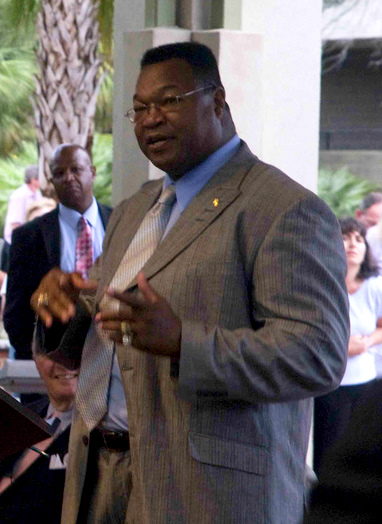
Holmes was elected to the International Boxing Hall of Fame in his first year of eligibility and inducted in Canastota, New York, on June 8, 2008. Speaking to the Associated Press when his election was announced, he made clear that the old grievance had not faded: "Sometimes the critics try to make you think you are less than what you are."
Away from the ring, he put much of his money back into Easton, building businesses that included restaurants, a nightclub, a training facility and an office complex, and employing more than 200 people at their peak. He sold the business complex in 2014. His autobiography, written with Phil Berger and titled Larry Holmes: Against the Odds, appeared in 1998.
Sources
- Larry Holmes, Wikipedia, accessed October 2026
- Larry Holmes (b. 1949), New Georgia Encyclopedia (John Paul Hill), last edited July 16, 2018
- 'Underrated' Larry Holmes inducted into boxing's Hall, Associated Press via Korea JoongAng Daily, December 12, 2007
- Boxing's Heavyweights of the 1970s: Larry Holmes, Sherdog (Luis Monda), November 1, 2015
- IBHOF: 2008 Induction, BoxRec Wiki, accessed October 2026


