
How Ken Norton Went From Marine Corps Boxer to Ali's Rival and WBC Champion
The life of Ken Norton, the Jacksonville, Illinois athlete who learned to box in the Marines, broke Muhammad Ali's jaw, was named WBC heavyweight champion in 1978 and later fought back from a near-fatal 1986 car crash.

Ken Norton came out of a small Illinois town, learned to box in a Marine Corps uniform, broke Muhammad Ali's jaw, and became heavyweight champion by a sanctioning body's ruling rather than on fight night. Then, years after his last bout, he had to win the hardest contest of his life: learning to walk and talk again after a car crash in Los Angeles.
A Record-Setting Athlete in Jacksonville, Illinois
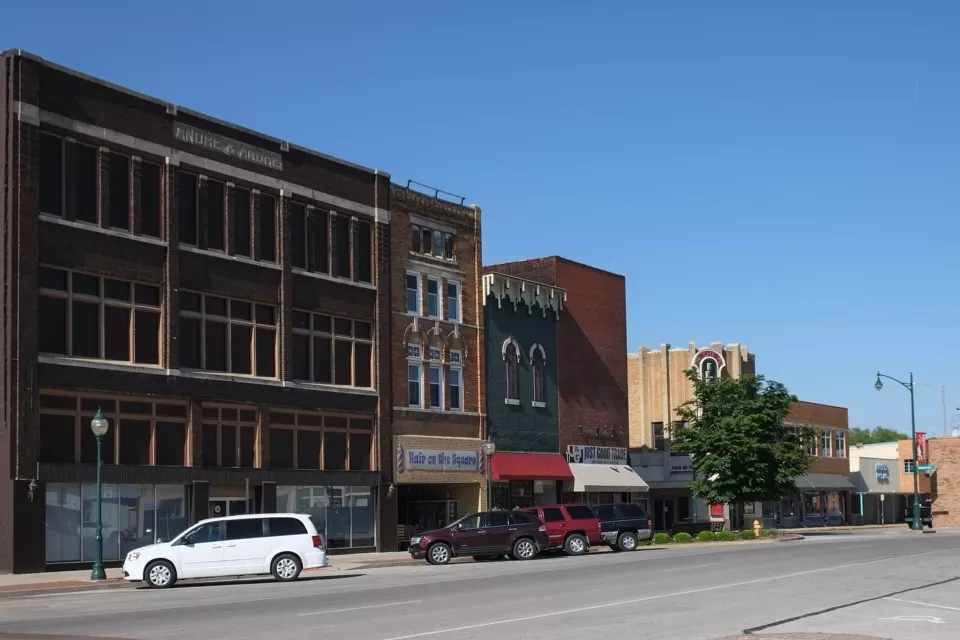
Kenneth Howard Norton was born on August 9, 1943, in Jacksonville, a county seat in west-central Illinois. Long before anyone thought of him as a fighter, he was the best all-round athlete in town. At Jacksonville High School he earned all-state honors as a defensive football player in his senior season of 1960, and on the track he was close to unbeatable, taking first place in seven of the eight events he entered at one meet. His dominance led to what became known in Illinois as the "Ken Norton Rule," which capped the number of events a single athlete could enter at four.
Football took him to Northeast Missouri State University, now Truman State, where he studied elementary education on a scholarship. College did not hold him for long. In 1963 he left campus and enlisted in the United States Marine Corps, a decision that would set the direction of the rest of his life.
Learning to Box in the Marine Corps
Norton spent four years in the Marines, from 1963 to 1967, and it was there that he first laced up gloves in earnest. He took to the sport quickly. According to his Wikipedia biography, he compiled a 24-2 record as a Marine boxer and won the all-Marine heavyweight championship three times, along with AAU and Pan American titles. The California Sports Hall of Fame goes further, calling him the finest boxer ever to compete for the Corps. His service later earned him a place in the United States Marine Corps Sports Hall of Fame in 2004.
After the 1967 National AAU finals and his discharge that same year, Norton turned professional. For several years he worked his way up the heavyweight ranks on the West Coast, largely out of sight of the national spotlight, well away from the biggest stages of the sport.
Breaking Through Against Muhammad Ali
The anonymity ended on March 31, 1973, at the San Diego Sports Arena. Norton met former champion Muhammad Ali in a 12-round, non-title bout and won a split decision, taking the NABF heavyweight belt. Ali finished the night with a broken jaw, an injury reported as having happened early in the fight. Overnight, the ex-Marine became one of the most talked-about heavyweights in the world.
The two men fought again on September 10, 1973, at the Forum in Inglewood, California. Norton came in lighter than for the first fight, and this time Ali edged him on a split decision. (At least one 2013 obituary misdates this rematch to 1974; contemporary records and most accounts place it six months after the first fight, in September 1973.) Six months later, on March 26, 1974, Norton challenged George Foreman for the heavyweight championship in Caracas, Venezuela, and was stopped in the second round.
The trilogy ended on September 28, 1976, at Yankee Stadium in New York, with Ali's title on the line. Ali won once more, and the verdict has been argued over ever since. Wikipedia records the decision as unanimous, with judges Harold Lederman and Barney Smith both scoring it 8-7 for Ali and referee Arthur Mercante 8-6-1; the California Sports Hall of Fame describes it as a split decision. Either way, many ringside observers believed Norton had done enough. Longtime boxing writer Ed Schuyler Jr., quoted in the AP obituary, later summed up the matchup this way: "He gave Ali fits because Ali let him fight coming forward instead of making him back up."
A Championship Handed Down by Ruling
Norton remained a leading contender, and on November 5, 1977, at Caesars Palace in Nevada, he faced Jimmy Young in a 15-round bout designated as a WBC title eliminator. Norton won a split decision that many observers felt should have gone to Young. That year the Boxing Writers Association of America named him Fighter of the Year.
Then the heavyweight picture shifted beneath everyone's feet. On February 15, 1978, Leon Spinks upset Ali for the undisputed championship. The WBC ordered Spinks to defend against Norton, its top-rated contender, but Spinks opted for a lucrative rematch with Ali instead. On March 18, 1978, the WBC responded by retroactively treating Norton's win over Young as a championship fight and recognizing Norton as its heavyweight champion. It was a rare way to become a world titleholder, and it meant Norton never won a heavyweight title inside the ring.
Fifteen Rounds With Larry Holmes at Caesars Palace
Norton's reign lasted less than three months. His first defense came on June 9, 1978, again at Caesars Palace, against the unbeaten Larry Holmes. The fight became one of the most celebrated heavyweight battles of the era, with both men trading heavily through a punishing 15th round. Holmes won a split decision; two judges scored it 143-142 for Holmes, and the third had it 143-142 for Norton. In March 2001, The Ring ranked that final round as the seventh most exciting round in boxing history.
Norton never held a world title again. In March 1979 Earnie Shavers knocked him out in the first round in Las Vegas, and after a draw with Scott LeDoux and a split-decision win over Randall "Tex" Cobb, he took his final fight on May 11, 1981, at Madison Square Garden, where Gerry Cooney stopped him in 54 seconds. He retired with a record of 42 wins (33 by knockout), 7 losses and 1 draw.
Hollywood, "Mandingo" and "Drum"
Even while still active as a fighter, Norton had begun building a second career in front of the camera. He made his acting debut in "Mandingo," the 1975 Dino De Laurentiis production, and starred the following year in its sequel, "Drum." The California Sports Hall of Fame notes that both pictures performed strongly abroad and credits him with roughly 20 film appearances in total; his Wikipedia biography lists bit parts in about a dozen other productions after those two. Alongside acting, he worked as a fight commentator and did television, radio and public speaking.
The Crash on the Santa Monica Freeway Ramp
That second career was cut short on February 23, 1986. Norton's car went off the Vermont Avenue on-ramp to the Santa Monica Freeway in Los Angeles. He suffered a fractured skull, a broken jaw and a broken leg, and he had no memory of the crash. There were no witnesses, and, according to a CBS Sports account, no clear explanation of what caused it ever emerged.
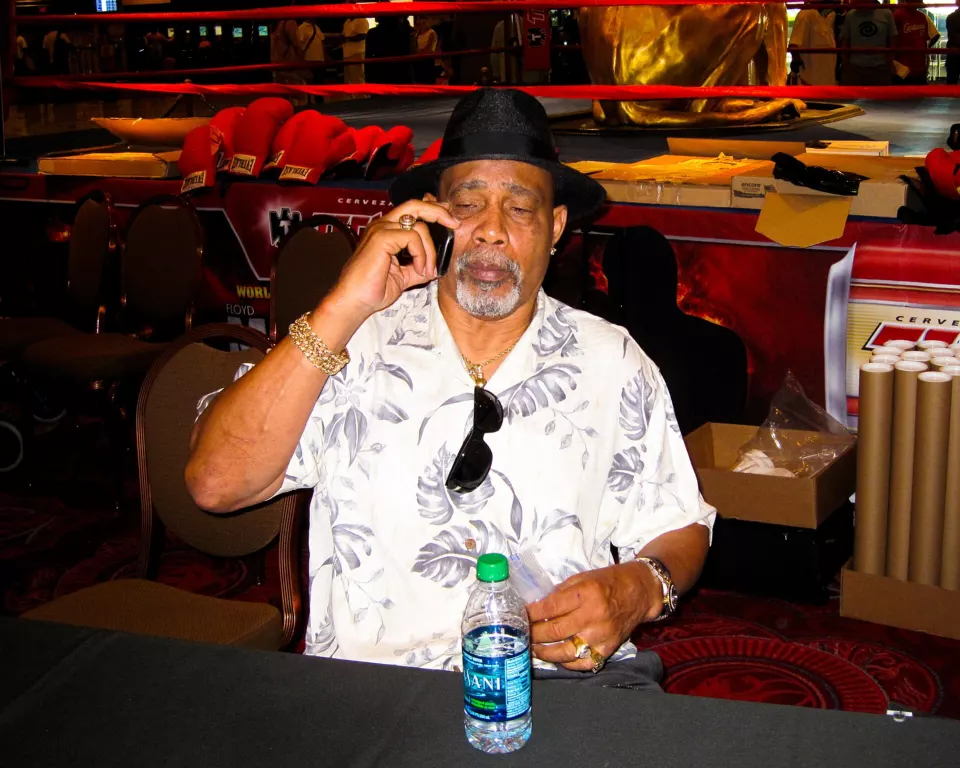
The injuries left his speech slow and slurred, a condition people often wrongly blamed on his years in the ring. The prognosis was grim. "The doctors said I would never walk or talk," Norton recalled in 2011, as quoted in his AP obituary. He refused to accept that outcome. Through long rehabilitation and what he described as a stubborn belief in positive thinking, he regained the ability to walk and speak, though the AP noted he never fully recovered his physical mobility. In 2000 he published an autobiography, "Going the Distance."
Final Years and Legacy
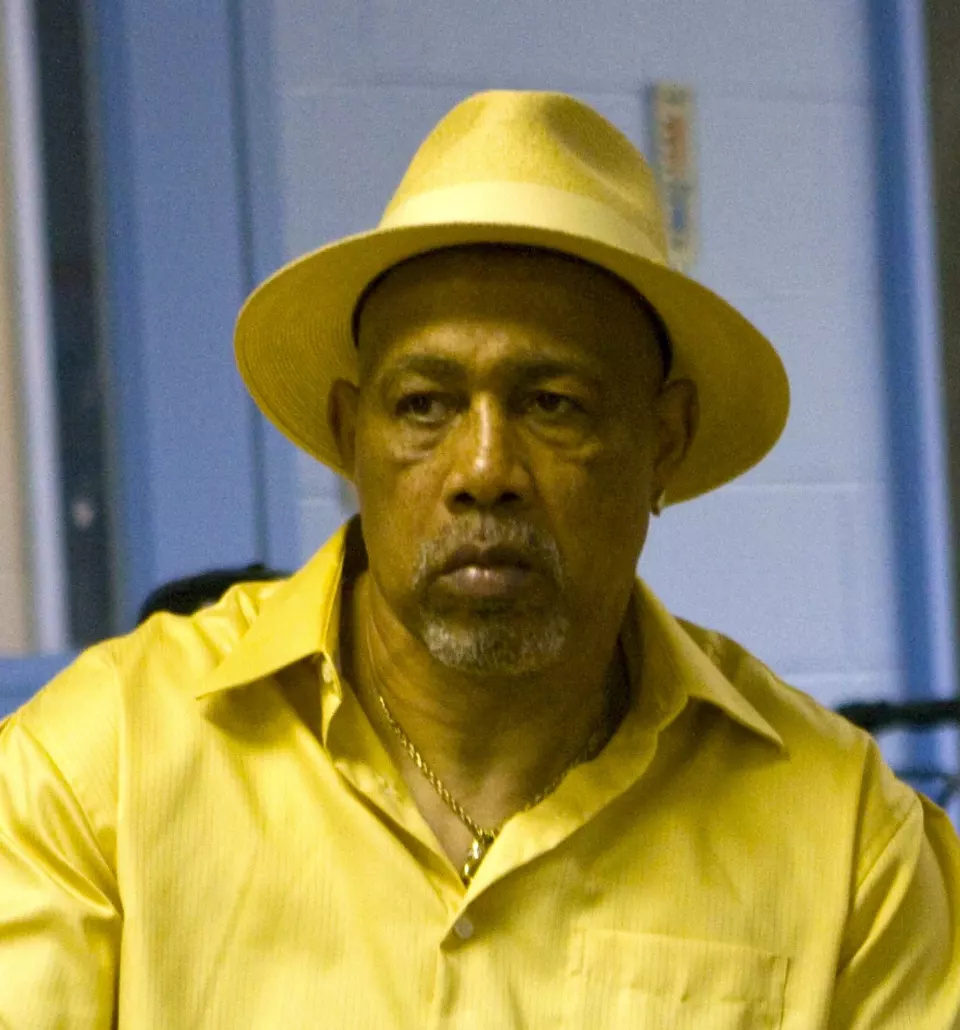
Honors followed him into later life. He entered the World Boxing Hall of Fame in 1989, the International Boxing Hall of Fame in 1992 and the WBC Hall of Fame in 2008. In 1998 The Ring placed him 22nd on its list of the 50 greatest heavyweights. His son Ken Norton Jr. became an NFL linebacker and later a coach.
Norton died on September 18, 2013, at a care facility in Las Vegas, at the age of 70. The Associated Press reported that his health had declined over several years following a series of strokes; a later CBS Sports profile of his son gives the cause of death as congestive heart failure. Ken Norton Jr. confirmed his father's death. Gene Kilroy, Ali's former business manager, remarked that Norton was surely in heaven with all the great fighters.
Sources
- Ken Norton, Wikipedia, accessed October 2026
- Ken Norton, 70; was famed for trio of fights with Ali, The Boston Globe (Associated Press), September 18, 2013
- Former heavyweight champion Ken Norton dies, MPR News (Associated Press), September 18, 2013
- US boxing legend Ken Norton dies at 70, Al Jazeera, September 19, 2013
- Kenneth Howard Norton, California Sports Hall of Fame, accessed October 2026
- How the spirit of Ken Norton's Marine toughness lives on in Ken Norton Jr., CBS Sports, accessed October 2026


