
How Gentleman Jim Corbett Went From San Francisco Bank Teller to Heavyweight Champion and Stage Star
James J. Corbett went from a San Francisco bank and the Olympic Club to a 61-round epic with Peter Jackson, the heavyweight title and a long career on stage and screen.

James J. Corbett came out of a San Francisco bank and a gentlemen's athletic club, outlasted Peter Jackson over 61 rounds, took the heavyweight title from John L. Sullivan, and then spent most of his adult life on stage and in front of cameras. "Gentleman Jim" was boxing's first champion who also understood show business.
A Teller's Job and a Club in San Francisco
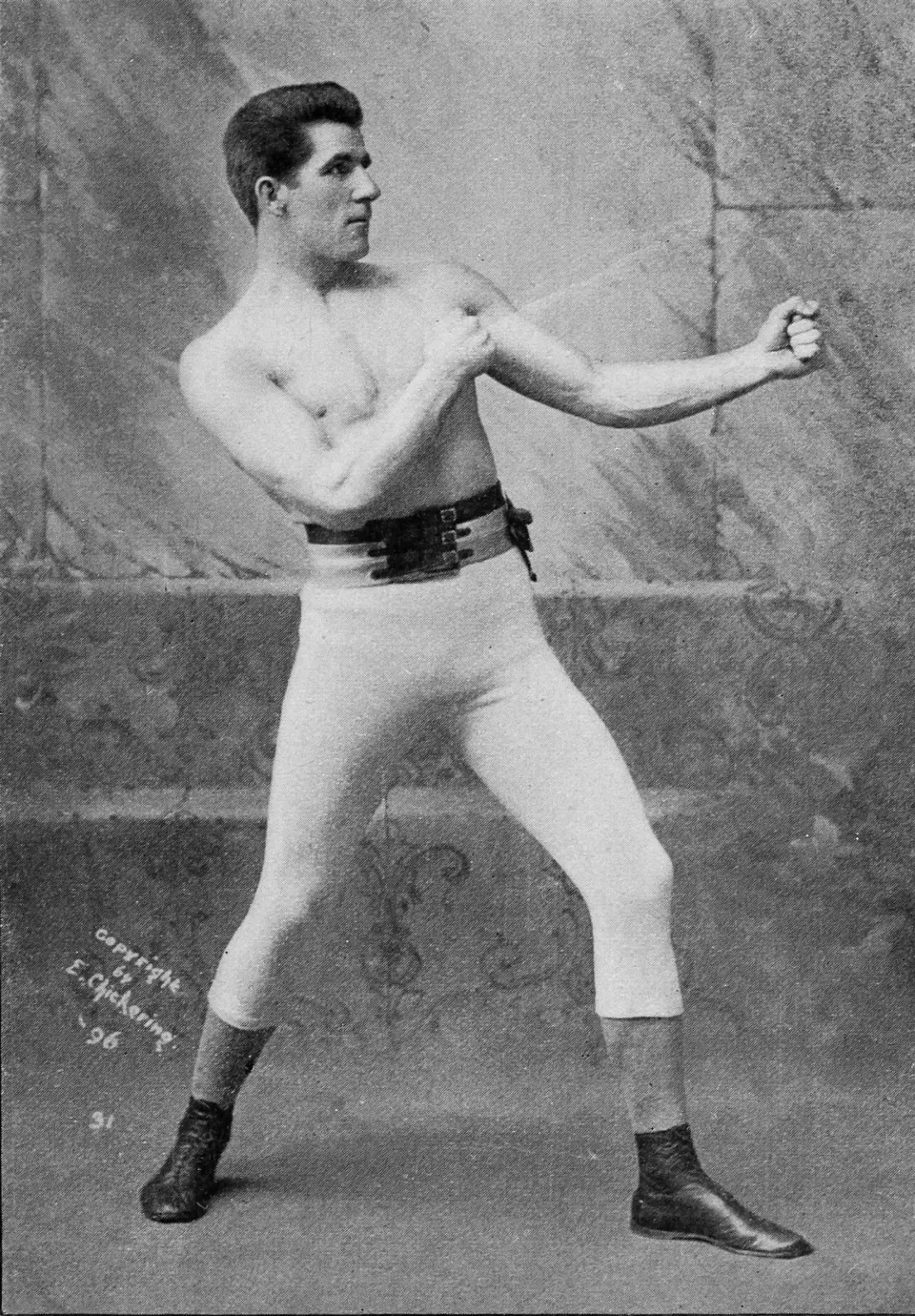
Corbett was born in San Francisco on September 1, 1866. His father, Patrick, had emigrated from County Mayo in Ireland in 1854, and the Olympic Club's history of its famous member describes him as one of eleven children of Patrick and Catherine Corbett. His brother Joe later pitched in Major League Baseball.
According to the Olympic Club, Corbett left school at 13 to work as a messenger at the Nevada Bank of San Francisco. He rose to teller there and made up for the lost schooling by reading widely. Wikipedia's account instead says he finished at Sacred Heart High School in the city. The sources do not agree on how much formal education he had. What they do agree on is the setting. He was a polished young man from a respectable job, which was not where heavyweight prizefighters usually came from.
The club first wanted him for baseball. In 1884, the club says, it brought Corbett in to play second base. When he hurt his left hand, the boxing instructor Walter Watson steered him toward the gloves. Watson had been an English bare-knuckle heavyweight, and Corbett later gave him credit for his training. The club remembers its new boxer for his quick feet, his agility, his height and his lean build. In time he also helped Watson coach the club's other boxers.
The Barge Off Benicia, 1889
Corbett's local rival was Joe Choynski, who lived about a mile away in the same city. A 2019 book on their feud by Ron J. Jackson Jr., reviewed by HistoryNet, traces the trouble back to a scuffle in a stable in 1884. Wikipedia lists that 1884 meeting as Corbett's professional debut. Either way, it happened well before the fights that made both men's names.
In 1889 they met three times. A bout on May 30 was illegal and was broken up by the law after four rounds. The HistoryNet review places it in a barn at Fairfax, while Wikipedia lists it as San Francisco. On June 5 the two met again on a grain barge off Benicia, California, out of reach of the law. Choynski knew Corbett's hand was injured and turned up without the two-ounce gloves the two sides had agreed on, hoping to force a bare-knuckle fight. Corbett refused. Instead he let Choynski wear a pair of leather riding gloves borrowed from a spectator, and their seams cut Corbett's face badly. Corbett still knocked Choynski out in the 27th round. A review of Corbett's memoir on The Fight City notes that he fought that day with a damaged hand and thumb and blistered feet.
Sixty-One Rounds With Peter Jackson
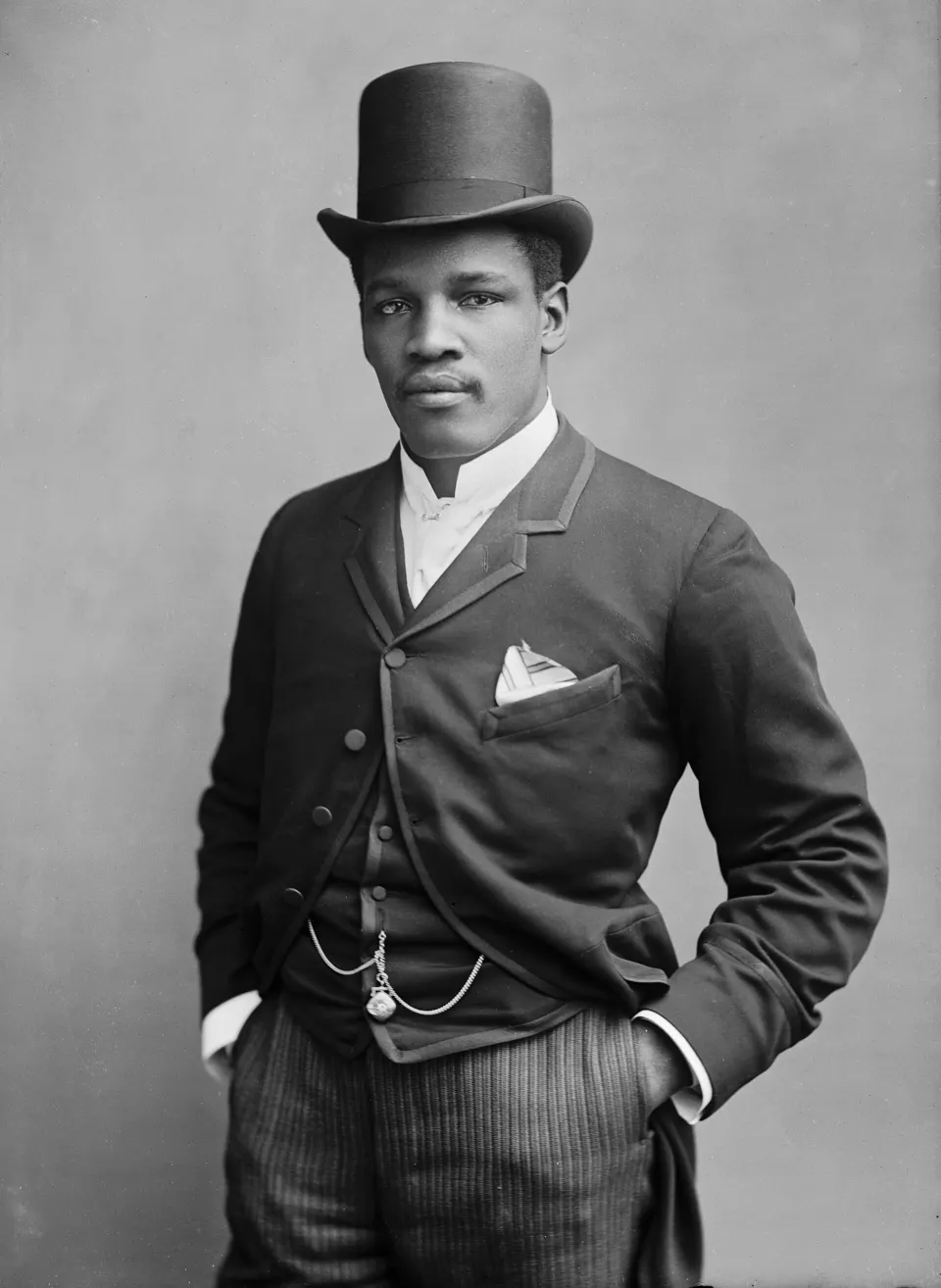
Peter Jackson was the most feared heavyweight Sullivan would not fight. He was born in 1861 in Christiansted on St. Croix, won the Australian heavyweight title in 1886, and arrived in San Francisco in May 1888. He soon beat George "Old Chocolate" Godfrey for the World Colored Heavyweight Championship. Jackson kept trying to get a fight with Sullivan, and Sullivan kept refusing him on the grounds of the color line.
On May 21, 1891, Corbett, then 24, fought Jackson at the California Athletic Club in San Francisco. The fight went 61 rounds. Neither man could take control, and by the end both were too exhausted to go on, so it was stopped with no winner. The sources describe the result differently. Wikipedia's pages on both fighters call it a no contest, and the Olympic Club's history calls it a draw. Whatever the label, the fight told the country that the bank clerk could last with the best heavyweight in America, and it made him a national figure. Jackson died of tuberculosis in Queensland in 1901.
New Orleans, 1892: The Title
The Sullivan fight was the turning point of Corbett's career, and it is covered in detail elsewhere on RingTalk. On September 7, 1892, at the Olympic Club in New Orleans, Corbett knocked out Sullivan in the 21st round and became heavyweight champion of the world. The San Francisco Olympic Club calls it the first championship fought under the Marquess of Queensberry rules.
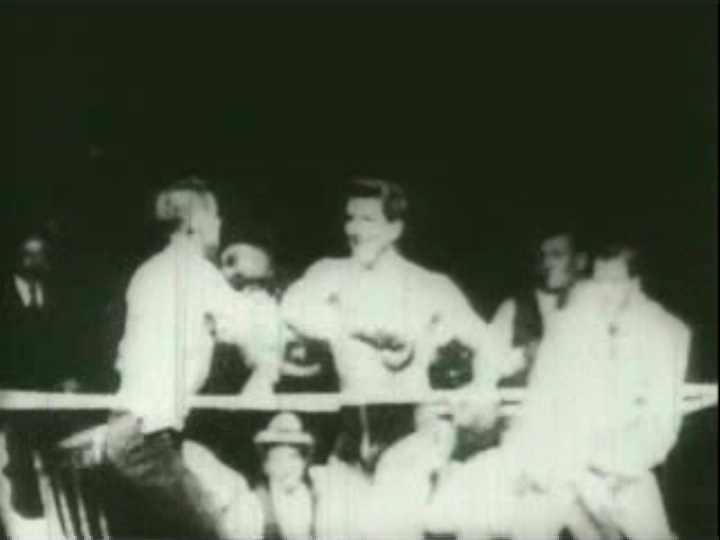
Corbett's first defense came on January 25, 1894, in Jacksonville, Florida, where he knocked out the British challenger Charley Mitchell in three rounds. That September he did something no champion had done before. On September 7, 1894, he boxed Peter Courtney at Thomas Edison's Black Maria studio in West Orange, New Jersey, for William K. L. Dickson's camera. The bout was arranged around the needs of the Kinetograph, with six rounds of one minute each. It was only the second boxing match ever filmed, and only part of one round survives.
Carson City and the Jeffries Fights
Corbett lost the title on March 17, 1897, in Carson City, Nevada. He controlled the early rounds against Bob Fitzsimmons and dropped him in the sixth. In the 14th, Fitzsimmons landed a body punch to the solar plexus and Corbett was counted out. The film of that fight was the longest ever released up to that time. That story also has its own article on this site.
Twice more Corbett tried to win the title back from James J. Jeffries. On May 11, 1900, at Coney Island, he outboxed the bigger man for much of the fight. In the 23rd round he leaned back from a punch, bounced off the ropes, and was knocked down by a short right hand that ended it. Their rematch at Mechanics' Pavilion in San Francisco on August 14, 1903, ended with Corbett stopped in the 10th round.
Footlights, Film and The Roar of the Crowd
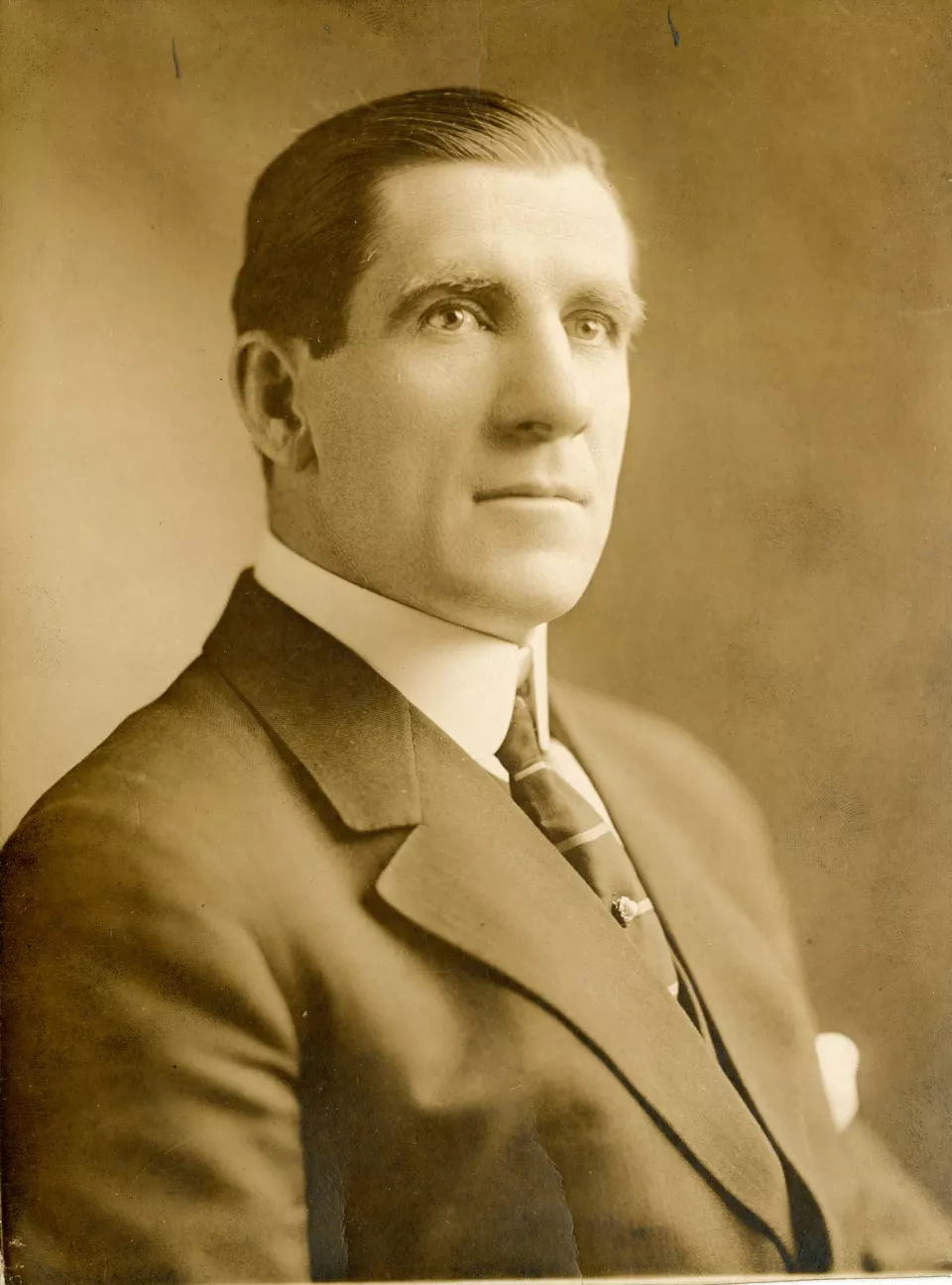
Corbett had acted in local theatres before he boxed, and the title gave him a much bigger stage. Soon after beating Sullivan he toured the country in Gentleman Jack, a play written for him by his manager and a collaborator. He played a college man with a convict for a father who is falsely accused of a crime and clears himself by winning a championship fight. He also worked in vaudeville and a minstrel show, and the Olympic Club adds lecture tours and radio to the list. The club says he did well on the legitimate stage too.
His screen career went on long after the Courtney film. His credits include The Burglar and the Lady in 1914 and The Midnight Man in 1919, and his last film role was in Happy Days in 1929. His memoir, The Roar of the Crowd, ran in six weekly parts in The Saturday Evening Post beginning in October 1924 and came out as a book in 1925. Warner Bros. turned it into Gentleman Jim in 1942, directed by Raoul Walsh with Errol Flynn in the lead. The American Film Institute's catalog notes that reviewers at the time spotted the liberties the film took. They described the real Corbett as quiet and self-effacing, not the swaggering figure Flynn played.
Bayside and the Final Bell
From 1903 Corbett lived in a three-story house in Bayside, Queens, on a street that now bears his name. He married twice. His first marriage, to Olive Higgins, ended in divorce in 1895, and his second wife, the actress Jessie Taylor, outlived him by more than 25 years. He died of liver cancer at home in Bayside on February 18, 1933, at 66, and was buried in Cypress Hills Cemetery in Brooklyn. The Olympic Club records that Jack Dempsey and Gene Tunney were among his pallbearers. When the International Boxing Hall of Fame opened in 1990, Corbett was part of its first class of inductees.
Sources
- James J. Corbett, Wikipedia, accessed October 2026
- James J. Corbett, The Olympic Club (olyclub.com), accessed October 2026
- Peter Jackson (boxer), Wikipedia, accessed October 2026
- Joe Choynski, Wikipedia, accessed October 2026
- Review: Fight to the Finish by Ron J. Jackson Jr., HistoryNet, 2019
- Gentleman Jim Speaks: review of The Roar of the Crowd, The Fight City, accessed October 2026
- Corbett and Courtney Before the Kinetograph, Wikipedia, accessed October 2026
- Gentleman Jim (1942), AFI Catalog of Feature Films, American Film Institute, accessed October 2026


