
Eubank vs Watson II in 1991 Ended With an Uppercut at White Hart Lane and a Case That Changed British Boxing
Michael Watson was ahead on every card when Chris Eubank's eleventh-round uppercut turned their 1991 rematch. The missing ringside care that followed, and Watson's successful lawsuit against the British Boxing Board of Control, changed medical rules for every fight in Britain.

On 21 September 1991 Michael Watson was a round and a half away from becoming a world champion at White Hart Lane. Instead a single uppercut from Chris Eubank, a stadium with no ambulance and a delayed journey across north London left him fighting for his life, and his long case against the British Boxing Board of Control rewrote the duty of care owed to every boxer in Britain.
A Rematch Built on a Disputed Decision
Michael Watson came to the second fight with a strong case that he had already won the first. Born in London in March 1965, he had learned the sport at the Crown and Manor club and turned professional in 1984. In May 1989 he stopped Nigel Benn in six rounds at the Finsbury Park Majestic Ballroom to take the Commonwealth middleweight title, and in April 1990 he challenged Mike McCallum for the WBA middleweight belt at the Royal Albert Hall, losing in the eleventh round.
His first meeting with Chris Eubank came at Earls Court on 22 June 1991, with Eubank's WBO middleweight title at stake. Eubank kept it on a majority decision, with cards of 116-113, 115-113 and 114-114, a verdict that drew criticism from several commentators. Barely three months later the two were matched again, this time at Tottenham Hotspur's football ground for the vacant WBO super middleweight championship.
Eleven Rounds of Watson's Fight at White Hart Lane
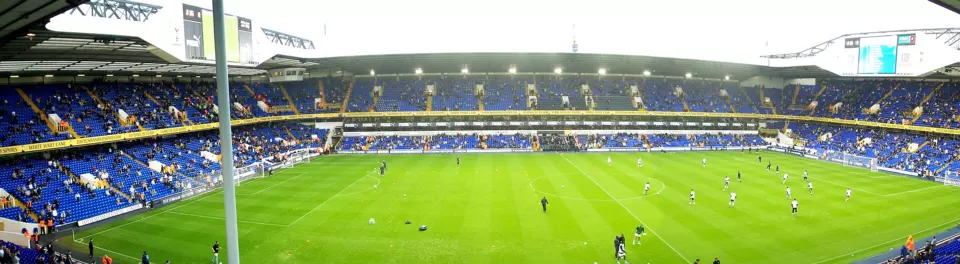
The rematch was a national event. Steve Bunce, writing in Boxing News, put the television audience at more than 12 million; a Vice retrospective gave a figure of around 13 million on ITV. Those viewers watched Watson box the better fight. He controlled most of the early and middle rounds, and by the eleventh he was in front on all three judges' scorecards.
Late in that eleventh round Watson dropped Eubank with an overhand right. It looked like the moment the title changed hands. Eubank, however, was up almost at once, and with the round nearly over he threw a right uppercut that caught Watson flush. Watson's head snapped back and struck the ropes, and he went down just before the bell. He came out for the twelfth, but he could no longer defend himself. Referee Roy Francis stepped in 29 seconds into the final round, which Bunce timed at 10.54pm.
No Ambulance, No Oxygen
Watson collapsed in his corner shortly after the stoppage. What followed became the core of a later court case. There was no ambulance and no paramedic at the stadium. Doctors in dinner jackets made their way to him, but the Court of Appeal later recorded that it was around seven minutes before they attended him, while other accounts put the gap at more than eight minutes. During that time he was given no oxygen, and no equipment for emergency intubation and ventilation was available at ringside.
Watson himself later summed up those minutes in stark terms, telling Bunce: "Five minutes after that fight was stopped, I started to die in the ring."
The Journey to St Bartholomew's
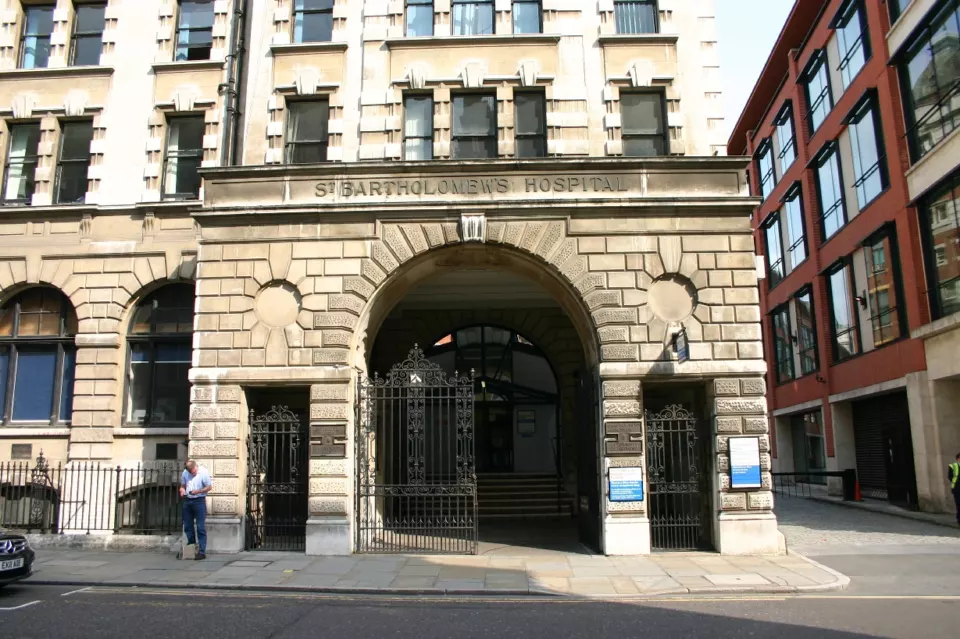
According to the timeline Bunce assembled, Watson was carried from the ring on a stretcher at 11.08pm and reached North Middlesex Hospital at 11.22pm. That hospital had no neurosurgical unit, and he was judged too badly hurt to be treated there. At 11.55pm he was moved again by ambulance to St Bartholomew's Hospital in the City of London, where he went into surgery at about 1am. Wikipedia's account puts the total time before he received treatment in a neurosurgical unit at 28 minutes; the court reports focus on the lack of resuscitation at the venue and the detour to a hospital that could not operate.
The surgeon was Peter Hamlyn, who removed a blood clot from Watson's brain. Shortly after 6am Hamlyn reported that Watson was in a critical state. In a later interview cited by the Morning Star, he said Watson had been closer to death than anyone he had ever operated on.
Watson spent 40 days in a coma and underwent six operations. He needed more than a year of intensive care and rehabilitation and spent six years in a wheelchair while he slowly relearned how to speak and write. He never boxed again; his professional record closed at 25 wins, four defeats and one draw.
Watson v British Boxing Board of Control
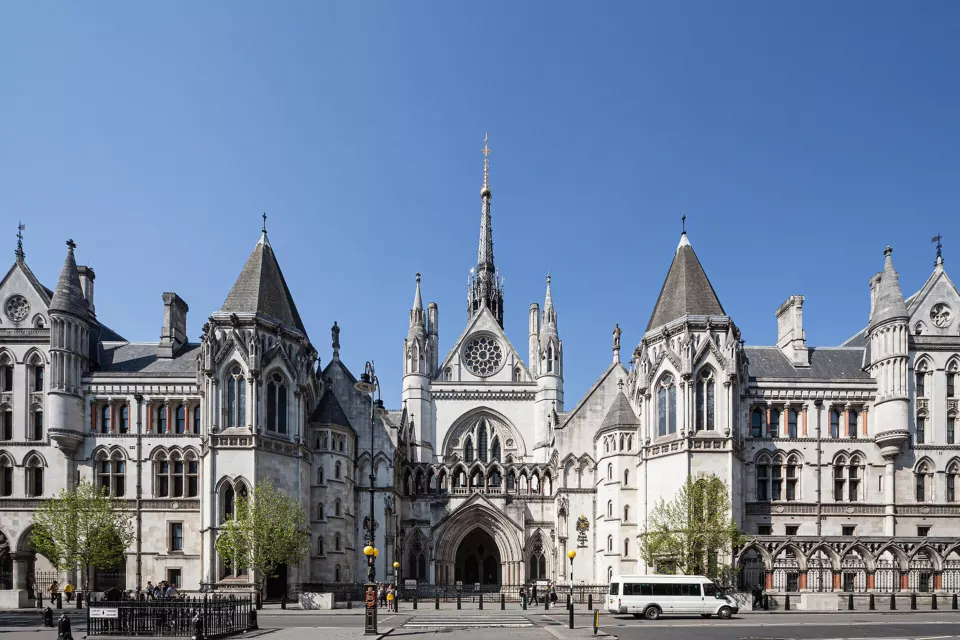
Watson sued the British Boxing Board of Control, the body that licensed and supervised the fight, arguing that its medical arrangements had been negligent. On 24 September 1999 Mr Justice Kennedy found in his favour in the High Court, ruling that the Board had breached its duty of care because the ringside resuscitation provision was inadequate. With prompt oxygen and intubation at ringside, and a direct transfer to a hospital with neurosurgery, the court accepted that the damage to his brain would have been much less severe.
The Board appealed. On 19 December 2000 the Court of Appeal, with Lord Phillips, the Master of the Rolls, presiding alongside May and Laws LJJ, upheld the ruling. The judgment, reported as Watson v British Boxing Board of Control [2001] QB 1134, held that a governing body that controls the medical arrangements of a sport can owe its participants a duty not only to reduce the risk of injury but also to make sure that injuries already suffered are properly treated. The Board did not take the case to the House of Lords.
Damages the Board Could Not Pay
Reports at the time suggested Watson's damages could reach around £1 million. The Board, however, was uninsured and short of assets. In October 2001 a settlement of £400,000 was announced, described in agency coverage as the best that could be achieved given the Board's finances. To meet it, the Board sold its London headquarters and moved to Wales. Wikipedia notes the judge's view that the sum fell well short of what Watson would otherwise have been awarded.
How the Ringside Changed
The case reshaped how British boxing prepares for the worst. In the years after 1991 the Board introduced rules requiring doctors qualified in resuscitation and experienced with head injuries to be present at ringside, along with paramedics and ambulances on standby; contemporary reporting refers to two ambulances being in attendance. The Morning Star's account adds that venues were expected to be within reach of a hospital with a neurological unit. The idea at the heart of the reforms was simple: the minutes after a stoppage matter as much as anything that happens during the fight.
A Marathon and a Friendship
Watson's recovery became a story of its own. In April 2003 he completed the London Marathon, walking for two hours each morning and afternoon over six days. At the finish he was joined by Chris Eubank and Peter Hamlyn, both of whom had become friends. Eubank's trainer Ronnie Davies told Boxing News that the champion was never the same finisher afterwards and preferred referees to step in rather than having to end a fight himself. In 2004 Watson was appointed MBE for services to disability sport, and in 2012 he carried the Paralympic torch.
The night at White Hart Lane decided a world title, but its lasting result was written in a courtroom: a boxer who was winning the fight lost almost everything after it, and the sport was made to accept responsibility for what happens once the bell has stopped ringing.
Sources
- Michael Watson, Wikipedia, accessed October 2026
- Watson v British Boxing Board of Control, Wikipedia, accessed October 2026
- Michael Watson: The last round, Steve Bunce, Boxing News, 21 September 2021
- On this day: Chris Eubank comes back from the brink of defeat to stop Michael Watson in tragic encounter, Matt Christie, Boxing News, 21 September 2020
- Between life and death: remembering boxer Michael Watson's fightback from the abyss, Jim Weeks, Vice, 22 September 2016
- Eubank-Watson II: the fight that changed boxing, John Wight, Morning Star, 26 February 2021
- Watson settles boxing case, Dawn, October 2001


