
How José "Chegüi" Torres Went From Playa Ponce and Melbourne to the Light Heavyweight Title, the Typewriter and the Commission
José Torres learned to box in the U.S. Army, won 1956 Olympic silver, became the first Latin American world light heavyweight champion under Cus D'Amato, then wrote books on Ali and Tyson and ran the New York State Athletic Commission.

José "Chegüi" Torres came out of Playa Ponce, learned to box in a U.S. Army uniform, took Olympic silver in Melbourne, and became the first Latin American to hold the world light heavyweight championship. When the fighting ended he picked up a pen, wrote about Muhammad Ali and Mike Tyson, and returned to the sport as the man in charge of boxing in New York State.
From Playa Ponce to an Army Ring
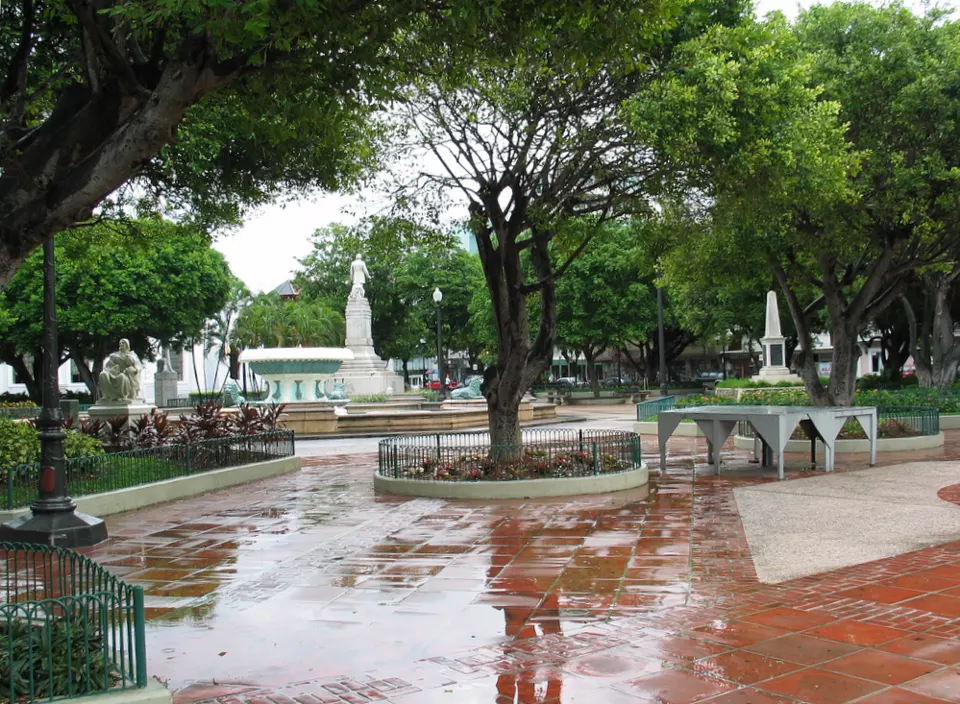
José Louis Torres was born on May 3, 1936, in Playa Ponce, the seaside district of Ponce on Puerto Rico's southern coast. The nickname that followed him for life, Chegüi, came from home; the boxing came later and from an unlikely place. At 17 he enlisted in the United States Army, and it was there, as a teenager in service, that he first laced on gloves in earnest.
He progressed quickly. Olympedia records Army and Inter-Service championships during those years, and the service team gave him a route onto the American national squad. His rise was steep enough that, according to boxing writer Ron Borges, he had only around 25 amateur bouts behind him when he travelled to the other side of the world for the Olympic Games.
Melbourne 1956 and the Meeting With László Papp
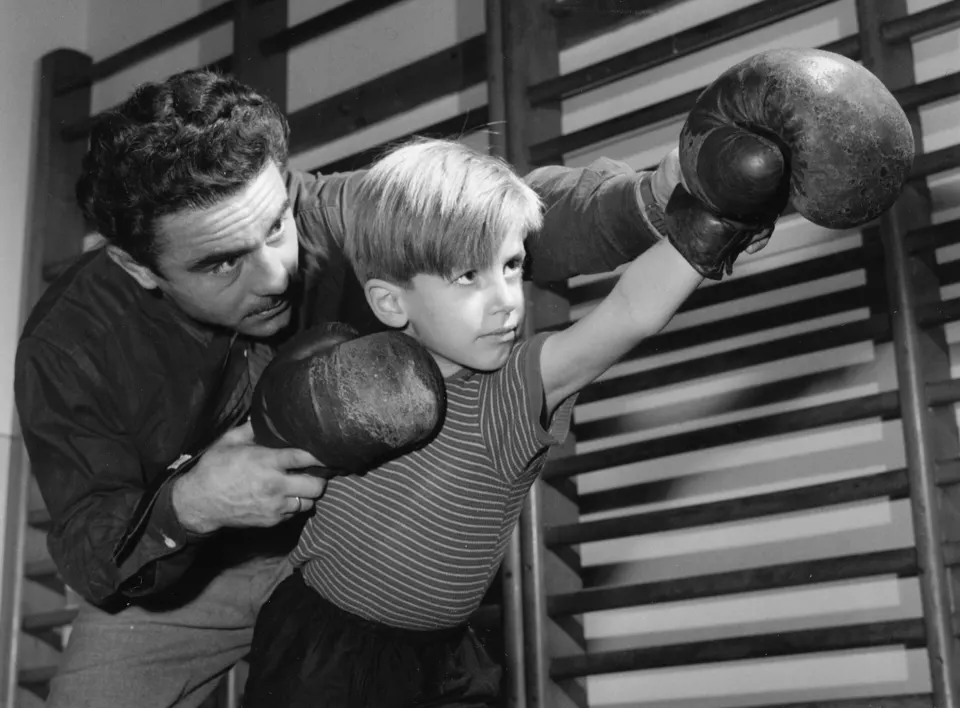
At the 1956 Summer Olympics in Melbourne, Torres boxed for the United States in the light middleweight division. He fought his way to the final, where the opponent waiting for him was Hungary's László Papp. Papp won the gold medal bout and with it his third consecutive Olympic title. Torres went home with silver, a remarkable return for a fighter with so little experience.
He kept boxing as an amateur after the Games. In 1958 he won the National AAU middleweight title and the New York Golden Gloves open championship at 160 pounds, which made the next step obvious.
The Empire Sporting Club and Cus D'Amato
In New York, Torres attached himself to Cus D'Amato, the trainer and manager who worked out of the Empire Sporting Club and who also handled Floyd Patterson. D'Amato managed Torres's professional career, and the pairing put the Puerto Rican inside one of the most distinctive boxing schools of the era, the same lineage that would later produce Mike Tyson. All three of D'Amato's champions, Patterson, Torres and Tyson, would eventually be inducted into the International Boxing Hall of Fame.
Torres turned professional in 1958 with a first-round knockout. Sources differ slightly on the details: Wikipedia names the opponent George Hamilton and places the fight in New York, while Borges dates it to May 24, 1958, in Brooklyn and calls the opponent Gene Hamilton.
Five Unbeaten Years and One Hard Night
For roughly five years Torres did not lose. Along the way he boxed a ten-round draw in San Juan with Benny Paret, a future world welterweight champion, beat contenders such as Ike Jenkins and Al Andrews, and returned to his hometown to stop Hamilton again in four rounds in 1961.
The streak ended in 1963 against Cuba's Florentino Fernández, a heavy hitter who stopped Torres in five rounds. It would be the only knockout defeat of his career. Torres rebuilt, and on November 27, 1964, he made a statement by stopping Bobo Olson in a single round, a result that pushed him into position for a title shot.
March 30, 1965: Champion at Madison Square Garden
The shot came against the light heavyweight champion Willie Pastrano at Madison Square Garden on March 30, 1965. The fight ended in the ninth round, giving Torres a stoppage victory and the WBA, WBC and lineal light heavyweight championships. (Wikipedia's article on D'Amato places the fight in May 1965, but Torres's own entry, Borges and other accounts all give the March date.)
The win carried weight beyond the division. Torres became the third Puerto Rican world boxing champion and the first Latin American, and by several accounts the first Hispanic fighter, to win the light heavyweight crown.
Three Defenses in 1966
Torres made his defenses in a single busy year. On May 21, 1966, he outpointed Wayne Thornton over 15 rounds at Shea Stadium in New York. On August 15 he went the full 15 again against Eddie Cotton at the Las Vegas Convention Center, a contest that, according to Borges, The Ring named its Fight of the Year. Then, on October 15, he took the title home to San Juan and knocked out Chic Calderwood in the second round.
Two Close Nights Against Dick Tiger
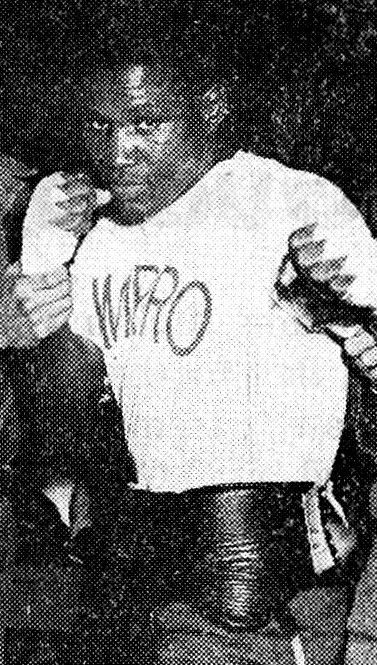
His fourth defense brought Dick Tiger to Madison Square Garden on December 16, 1966. After 15 rounds Tiger was awarded a unanimous decision, a result the Associated Press later summed up as a close one. Torres had held the championship for about 18 months.
The rematch, at the Garden on May 16, 1967, went the distance once more and ended in a split decision for Tiger. Many in the crowd believed Torres had done enough, and Wikipedia records that a riot broke out after the verdict was announced.
Torres boxed only twice more, against Bob Dunlop in 1968 and Charley Green in 1969, and retired in 1969 at around 32 years of age. The record most commonly cited, including by the Associated Press, is 41 wins (29 by knockout), 3 losses and 1 draw. A 2009 Fresh Air tribute gave a different total, so figures for his record vary between sources.
A Fighter Who Wrote
He befriended the journalist Pete Hamill and the novelist Norman Mailer, and with Hamill's help began writing columns for the New York Post. He also wrote for El Diario La Prensa and The Village Voice.
In 1971 he published Sting Like a Bee, a book about Muhammad Ali, which Fresh Air noted was written with Mailer's assistance. His best-known book came in 1989: Fire and Fear: The Inside Story of Mike Tyson, an insider's portrait of the young heavyweight who had grown up in the same D'Amato tradition. HBO adapted it into a television film in 1995. Borges, writing after Torres's death, gave the Tyson book a different title and year, but Wikipedia, the Associated Press and Fresh Air all name it Fire and Fear.
Trainer Teddy Atlas, quoted by Borges in The Sweet Science, suggested that Torres's interests outside the ring may have competed with his drive to remain champion, while describing him as a bright man and a good writer.
Running Boxing in New York
Torres became a public voice for New York's Puerto Rican community, meeting political leaders and lecturing. From 1984 to 1988 he headed the New York State Athletic Commission, the body that regulated the sport in the state where he had won his title; Borges and the Associated Press describe him as its chairman. In the 1990s he also worked as an aide to New York City Mayor David Dinkins.
He moved into world boxing administration as well. Wikipedia lists him as president of the World Boxing Organization from 1990 to 1995, while the Associated Press obituary describes his role with the WBO as that of a supervisor.
Hall of Fame and a Return to Ponce
In 1997 Torres was inducted into the International Boxing Hall of Fame. In later years he went back to Ponce, and it was there, at his home, that he died of a heart attack on January 19, 2009, at the age of 72. His widow, Ramonita Ortiz, confirmed the cause of death to the Associated Press, and he was buried in Ponce later that week.
Tributes came from both islands of his life. David Bernier, president of Puerto Rico's Olympic Committee, told the Associated Press that "Puerto Rico has lost a great Puerto Rican, a very valiant person who aside from being a great athlete, was a great human being."
Sources
- José Torres (boxer), Wikipedia, accessed October 2026
- José Torres athlete profile, Olympedia, accessed October 2026
- Cus D'Amato, Wikipedia, accessed October 2026
- Puerto Rican boxer Jose 'Chegui' Torres dies at 72, Associated Press via Deseret News, January 19, 2009
- Jose Torres Dead at 72, Associated Press via NBC New York, January 2009
- RIP Jose Torres, Ron Borges, The Sweet Science, January 21, 2009
- Remembering Boxing Champ José Torres, Fresh Air (NPR), January 23, 2009


