
How the Queensberry Rules Brought Gloves, Three-Minute Rounds and the Ten Count and Ended the Bare-Knuckle Era
John Graham Chambers' code of the 1860s, issued under the Marquess of Queensberry's name, replaced the London Prize Ring Rules with gloves, timed rounds and the ten count. Its triumph was sealed when James J. Corbett knocked out John L. Sullivan in New Orleans in 1892.

Every modern bout, from a club show to a stadium title fight, still runs on a handful of clauses written by a young Welsh sportsman in the 1860s. Three-minute rounds, a minute of rest, ten seconds to get up and padded gloves on both fists all trace back to the Marquess of Queensberry Rules. It took a quarter of a century, and a September night in New Orleans, before the bare-knuckle code they replaced was finally finished.
Before the Gloves: Broughton and the London Prize Ring
Prizefighting in Britain had rules long before Queensberry's name was attached to any of them. Jack Broughton set down the first widely followed code in 1743, and his framework grew into the London Prize Ring Rules, which were codified in 1838 and revised in 1853.
Fights under that code looked very different from what a modern fan would recognise. Men fought with bare knuckles, and throws and holds were part of the game. A round had no fixed length; it ended only when one fighter went down, whether from a punch or a wrestling fall. The fallen man then had 30 seconds, unless the two camps agreed otherwise, to rise from his second's knee and walk unaided to the scratch line in the centre of the ring. If he failed to reach it within a further eight seconds, he lost.
The London rules did try to curb the worst of it. Butting, gouging, kicking, biting, hitting a man while he was down and gripping stones or other hard objects in the fist were all banned. But because rounds could last seconds or many minutes, and because a beaten man could keep toeing the line, contests could run on for dozens of rounds.
A Welsh Oarsman Puts Pen to Paper
The man who wrote the new code was John Graham Chambers, born in Llanelli, Carmarthenshire, on 12 February 1843. He was educated at Eton and Trinity College, Cambridge, where he rowed in the 1862 and 1863 Boat Races, both defeats, and became president of the university boat club. He went on to coach Cambridge crews, and his best spell, from 1871 to 1874, brought four straight wins.
Chambers was an organiser by instinct. In 1866 he helped found the Amateur Athletic Club, and over the following years he staged or established championships in athletics, cycling, wrestling and billiards. He was also involved with the FA Cup Final and the Thames Regatta. Boxing was one more sport he set out to put in order.
According to Wikipedia's account, he drafted his boxing rules in London in 1865 and they were published in 1867. Not every source agrees on that timeline: a 2025 retrospective on the World Boxing Association's website places the first draft in 1863 and its formalisation in 1865.
Why the Code Bears a Nobleman's Name
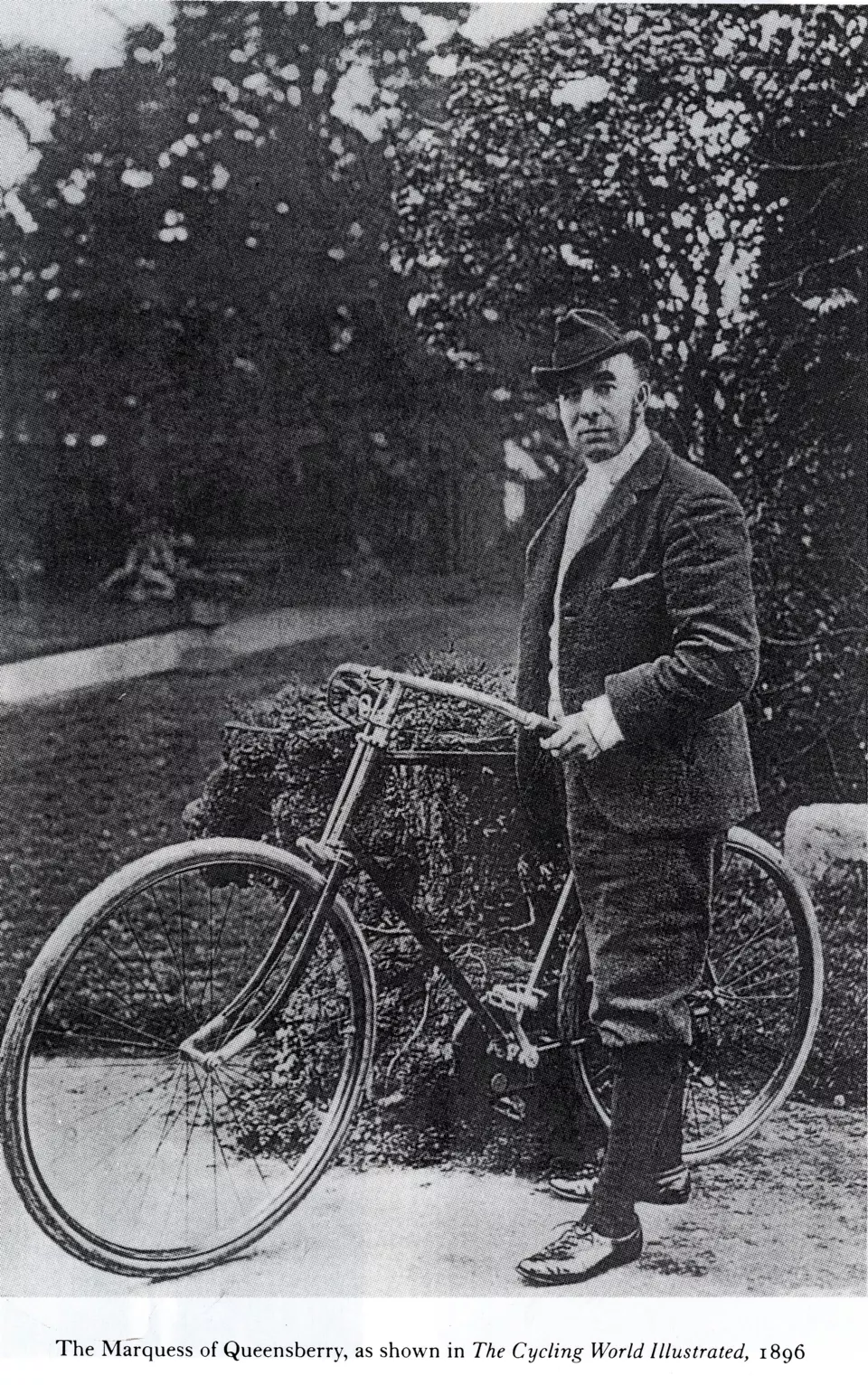
The rules were not named after their author. They carried the name of John Sholto Douglas, the 9th Marquess of Queensberry, born in Florence in 1844, who attended Magdalene College, Cambridge, between 1864 and 1866 and was among the founders of the Amateur Athletic Club in 1866. Queensberry did not write the code, but it appeared under his sponsorship, and the weight of an aristocratic title helped give it public standing.
His name later became tied to another story: his 1895 clash with Oscar Wilde, which ended in Wilde's imprisonment.
Twelve Rules That Rewrote the Fight
The Queensberry code ran to twelve rules, and it described the contest as a fair stand-up boxing match. The changes it brought were fundamental. The ring was set at 24 feet. Wrestling was banned outright. Rounds lasted a fixed three minutes, with one minute of rest between them.
A fighter who went down, whether through weakness or otherwise, had to rise without help, and he had ten seconds to do it. A man hanging helplessly on the ropes, or down on one knee, was treated as down. Seconds were not allowed in the ring during a round, and spiked shoes were forbidden.
Most important for the sport's future, the rules called for fair-sized gloves of good quality, with provision for replacing them. They were the first boxing rules to require gloves. Anything the twelve clauses did not cover was to be decided under the old London Prize Ring Rules, which shows that Chambers was reforming the sport rather than starting it from scratch.
The fixed round and the ten count changed the logic of a fight. Under the London rules, survival meant reaching the scratch line again. Under Queensberry, the clock ruled, and a fighter who could not beat the count was knocked out.
Two Codes Side by Side
The new rules did not take over at once. Bare-knuckle prizefighting under the London code went on for decades. Amateur bodies moved first: the Amateur Boxing Association, founded in England in 1880, and the Amateur Athletic Union in the United States, formed in 1888, both adopted the Queensberry standard. The WBA retrospective dates the rules' spread to the United States and Canada to around 1889.
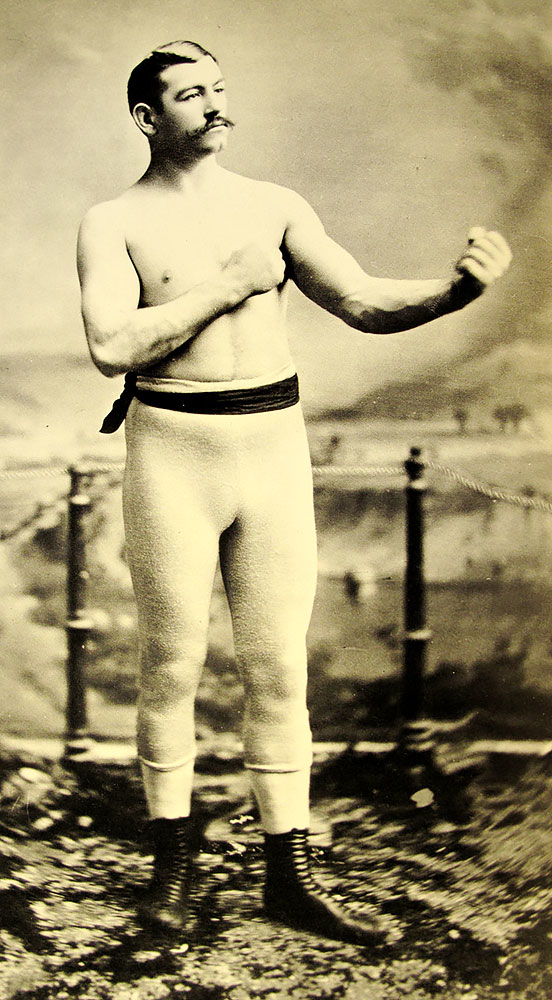
The career of John L. Sullivan, born in 1858, shows both codes running side by side. He fought with gloves under Queensberry rules as early as 1880, yet he won the bare-knuckle championship from Paddy Ryan in 1882 under the London rules. On 29 August 1885 he beat Dominick McCaffrey in a gloved contest, and modern authorities treat that bout as the start of his reign as world heavyweight champion under Queensberry rules.
The old code had one great heavyweight occasion left. On 8 July 1889, at Richburg, Mississippi, Sullivan met Jake Kilrain in a bare-knuckle fight scheduled for 80 rounds before about 3,000 spectators. Kilrain drew first blood and scored the first fall, Sullivan was sick in the 44th round, and Kilrain's manager threw in the towel after the 75th. It was the last time a champion defended a title under the London Prize Ring Rules.
New Orleans, 7 September 1892
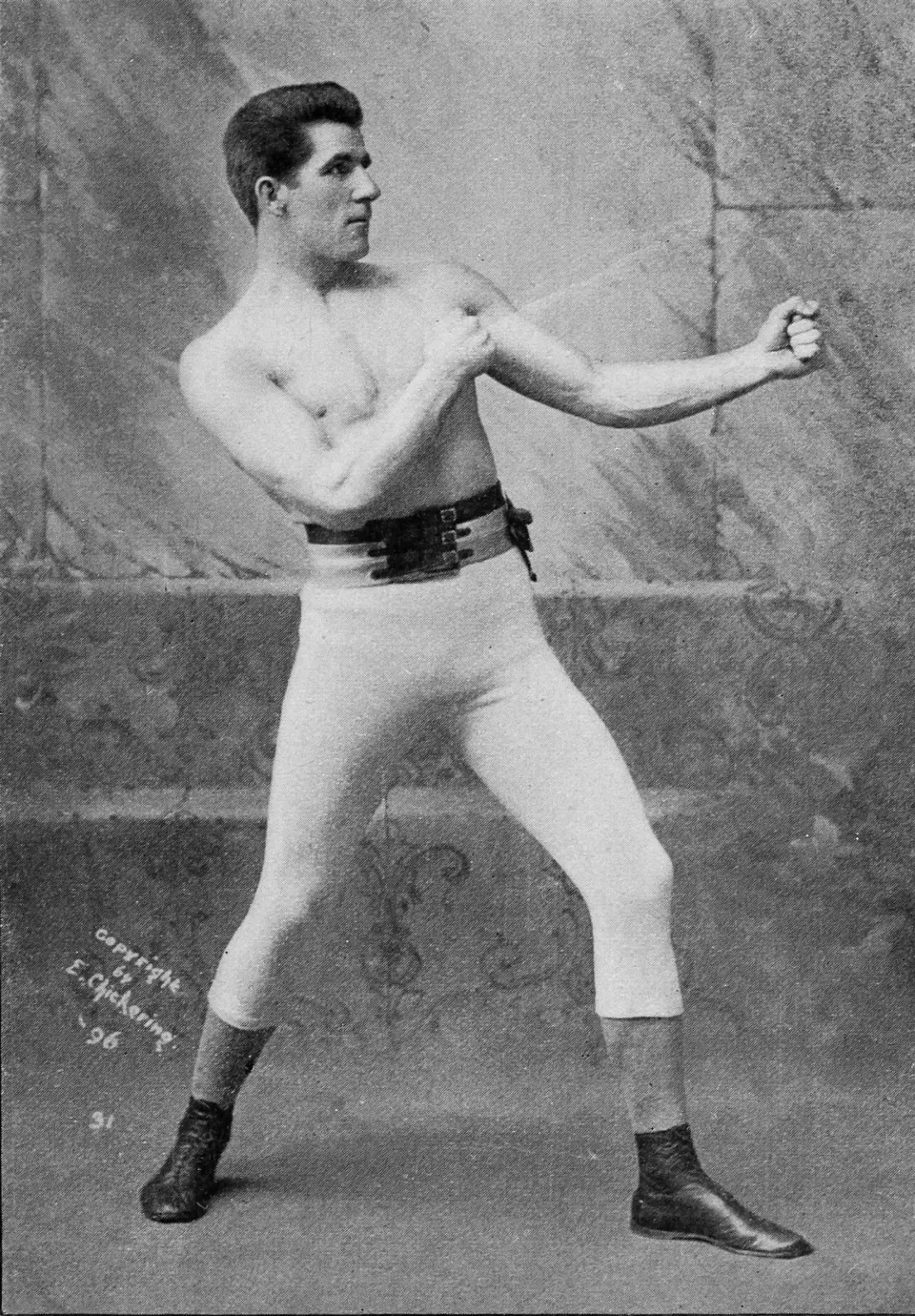
Three years later Sullivan defended his title at the Olympic Club in New Orleans, under electric lights, against James J. Corbett. Born in San Francisco in 1866 and nicknamed "Gentleman Jim," Corbett had come to national attention in May 1891 with a 61-round no-contest against Peter Jackson.
The fight was held entirely under Queensberry terms. According to Nathan Ward's account in American Heritage, the New Orleans police would only allow the bout if the fighters followed the Queensberry code and wore gloves, and $25,000 plus the heavyweight championship were at stake. Wikipedia reports that the venue was filled to its 10,000 capacity, with tickets priced from $5 to $15.
Three-minute rounds suited Corbett's style. He moved and slipped away from Sullivan's charges and wore the champion down with jabs. In the 21st round, at 1:30, Corbett knocked out Sullivan, the only defeat of the champion's career and his last fight.
First Gloved Title Fight? The Record Is Split
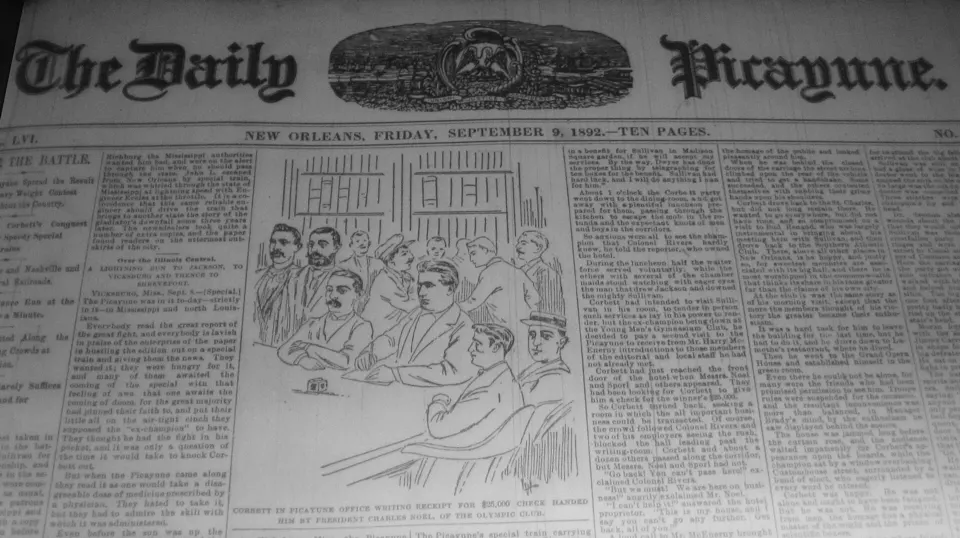
Sullivan vs. Corbett is often described as the first heavyweight title fight of the gloved era, and American Heritage puts it exactly that way. Other sources do not. Wikipedia's article on Sullivan says the bout was neither the first title fight under Queensberry rules nor the first fought with gloves, and the WBA retrospective names the 1885 McCaffrey contest as Sullivan's first gloved world title bout.
A more defensible claim is that 1892 was the turning point for the championship. Wikipedia's list of heavyweight champions notes that the National Police Gazette's recognition of bare-knuckle claimants had faded by the time Sullivan met Corbett, because gloved boxing had already won out. Corbett was the first man to hold the title purely under Queensberry rules.
A Code That Outlived Its Authors
Chambers did not live to see that night in New Orleans. He died in London on 4 March 1883, aged 40. Queensberry died in 1900. In 1990 both men were named among the 53 inaugural inductees of the International Boxing Hall of Fame, in the non-participant category.
Much of what they put on paper is still in force. The WBA notes that five of the original twelve rules survive in today's rulebook, among them the three-minute round with a minute's rest and the ten count.
Sources
- Marquess of Queensberry Rules, Wikipedia, accessed October 2026
- John Graham Chambers, Wikipedia, accessed October 2026
- London Prize Ring Rules, Wikipedia, accessed October 2026
- John L. Sullivan, Wikipedia, accessed October 2026
- James J. Corbett, Wikipedia, accessed October 2026
- John Douglas, 9th Marquess of Queensberry, Wikipedia, accessed October 2026
- List of world heavyweight boxing champions, Wikipedia, accessed October 2026
- 160 Years of the Queensberry Rules: The Code That Shaped Boxing History, World Boxing Association (wbaboxing.com), 24 April 2025
- 1892: One Hundred Years Ago, Nathan Ward, American Heritage, September 1992
- Boxing Hall of Fame names first inductees, UPI, 7 April 1990


