
Marciano vs Walcott in 1952 Ended With One Short Right for the Heavyweight Title After Twelve Rounds Behind
In Philadelphia on September 23, 1952, Jersey Joe Walcott dropped Rocky Marciano in the first round and led on all three cards after twelve. Early in the 13th, a single short right hand made Marciano heavyweight champion.

On the night of September 23, 1952, a 38-year-old heavyweight champion outboxed an unbeaten challenger in Philadelphia for twelve rounds, dropped him in the first and led on every scorecard. Then, early in the 13th, Rocky Marciano threw one short right hand and Jersey Joe Walcott's reign was over.
An Old Champion and an Unbeaten Puncher
Jersey Joe Walcott had waited most of his adult life for the heavyweight championship. He finally won it in July 1951 at the age of 37, knocking out Ezzard Charles in the third of their meetings, which made him the oldest man to hold the title up to that point. The record stood for more than four decades, until George Foreman broke it in 1994. Walcott then kept the belt with a 15-round unanimous decision over Charles in their fourth fight.
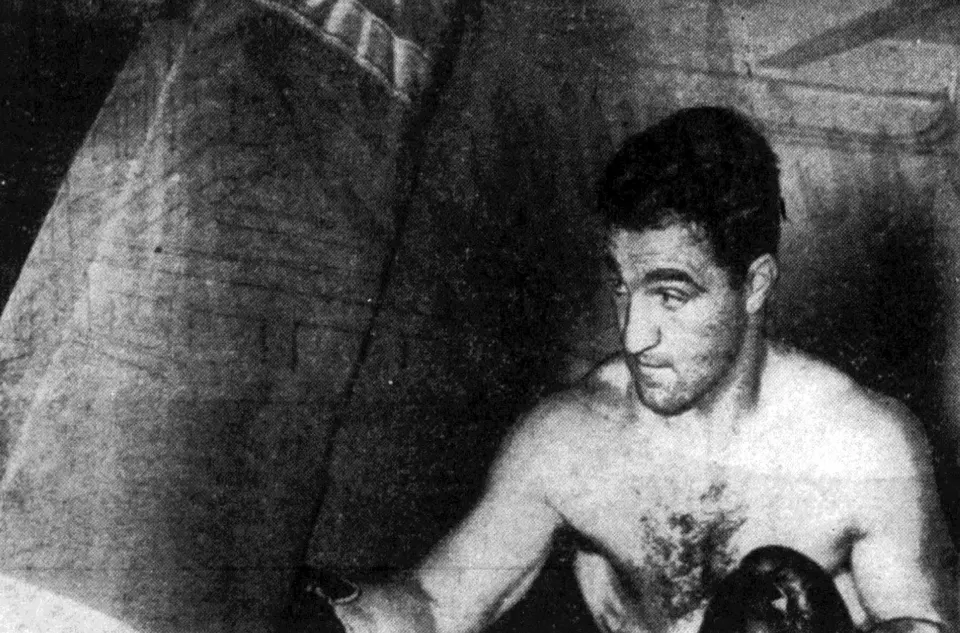
The challenger arrived from the opposite direction. Rocky Marciano, 29, of Brockton, Massachusetts, had never lost and had never been knocked down. He came in at 42-0 with 37 knockouts, the most recent of his headline wins being the 1951 stoppage of an aging Joe Louis. Walcott, by Wikipedia's count, stood at 49-18-1.
The contract was signed on August 20. Under its terms the champion was guaranteed 40 percent of the live gate and the challenger 20 percent, a split that reflected who owned the title, if not who was expected to keep it. A contemporary wire report carried by the Anaheim Gazette listed Marciano as the 9-to-5 betting favorite; ESPN gives the same price, while Wikipedia describes him only as a slight favorite.
Walcott's Promise Before the Bell
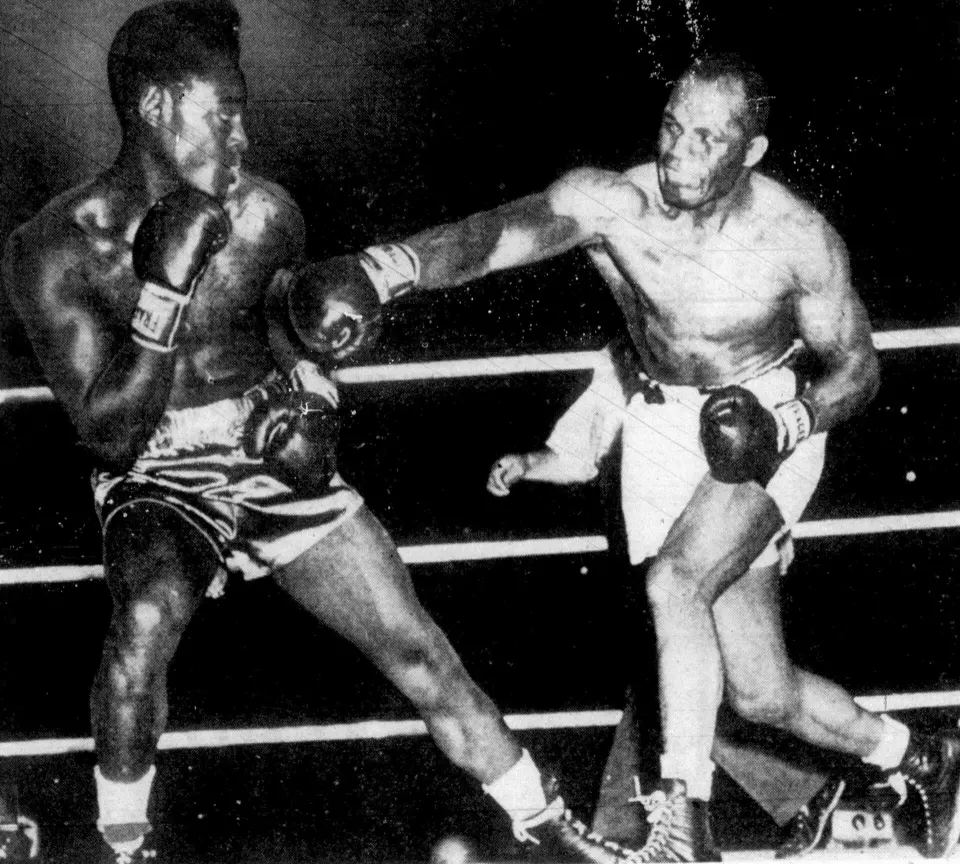
Walcott made no effort to hide his confidence. The Fight City records his pre-fight message to reporters as blunt as it gets: "If I don't lick him, take my name out of the record books." The disagreement among experts was real. One camp trusted the champion's craft, his feints and shifting angles; the other believed Marciano's youth and relentless punching would eventually break an older man down.
The weigh-in numbers showed the difference in frames. Walcott was a shade under 197 pounds, according to Wikipedia, while Marciano scaled 184. The champion was also about two inches taller and had the longer reach, advantages he intended to use from the opening bell.
Round One: The First Time Marciano Went Down
Walcott used them almost immediately. In the first round he caught Marciano with a short left hook and put him on the canvas. In 42 previous professional fights it had never happened. ESPN and The Fight City both report that Marciano was up at the count of four. ESPN quotes him explaining later that he rose quickly because he was angrier at himself than hurt.
It was the first of only two knockdowns Marciano suffered as a professional in his entire career. On this night it set the tone for a long stretch in which the champion appeared to be the better boxer.
Blood, Liniment and Blurred Vision
Walcott kept working behind his reach in the early rounds. ESPN's account describes him landing a low left hook in the second and another clean left to the chin in the third, finding gaps in Marciano's crouch. By the fourth, according to The Fight City, the challenger had started to find a rhythm and was pushing Walcott toward the ropes.
The sixth round brought an accidental clash of heads that cut both men. Walcott was opened over the left eye, and Marciano took a deep gash of his own; The Fight City places it on his scalp. What followed nearly decided the fight. ESPN reports that the solution used to treat the cuts got into Marciano's eyes, and from about the seventh round he complained to his corner that he could not see properly. Through the eighth, ninth and tenth, a half-blind challenger missed repeatedly while Walcott countered him almost at will. Both accounts credit those rounds clearly to the champion.
Marciano kept coming forward, but the arithmetic was turning against him. With three rounds left, a decision looked to be Walcott's for the taking.
The Scorecards After Twelve Rounds
All three officials had Walcott in front. Referee Charley Daggert scored the bout 7-4-1, according to the contemporary wire report in the Anaheim Gazette and ESPN; Wikipedia gives his tally as 7-4. The two judges had it 7-5 and 8-4. Whatever the precise figures, Marciano needed to win nearly every remaining round, or knock Walcott out, to leave with the belt.
Round Thirteen: The Short Right
He did not need the full three rounds. Early in the 13th, Walcott backed toward the ropes and both men threw right hands at nearly the same moment. Marciano's arrived first. It landed flush on the side of Walcott's jaw, and the champion sagged down the ropes, one arm hooked over the middle strand, his head dropping toward the canvas. Marciano followed with a left that, by ESPN's description, only grazed him. Daggert counted ten. The official time was 43 seconds of the round.
The length of that punch became part of the legend, and the sources measure it differently. ESPN says it travelled no more than six inches, and also notes it was later described as covering no more than twelve; The Fight City puts it at barely ten. Wikipedia calls it a right hook rather than a straight right. What all agree on is that it was short, that it was perfectly timed, and that Walcott was unconscious before he settled.
One contemporary wire story printed in the Anaheim Gazette mistakenly placed the knockout in the 15th round; every other source consulted, including the official record summarised by Wikipedia, gives the 13th.
A Crowd, a Gate and a Lost Pair of Trousers
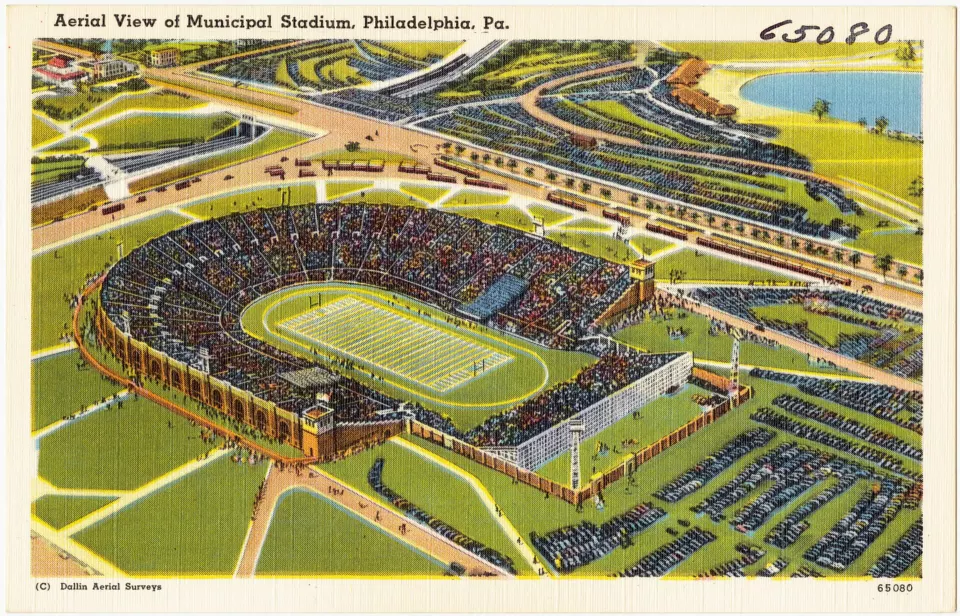
ESPN puts the crowd at Municipal Stadium at 40,379, while The Fight City estimates roughly 50,000. The contemporary report gave the live gate as $504,645, with theater television expected to add about $125,000 more. The Fight City notes the fight was carried to a record 50 theaters across the United States. Under the percentages in the contract, Walcott's share came to about $188,000 and Marciano's to roughly $94,000, as reported at the time.
The aftermath had its own scenes. In the dressing room, ESPN recounts, Marciano's father, Peter Marchegiano, wept and kept repeating that he was proud. In the chaos around the ring a souvenir hunter made off with the new champion's trousers, and Marciano left the stadium in a bathrobe.
Fight of the Year and a Quick Rematch
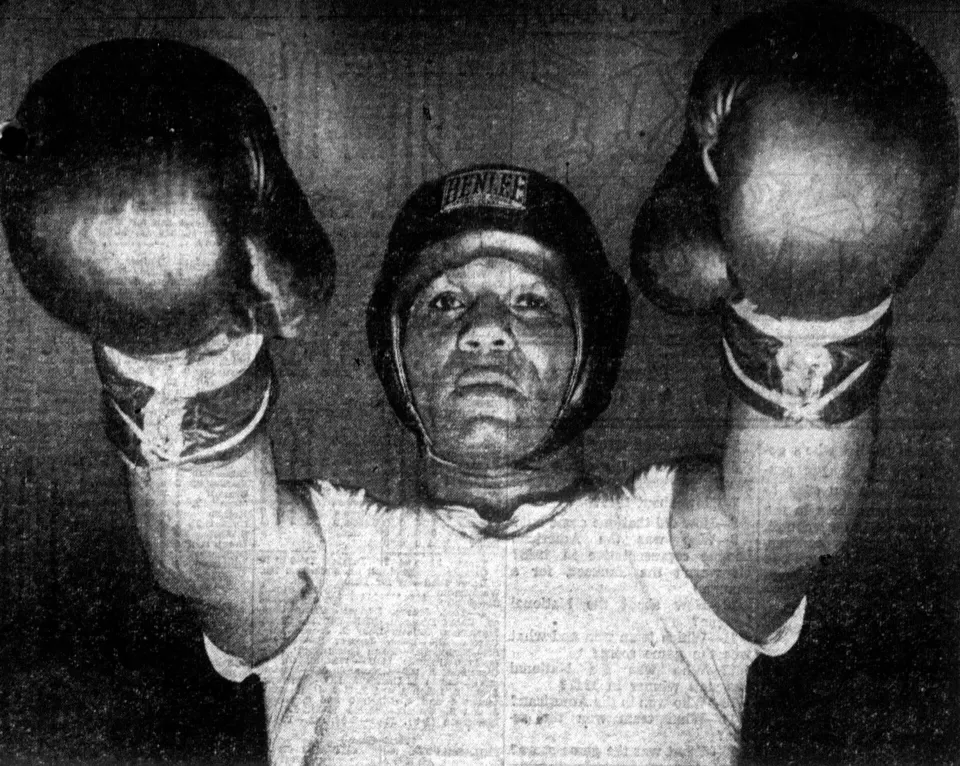
The Ring named the bout its Fight of the Year for 1952 and the 13th its Round of the Year. Decades later The Ring and BoxRec each ranked it the 16th greatest fight of all time, according to Wikipedia, and it still turns up regularly on lists of the best heavyweight title fights.
A rematch followed on May 15, 1953, at Chicago Stadium, and it bore no resemblance to the first. Marciano dropped Walcott in the opening round and he was counted out, ending the fight in roughly two minutes. Walcott retired afterward. In Philadelphia, though, the old champion had come within three rounds of beating the only heavyweight titleholder ever to retire undefeated, and he had done it with a 12-round lead and a knockdown on his side of the ledger.
Sources
- Jersey Joe Walcott vs. Rocky Marciano, Wikipedia, accessed October 2026
- Rocky Marciano vs. Jersey Joe Walcott II, Wikipedia, accessed October 2026
- Rocky Marciano's Greatest Fights: Marciano-Walcott, ESPN Classic
- Rocky Marciano (career summary), ESPN Classic
- Sept. 23, 1952: Marciano vs Walcott I, The Fight City
- Wire report on Marciano-Walcott, Anaheim Gazette, September 24, 1952


