
Johnson vs Jeffries in 1910 Was the Fight of the Century That Brought Riots and a Film Congress Banned
On 4 July 1910 in Reno, Jack Johnson beat the unretired James J. Jeffries in fifteen rounds. The result set off race riots across the United States and led Congress to outlaw the interstate shipment of fight films.

On the Fourth of July 1910, in a wooden arena hammered together in under two weeks beside the railroad tracks in Reno, Nevada, heavyweight champion Jack Johnson spent fifteen rounds taking apart James J. Jeffries, the unbeaten former champion who had been coaxed out of six years of retirement to win the title back for white America. The fight lasted about an hour. Its consequences, in the streets of dozens of American cities and later in the halls of Congress, lasted for decades.
A Retired Champion Called Back to the Ring
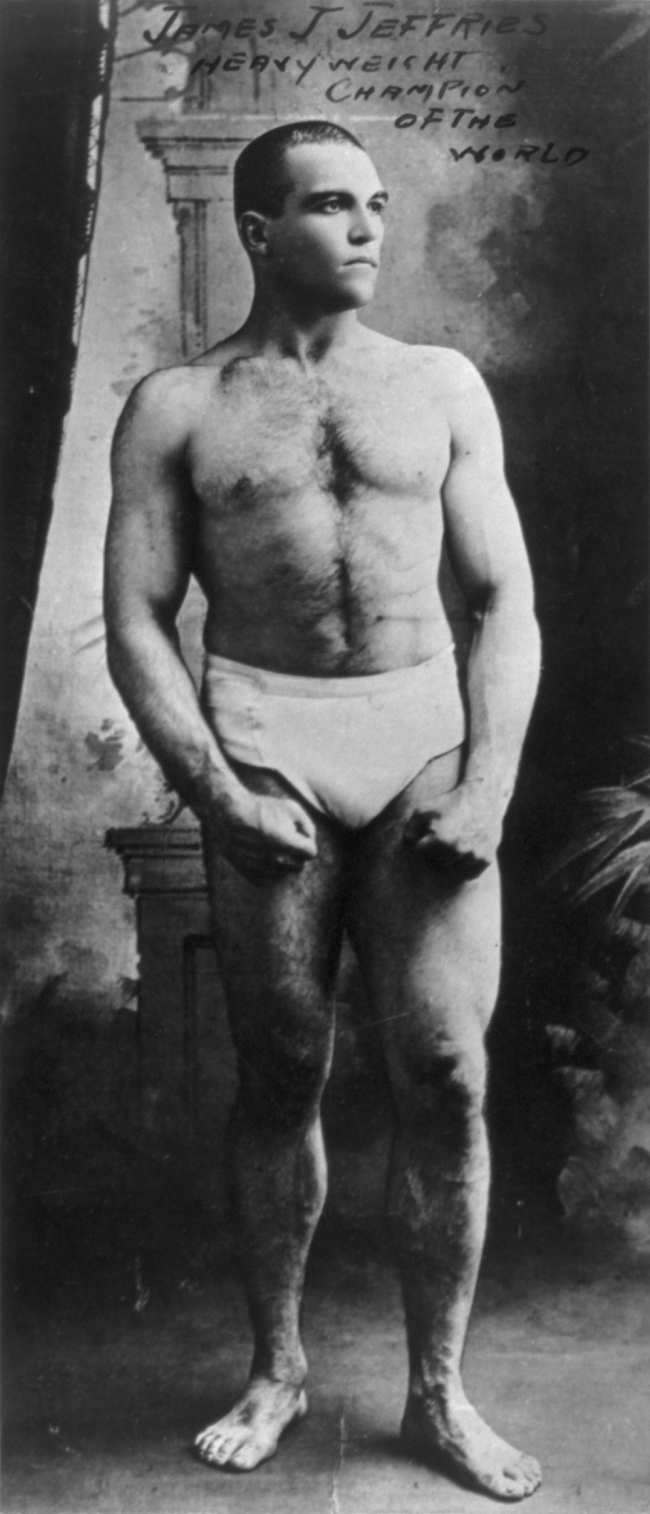
Jeffries had walked away from boxing with his record unblemished, and by 1910 he had been out of the ring for roughly six years. He was 35 years old. Johnson, the first Black man to hold the world heavyweight championship, was 32 and in his prime. The campaign to bring Jeffries back was openly racial: he was billed as the "Great White Hope," the man expected to reclaim a title that much of the white sporting press refused to accept in Johnson's hands.
The novelist Jack London, writing two days before the bout, cast Jeffries as the representative of his race. The New York Times, in an editorial that spring, fretted about what a Johnson victory might encourage among Black Americans. The comeback itself was a physical ordeal. According to Wikipedia's account of the bout, Jeffries had to shed well over 100 pounds to get back to a fighting weight.
From San Francisco to Reno in a Matter of Weeks
The promoter was George "Tex" Rickard, working with partner John Gleason, and the original plan put the fight in San Francisco. Then California's governor, James Gillett, cancelled it at the last minute. The Nevada state historic marker at the site gives "moral and religious objections" as the reason.
Rickard turned to Nevada, where prizefighting was legal. Reno's civic leaders lobbied hard to convince him that the town could be ready by the holiday. According to the Reno Historical project, construction of the arena began on June 23, on land owned by Patrick Flanigan along East 4th Street, near the Southern Pacific tracks and the Reno-Sparks streetcar line. Architect W. L. McLaughlin oversaw crews of up to 300 men working ten-hour shifts to raise a wooden amphitheater in time.
Eighteen to Twenty-Two Thousand in a Wooden Bowl
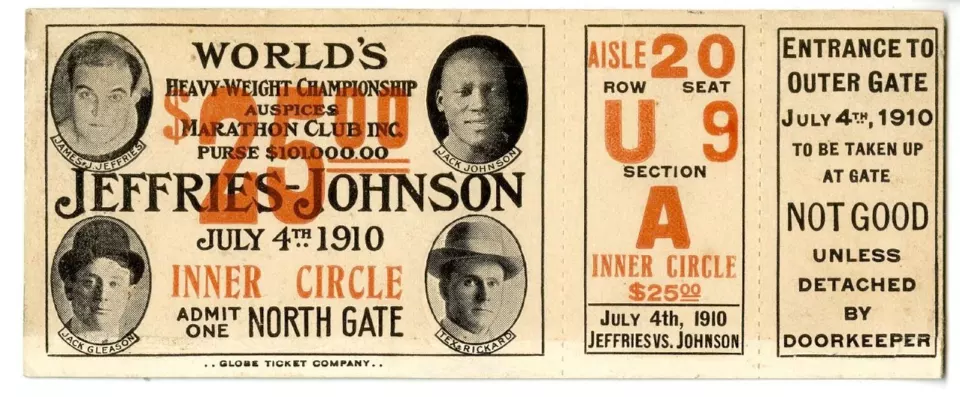
The money was enormous for its era. The purse was $101,000, split 75 percent to the winner and 25 percent to the loser, and the two fighters also shared in the film revenues. Ringside seats, according to Reno Historical, sold for $25 to $50. Rickard himself took the referee's job.
Sources do not agree on how many people were inside. Wikipedia gives a precise attendance of 18,020; Reno Historical estimates more than 20,000; the state historic marker says some 22,000 filled the arena, with over 30,000 visitors in town. Beyond Reno, crowds gathered in halls and outside newspaper offices across the country to follow the action through telegraph bulletins, and nine cameramen recorded the bout for theaters.
Fifteen Rounds of One-Way Traffic
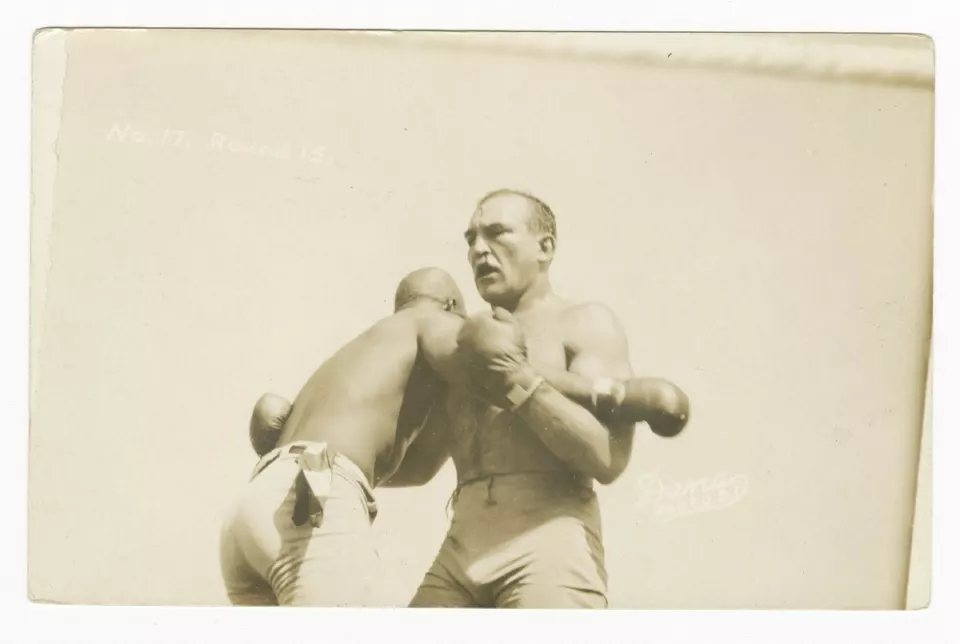
The bell rang at about 1:30 in the afternoon, Pacific time. What followed was not the war the promotion had sold. Johnson took control early and kept it. Every account consulted here describes him as dominant across all fifteen rounds, while the 35-year-old Jeffries, six years removed from serious competition, could not turn the fight his way.
The end came in the fifteenth round. Jeffries, who had never been knocked down in his career, went to the canvas more than once; Wikipedia says twice, while Reno Historical says three times. Accounts of who stopped the fight also differ. Wikipedia reports that Jeffries' manager threw in the towel to spare him the indignity of being counted out, the historic marker says his trainers called it off, and Reno Historical credits the referee. All agree on the outcome: Johnson won inside the distance in the fifteenth, and the man who had been sent to Reno to restore the old order left it beaten. Johnson's earnings from purse, bonuses and film rights came to more than $65,000.
The Night the Country Burned
The result travelled by telegraph, and violence followed it. In cities and towns across the United States, Black residents who celebrated Johnson's victory were attacked by white mobs. Wikipedia's account of the bout describes riots in more than 25 states and 50 cities and calls them the first truly nationwide race riots in American history.
The incidents recorded in the historical summaries are grim. In Uvalda, Georgia, white gunmen fired on a construction camp and killed three Black workers. In Wheeling, West Virginia, a Black man was lynched, reportedly for driving an expensive car. In Norfolk, Virginia, hundreds of white sailors roamed the streets hunting Black residents. In New York City, mobs entered Black neighborhoods, set buildings alight and beat at least one man to death. In Washington, D.C., crowds numbering in the thousands fought in the streets, and police made more than 200 arrests. Violence was also reported in Atlanta, Cincinnati, Houston, St. Louis, Philadelphia and many smaller places.
The death toll has never been fixed. Estimates in the sources range from 11 to 26 killed, with the ABA Journal citing as many as 26 and Wikipedia's fight article stating at least 20. Hundreds more were injured and hundreds arrested.
Banning the Pictures
The Vitagraph Company, under the supervision of J. Stuart Blackton, had filmed the contest for the J. & J. Company. The resulting picture, "Jeffries-Johnson World's Championship Boxing Contest," ran to seven reels and premiered at the Alhambra Theatre in New York on July 16, 1910. It became the most dangerous film in America almost overnight. Many cities and states barred it, and within two weeks of the fight former President Theodore Roosevelt had written in support of censoring all prizefights.
In 1912 Congress went further, passing the Sims Act, which outlawed the interstate transport of prizefight films. The concern, plainly, was the image of a Black champion beating a white challenger being projected in theaters across the land. The ban remained federal law until 1940. Silent-era film historians count the Reno picture as the last legal American boxing film of that period. A print survived, and in 2005 the Library of Congress added the film to the National Film Registry.
What Reno Left Behind
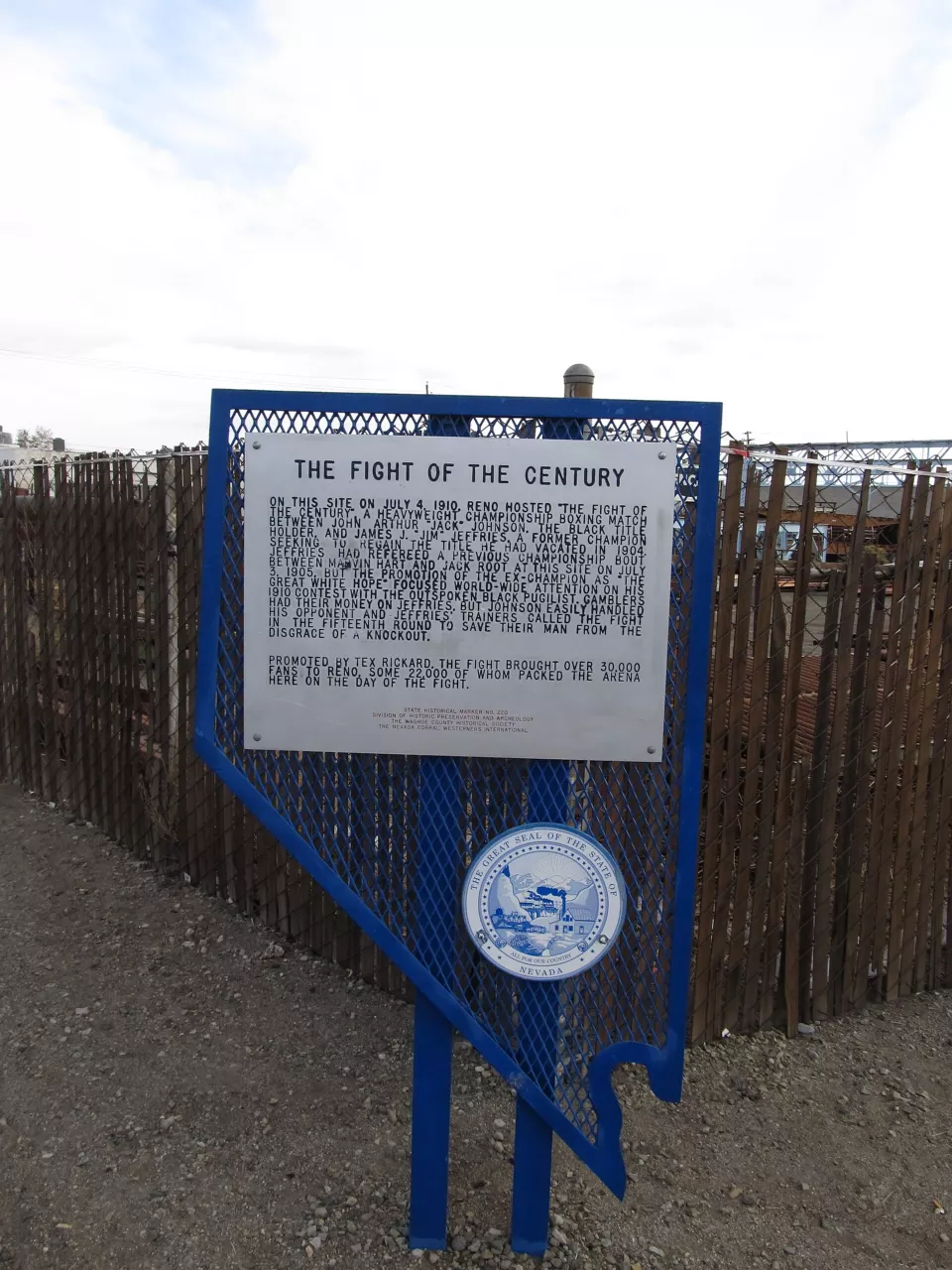
The wooden arena did not last; the site on East 4th Street later became a salvage yard, and today a state historic marker stands nearby. The fight's meaning has proved far more durable. A promotion built on the promise that an aging white champion would put a Black titleholder in his place ended instead in a one-sided beating, a wave of racial violence and a federal law aimed at keeping the evidence off American screens. More than a century later, it remains one of the clearest moments in which a boxing ring reflected the country around it.
Sources
- Jack Johnson vs. James J. Jeffries, Wikipedia, accessed October 2026
- Johnson–Jeffries riots, Wikipedia, accessed October 2026
- The Fight of the Century, Reno Historical (renohistorical.org), accessed October 2026
- The Fight of the Century, Nevada State Historic Marker No. 220 (text via Destination4x4), accessed October 2026
- October 17, 1912, George Hodak, ABA Journal, October 1, 2010
- Jeffries-Johnson World's Championship Boxing Contest (1910), AFI Catalog of Feature Films, accessed October 2026
- Jeffries-Johnson World's Championship Boxing Contest, Silent Era, accessed October 2026


