
Louis vs Conn in 1941 Saw Billy Conn Gamble in the 13th and Lose Two Seconds From the Bell While Ahead on the Cards
Billy Conn outboxed Joe Louis for twelve rounds at the Polo Grounds and led on two official cards, then chose to trade and was knocked out at 2:58 of the 13th. Louis's famous 'he can run, but he can't hide' line came five years later, before the rematch.

On the night of 18 June 1941, a 23-year-old light heavyweight from Pittsburgh stood twelve rounds from nowhere and three minutes from the heavyweight championship of the world. Billy Conn had outboxed Joe Louis at the Polo Grounds and was ahead on two of the three official cards. Then he chose to fight instead of box, and with two seconds left in the 13th round he was counted out.
A Light Heavyweight Gives Up His Crown
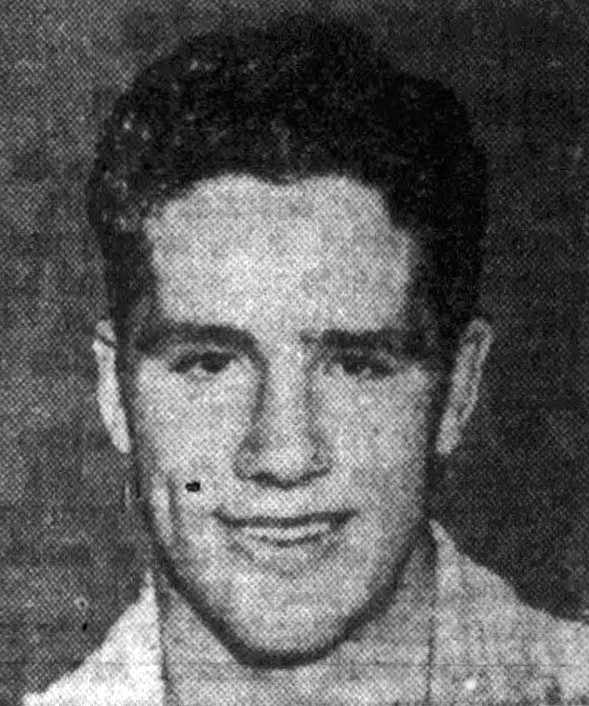
Conn arrived at the fight as a champion in his own right. Known as "The Pittsburgh Kid," he had taken the world light heavyweight title by outpointing Melio Bettina in New York in July 1939 and had defended it twice against Gus Lesnevich. In May 1941 he relinquished that belt to chase a bigger one. The move looked reckless on paper. Few observers gave him more than a slim chance against Louis, who was then recognised as undisputed heavyweight champion by the National Boxing Association, the New York State Athletic Commission and The Ring.
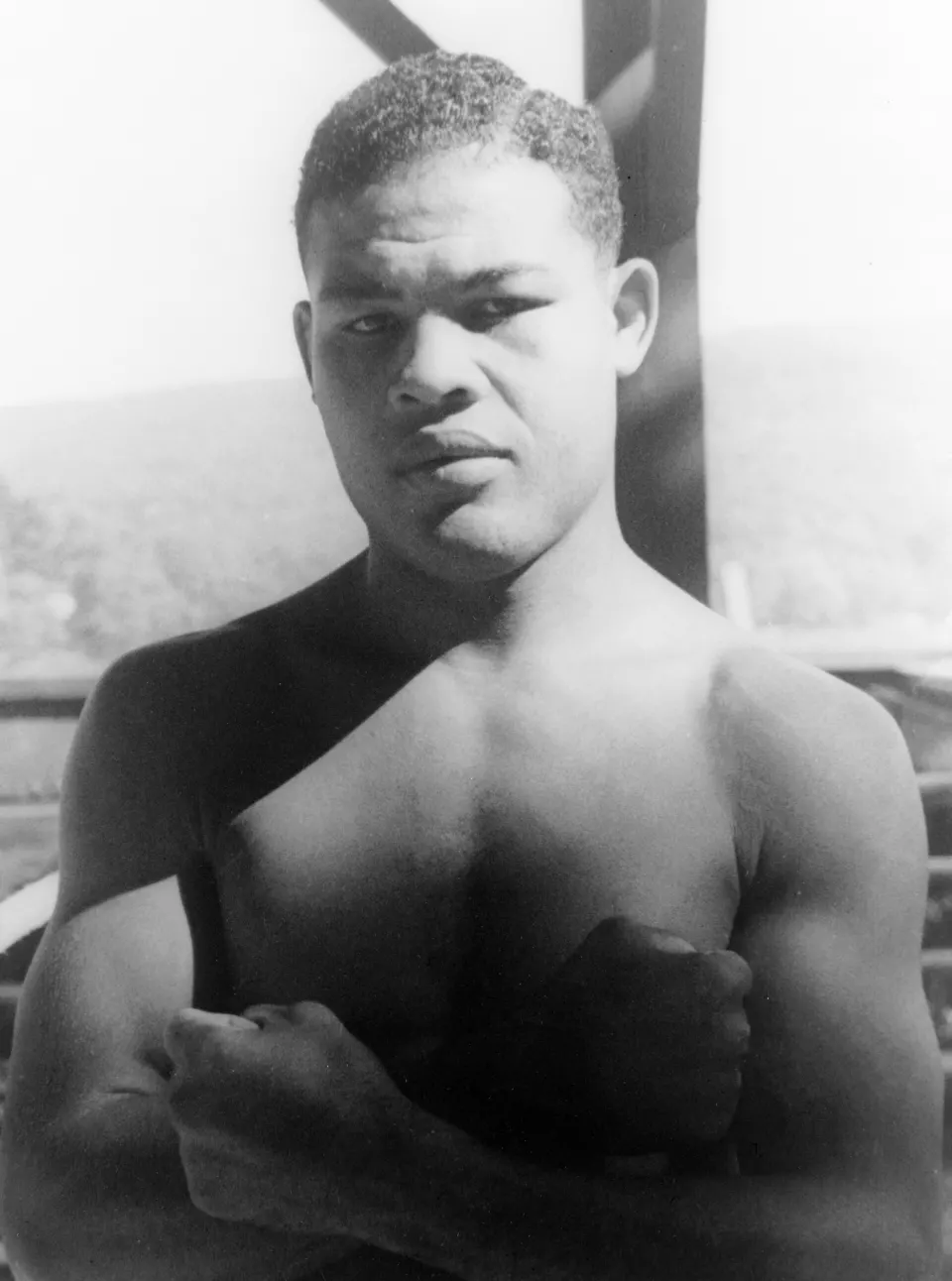
The physical gap was plain at the weigh-in. Louis scaled 199½ pounds and Conn 174, a difference of roughly 25 pounds, although both men stood about six feet one and a half. Louis, 27, was the established king of the division; Conn was a quick, upright boxer whose route to victory depended on speed of hand and foot, moving in and out of range and never letting the bigger man set his feet.
Uptown Crowd at the Polo Grounds
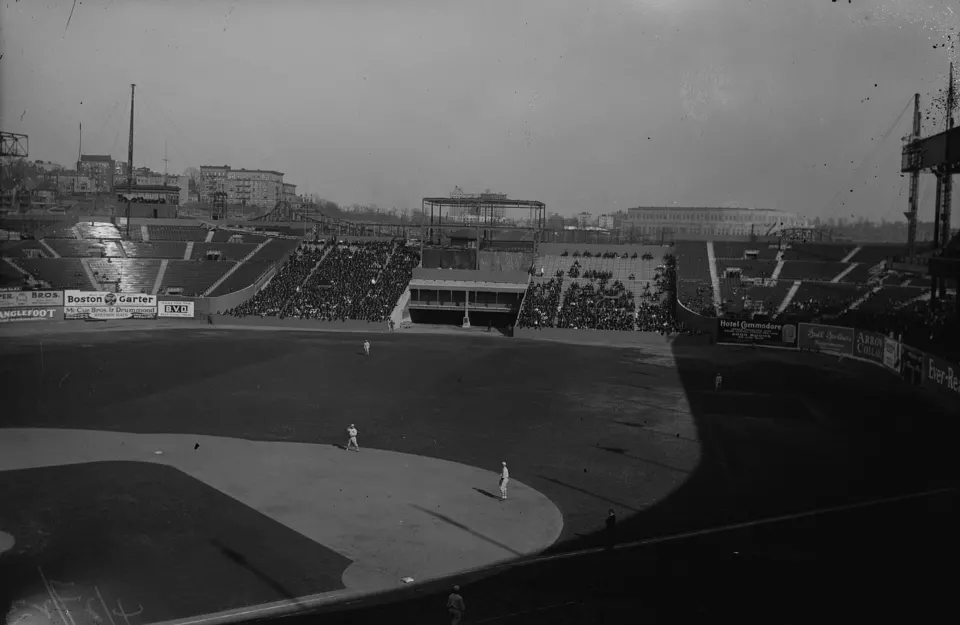
The bout drew a huge crowd to the old Manhattan ballpark. Wikipedia's account of the fight puts the paid attendance at 54,487, the figure also cited by Boxing News, while The Fight City describes the gathering as close to 60,000 and the largest at the Polo Grounds since Jack Dempsey met Luis Firpo there in 1923. The gap probably reflects the difference between counted tickets and a rounded estimate of everyone inside, but the sources do not settle it.
Early Danger, Then a Boxing Lesson
The opening rounds were cautious. Louis landed first with real weight: according to The Fight City, he staggered Conn with a pair of rights in the second round. Conn answered in the third with a jab that kept arriving and forced the champion to hold. In the fourth Conn's knees dipped after sharp rights, yet he still finished the round pushing Louis backwards.
The fifth nearly ended the night early. Louis dug a heavy left into the body and followed with a vicious hook, and Conn needed smelling salts in his corner between rounds. He recovered, and from there the fight began to tilt. Through the middle rounds Conn found his rhythm, throwing frequent left hooks, slipping away from Louis's counters and turning him around the ring.
The eighth and ninth were among his best. The Fight City records an exchange in the ninth in which Conn told the champion he was in a fight, and Louis replied that he knew it. Louis showed signs of life in the tenth with a hard body shot, but the momentum stayed with the challenger.
Round 12: Louis on the Ropes
The 12th was the round that set up everything that followed. Conn landed swinging left hooks that sent Louis back onto the ropes, and for a moment the champion looked dazed. Going into the 13th, the scoring stood in the Pittsburgh fighter's favour.
Boxing News lists the three official tallies after twelve rounds: referee Eddie Joseph had Conn ahead 7-5, judge Marty Monroe had him in front 7-4-1, and judge Bill Healy scored it level at 6-6. The Associated Press card, reported in Wikipedia's account, was more generous to Conn at 8-4. Conn needed only to stay upright and keep boxing to have a strong chance of leaving with the title.
The Decision to Trade
He did not. Encouraged by the hurt he had caused in the 12th, Conn came out for the 13th looking to finish Louis rather than outpoint him. It was the one thing Louis's style was built to punish. The champion drew him into an exchange, straightened him with a left hook and followed with a right. More rights came, methodical and heavy, as Conn's legs went. A final right to the head dropped him late in the round, and he could not beat the count.
The official time was 2:58 of the 13th. Two more seconds and the bell would have sent Conn to his corner still leading on the cards. The Ring later named the bout its Fight of the Year for 1941.
"I Lost My Head"
Conn spent the rest of his life being asked why he abandoned the plan that was working. His most repeated verdict on himself, cited both by Wikipedia and by EBSCO's biographical summary, was "I lost my head and a million bucks." When pressed on the decision he leaned on self-mocking humour about his Irish temperament; Boxing News quotes him as asking, "What's the point in being Irish if you can't be thick?"
The money was not abstract. A heavyweight title in 1941 was the richest prize in sport, and Conn had held it within reach for twelve rounds. Instead he left the Polo Grounds as the man who had come closer than anyone to beating Louis in his prime, and lost anyway.
War Postpones the Rematch
A return was quickly in demand. According to Wikipedia, a second fight was set for 25 June 1942 but was postponed when Conn broke his left hand. It was rescheduled for 12 October, then cancelled outright on 25 September 1942 by Secretary of War Henry L. Stimson. By then the United States was at war, and Conn had enlisted in the Army. Conn had also cashed in on his fame in Hollywood, appearing in the 1941 film The Pittsburgh Kid, as EBSCO notes.
"He Can Run, But He Can't Hide"
The line most associated with the rivalry belongs to the build-up to the rematch, not to the 1941 fight. Before the two met again at Yankee Stadium on 19 June 1946, Louis was asked how he would deal with Conn's hit-and-run tactics. Wikipedia and the historian J.H. Graham both record his reply as "He can run, but he can't hide." Boxing News places the remark in the same context, as Louis's answer when told of Conn's plan to stay on the move. Popular memory sometimes attaches it to the first fight; the sources consulted here tie it to the second.
The rematch did not resemble the original. Five years had dulled both men, Conn more than Louis. EBSCO reports that he weighed 182 pounds, around ten above his old fighting weight, and had lost the speed and timing that had troubled the champion in 1941. Louis knocked him out in the eighth round; Graham gives the time as 2:19. The fight was one of the early televised heavyweight title bouts, carried by NBC in parts of the country.
How the Night Is Remembered
Conn retired in 1948 and settled in Pittsburgh, where he died in 1993. The sources differ on his enshrinement: EBSCO records a Hall of Fame induction in 1965, while Wikipedia notes his place in the inaugural 1990 class of the International Boxing Hall of Fame. His career record is usually given as 63 wins, 11 losses and a draw.
For Louis, it was the night a smaller man nearly took his title. For Conn, it remained the defining night of his career: twelve rounds of near-perfect boxing undone in the thirteenth, two seconds from the bell.
Sources
- Joe Louis vs. Billy Conn, Wikipedia, accessed October 2026
- Billy Conn, Wikipedia, accessed October 2026
- On this day: stylish light heavyweight great Billy Conn was born, Boxing News, accessed October 2026
- June 18, 1941: Louis vs Conn I, The Fight City, accessed October 2026
- Billy Conn, EBSCO Research Starters, accessed October 2026
- The Louis-Conn Rematch, J.H. Graham, 18 September 2017


