
How Héctor 'Macho' Camacho Went From Spanish Harlem to Three World Titles and Retiring Sugar Ray Leonard
The Bayamón-born, Spanish Harlem-raised showman won world titles in three divisions, went the distance with Chávez and De La Hoya and ended Sugar Ray Leonard's career in 1997, before being shot dead in his hometown in 2012.

Héctor "Macho" Camacho turned boxing into theatre. Born in Bayamón and raised in Spanish Harlem, he won world titles at 130, 135 and 140 pounds, went the distance with Julio César Chávez and Oscar De La Hoya, and in 1997 closed the book on Sugar Ray Leonard's career. His life ended in 2012, in the town where it began, with a gunshot fired into a parked car.
From Bayamón to the James Weldon Johnson Houses
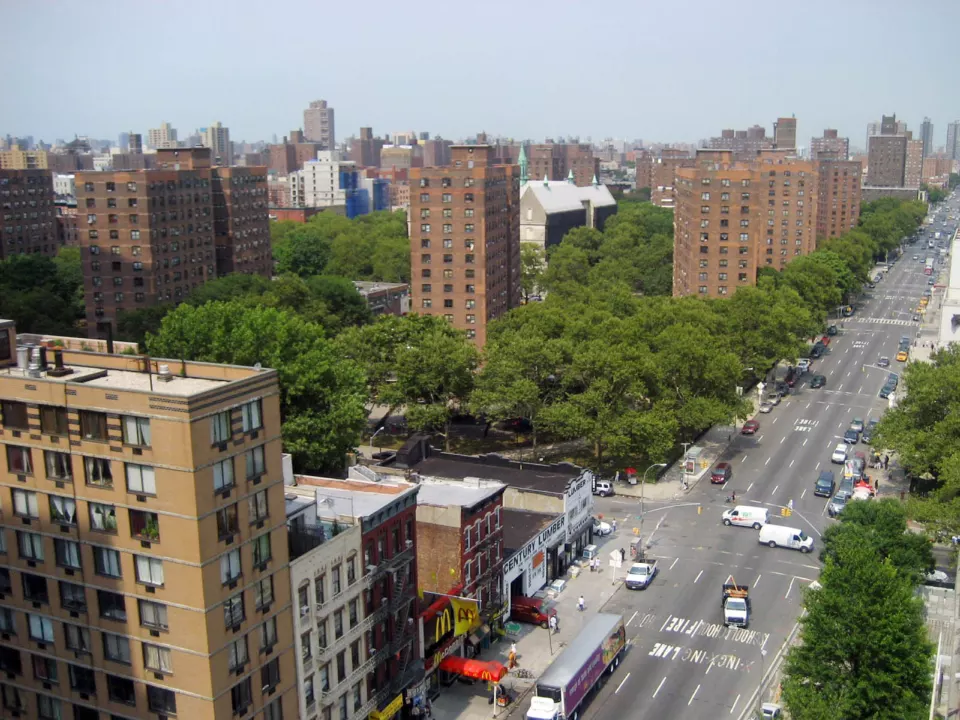
Camacho was born on May 24, 1962, in Bayamón, Puerto Rico. When he was about three, his parents split up and his mother took him to New York, where the family settled in the James Weldon Johnson housing project in Spanish Harlem. The neighbourhood shaped him in both directions. By his own later admissions, reported in obituaries, he stole cars as a teenager; the Boston Globe described a youth of shoplifting, drugs and delinquency, and Wikipedia records that he was jailed at 15. Accounts differ on where boxing took hold: the Philadelphia Inquirer's obituary linked his start in the sport to time at Rikers Island, while other biographies credit a high school language teacher, Pat Flannery, with steering him.
Even the nickname has more than one origin story. His father said he coined it for his youngest son, the New York Times credited Flannery, and Camacho himself once claimed co-workers who could not pronounce his surname simply called him "Macho." Whatever the source, the name fit.
As an amateur he collected three New York Golden Gloves titles, in 1978, 1979 and 1980, plus the 1980 Intercity Golden Gloves, finishing with a reported 96 wins in roughly 100 bouts.
Speed, Swagger and the Costumes
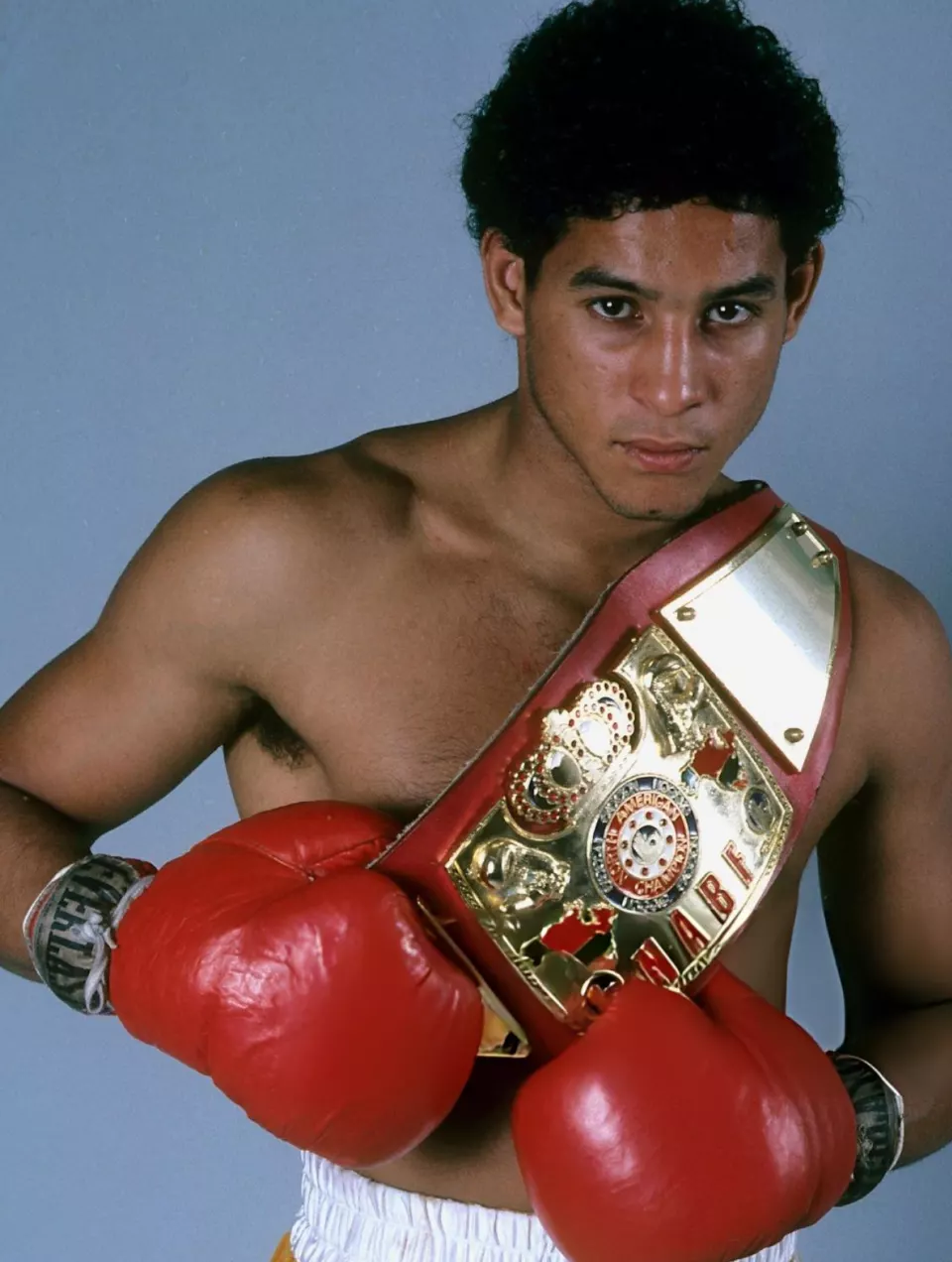
Camacho turned professional in 1980 as a southpaw built on hand speed. The Boston Globe remembered him for quick, rapid-fire combinations and sharp counterpunching, and an early admirer was Sugar Ray Leonard himself, who told reporters in 1982: "Not only quick, but accurate. I told him he could take my place." Fifteen years later that remark would read like a prophecy with a twist.
What made Camacho famous beyond the sport was the show. Fox News listed ring outfits ranging from a firefighter to a Roman gladiator, along with heavy gold chains; the Inquirer recalled a leopard-print loincloth and trunks decorated with lights or tassels. Crowds answered with the chant "It's Macho time!", as the Globe and Mail noted. He was also an unapologetic talker. Asked before the Ray Mancini fight why his opponent seemed to dislike him, he told reporters, according to the Inquirer, that it could only be jealousy of "a good-looking guy like me."
Three Divisions in Six Years
The first title came on August 7, 1983, when Camacho stopped Rafael "Bazooka" Limón in the fifth round to win the vacant WBC super featherweight belt. He kept it against Rafael Solís that November, then moved up. On August 10, 1985, in Las Vegas, he outpointed José Luis Ramírez over 12 rounds for the WBC lightweight title.
The most testing defence followed on June 13, 1986, at Madison Square Garden against fellow Puerto Rican Edwin Rosario. Camacho kept the belt on a split decision, then beat Cornelius Boza-Edwards unanimously in Miami that September. He was later stripped of the WBC title, in early 1987 according to the account of the Mancini fight.
The third division arrived at the Lawlor Events Center in Reno on March 6, 1989, where an unbeaten Camacho, then 33-0, met Ray "Boom Boom" Mancini for the inaugural WBO junior welterweight championship. Mancini, back after roughly four years away, kept marching forward; Camacho jabbed, held and slid away. The Reno crowd booed, and the judges split: two cards read 115-113 for Camacho, the third 116-112 for Mancini. Camacho called it the smartest fight a boxer could make against a slugger. Mancini was not persuaded.
He defended against Vinny Pazienza in February 1990, lost the belt to Greg Haugen on a split decision in February 1991 for his first professional defeat, and took it back in a rematch that May.
The Chávez Night in Las Vegas
A meeting with Julio César Chávez had been discussed since 1989, and it finally happened on September 12, 1992, at the Thomas & Mack Center outside Las Vegas, with Chávez's WBC junior welterweight title at stake. Chávez arrived 81-0 and a 5-1 favourite; Camacho was 40-1 and rated second by the WBC.
It was a one-sided evening. Chávez pressed for 12 rounds, hurt Camacho with a three-punch combination in the third, and by the eighth had swollen his left eye and cut the skin near his right. Camacho never went down and lasted the distance, which was itself something. The scorecards read 120-107, 119-110 and 117-111. The fight reportedly drew between 740,000 and 800,000 pay-per-view buys on Showtime.
Durán, Leonard and the End of a Legend
Camacho kept fighting at heavier weights and against famous names. On June 22, 1996, in Atlantic City, he outpointed Roberto Durán over 12 rounds, and he would beat Durán again in Denver in 2001.
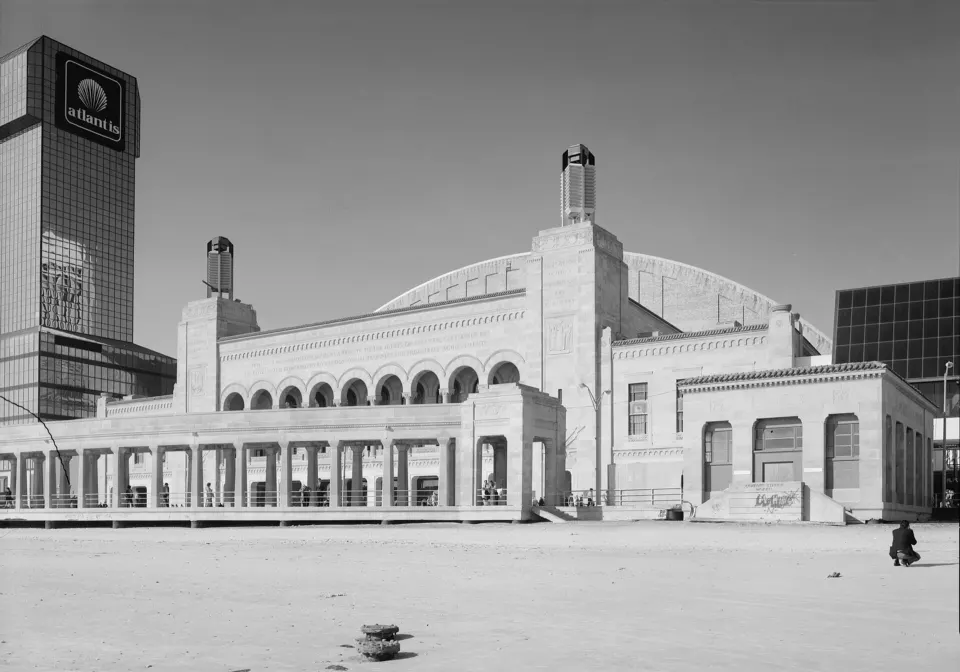
The fight that defined his later years came on March 1, 1997, at Convention Hall in Atlantic City. Leonard, 40, was returning after six years out of the ring; his last bout had been a heavy decision loss to Terry Norris in 1991. Camacho, 34, put his minor IBC middleweight belt on the line. Leonard was paid a reported $4 million and Camacho $2 million.
Leonard, it later emerged, was carrying a calf injury that had not been disclosed beforehand, and he moved stiffly. In the fifth round Camacho landed a left hook and a right hand, followed by uppercuts that put Leonard down. When Camacho followed up with a flurry, referee Joe Cortez stopped it at 1:08 of the round. Leonard briefly talked about tune-up fights afterwards but never boxed again, so the man who once said Camacho could take his place became the man Camacho retired.
Outclassed by De La Hoya
Six months later, on September 13, 1997, Camacho returned to the Thomas & Mack Center to challenge Oscar De La Hoya for the WBC welterweight title. De La Hoya was 24, unbeaten and widely rated the best fighter in the world; Camacho was 35 and 63-3-1. De La Hoya controlled every phase, dropped Camacho in the ninth with a left uppercut and two rights, and referee Richard Steele docked Camacho a point in the 12th for holding. The cards were 120-105, 120-106 and 118-108. It was his last shot at a major world title.
He kept fighting into his late forties, with his final bout in 2010, and finished 79-6-3 with 38 knockouts across 88 fights. The Inquirer noted he was never knocked out.
Trouble Outside the Ropes
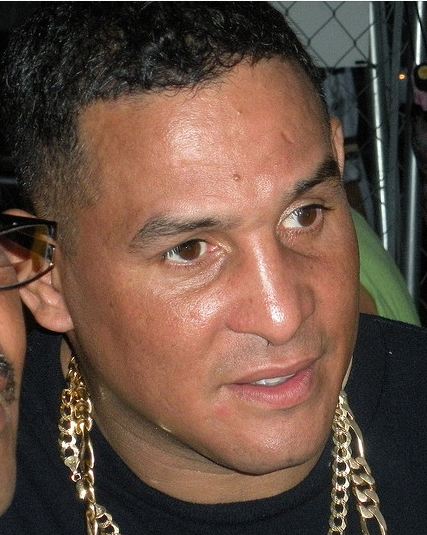
Retirement from the spotlight did not bring calm. In January 2005 he was arrested in Gulfport, Mississippi, over an attempted burglary of an electronics store; he pleaded guilty in 2007, and a seven-year sentence was suspended to probation apart from one year. In 2011 he escaped unharmed when shots were fired at him during a carjacking attempt in San Juan. The Globe and Mail summed up the contradiction: prison time, restraining orders and substance problems on one side, and on the other friends who described a generous man. Former champion Juan Laporte told the paper that people mistook Camacho's swagger for his character.
The Shooting in Bayamón
On the evening of November 20, 2012, Camacho was sitting in the passenger seat of a car belonging to his friend Adrián Mojica Moreno, parked outside a bar in Bayamón. Gunmen opened fire. Mojica Moreno was killed at the scene; Camacho was hit in the face, the bullet damaging his jaw, spine and carotid artery. The Inquirer reported that police found cocaine in the car.
Doctors declared him brain dead within days. After he went into cardiac arrest at the Centro Médico trauma centre in San Juan, the family had life support withdrawn, and he died on November 24, 2012, aged 50. On December 1 hundreds of mourners filled St. Cecilia's Church in East Harlem, the parish where he had gone to school, before his flag-draped coffin was taken to St. Raymond's Cemetery in the Bronx.
The International Boxing Hall of Fame voted him in in December 2015, and he was inducted the following June. His son Héctor Camacho Jr. had followed him into the professional ring.
Sources
- Héctor Camacho, Wikipedia, accessed October 2026
- Ray Mancini vs. Héctor Camacho, Wikipedia, accessed October 2026
- Julio César Chávez vs. Héctor Camacho, Wikipedia, accessed October 2026
- Sugar Ray Leonard vs. Héctor Camacho, Wikipedia, accessed October 2026
- Oscar De La Hoya vs. Héctor Camacho, Wikipedia, accessed October 2026
- Hector Camacho, 50; boxer who was champ in three classes, The Boston Globe, November 25, 2012
- Flamboyant boxer Hector "Macho" Camacho dies, The Philadelphia Inquirer, November 25, 2012
- Hector "Macho" Camacho dies after family removes life support, Fox News, November 2012
- Ex-boxer Hector "Macho" Camacho dies after shot, Honolulu Star-Advertiser (AP), November 24, 2012
- Funeral held for boxer "Macho" Camacho in NYC, The Spokesman-Review (AP), December 1, 2012
- A bad boy with a good heart, The Globe and Mail, 2012
- Legends' last fights: Sugar Ray Leonard, Boxing News


