
Hagler vs Hearns in 1985 Gave Boxing Eight Minutes It Never Forgot
On 15 April 1985 at Caesars Palace, Marvin Hagler survived a broken-open forehead and Thomas Hearns' right hand to win 'The War' in three rounds. The story of the fight, round by round, and why it still sets the standard.

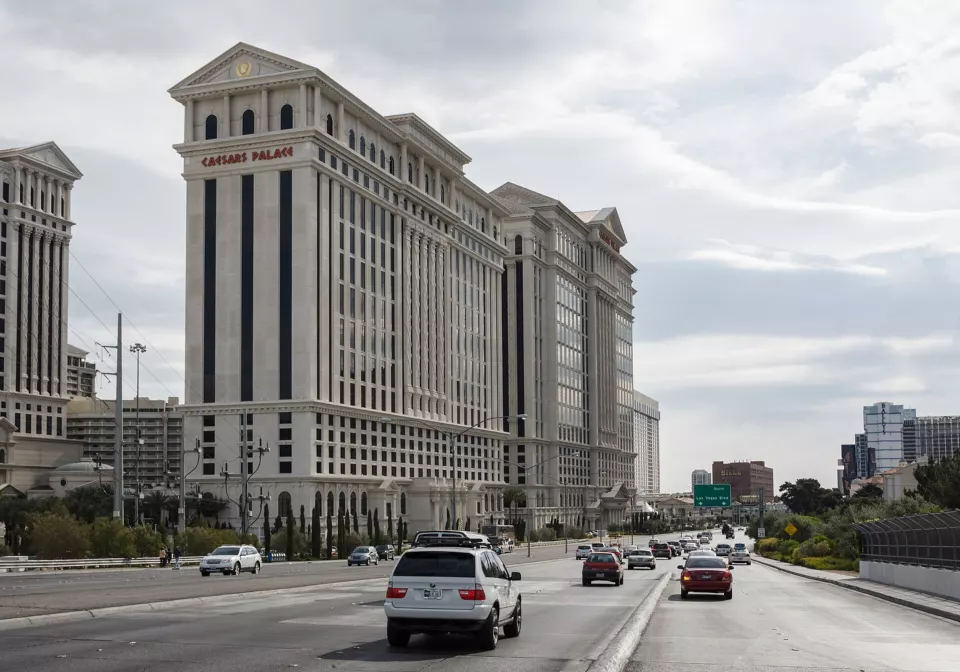
On the night of 15 April 1985, at Caesars Palace in Las Vegas, Marvin Hagler and Thomas Hearns fought for the undisputed middleweight championship of the world. The contest lasted only a little more than eight minutes, yet those minutes, and above all the first three of them, are still the yardstick against which every brawl in the sport is measured.
Two Champions Who Did Not Like Each Other
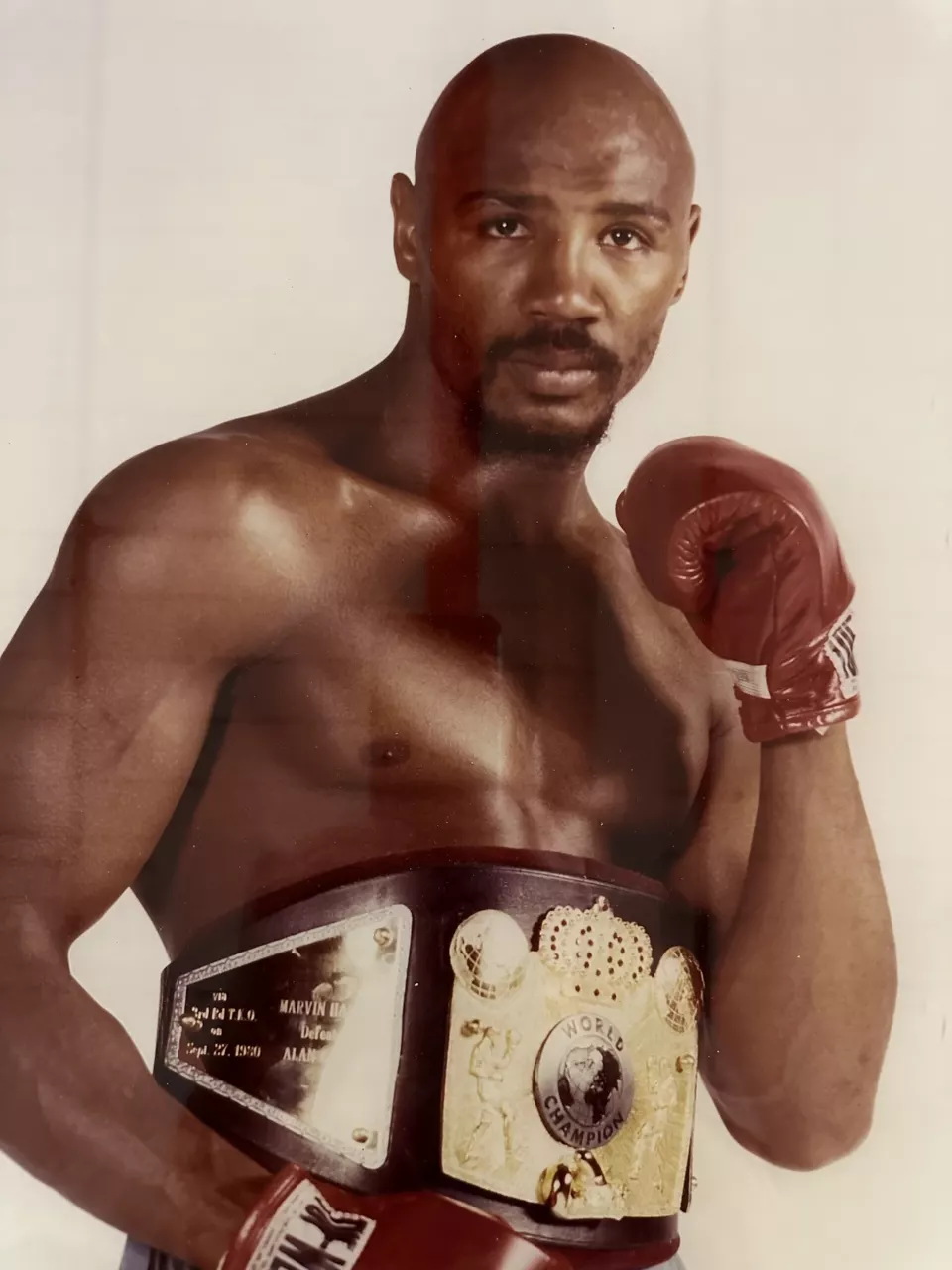
By the spring of 1985 Hagler had owned the middleweight division for years. He held the WBA, WBC and IBF belts along with The Ring's championship, carried a record of 60 wins, 2 losses and 2 draws with 50 knockouts, and had defended his crown again and again. What he lacked was the public adoration that followed Sugar Ray Leonard, Roberto Duran and Hearns. Even his points victory over Duran a year earlier had brought him criticism rather than praise, according to Planet Sport's retrospective.
Hearns arrived with a record of 40 wins and a single defeat, 34 of those wins inside the distance. The tall Detroit puncher had restored his standing in 1984 by beating Duran, and his right hand was regarded as one of the most dangerous weapons in boxing. A planned meeting between the two in 1982 had collapsed; Hearns blamed an injured finger, while Hagler was convinced his rival had simply backed away, Boxing News recalled. The resentment was mutual. Hearns told the press he had never liked Hagler, and Hagler appeared in public wearing a cap with the single word "WAR" printed across it.
The promotion initially sold the event simply as "The Fight." History renamed it. Both men were paid in the millions, although the figures differ by source: Wikipedia lists $5.6 million for Hagler and $5.4 million for Hearns, while Boxing News gives $5.3 million and $5.2 million. At the weigh-in Hagler scaled 159¼ pounds and Hearns 159¾. Hagler was 30, Hearns 26.
The First Round: Three Minutes Without a Breath
There was no feeling-out process. Hagler, normally a patient southpaw, charged across the ring at the opening bell and began swinging heavy right hands, driving Hearns toward the ropes. Hearns answered in kind. His right hand found Hagler's chin and, for a moment, the champion was shaken. Planet Sport describes an early right uppercut from Hearns as the first punch that truly landed and stung.
The exchanges never stopped. Somewhere in that storm Hearns broke his right hand, the punch he relied on most. Before the round was over Hagler had been cut on the forehead, the blood running down his face, yet he kept coming forward and had Hearns hurt again as the bell approached. Accounts differ slightly on the timing of the injury: Wikipedia and Boxing News place the forehead cut in the opening round, while Al Jazeera's obituary of Hagler says he was cut early in the second.
The Ring magazine later called it the greatest round in boxing history and named it the Round of the Year for 1985. KO Magazine gave it the same honour.
The Second Round: Hearns Loses His Legs
The pace dropped, but only relative to what had come before. Hearns no longer looked steady on his feet. Sugar Ray Leonard, working as a commentator on the broadcast, remarked that Hearns seemed "a little rubbery-legged." Hagler stalked him, landing left hooks to the side of the head, and at one stage briefly switched to an orthodox stance before returning to southpaw. Boxing News reports that a further punch opened a second wound, this one beneath Hagler's right eye.
After two rounds the bout was close on paper. Judges Harry Gibbs of Britain and Herb Santos each had Hagler ahead 20-18, while Dick Young scored it 20-18 for Hearns. Hagler was ahead, but his face was a mess and the cuts gave the challenger a way back into the fight.
The Third Round: The Cut and the Finish
Early in the third round the forehead wound opened again. Referee Richard Steele paused the action and sent Hagler to the ringside physician to have the cut examined. Boxing News notes that Steele had warned the fight could be halted in Hearns' favour. The doctor allowed it to continue, but the message was clear: Hagler could not count on many more minutes.
He did not need them. Hagler went straight back to the all-out aggression of the first round. A right hand to the side of the head sent Hearns reeling across the ring, turning almost a full circle. Hagler followed him, landing more right hands and a left hook, and Hearns went down on his back. He hauled himself up just before the count of ten, but he was in no condition to go on and toppled toward Steele, who waved the fight off. Leonard's voice on the broadcast caught the moment as Hearns fell.
Sources do not agree on the exact second the bout ended. Planet Sport gives the total duration as eight minutes and one second, which would place the stoppage just past the two-minute mark of round three, while other accounts give a time a few seconds earlier. All agree it was a third-round stoppage win for Hagler. Boxing News recorded the crowd at 15,700; Planet Sport gives a round figure of 15,000.
Carried Out of the Ring
The closing scene became part of the legend. Hagler, his face streaked with blood, was lifted high by his corner in celebration, while Hearns had to be carried back to his own corner, barely conscious. Afterward neither man sounded bitter. Hearns, quoted by Boxing News, called his opponent a great champion and the contest a very good fight. Hagler later admitted how close to the edge he had been, telling reporters, as quoted by Planet Sport: "I wanted him to get up so badly so I could knock him down again."
Hagler also gave Hearns credit for the approach he chose, saying the challenger had come out in the only way that might take a title from a champion. Not everyone agreed with the tactics. Wikipedia records that Donald Curry, speaking on British television, felt Hearns should have started cautiously and conceded the early rounds instead of trading. Hearns himself later said that the first round had drained everything he had.
Why It Still Sets the Standard
The Ring and KO Magazine both named Hagler-Hearns their Fight of the Year for 1985. Boxing News called it eight minutes of mayhem, and The Ring described it as the most electrifying eight minutes in the sport. Decades later it is still commonly ranked as the greatest three rounds ever fought.
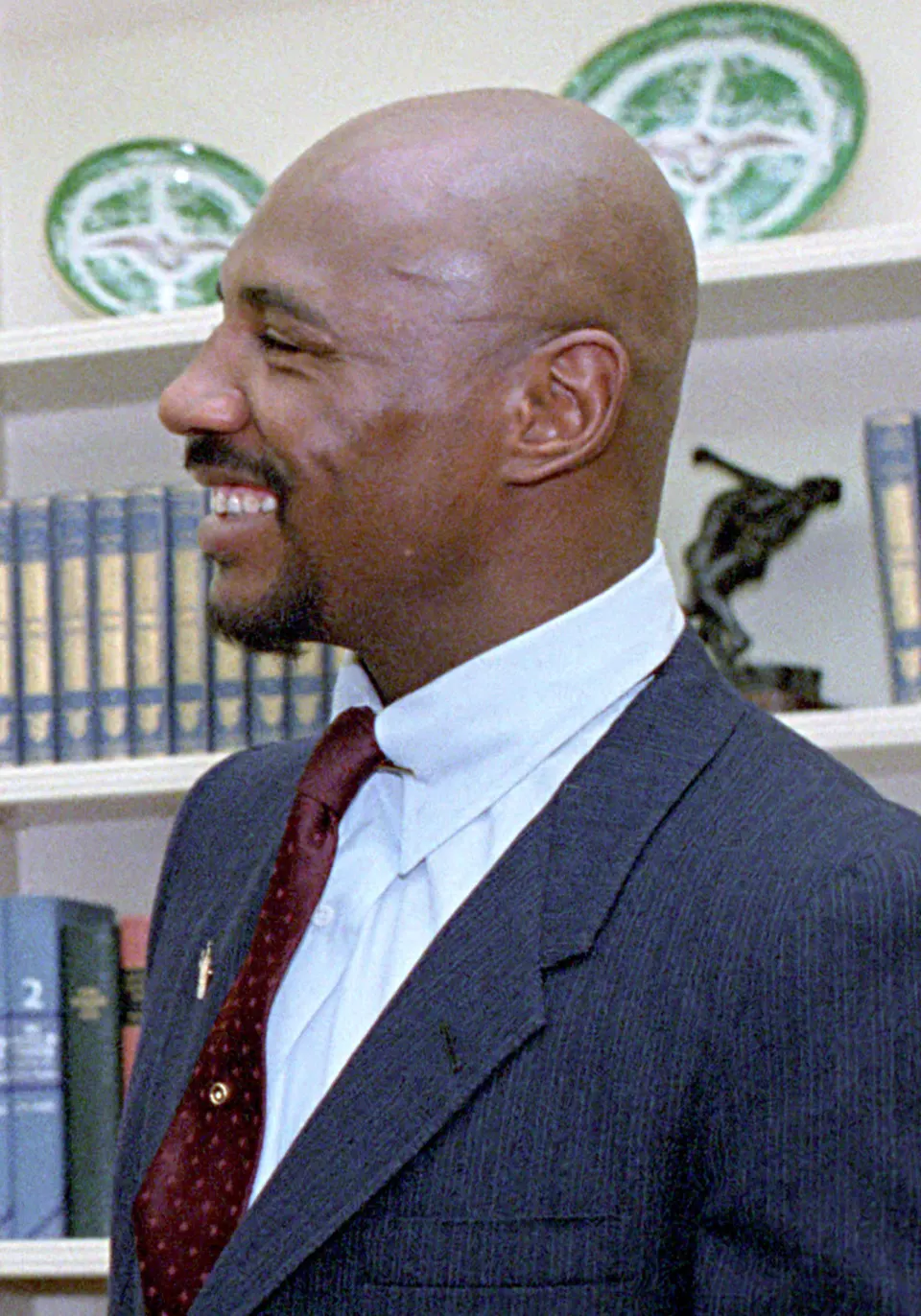
For Hagler the win delivered what years of dominance had not: lasting public recognition. He was named Fighter of the Year for 1985, as he had been in 1983, and was later chosen as the Fighter of the Decade for the 1980s. He fought only twice more, losing a disputed split decision to Leonard in 1987, and retired with a record of 62 wins, 3 losses and 2 draws, 52 of the wins by knockout. He entered the International Boxing Hall of Fame in 1993 and died at his home in Bartlett, New Hampshire, in March 2021, aged 66.
For Hearns, too, the name is forever tied to that April night in Las Vegas. Three rounds, two broken bodies and one result: a fight that needed no more than eight minutes to become permanent.
Sources
- Marvin Hagler vs. Thomas Hearns, Wikipedia, accessed 2 October 2026
- On this day: Marvin Hagler flattens Thomas Hearns to win epic three-round war, Boxing News (Matt Christie), 14 April 2018
- Marvelous Marvin Hagler vs Tommy Hearns: The Fight in Las Vegas, three rounds of boxing brutality, Planet Sport (Joe Hewlett), 14 April 2022
- Boxing legend 'Marvellous' Marvin Hagler dies aged 66, Al Jazeera, 14 March 2021


