
Fighting Harada the Tokyo Teenager Twice Beat Éder Jofre
Masahiko 'Fighting' Harada won the world flyweight title at 19, handed Éder Jofre the only two defeats of his career at bantamweight, and fell just short of a third title against Johnny Famechon.

Masahiko Harada turned professional in Tokyo at 16, took the world flyweight championship at 19 and then did something no one had managed in fifty professional fights: he beat Éder Jofre. He beat him twice. Fighting under the ring name "Fighting" Harada, he became Japan's first two-weight world champion and one of the most relentless pressure fighters of the 1960s.
A Teenager from Setagaya
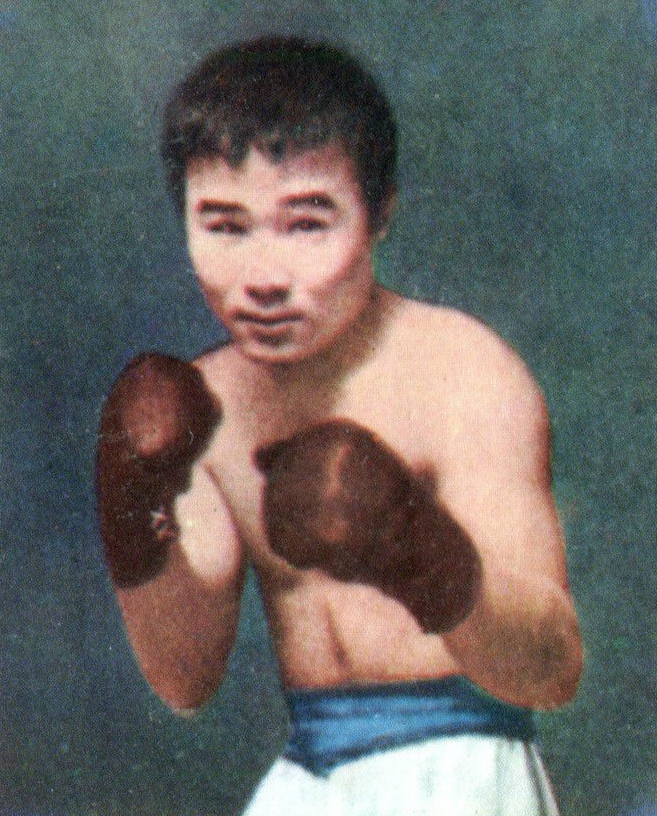
Harada was born on April 5, 1943, in Setagaya ward of Tokyo. He boxed out of the Sasazaki Gym and was only 16 when he made his professional debut on February 21, 1960, stopping Isami Masui in the fourth round in Tokyo.
What followed was a long winning run. The Tokyo Dome's Japanese Baseball and Sports Hall of Fame, in its profile of him, credits him with 26 straight victories at the start of his career and describes a style built on charging forward and never letting up. It also notes that he came up in the same era as Hiroyuki Ebihara and Katsuyoshi Aoki, a trio Japanese fans nicknamed "the Three Crows." Harada settled that rivalry with Aoki directly, knocking him out in the third round on October 29, 1964.
World Flyweight Champion at 19: Kingpetch in Tokyo, 1962
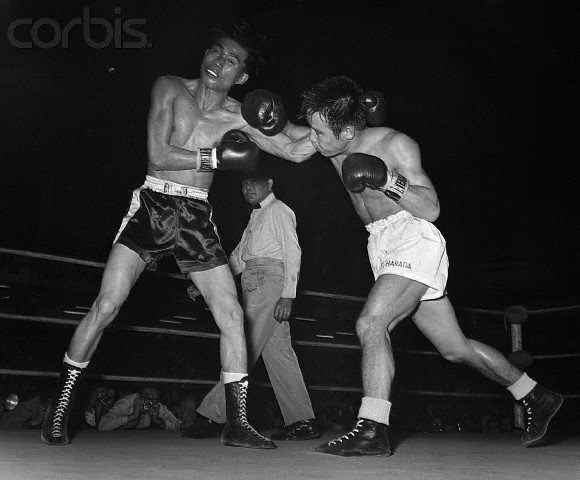
On October 10, 1962, Harada faced Thailand's Pone Kingpetch, the reigning flyweight champion, at the Kokugikan in Tokyo. Harada knocked him out in the eleventh round, taking the title recognised by the WBA, the New York State Athletic Commission and The Ring. He was 19 years old.
The reign was brief. Three months later, on January 12, 1963, the two met again in Bangkok, in what was Harada's first fight outside Japan. Kingpetch won back the belt on points over fifteen rounds. Wikipedia lists the verdict simply as a decision, while a 2023 profile by Paul Zanon for British Vintage Boxing describes it as a majority decision.
Breaking Éder Jofre: Nagoya, 1965
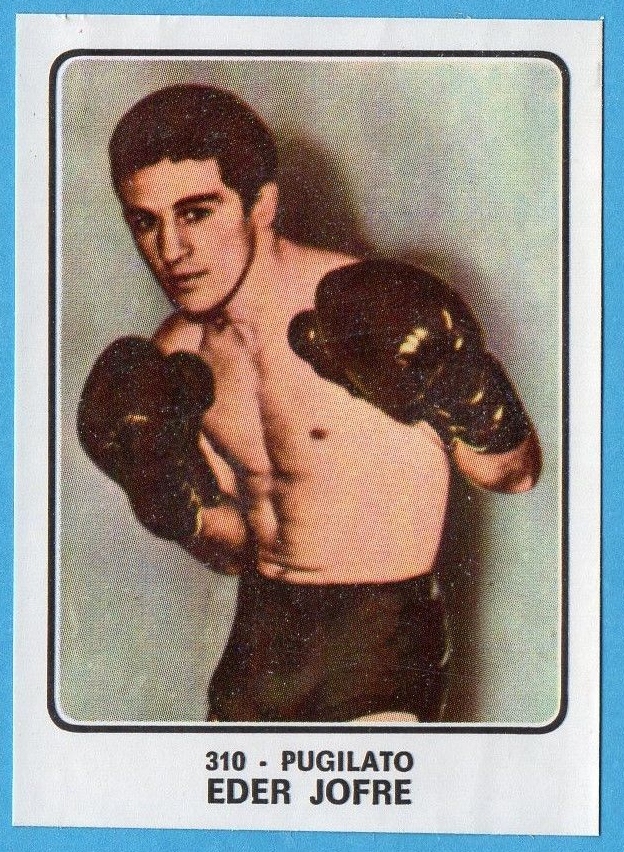
Harada soon moved up to bantamweight, where the champion was Brazil's Éder Jofre. Jofre had been champion since 1960, had defended the title repeatedly, including against Aoki, and had never lost as a professional, with fifty bouts behind him.
They fought at the Aichi Prefectural Gymnasium in Nagoya. Wikipedia and British Vintage Boxing date the bout to May 18, 1965; the Tokyo Dome Hall of Fame gives May 17. Over fifteen rounds Harada pushed the pace, and the result was a split decision in his favour. Jofre's unbeaten record was gone, and Harada was champion in a second weight class.
Defending the Bantamweight Crown
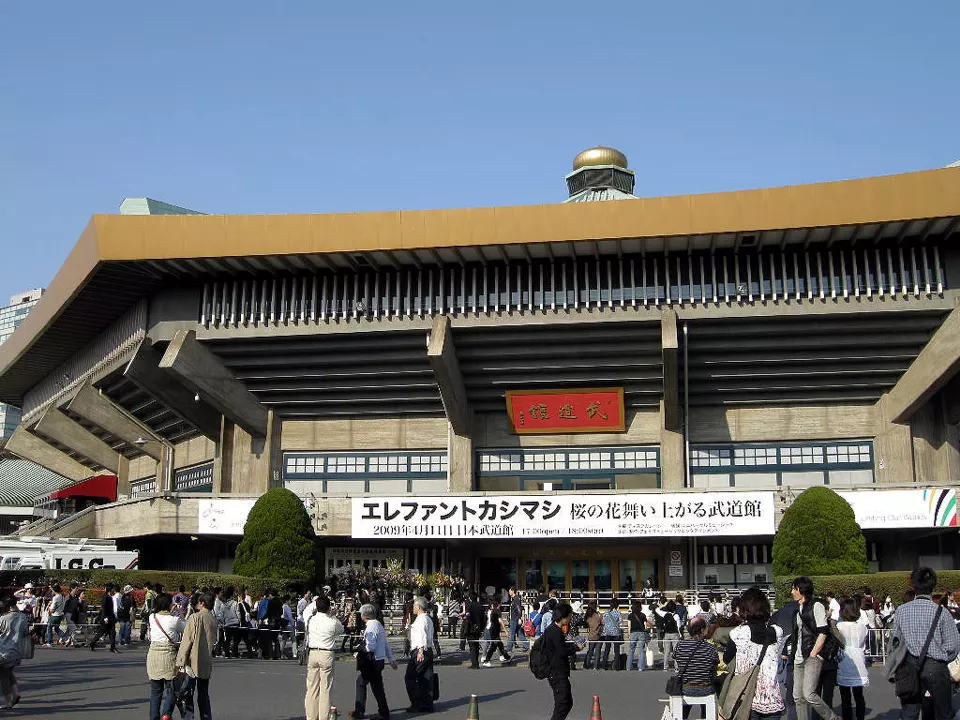
Harada's first defence came on November 30, 1965, against Alan Rudkin. Then Jofre wanted his rematch. It took place at the Nippon Budokan in Tokyo, on June 1, 1966 according to Wikipedia (British Vintage Boxing gives May 31). Again the bout went fifteen rounds, and again the decision went to Harada, this time unanimously. They were the only two losses Jofre suffered in his career. Jofre walked away from the ring afterwards and stayed out until a comeback in 1969, which would eventually carry him to a featherweight title in 1973.
Harada kept defending. He beat José Medel on January 3, 1967, and Bernardo Caraballo on July 4, 1967. The Tokyo Dome Hall of Fame counts four successful bantamweight defences in all.
The run ended on February 27, 1968, in Tokyo, when Australia's Lionel Rose took the title from him by unanimous decision over fifteen rounds.
Chasing a Third Title: Johnny Famechon and Willie Pep
Harada then climbed to featherweight, aiming to become a three-weight champion. On July 28, 1969, at Sydney Stadium, he challenged Johnny Famechon, the Australian holder of the WBC and Ring featherweight titles. The arrangement for officiating was unusual: the former great Willie Pep served as both referee and the only judge.
What happened inside the ring is told differently depending on the source. A 2023 British Vintage Boxing profile says Harada put Famechon down three times, in the fourth, eleventh and fourteenth rounds. A 2022 Footy Almanac account describes Famechon dropping Harada early, then going down himself from overhand rights in the eleventh and fourteenth. A 2022 Boxing News obituary of Famechon, by contrast, says Harada did not score a knockdown that night. The sources do agree on the ending. Pep first announced a draw, then said he had made an error in adding up his card, and Famechon was declared the winner. British Vintage Boxing and Footy Almanac both give the corrected score as 70-69. The decision has been described as controversial ever since.
The rematch came six months later, on January 6, 1970, at the Tokyo Metropolitan Gymnasium. Boxing News and British Vintage Boxing both report that Harada dropped Famechon in the tenth round, but the champion recovered and stopped him in the fourteenth. It was the last fight of Harada's career. He was 26.
Record, Legacy and Life After the Ring
The figures for his career vary slightly between sources. Wikipedia lists 63 fights with 56 wins and 7 losses, 23 of them by knockout; the Tokyo Dome Hall of Fame gives 55 wins, 23 knockouts and 7 losses from 62 fights. That museum also notes that he never lost to a Japanese opponent.
Recognition followed. Harada was inducted into the International Boxing Hall of Fame in 1995, and in 2002 The Ring magazine placed him 32nd on its list of the greatest fighters of the previous 80 years.
He stayed inside the sport. He opened his own club, the Fighting Harada Gym, and moved into boxing administration. The Tokyo Dome Hall of Fame describes him as having served as president of the Japan Professional Boxing Association; Wikipedia records that he took a presidency in 2002 but names the body as the Japanese Boxing Commission. He also kept close ties with Korakuen Hall, the small Tokyo arena at the centre of Japanese boxing. "When I think of boxing, I think of Korakuen," he told the Tokyo Dome Hall of Fame.
British Vintage Boxing adds a final detail that fits the man: in later years Harada became friends with the two Australians who had ended his title ambitions, Lionel Rose and Johnny Famechon.
Sources
- Fighting Harada, Wikipedia, accessed October 2026
- Éder Jofre, Wikipedia, accessed October 2026
- Johnny Famechon, Wikipedia, accessed October 2026
- The Interview: Fighting Harada, Japanese Baseball and Sports Hall of Fame (Tokyo Dome), accessed October 2026
- Fighting Harada, Paul Zanon, British Vintage Boxing, August 29, 2023
- Johnny Famechon 1945-2022, Boxing News, August 24, 2022
- Almanac Boxing: Famechon, a time and a place, Dips O'Donnell, Footy Almanac, August 5, 2022


