
Pone Kingpetch, the Hua Hin Flyweight, Became Thailand's First World Champion
Pone Kingpetch beat Pascual Pérez in Bangkok in 1960 to become Thailand's first world boxing champion, then lost and regained the flyweight crown against Fighting Harada and Hiroyuki Ebihara to become the division's first three-time champion.

On April 16, 1960, a 25-year-old flyweight from the seaside town of Hua Hin outlasted Argentina's Pascual Pérez over fifteen rounds at Lumpinee Stadium and gave Thailand its first world boxing champion. Pone Kingpetch would lose that crown twice and win it back twice, a pattern that made him the flyweight division's first three-time champion before his life ended at just 47.
Mana Sridokbuab of Hua Hin
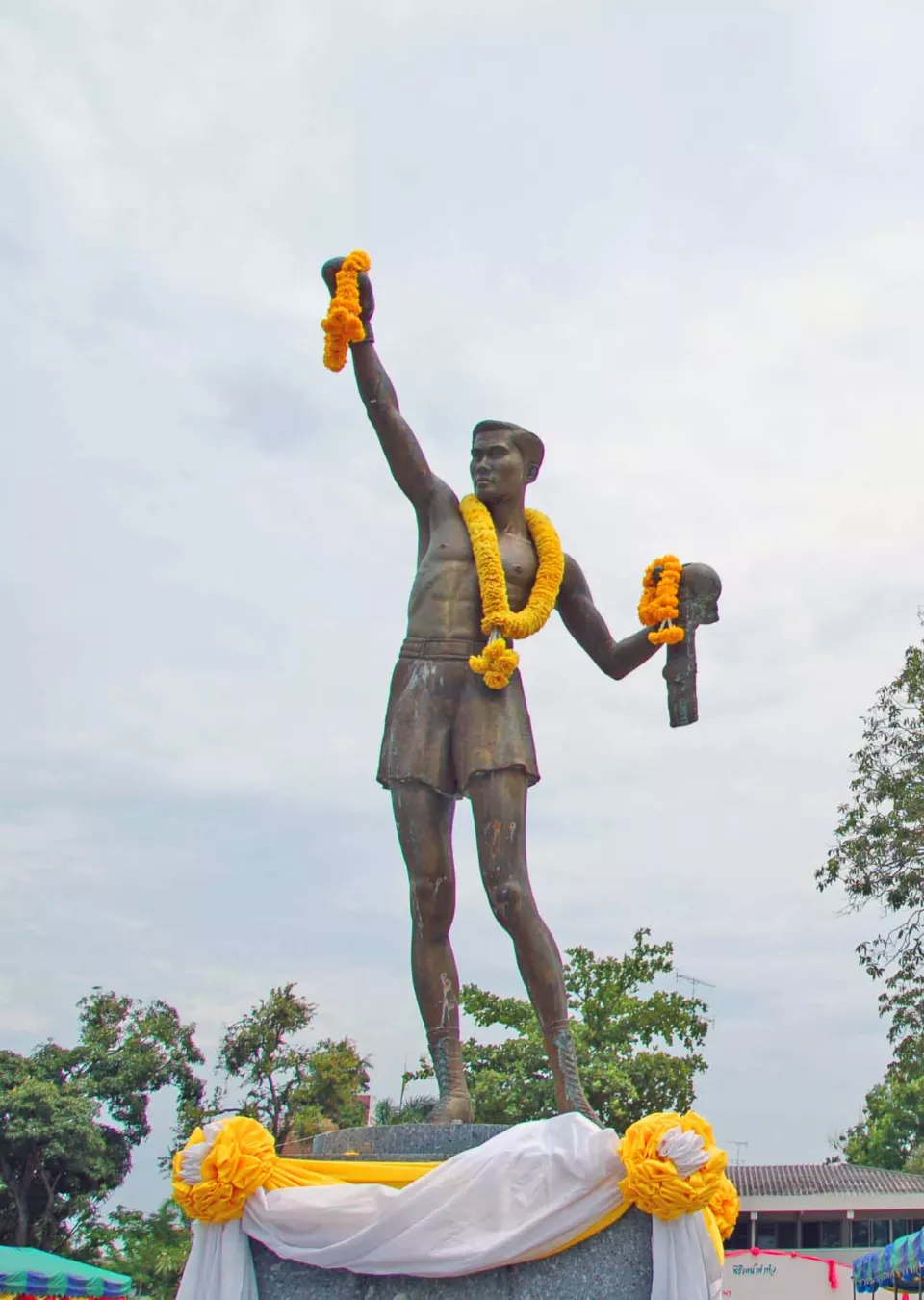
The man Thailand came to know as Pone Kingpetch was born Mana Sridokbuab on February 12, 1935, in Hua Hin, then a quiet fishing community on the western shore of the Gulf of Thailand. He was the seventh of nine children. He moved through several local schools before completing his secondary education at Hua Hin Wittayalai School, and according to his Wikipedia biography he was already telling friends as a boy that he intended to become the country's first world boxing champion.
At the time, no Thai fighter had come close to that goal. The ambition sounded like schoolyard talk. It would take him barely six years as a professional to make it real.
The Kingpetch Camp and a Borrowed Name
An older brother introduced him to Thongthot Intharathat, owner of the Kingpetch boxing camp on Phetchaburi Road in Bangkok, where he trained under the camp's co-founder Niyom Thongchid. Like many Thai fighters, he took the gym's name as his surname. His first name in the ring, Pone (often written Phon), was chosen by his manager in memory of Major Phon Intharathat, a member of the Free Thai movement who was killed during the Palace Rebellion.
He made his professional debut on May 1, 1954, in his home town, stopping Noknid Sorsor in the second round. Progress was steady. According to Feast Thailand's profile, he won the Thai flyweight title by knockout in July 1956 and added the Oriental and Pacific Boxing Federation flyweight belt in January 1957. By the end of the decade he was the obvious Asian challenger for the man who owned the division.
April 16, 1960: Pascual Pérez at Lumpinee
That man was Pascual Pérez. The Argentine had won flyweight gold at the 1948 London Olympics, taken the world title from Yoshio Shirai in Tokyo on November 26, 1954, and defended it nine times. He was short, strong and punched hard for his size, and he had been champion for more than five years when he travelled to Bangkok.
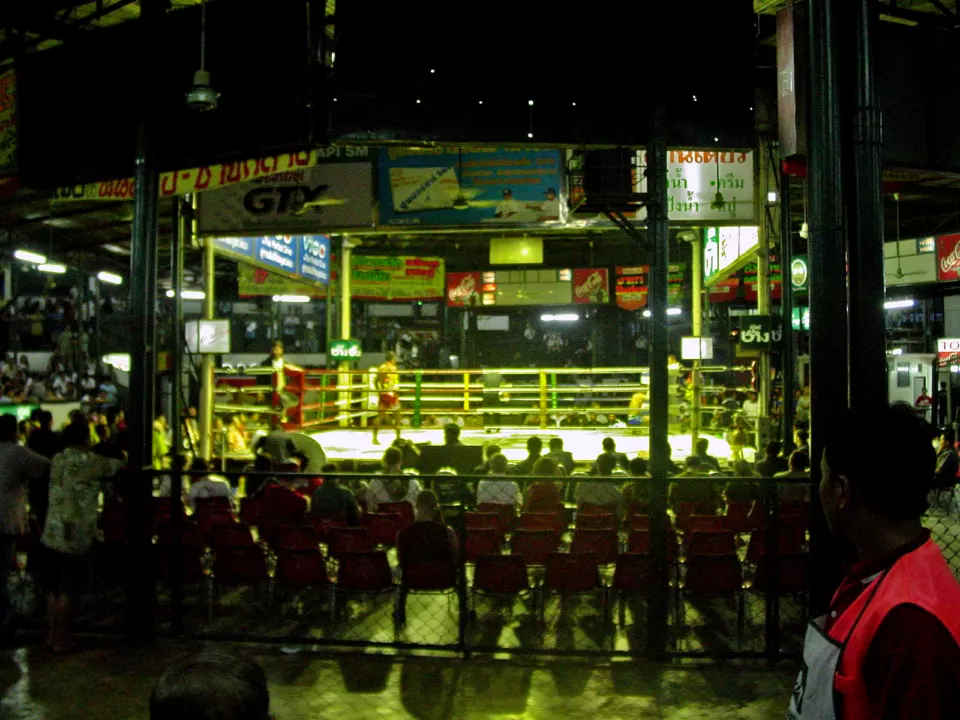
The fight at Lumpinee Stadium went the full fifteen rounds and both men finished bleeding. According to the Bangkok Post's account, Pone used his left hand to hold the shorter Pérez at range. When the champion did corner him, Pérez dug hard punches to the body and head, but the challenger's quicker feet kept him out of serious trouble. The verdict was split: the Thai and American judges voted for Pone, while the Argentine judge favoured Pérez.
The crowd erupted. King Bhumibol and Queen Sirikit, who were at the stadium, presented the new champion with a trophy, and the King patted him on the back. "I was so happy I cried," Pone said afterwards, as quoted by the Bangkok Post.
Settling It in Los Angeles
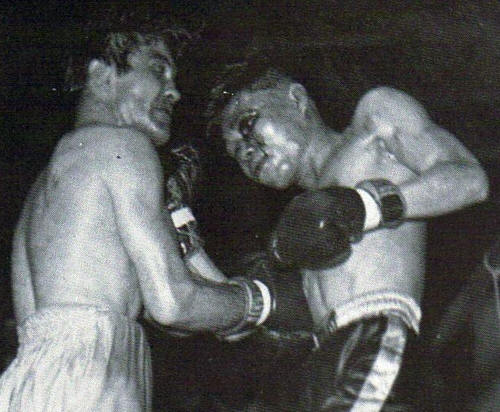
Any suspicion that a home decision had decided the title was answered five months later. On September 22, 1960, the two met again in Los Angeles, the first time Pérez had fought in the United States. This time Pone stopped him in the eighth round. Sources differ on the precise label, with Pérez's Wikipedia entry listing a knockout and the Boxing Title Fights database recording it as a technical knockout, but all agree on the round and the result. It was the first time Pérez had been stopped in his career.
Pone then took his title on the road to Japan. According to Boxing Title Fights, he outpointed Mitsunori Seki by split decision in Tokyo on June 27, 1961, and beat Kyo Noguchi by unanimous decision, again in Tokyo, on May 30, 1962. The Japanese market was rich in flyweight talent, and his next visit there would cost him.
A 19-Year-Old Named Fighting Harada
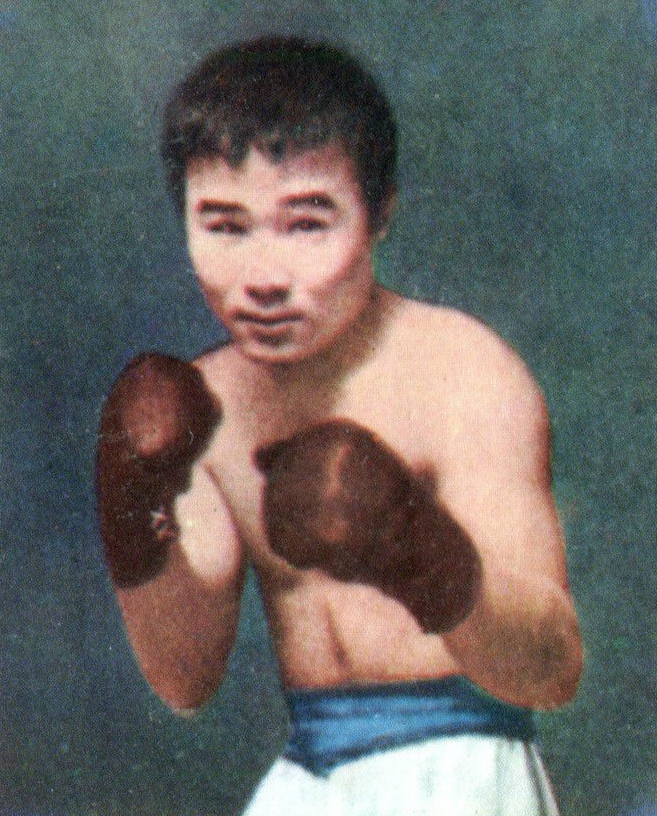
On October 10, 1962, Pone defended against Masahiko "Fighting" Harada at the Kuramae Kokugikan in Tokyo. Harada was 19, and The Fight City's retrospective notes that he was widely regarded as too raw for a champion it describes as a crafty sharpshooter. The prediction did not survive the evening. Harada kept up an increasingly fierce pace as the home crowd rose behind him, and in the eleventh round he trapped Pone in his own corner and battered him until he went down and was counted out.
The rematch came quickly. On January 12, 1963, at the National Stadium Gymnasium in Bangkok, Pone won a majority decision over fifteen rounds to become champion for a second time. It was Harada's first fight outside Japan, and The Fight City describes him as looking flat on the night. Harada later moved up and won the bantamweight championship from Éder Jofre in 1965, a career that took him into the International Boxing Hall of Fame in 1995.
One Round in Tokyo, Fifteen in Bangkok
Pone's second reign ended more abruptly than the first. On September 18, 1963, at the Metropolitan Gym in Tokyo, the Japanese southpaw Hiroyuki Ebihara knocked him out in the opening round, taking the WBA, WBC and Ring flyweight titles.
Once again Pone answered at home. On January 23, 1964, at Rajadamnern Stadium in Bangkok, he took a split decision over fifteen rounds. The WBC, recalling the night years later, credited his jab with controlling the fight. The win made him a three-time world flyweight champion, the first man in the division to manage it. The Bangkok Post's timeline goes further and calls him the first boxer to lose and regain a world championship three times.
Rome and the Last Title Fight
The third reign lasted about fifteen months. On April 23, 1965, Pone defended in Rome against Italy's Salvatore Burruni and lost a unanimous decision over fifteen rounds. One database lists the year ambiguously, but Wikipedia and the surrounding chronology place the fight in 1965. It was his final world title bout.
He retired in 1966, aged 31. His professional record is given as 35 fights, with 28 wins (nine by knockout) and seven losses.
A Short Life After the Ring
Retirement was not kind to him. His business ventures failed, and he developed diabetes. According to his Wikipedia biography and Feast Thailand, a choking incident led to an infection, and he died in Bangkok of pneumonia and heart failure in 1982, at the age of 47. The sources disagree on the date: Wikipedia gives May 31, 1982, while Feast Thailand gives March 31.
Recognition outside Thailand came long after his death. In June 2023 the International Boxing Hall of Fame inducted him in its Old-Timer category. In Hua Hin, where the boy named Mana once announced his plan, a park carries his name and a statue of him stands.
Sources
- Pone Kingpetch, Wikipedia, accessed October 2026
- Pascual Pérez (boxer), Wikipedia, accessed October 2026
- Fighting Harada, Wikipedia, accessed October 2026
- Hiroyuki Ebihara, Wikipedia, accessed October 2026
- 16 April 1960: Pone takes world flyweight title, Bangkok Post (Thailand Journey timeline)
- On this day in history, Kingpetch wins world flyweight crown for a third time, World Boxing Council, January 23, 2019
- Oct. 10, 1962: Harada vs Kingpetch, Robert Portis, The Fight City, October 10, 2025
- Phon Kingphet: A Force of Nature, Feast Thailand, undated
- Pone Kingpetch title fight record, Boxing Title Fights


