
Éder Jofre the Golden Bantam of São Paulo Lost Only to Fighting Harada
Brazil's greatest boxer ruled the bantamweights from 1960 to 1965, lost only twice in 78 fights, and came back to win the WBC featherweight title at 37 before a long career on the São Paulo city council.

Éder Jofre came out of a São Paulo boxing family, ruled the bantamweight division for close to five years, and lost only twice in 78 professional fights, both times to Japan's Fighting Harada. Then, after more than two years out of the ring, he came back as a featherweight and won a world title at 37. He is still the only Brazilian in the International Boxing Hall of Fame.
A Family Trade in São Paulo
Jofre was born in São Paulo on 26 March 1936. Boxing was the family business. His father, José Aristides Jofre, known in the ring as "Kid" Jofre, was an Argentine-born fighter of Spanish and French Basque descent, and he went on to run a gym in his adopted city. According to Boxing News, Éder's grandfather and an uncle had also boxed. The father trained his son for his whole career, and that partnership held until the very end.
Olympedia says the boy learned the sport at São Paulo Futebol Clube, where his father was the coach. Boxing News puts his first amateur bout at age nine. At 20 he gave up meat after reading a book that called it bad for the body. Wikipedia describes him as one of the few vegetarians ever to win a world championship, and later in life he credited his long health to that diet and to staying away from tobacco and alcohol.
Melbourne 1956 and the Turn to Professional
Jofre boxed for Brazil as a bantamweight at the 1956 Summer Olympics in Melbourne. In the quarter-finals he lost to Claudio Barrientos of Chile. Boxing News presents that loss as what pushed him to turn professional, and he did so within months. On 23 March 1957 he made his debut against Raúl López and stopped him in five rounds.
He built his record mostly at home, and he built it carefully. Olympedia notes that he went through his first 50 professional fights without a defeat. The nicknames came early: "Galinho de Ouro," the Golden Bantam, and the more affectionate "Jofrinho."
Champion of the Bantamweights, 1960
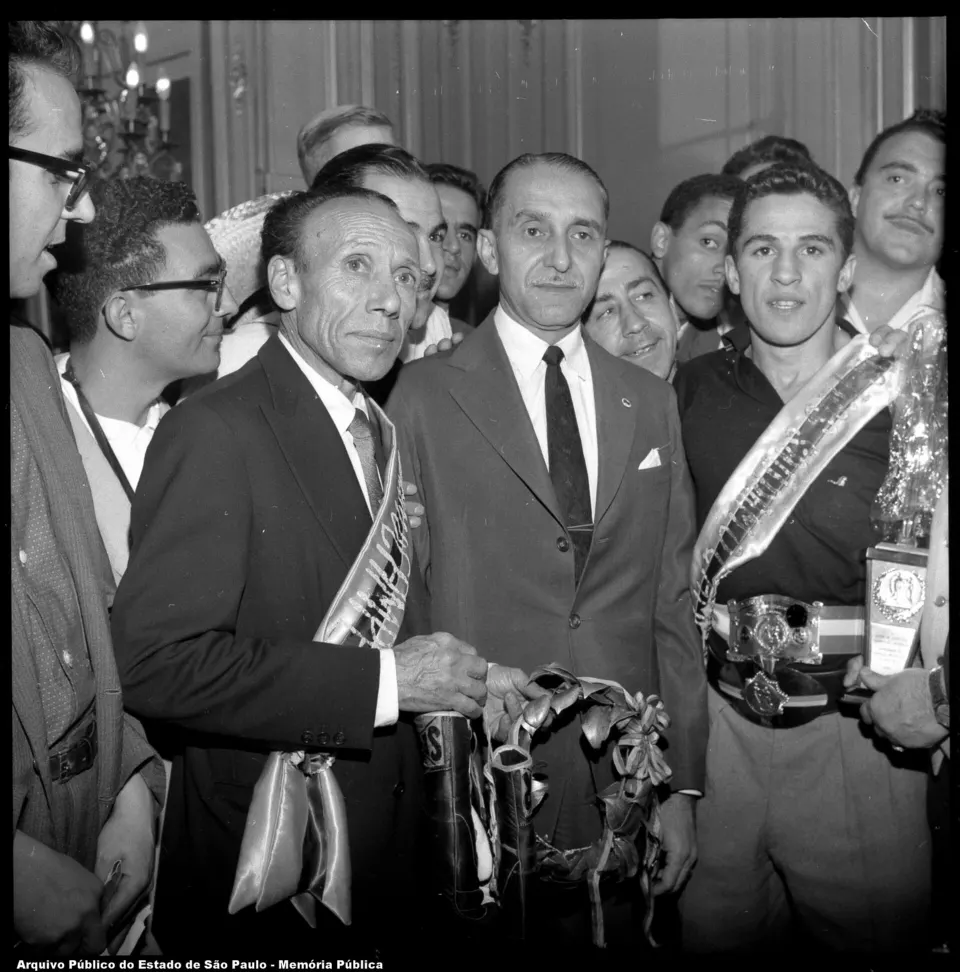
The opening came in 1960, when the champion José Becerra retired. Jofre travelled to Los Angeles and, in August, knocked out José Medel in the tenth round. On 18 November 1960, also in Los Angeles, he met Eloy Sánchez for the vacant National Boxing Association title, listed by Wikipedia as the WBA title, and knocked him out in the sixth round.
The European side of the division still had a claim. Boxing News reports that Alphonse Halimi, the European-recognised champion, declined to fight him. Jofre settled the argument in a different way. On 18 January 1962 in São Paulo he beat Belfast's Johnny Caldwell, who had a claim of his own, and stopped him in the tenth round. Before that, in 1961, he had defended against Italy's Piero Rollo. Sources disagree on how that fight ended: Wikipedia lists a retirement in the ninth round, while Boxing News describes a tenth-round knockout.
Defending the Crown Around the World
For most of the next three years Jofre defended the title wherever the money was. He stopped Herman Marques in the tenth round in Daly City, California, in May 1962. In Tokyo on 4 April 1963 he knocked out Katsutoshi Aoki in three rounds, a win that also brought him recognition from the newly formed WBC. Six weeks later he was in Manila, where he stopped Johnny Jamito in the twelfth. In November 1964 in Bogotá he knocked out Colombia's Bernardo Caraballo in seven.
The record he put together in those years is a big part of why historians rank him so highly. The Ring placed him 19th in a 2000 list of the century's greatest fighters, and the WBA named the belt its bantamweight champions wear after him. In 2019 a poll by the International Boxing Research Organization voted him the best bantamweight of all time.
Two Nights Against Fighting Harada
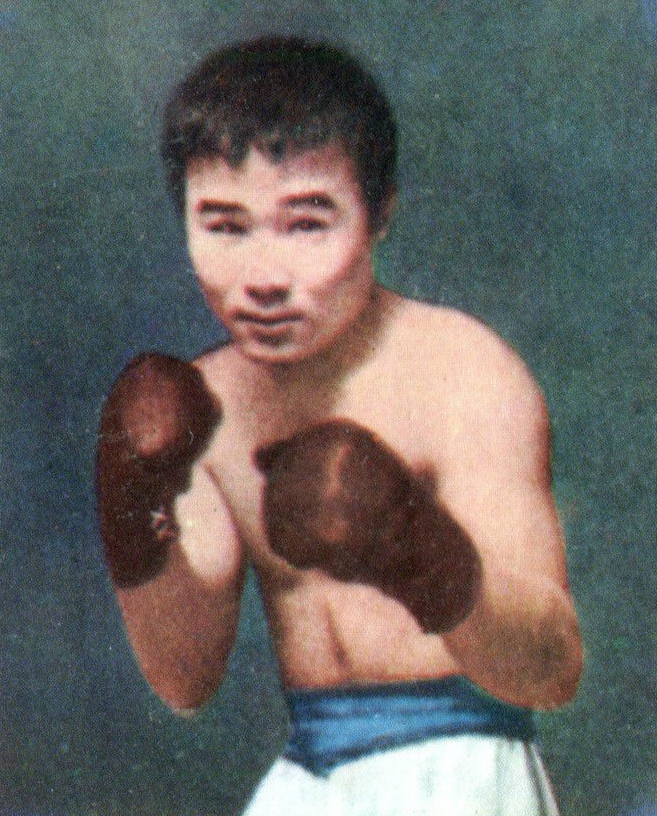
On 18 May 1965 Jofre fought Masahiko "Fighting" Harada at the Aichi Prefectural Gymnasium in Nagoya. Harada was fighting at home. After 15 rounds the judges split, and two of the three gave the fight to Harada. It was Jofre's first professional defeat, and he lost the title along with it. Wikipedia calls the decision controversial.
They fought again on 31 May 1966 at the Nippon Budokan in Tokyo. This time all three judges scored it for Harada after 15 rounds. Those two decisions are the only losses on Jofre's record. Boxing News dates his retirement to January 1967.
The Featherweight Comeback at 37
In 1969, at 33, Jofre returned as a featherweight. He opened with a knockout of Rudy Corona and kept winning. The International Boxing Research Organization counted 25 straight wins in the comeback before his final fight.
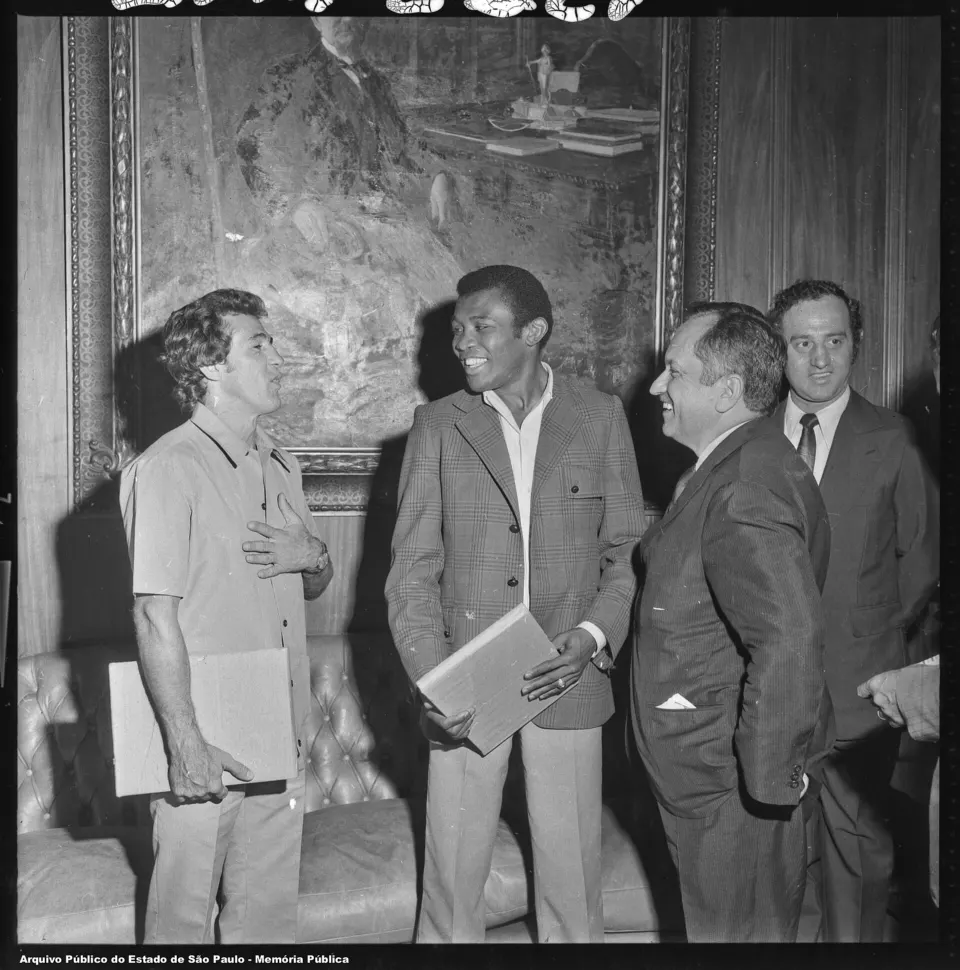
On 5 May 1973 in Brasília he challenged José Legrá for the WBC featherweight title and won a 15-round majority decision. He was 37. In October that year he defended against Vicente Saldívar in Bauru and knocked him out in the fourth round. The title did not stay with him long. The WBC stripped him on 17 June 1974, and Boxing News says the reason was that he had not fought Alfredo Marcano.
Jofre fought on outside of championship bouts. His last fight was on 8 October 1976 in São Paulo, a unanimous decision over Octavio Gómez, by then at age 40. Wikipedia says he looked slow and unsure that night and that he himself later doubted the decision. His final record is usually given as 72 wins, 50 by knockout, two losses and four draws.
A Second Career in Public Life
After boxing, Jofre trained fighters and ran businesses, according to Boxing News. He also went into politics. Wikipedia and the International Boxing Research Organization both describe him as a vereador, or city councillor, in São Paulo, and Wikipedia says he served 16 years. The IBRO credits him with sponsoring measures on access to public transport for the elderly and on first aid at sports venues. Boxing News, by contrast, says he served in Brazil's national Congress. This account follows the two sources that agree on the city council. Wikipedia adds that he also worked for DERSA, São Paulo state's highway company.
The International Boxing Hall of Fame inducted him in 1992 according to Wikipedia and Olympedia, while Boxing News gives 1994. All of them agree that no other Brazilian has been inducted.
Final Years and Death in 2022
Wikipedia reports that Jofre suffered from chronic traumatic encephalopathy, the degenerative brain condition associated with repeated head blows. He had been in hospital with pneumonia since March 2022, and he died of its complications on 2 October 2022, aged 86. The WBA and the IBRO give the place as São Paulo, and Wikipedia names Embu das Artes in the São Paulo metropolitan area. His wife Cidinha, married to him for 52 years, died in 2013. The IBRO lists his children Marcel and Andrea among the survivors.
The WBA's tribute praised his "great quality inside the ring and his integrity outside of it." He went 50 fights without a loss, beat a former champion for a world title in his late thirties, and only one man ever beat him, a record few fighters of any era have matched.
Sources
- Éder Jofre, Wikipedia, accessed October 2026
- Éder Jofre, Olympedia, accessed October 2026
- A tribute to Eder Jofre, the best bantamweight ever, Daniel Herbert, Boxing News, 17 October 2022
- Eder Jofre, the greatest bantamweight of all time, passed away, World Boxing Association, October 2022
- Rest in Peace Eder Jofre, Chris Smith, International Boxing Research Organization, 5 October 2022


