
Dempsey, Tunney and the Long Count Seconds That Shaped Boxing History
In September 1927 Jack Dempsey floored Gene Tunney before a record crowd at Chicago's Soldier Field, but his failure to reach a neutral corner delayed the count. Tunney rose, won on points and kept the heavyweight title.

On the night of 22 September 1927, more than a hundred thousand people packed Chicago's Soldier Field to watch Jack Dempsey try to win back the heavyweight championship from Gene Tunney. What happened next, a few seconds of confusion over where Dempsey should stand, became the most argued-about count in boxing history.
Philadelphia, 1926: The Champion Who Forgot to Duck
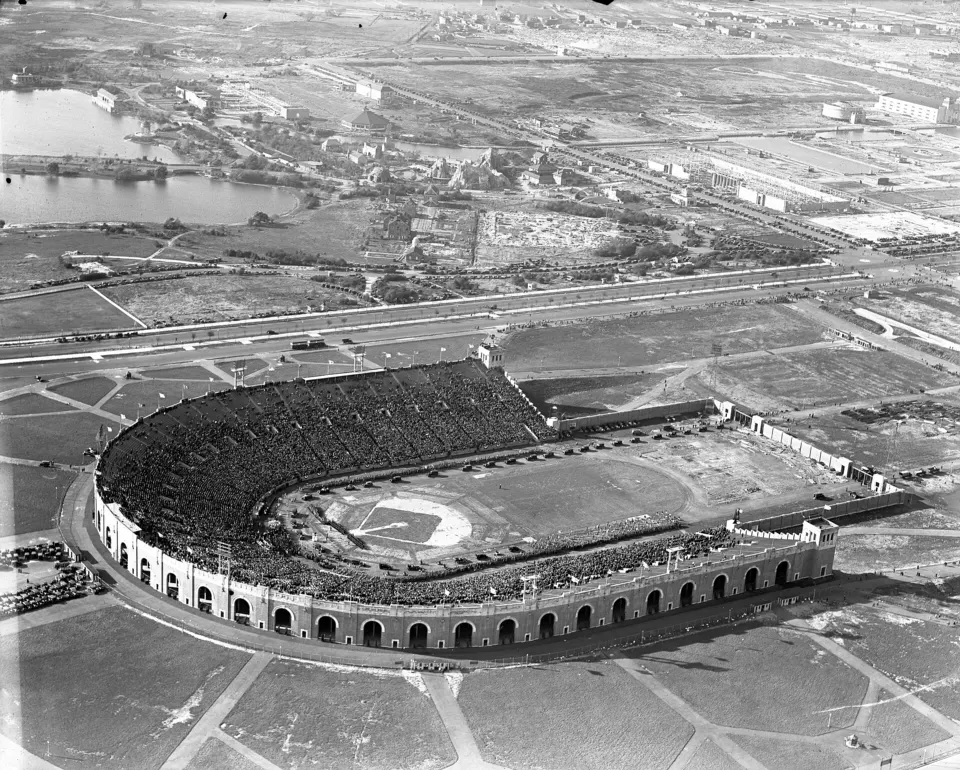
The story begins a year and a day earlier, in the rain. On 23 September 1926, Dempsey defended his title against Tunney at the Sesquicentennial Stadium in Philadelphia. Dempsey had held the championship since flattening Jess Willard in Toledo on 4 July 1919, but he had not fought for close to three years, not since his wild September 1923 brawl with Luis Ángel Firpo at the Polo Grounds.
The bookmakers still trusted him. Wikipedia's account of the bout puts the odds at 13-to-5 in Dempsey's favour, while a World Boxing Association history describes Tunney as a 3-to-1 underdog. Either way, the crowd of roughly 120,557, a paid attendance figure that stood as a boxing record for decades, expected the old puncher to deal with the former Marine.
Instead Tunney, nicknamed "the Fighting Marine" for his service in the First World War, boxed him from the outside for ten rounds as the rain came down. He won a unanimous decision; the WBA account says he took at least nine of the ten rounds. By the end Dempsey's left eye was shut and one side of his face badly swollen. Back in the dressing room he told his wife "Honey, I forgot to duck," a line that outlived the fight and was borrowed by President Ronald Reagan after he was shot in 1981. The Ring later named the result its upset of the decade.
The Road Back Through Yankee Stadium
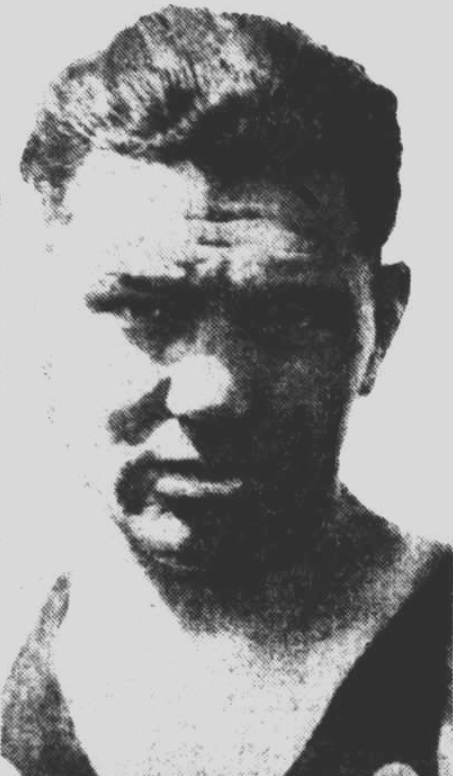
Dempsey did not walk away. On 21 July 1927 he met Jack Sharkey at Yankee Stadium in what amounted to an elimination bout for a rematch. It ended in controversy of its own: Sharkey turned to the referee to complain about low blows, and Dempsey caught him with a left hook while his attention was elsewhere, knocking him out in the seventh round. The win put Dempsey, now 32, back in front of the 30-year-old Tunney.
The rematch was set for Soldier Field, the lakefront stadium in Chicago, and it became a financial event without precedent. Tunney went in as a 7-to-5 betting favourite, according to the WBA, which also cites an estimated 10 million dollars wagered on the result.
A Rule the Dempsey Camp Asked For
One detail of the contract would decide how the night was remembered. Boxing at the time did not universally require a fighter who scored a knockdown to retreat to a neutral corner. The neutral-corner rule was in use in some places but not everywhere, and, according to Wikipedia's account of the fight, it was the Dempsey camp that asked for it to be applied in Chicago. Under it, the count on a fallen fighter would not begin until his opponent had moved to the corner farthest away.
The referee was Dave Barry, a late replacement for Davy Miller. Before the opening bell he went over the instructions with both men, telling them that a fighter who scored a knockdown must go to the farthest neutral corner.
The Seventh Round at Soldier Field
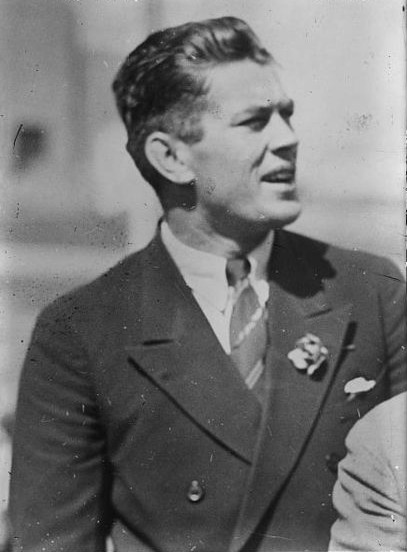
For six rounds nothing separated the rematch from the first fight in the record books. Then, midway through the seventh, Dempsey finally landed cleanly. Wikipedia describes a burst of two rights and two lefts to the chin, followed by more punches as Tunney sagged and the champion went down.
Dempsey stood close to his opponent instead of heading for the far corner. Barry did not begin counting. He pushed Dempsey away and directed him across the ring; the WBA account says Dempsey at first refused, saying he would stay where he was. Only after Dempsey had moved did Barry start his count at one.
Ringside timing put the gap at several seconds. The official timekeeper, Paul Beeler, had already reached five when Barry started over at one, according to the WBA history. Tunney got up at Barry's count of nine.
How Long Was Tunney Down?
Nobody has ever produced a single agreed number, and the sources differ. Wikipedia's article on the fight says the film shows Tunney down for about 13 seconds, with estimates of the delay before Dempsey reached the neutral corner ranging from three to eight seconds. Dempsey's own Wikipedia biography gives the total as 14 seconds. The WBA writes that 14 seconds, and possibly as many as 18, passed between the knockdown and Tunney rising, and a separate WBA piece settles on 14 to 16. A PA Media anniversary article uses roughly 14.
The deeper argument was whether the extra time changed anything. Tunney always maintained that it did not. In his own account, quoted by Wikipedia, he said he had picked up the referee's count at two and could have risen at any point after that, choosing to wait until nine for tactical reasons.
Tunney Takes Control
Whatever the truth of those seconds, Tunney used the rest of the round well. By the eighth round Tunney was boxing at range again, and he dropped Dempsey with a punch. This time, Wikipedia notes, Barry began counting at once without waiting for Tunney to reach a neutral corner.
At the end of ten rounds Tunney received a unanimous decision and kept the title. The WBA history says Dempsey's face was bloodied by the finish.
The Record Gate and a Nationwide Audience
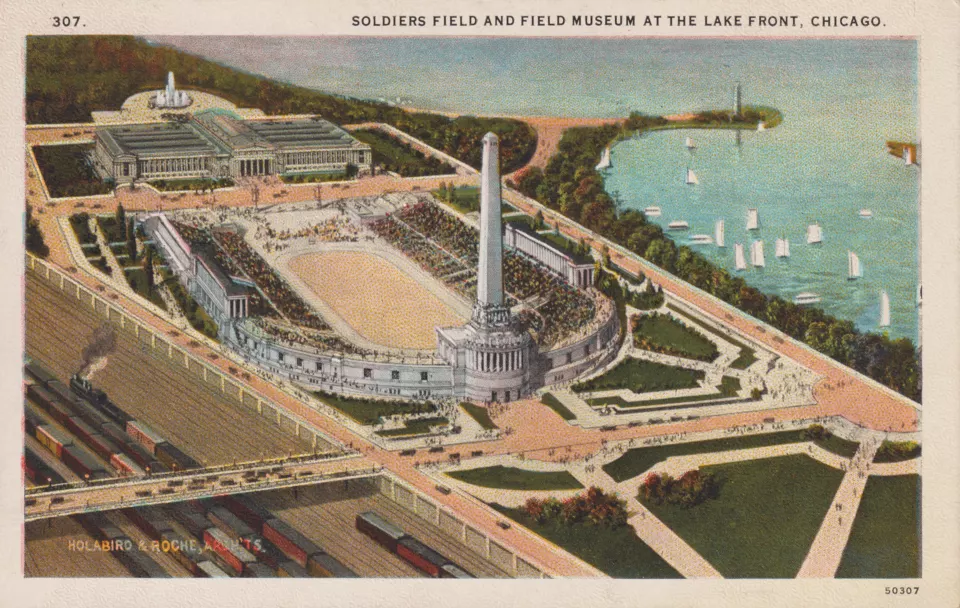
The numbers were enormous for the 1920s, though they vary depending on the source. Wikipedia lists the paid crowd at 104,943 and the gate at 2,658,660 dollars, which it calls the first two-million-dollar gate in entertainment history. The WBA describes a crowd of over 120,000 and a gate of about 2.5 million dollars, and PA Media's retrospective speaks of about 150,000 spectators.
The purses matched the occasion. Wikipedia records Tunney's share as 990,445 dollars and Dempsey's as 447,500. Those who could not get in heard the fight on radio: Graham McNamee and Phillips Carlin called it for more than 60 NBC stations.
Protests, Appeals and a Long Afterlife
Dempsey's side contested the result. According to the WBA, they appealed to have the decision reversed, and the appeals were turned down. Over time the anger cooled; once the fight film could be widely seen, Wikipedia says, the controversy gradually faded.
Neither man fought much longer. Dempsey retired from competition after the rematch, though he went on boxing exhibitions into the early 1930s. Tunney made one more defence, stopping Tom Heeney in the eleventh round on 26 July 1928, and then retired as champion. Wikipedia places that fight at Yankee Stadium, while the WBA account names Madison Square Garden. The Ring made Tunney its first Fighter of the Year in 1928.
Dempsey's later verdict on his rival, as quoted by Wikipedia, was generous: "I have no reason not to believe him. Gene's a great guy." Both men are members of the International Boxing Hall of Fame. Their second meeting, though, is remembered less for its winner than for the few seconds in the seventh round when the man who had asked for the neutral-corner rule did not go to his corner.
Sources
- The Long Count Fight, Wikipedia, accessed October 2026
- Jack Dempsey vs. Gene Tunney, Wikipedia, accessed October 2026
- Jack Dempsey, Wikipedia, accessed October 2026
- Gene Tunney, Wikipedia, accessed October 2026
- Boxing History: The Long Count, World Boxing Association (wbaboxing.com), 22 September 2016
- Dempsey, Tunney, and the Long Count, World Boxing Association (wbaboxing.com), undated
- On this day in 1927 – Gene Tunney and Jack Dempsey meet in Chicago rematch, PA Media via Yahoo Sports, 22 September 2020


