
Chávez vs Meldrick Taylor in 1990 Brought Thunder, Lightning and Two Seconds That Never Ended
Meldrick Taylor led on two of three cards entering the final round at the Las Vegas Hilton, but Julio César Chávez dropped him and Richard Steele stopped it with two seconds left. A record-based account of the fight, the injuries and the debate that followed.

On 17 March 1990, at the Las Vegas Hilton, Meldrick Taylor was ahead on two of the three judges' cards and a few seconds from beating the unbeaten Julio César Chávez. Chávez knocked him down in the last round, and referee Richard Steele stopped the fight with two seconds left on the clock. People have argued about that call for more than three decades.
Two Unbeaten Champions, One Month After Tokyo
The fight was billed as "Thunder Meets Lightning". The thunder was Chávez's punching power and the lightning was Taylor's hand speed. Chávez came in 68-0. He had already won world titles at super featherweight and lightweight, and in 1989 he took the WBC light welterweight belt from Roger Mayweather. Taylor was from Philadelphia. He had won Olympic featherweight gold in Los Angeles in 1984 at 17, and in September 1988 he stopped Buddy McGirt in the 12th round to win the IBF title at 140 pounds. He was 24-0-1 and 23 years old. Chávez was 27.
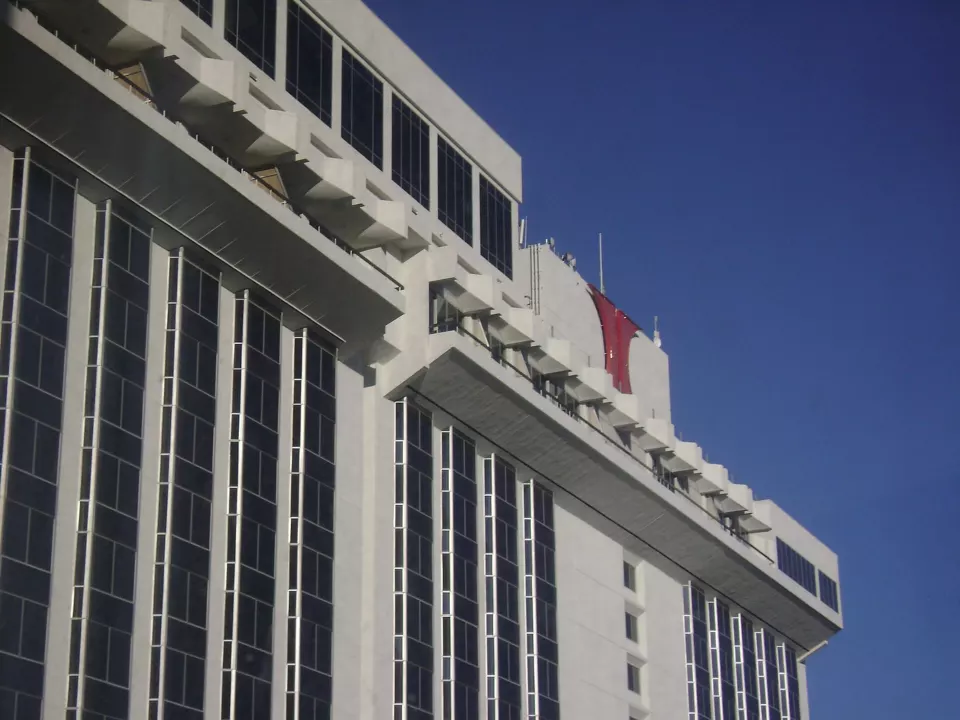
Both men were making the third defence of their titles, so the fight unified the WBC and IBF belts. DAZN's anniversary account says the vacant lineal championship was also at stake. The timing added to the interest. Only a month earlier, Buster Douglas had knocked out Mike Tyson in Tokyo, and boxing was paying close attention to unbeaten records.
Speed Against Pressure in the Early Rounds
For most of the fight, Taylor's plan worked. He was faster with his hands and his feet. He threw combinations, moved away before Chávez could set his feet, and kept the champion to one punch at a time. DAZN's retrospective says Taylor controlled roughly the first eight rounds behind his jab and his flurries. The Sweet Science, citing HBO's punch statistics, reports that Taylor landed 457 punches to Chávez's 258.
Chávez still kept moving forward. He was a body puncher who wore opponents down over time, and the punches he landed were heavier than the ones he took. The damage from them built up even while Taylor was winning the rounds.
A Face Coming Apart: Rounds Nine to Eleven
By the late rounds the toll was clear. Taylor was bleeding from the nose and mouth, and his face was swollen. Philadelphia boxing historians date the visible change in his features to around the ninth round. He was swallowing his own blood. When he tired, he could no longer stay out of range, and the fight became the close exchange Chávez wanted.
The clearest warning came after the bell ended the 11th round. Taylor started walking toward Chávez's corner, and Steele had to turn him back toward his own stool.
The Scorecards Going Into the Twelfth
Taylor did not need the final round. Judge Dave Moretti had him ahead 107-102 and Jerry Roth had him ahead 108-101. Chuck Giampa was the only judge with Chávez in front, at 105-104. On those numbers, Chávez needed a knockout or stoppage to win, unless Taylor fell apart on the cards in a single round. One later account of Steele's career says Taylor led on all three cards. The published tallies show that is wrong.
In the corner, trainer Lou Duva told Taylor he had to win the last round. Taylor was exhausted, but he went out and traded punches with Chávez at close range when he could have kept his distance.
Twelfth Round: The Last Half-Minute
Early in the round, Taylor missed with a wild left hand and fell to the canvas. With about a minute left, Chávez landed several hard shots, and Taylor answered by pretending to be hurt, a show of bravado. With roughly 25 seconds remaining, a Chávez right hand sent him stumbling toward a corner. Chávez trapped him there and put him down with another right.
Accounts of the timing differ. The Wikipedia history of the fight follows the sequence above. Its biography of Steele says the knockdown came with 17 seconds left. Taylor pulled himself up using the ropes and kept hold of them during the mandatory eight count. Steele asked him twice whether he was all right. Taylor gave no answer he could accept and looked toward his corner. Steele waved the fight off at 2:58 of the 12th round, two seconds before the final bell.
Chávez won by technical knockout and stayed unbeaten. If Taylor had heard the bell, he would almost certainly have left the ring as the unified champion.
What the Doctors Found
Dr. Flip Homansky, the physician who examined Taylor afterwards, found broken bones behind the eye. He also reported that Taylor needed a blood transfusion because of blood lost from a cut lower lip. Chávez's face was almost unmarked, according to Philadelphia boxing records. That contrast later became central to the referee's defence.
A Stoppage Still on Trial
Taylor's camp protested immediately. Duva argued that his fighter would have won if the bout had been allowed to finish. The IBF went further. Two weeks after the fight it ordered a rematch, on the grounds that Steele had not sent Chávez to a neutral corner before starting the count. IBF president Bob Lee was careful not to condemn the stoppage itself. He said: "We think he did the right thing to protect the fighter, but if he stopped the count, who knows what might have happened?"
Steele never backed down. He said his job was to protect the fighter and that Taylor had not responded clearly to his instructions. In a 2015 interview with Boxing News he said: "I'm one-hundred percent sure I did the right thing." He pointed to Taylor's medical reports and to how Taylor's career went afterwards as support for his decision.
Critics have focused on the clock. In their view, a fighter so far ahead deserved the chance to hear the bell. Defenders point to the broken orbital bones, the walk toward the wrong corner and the blank stare during the count. The fight was named The Ring's Fight of the Year for 1990, and the magazine later called it the Fight of the Decade. In 2002 HBO revisited it in a "Legendary Nights" documentary that gave both sides of the argument. Neither side has convinced the other.
Unfinished Business, 1994
The rematch took more than four years to happen. Taylor moved up instead, and on 19 January 1991 he outpointed Aaron Davis for the WBA welterweight title. He lost that belt in 1992. The writer William Nack argued that Taylor's prime had been beaten out of him in Las Vegas, and it is widely believed that Taylor was never the same fighter, physically or mentally, after that night.
When the two finally met again on 17 September 1994, the event was billed as "Unfinished Business", and Chávez no longer had his unbeaten record. Frankie Randall had beaten him in January of that year. Taylor started well. Chávez took over, dropped him with a left hook in the eighth round, and referee Mills Lane stopped the fight moments later. It was Taylor's last world title fight. He retired in 2002 with a record of 38-8-1. In 2009 he published a book about the first fight called "Two Seconds From Glory".
Sources
- Julio César Chávez vs. Meldrick Taylor, Wikipedia, accessed October 2026
- Julio César Chávez vs. Meldrick Taylor II, Wikipedia, accessed October 2026
- Meldrick Taylor, Wikipedia, accessed October 2026
- Richard Steele (referee), Wikipedia, accessed October 2026
- Thunder Meets Lightning: Julio César Chávez vs. Meldrick Taylor, March 17, 1990, Emanuel Dawster, The Sweet Science, 17 March 2026
- On this date in boxing history, March 17: Julio César Chávez rallies for 12th-round TKO of Meldrick Taylor, Mark Lelinwalla, DAZN
- Richard Steele discusses the ferocity of Marvin Hagler-Thomas Hearns and justifies stopping Meldrick Taylor, Boxing News, 16 February 2015
- This Day in Philadelphia Boxing History: March 17, PhillyBoxingHistory.com


