
A History of Boxing's Weight Classes and Sanctioning Bodies From Eight Divisions to Four Belts
How London's 1909 limits and New York's 1920 Walker Law created boxing's original eight divisions, how junior and super classes filled the gaps, and how the WBA, WBC, IBF and WBO turned 'undisputed' into a four-belt quest.

Professional boxing now crowns champions in seventeen widely recognized divisions, and at times eighteen, with as many as four major organizations awarding a belt in each. The sport did not begin that way. It started with eight weight limits written down in London and New York, then filled the gaps between them with "junior," "light" and "super" classes, and then split its championships among rival sanctioning bodies. This is how that map was drawn, and why so many people still argue over it.
Before the Limits: When "Lightweight" Meant Whatever You Said It Meant
In the early nineteenth century nobody agreed on what a weight class was. Two English reference books published in 1823 gave two different ceilings for a "light weight": one put it at 12 stone, or 168 pounds, while the other set it at 11 stone, or 154 pounds.
That vagueness had real costs. Badly mismatched bouts endangered the smaller fighter and gave crowds little reason to pay, and no national or world title could carry much meaning while the categories themselves kept shifting.
London 1909 and New York 1920: The Original Eight
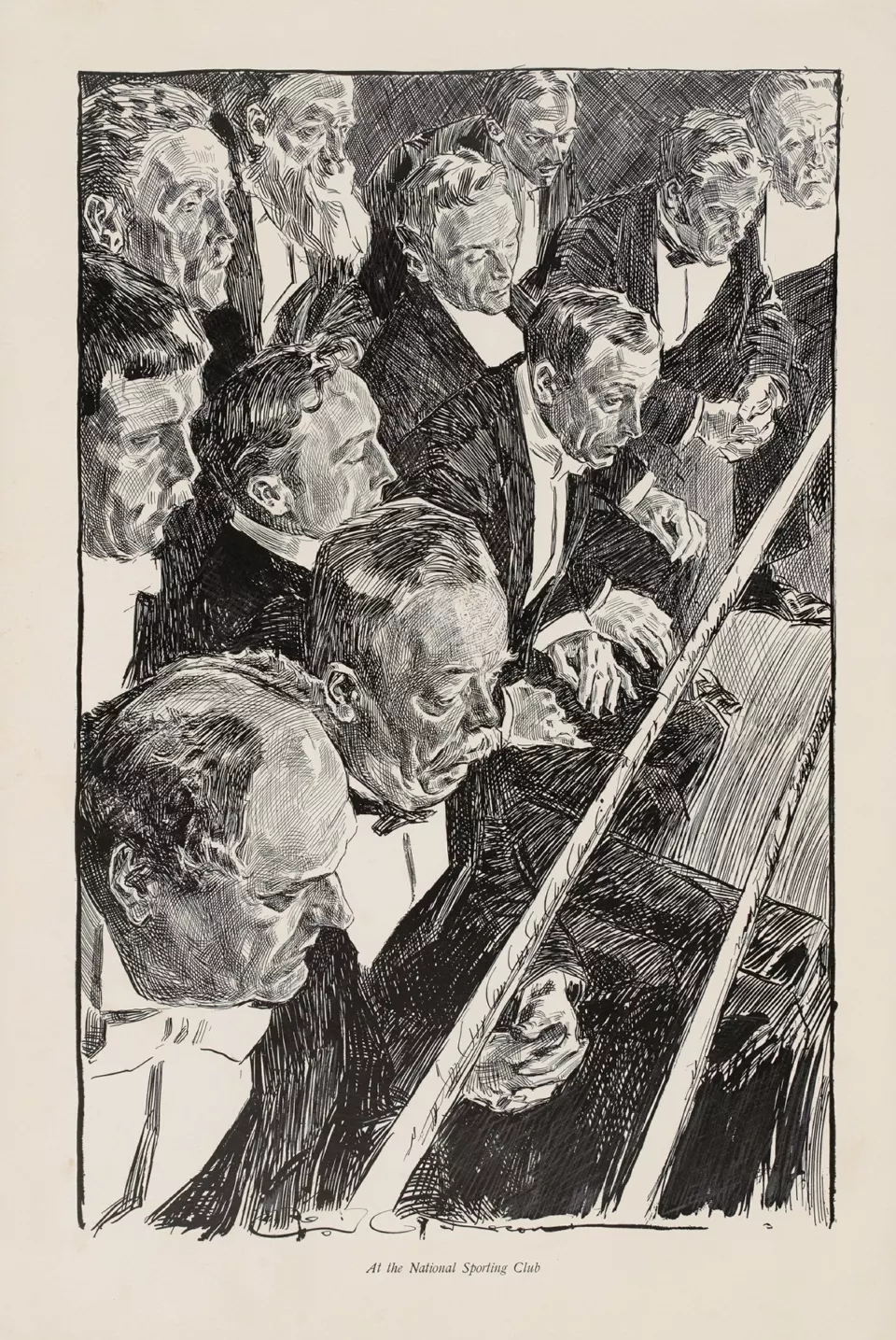
Two documents did most of the work. In 1909 the National Sporting Club of London fixed limits for eight divisions in stone: flyweight at 8 stone, bantamweight at 8 1/2, featherweight at 9, lightweight at 9 1/2, welterweight at 10, middleweight at 11, light heavyweight at 12, and heavyweight above that. Eleven years later the Walker Law, which created the New York State Athletic Commission, set the limits in pounds that still apply today: 112, 118, 126, 135, 147, 160 and 175, with heavyweight open beyond 175.
These eight are still called the "traditional," "classic" or "glamour" divisions. The heavyweight floor later rose, to 190 pounds in 1979 and 200 pounds in 2003.
Filling the Gaps: Junior, Light and Super Divisions
The Walker Law already listed several intermediate limits in 1920, including 108, 115, 122, 130, 140 and 154 pounds. Continuous world championships at those weights came much later. According to the division history compiled on Wikipedia, the 130-pound and 140-pound classes were recognized in 1959 and the 154-pound class in 1962. The lightest classes followed in the 1970s and 1980s: 108 pounds in 1975, 122 pounds in 1976, 115 pounds in 1980, and a new 105-pound strawweight division in 1987. Cruiserweight began at 190 pounds in 1979 and moved to 200 pounds in 2003. Super middleweight, at 168 pounds, has had a continuous world title since 1984.
The cutoffs are the same at every major body, but the names differ. The WBA and WBC use "super welterweight" and "super lightweight" for 154 and 140 pounds, while the IBF and WBO say "junior middleweight" and "junior welterweight." The WBO calls cruiserweight "junior heavyweight."
The newest addition is the most disputed. On November 9, 2020, the WBC announced a division for fighters between cruiserweight and heavyweight, named "bridgerweight" after Bridger Walker, a six-year-old American boy who had protected his younger sister from a dog that July. Wikipedia gives the class as 200 to 224 pounds. ESPN described it as 190 to 224, reflecting a WBC plan to lower the cruiserweight limit that, according to Wikipedia, was never carried out. Oscar Rivas won the first WBC title at the weight in October 2021. On December 1, 2023, the WBA said it would add its own 224-pound class, which ESPN called boxing's 18th weight class. The IBF and WBO did not follow.
From the NBA to the WBA: The First Governing Body
The oldest of today's sanctioning bodies started as an American alliance. In 1921, representatives of thirteen U.S. states formed the National Boxing Association as a counterweight to New York's commission. The first championship bout it recognized was the heavyweight fight between Jack Dempsey and Georges Carpentier in New Jersey.
For four decades the NBA and New York usually agreed on the champion, splitting mainly when a titleholder retired or changed weight. On August 23, 1962, the NBA renamed itself the World Boxing Association to reflect the sport's growing international reach.
1963 to 1988: The WBC, the IBF and the WBO
The World Boxing Council was founded in Mexico City on February 14, 1963, at the invitation of Mexican President Adolfo López Mateos, with the aim of bringing the world's national commissions under one umbrella. The founding membership is not reported consistently. The WBC's own history lists eleven countries, while Wikipedia gives a longer list that also includes Tunisia and the Soviet Union. After the South Korean lightweight Kim Duk-koo died from injuries suffered in a 1982 title fight, the WBC cut its championship distance from fifteen rounds to twelve, and the other bodies followed.
The International Boxing Federation was born out of a lost election. In 1983 Robert "Bobby" Lee, head of the United States Boxing Association, was defeated in his bid for the WBA presidency at the organization's convention in Puerto Rico. He and his supporters walked out and set up a rival body, which took the IBF name on November 6, 1983,. It gained credibility quickly by recognizing established champions such as Larry Holmes, Aaron Pryor, Marvin Hagler and Donald Curry. Lee himself was later indicted in a ratings-for-bribes case. He was convicted of money laundering and tax evasion in August 2000 and sentenced to 22 months in prison.
The World Boxing Organization came out of another WBA convention. In 1988, at Isla Margarita, Venezuela, a group of Puerto Rican and Dominican businessmen broke away over disagreements about the rules. Thomas Hearns won its first title fight, at super middleweight. Recognition from the others came slowly. Wikipedia reports that the WBA gave WBO champions equal standing by 2000, the WBC began listing them in its rankings in 2004, and the IBF formally recognized the WBO in February 2007.
Undisputed: Two Belts, Then Three, Then Four
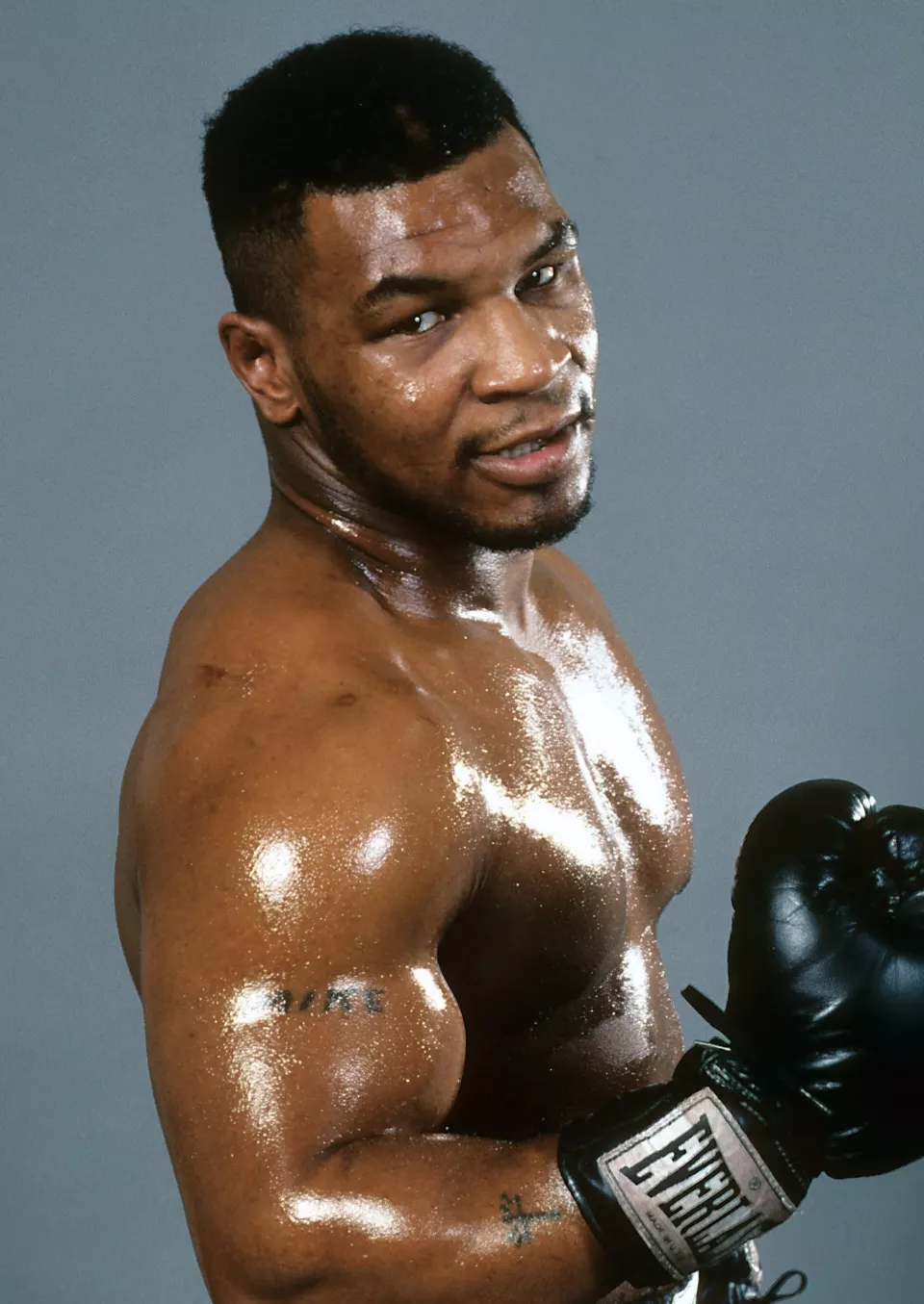
The meaning of "undisputed" has changed as the number of belts has grown. DAZN divides the history into eras: two recognized titles from 1922 to 1983, first New York and the NBA and later the WBA and WBC; three titles once the IBF arrived; and four titles from 2007. When Mike Tyson unified the WBA, WBC and IBF heavyweight belts in 1986 and 1987, he became, according to Wikipedia, the first undisputed heavyweight champion since Leon Spinks in 1978.

Bernard Hopkins collected all four middleweight belts in September 2004, at a time when not every body yet accepted the WBO as a major title. Jermain Taylor took all four from him in July 2005. Since then the club has grown slowly, with Terence Crawford, Oleksandr Usyk, Josh Taylor, Canelo Álvarez, Jermell Charlo, Devin Haney and Naoya Inoue among its male members. Wikipedia counts 24 boxers in all, 11 men and 13 women, who have held all four titles at once as of 2026. The Ring magazine's championship carries prestige as a lineal title, but it does not count toward undisputed status.
Why the Alphabet Titles Are Debated

Critics argue that the four sanctioning bodies, which fans often call the "alphabet" organizations, have created more champions than any fan can follow. The WBA is the most frequent example. It introduced a "super champion" designation in 2000, originally for fighters who also held other bodies' belts. A separate "regular" champion and interim titles grew up alongside it, and some divisions ended up with as many as four WBA titleholders at the same time. After pressure from the Association of Boxing Commissions in August 2021, the WBA began reducing interim belts and moving toward a single champion per division. The WBC, for its part, awards Diamond, Franchise, Silver and Eternal titles alongside its regular championship.
A 2022 Planet Sport article blamed the scarcity of undisputed champions on sanctioning fees, mandatory challengers and boxing politics. When the WBA announced its 224-pound class, promoter Lou DiBella told ESPN, "We need fewer titles, fewer interim titles, fewer weight classes."
The bodies themselves point to safety. The WBA justified its newest division as a way to avoid bouts with large weight differences, and the WBC credits its own record with shorter title fights, annual medical examinations for champions and ranked boxers, and post-fight drug testing. What started as eight divisions now has more than twice as many, and a fighter still has to beat every other titleholder at his weight to be called undisputed.
Sources
- Weight class (boxing), Wikipedia, accessed October 2026
- Undisputed championship (boxing), Wikipedia, accessed October 2026
- World Boxing Association, Wikipedia, accessed October 2026
- World Boxing Council, Wikipedia, accessed October 2026
- International Boxing Federation, Wikipedia, accessed October 2026
- World Boxing Organization, Wikipedia, accessed October 2026
- Bridgerweight, Wikipedia, accessed October 2026
- History, World Boxing Council (wbcboxing.com), accessed October 2026
- WBA joins WBC in adding 18th weight class with super cruiserweight, ESPN, December 1, 2023
- What is an undisputed boxing champion? Difference between undisputed and unified, DAZN, May 2024
- Terence Crawford, Oleksandr Usyk, Canelo Alvarez: the seven male undisputed champions ranked, Planet Sport, May 25, 2022


