
Ali vs Liston II Ended With the Phantom Punch in Lewiston, 1965
In May 1965 Sonny Liston went down in the first round of his rematch with Muhammad Ali in a small Maine hockey rink, and a botched count turned the knockout into one of boxing's most enduring controversies.

On the night of 25 May 1965, in a junior hockey rink in a Maine mill town, Sonny Liston went down in the first round of his rematch with Muhammad Ali from a right hand that much of the building never saw. A referee who lost the count, a timekeeper nobody could hear and a magazine editor shouting from ringside turned a short fight into one of boxing's longest arguments.
Miami Beach, 1964: The Champion Who Stayed on His Stool
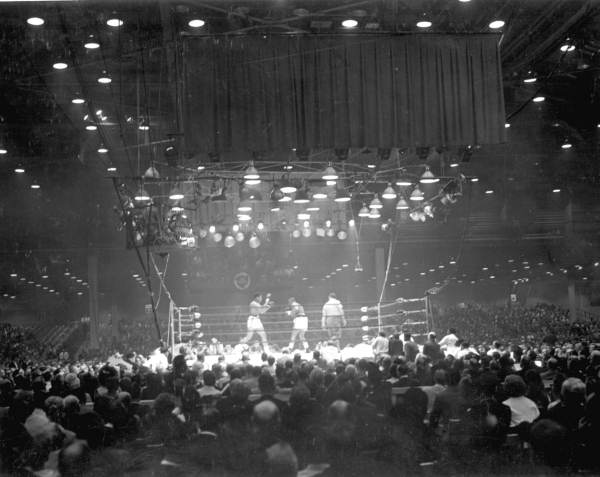
The story begins fifteen months earlier, on 25 February 1964, at the convention hall in Miami Beach. Sonny Liston was the heavyweight champion, a fearsome puncher, and the challenger, still fighting as Cassius Clay, went in as an 8-to-1 underdog. The bout did not follow the script. In the fourth round Clay came back to his corner complaining that his eyes were burning; Angelo Dundee sponged water into them, and one explanation later offered was a substance used on Liston's cuts. Clay got through the fifth, his vision returned, and he went back to work with fast combinations.
When the bell rang for the seventh, Liston did not get up. He stayed on his stool and the title changed hands. His camp pointed to a torn tendon in his left shoulder, a diagnosis made by Dr. Alexander Robbins, although one cornerman later told biographer David Remnick that the injury story was invented after the fight. According to the official cards, the contest was level when it ended.
Within days the new champion announced his membership in the Nation of Islam, and the following month he took the name Muhammad Ali, a decision that drew a fierce public reaction. Questions also hung over the contract itself: it contained a rematch clause, and critics argued that it gave the beaten champion a financial reason to lose and fight again.
From Boston Garden to a Hockey Rink in Maine
The rematch was first set for 16 November 1964 at the Boston Garden. Three days before the date, Ali needed emergency surgery for a hernia, and the fight was pushed back to 25 May 1965. Boston did not get it back. Massachusetts officials, led by Suffolk County District Attorney Garrett H. Byrne, moved against the bout over licensing concerns about the promoter, Inter-Continental Promotions. On 7 May, with less than three weeks to go, the promoters relocated to Lewiston, Maine, after Governor John H. Reed offered a venue within hours.
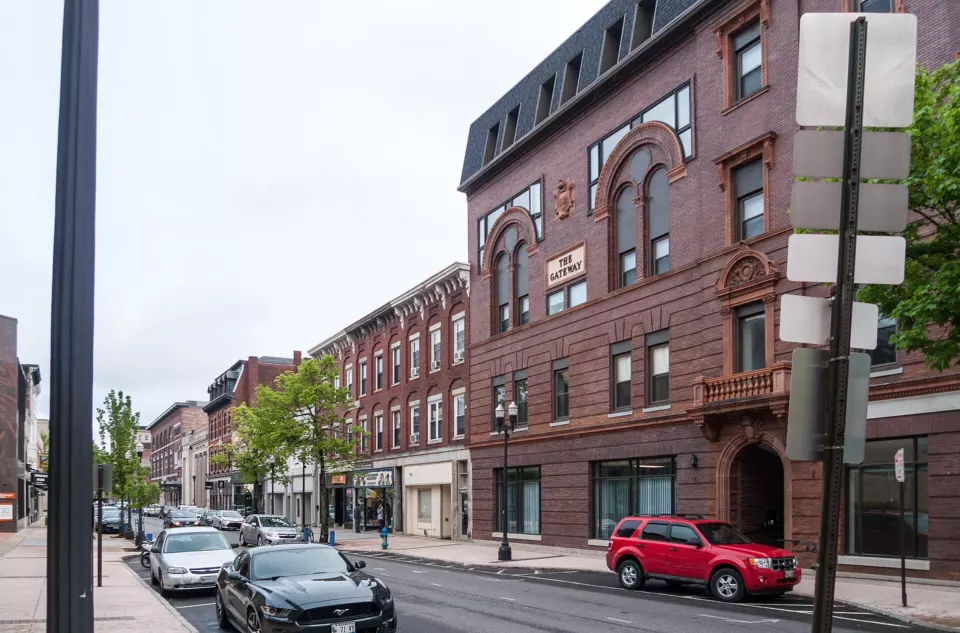
That venue was the Central Maine Youth Center, a junior hockey rink also known as St. Dominic's Arena, today the Colisée. Lewiston was a textile town of roughly 41,000 people with, by one account, only two hotels; around 600 journalists were housed at the Poland Spring House, about twelve miles away. No city that small had staged a heavyweight title fight since Jack Dempsey met Tommy Gibbons in Shelby, Montana, in 1923, and none in Maine has staged one since.
Sources do not agree on how many people were inside. The arena's capacity is given as about 4,000 by the Boston Globe and as around 5,400 seats in a later retrospective. Yankee magazine reports an announced attendance of 4,200, while a later retrospective puts the crowd at about 2,600, roughly half the seats. Every version makes it the smallest audience for a modern heavyweight championship.
The Punch Nobody Agreed On
The fight itself lasted less than one round. As Liston came forward with a left jab, Ali answered with a short right hand, and Liston dropped to the canvas. Wikipedia's reconstruction from the film puts the knockdown at 1:44 of the first round. Tex Maule, covering the fight for Sports Illustrated, described it as a legitimate and stunning right hand to the side of the head, and he wrote that the blow lifted Liston's left foot off the floor.
Many in the arena, and many watching on television, simply did not see it. The punch was short and quick, and the reaction from the seats was immediate: chants of "Fake!" filled the rink, according to Yankee. Ali himself later called it his "anchor punch," a technique he said the comedian Stepin Fetchit had taught him, but he never spoke of it again, and the same Wikipedia account records that he asked his own corner whether he had actually hit Liston.
Walcott Loses the Count
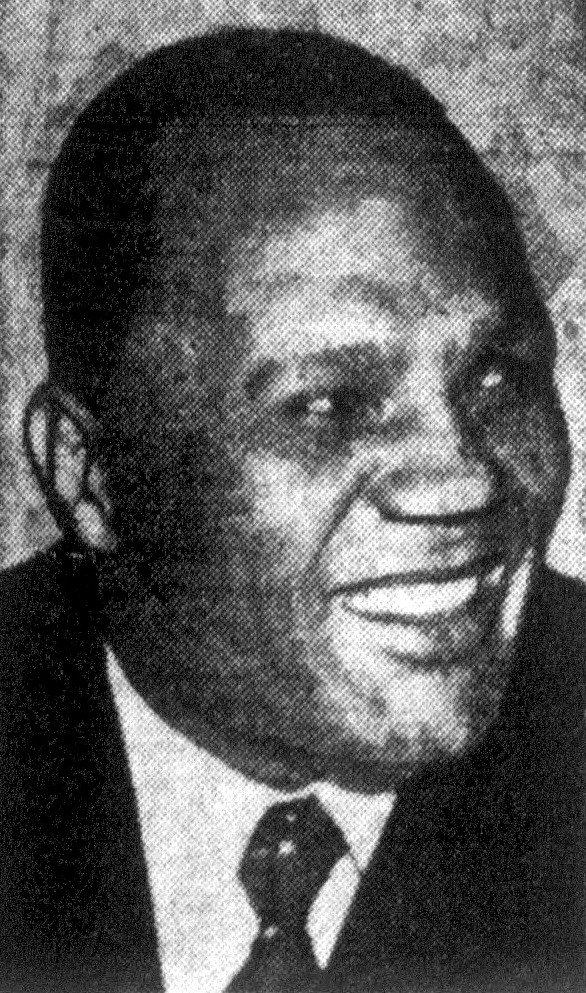
What followed turned a quick knockout into chaos. Ali did not go to a neutral corner. He stood over the fallen champion, shouting at him to get up, and referee Jersey Joe Walcott, himself a former heavyweight champion, spent the first seconds trying to push him away. By the time Walcott turned back to the fight he had no count to pick up. The knockdown timekeeper, Francis McDonough, a 63-year-old retired printer according to Yankee, had no microphone and gave no hand signals, so Walcott could not follow him.
Liston rose, by the Wikipedia timeline, at 1:56, after being down for roughly twelve seconds on that reckoning; Yankee reports that McDonough had counted at least twenty. The two fighters resumed. Then Nat Fleischer, editor of The Ring, seated beside the timekeepers at ringside, began waving his arms to signal that Liston had been down long enough. Walcott went over, heard that the count had been completed, and returned to stop the fight at 2:12. The ring announcer gave the time as 1:00, a figure that was simply wrong; Yankee notes that published records have variously listed 1:00, 1:47 and 2:12. Walcott later said Liston had looked like a man in a different world and that he did not know what the fallen fighter might do.
The Photograph Above the Fallen Champion
From ringside, Sports Illustrated photographer Neil Leifer caught Ali in the moment of standing over Liston, arm cocked across his body, mouth open in a shout, with the beaten man on his back below him. The magazine later chose it for the cover of its collection of the century's greatest sports photographs, and it has become the defining image of Ali's career. Other photographers at ringside recorded similar views of the same instant.
Sixty years on, Lewiston chose a different moment. In 2025 a ten-foot bronze of Ali by sculptor Zenos Frudakis was unveiled at the entrance to Bates Mill No. 5. According to the Boston Globe, the sculptor deliberately avoided the aggression of Leifer's frame and showed Ali a little later, composed and certain of victory.
Fix or Finish: An Argument Without End
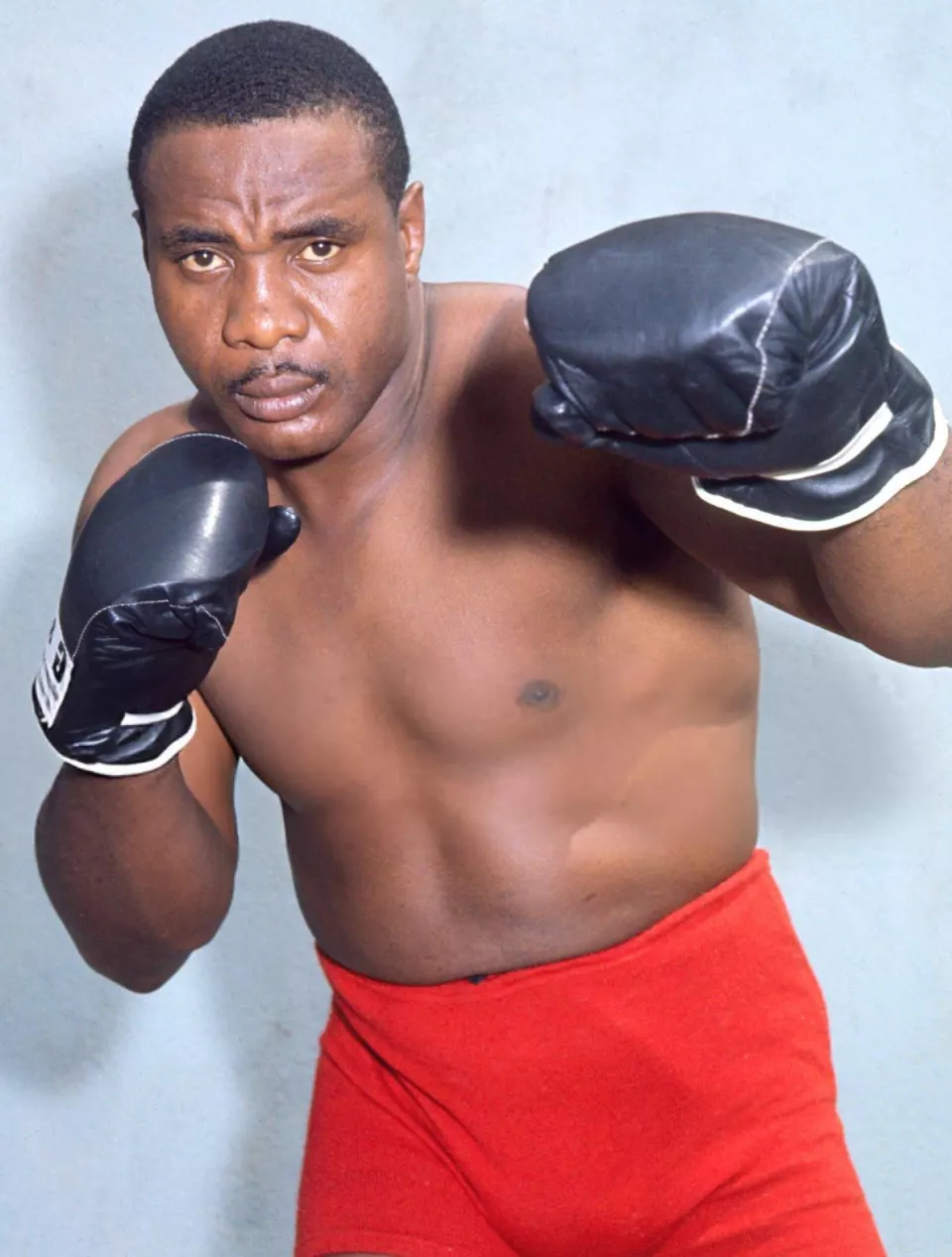
The verdicts split almost at once. Floyd Patterson, seated at ringside, called it a perfect right hand, and José Torres judged it a very strong one. Maule found no evidence of a fix, and Jim Murray of the Los Angeles Times wrote that there was nothing phantom about it. Fifty years later Larry Merchant said he had watched the punch land on the chin.
Others were unconvinced. The broadcaster Don Dunphy famously offered to eat the punch if it had been a real one. Heavyweight contender George Chuvalo pushed toward the ring calling it a fix, and Jimmy Breslin, as quoted by Yankee, called the night the worst mess in the history of sports. Sports Illustrated's Mark Kram later attributed to Liston the claim that he had gone down without being hit, while in Thomas Hauser's 1991 Ali biography Liston is quoted as saying he was down but not hurt. In a 1995 HBO documentary, the former FBI agent William F. Roemer Jr. said the bureau had learned there was a fix. None of these claims was ever proven, and the question remains open.
The people around the fight carried it with them. McDonough, Yankee reports, stopped talking to reporters, and his obituary three years later dwelt on those few seconds. Liston kept boxing and strung together a long winning run before his last fight in Jersey City on 29 June 1970; about six months later he was found dead at home. Ali kept the title, and the picture from Lewiston stayed attached to his name.
Sources
- Muhammad Ali vs. Sonny Liston, Wikipedia, accessed October 2026
- Sonny Liston, Wikipedia, accessed October 2026
- Ali vs. Liston: The Night Lewiston, Maine, Can Never Forget, Yankee Magazine (newengland.com)
- After 60 years, Lewiston's place in boxing lore will be cast in bronze, The Boston Globe, 26 May 2025
- 50 years ago: Ali, Liston, Lewiston, Bates, Bates College News, 22 May 2015
- Real or Fixed? Ali-Liston II still puzzles, John Nogowski (Substack)


