
How Joe Frazier Handed Muhammad Ali His First Defeat in the Fight of the Century, 1971
On 8 March 1971 at Madison Square Garden, unbeaten champions Joe Frazier and Muhammad Ali met after Ali's exile over the draft. A 15th-round left hook knockdown sealed a unanimous decision for Frazier.

On 8 March 1971, two unbeaten heavyweights who both had a claim to the same crown met at Madison Square Garden. Joe Frazier held the belts; Muhammad Ali had never lost them in the ring. Fifteen rounds later, a left hook in the final round and a unanimous decision settled the argument, at least for one night.
A Title Taken Outside the Ring
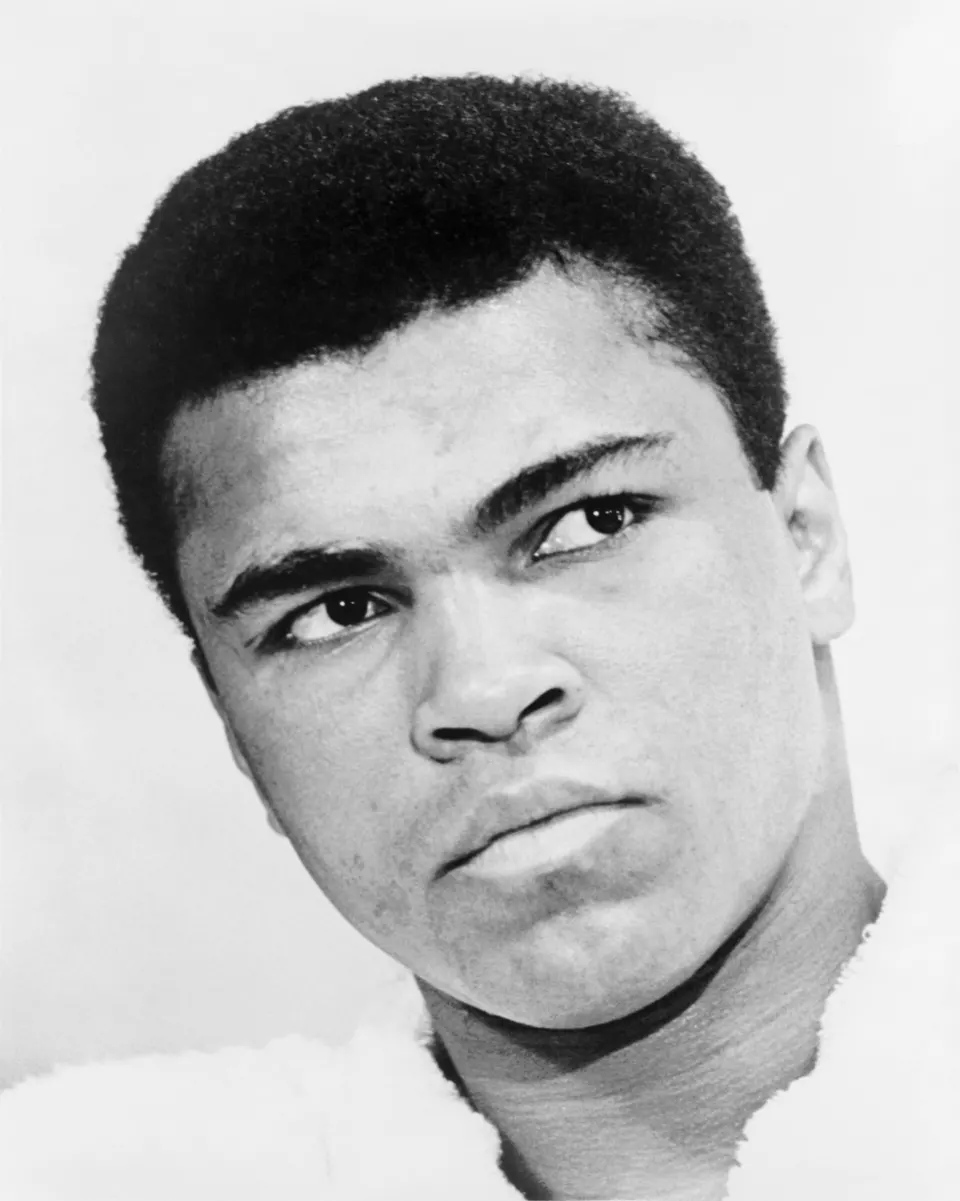
The story of the Fight of the Century begins four years earlier, in a military induction centre in Houston. On 28 April 1967, Ali was called forward three times to be inducted into the United States armed forces and refused each time, citing his religious beliefs as a member of the Nation of Islam and his opposition to the war in Vietnam. The consequences arrived the same day. The New York State Athletic Commission suspended his licence and the World Boxing Association stripped him of the heavyweight championship. Other commissions followed.
On 20 June 1967 a federal jury convicted him of violating Selective Service laws. He was sentenced to five years in prison and fined 10,000 dollars, but stayed free while his appeal moved slowly through the courts. For roughly three and a half years, the man who had beaten Sonny Liston and defended the title repeatedly could not get a licence to box anywhere in the United States. In the eyes of many fans he remained the real champion, because nobody had beaten him.
Smokin' Joe Fills the Vacuum
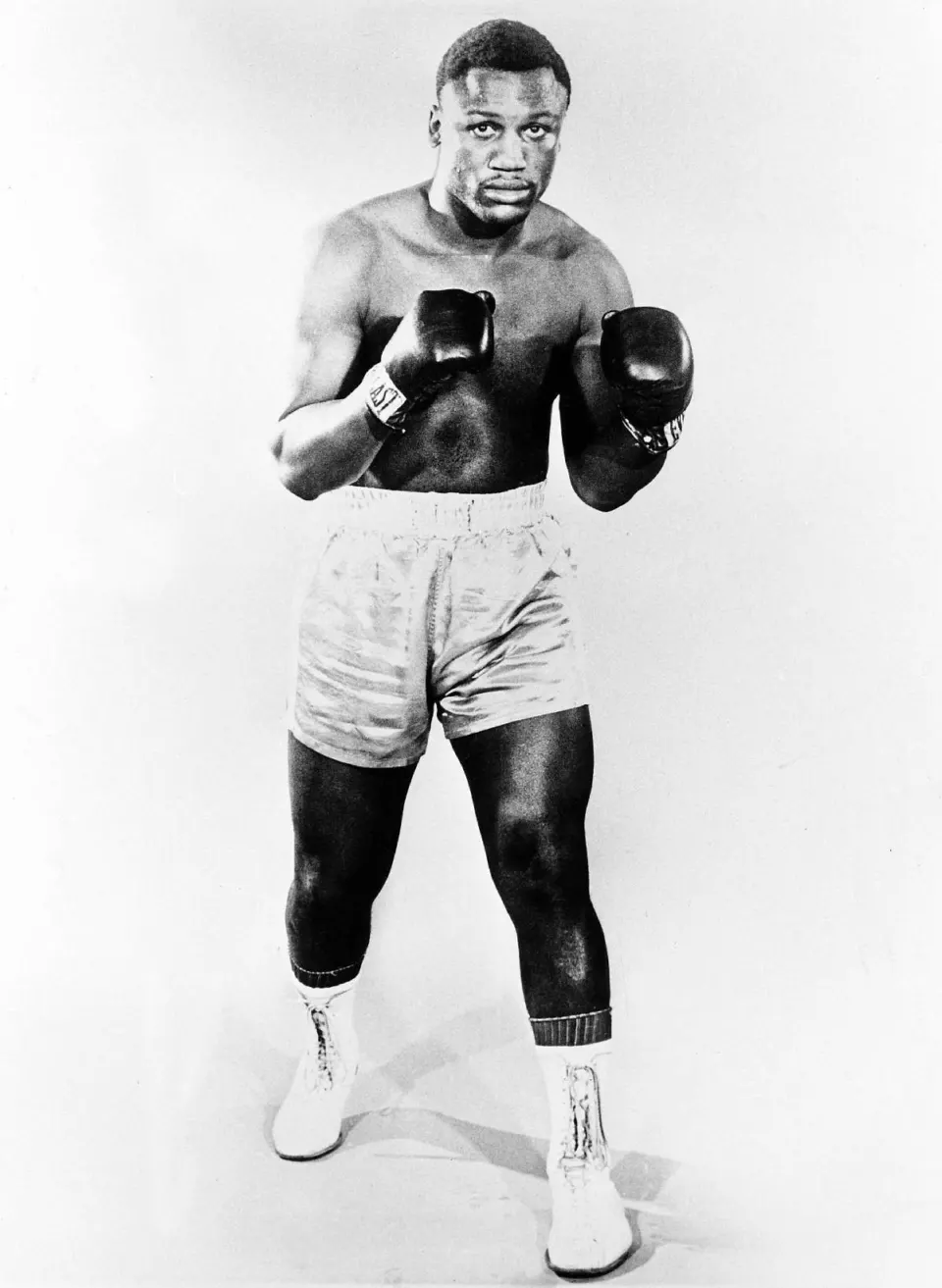
While Ali was idle, a compact, relentless Philadelphia fighter built his own claim. Joe Frazier had won heavyweight gold at the 1964 Tokyo Olympics, a place he only got as a replacement for the injured Buster Mathis, and he reportedly fought the final with an injured left thumb he kept to himself. As a professional he marched forward behind a bobbing, weaving style and one of the most feared left hooks the division had seen.
On 4 March 1968 he knocked out Mathis in the eleventh round to win the version of the title recognised by New York. On 16 February 1970, at Madison Square Garden, he met Jimmy Ellis, the winner of the WBA tournament held to replace Ali. Frazier dropped Ellis twice in the fourth round and Ellis's corner ended it, leaving Frazier as the undisputed champion. Accounts differ on how the stoppage is recorded: some list it as a fourth-round finish, while an Associated Press obituary profile describes it as a stoppage in the fifth.
The Road Back Through Atlanta
Ali's return came before his legal case was settled. In 1970 he secured a licence in Georgia and, on 26 October, stepped back into the ring in Atlanta against Jerry Quarry, his first fight in three and a half years. He won, then beat Oscar Bonavena in New York in December. The path to Frazier was clear.
When the fight was made, it carried every belt that mattered: the WBA and WBC titles, The Ring magazine championship and the lineal claim. Frazier came in at 26-0 with 23 knockouts; Ali was 31-0 with 25. Each man was guaranteed 2.5 million dollars, a purse figure without precedent in the sport at that time.
A Country Split Down the Middle
The build-up turned two boxers into symbols. Ali had become a figure for the anti-war movement and for many who saw the establishment as an enemy. Frazier, who supported American involvement in Vietnam, was cast, often against his own wishes, as the other side. Ali drove the division hard. He labelled Frazier an "Uncle Tom" and mocked his appearance, insults that Frazier never forgot, partly because he had helped Ali financially during the exile. Wikipedia's account of the period notes that Frazier's children were bullied at school and that his family received police protection after death threats.
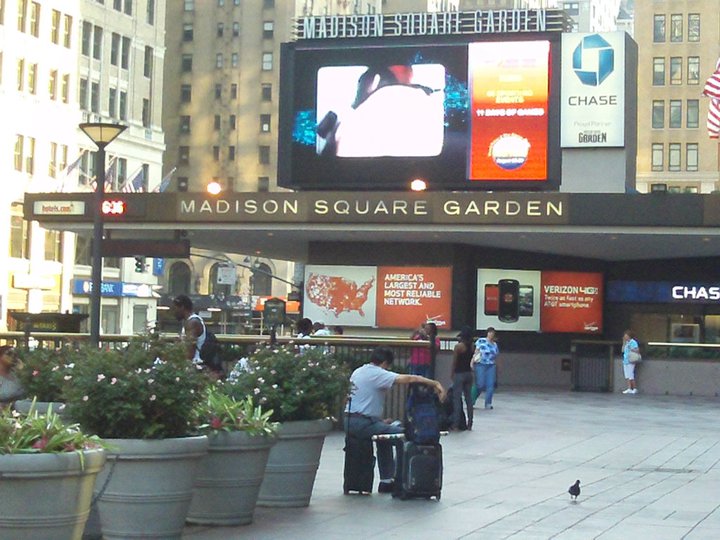
The demand was enormous. The Garden held a sellout crowd of 20,455, and the live gate reached about 1.5 million dollars. Celebrities packed ringside: Frank Sinatra worked as a photographer for Life magazine, while the actor Burt Lancaster joined the broadcast as a colour commentator alongside Don Dunphy and Archie Moore. Figures for the worldwide audience are estimates, but sources commonly cite around 300 million viewers, with millions more paying for closed-circuit screenings across the United States and in London.
Fifteen Rounds at the Garden
Ali started the way his admirers hoped. Through the early rounds his jab snapped into Frazier's face, raising welts, and he moved and talked as though the layoff had cost him nothing. Biography.com notes that Frazier bloodied Ali's nose in the fourth, but the opening third of the fight was largely Ali's.
The pace was his problem. By the sixth round Ali was visibly tiring, and he spent stretches leaning on the ropes, letting Frazier work to the body and head. Frazier kept coming. In the eighth he landed a clean left hook that forced Ali to grab and hold. According to History.com, by the eighth round Frazier was ahead six rounds to two on each judge's card.
The eleventh was the most dangerous moment of the night for Ali before the last. Another left hook shook him badly; his legs buckled and only the ropes kept him upright. He survived, and found enough in the later rounds to make some of them close, but Frazier's pressure did not let up.
The Hook in the Fifteenth
Early in the final round, Frazier threw the punch that has become the fight's defining image. As Ali loaded up an uppercut, Frazier's left hook caught him flush on the jaw and put him on the canvas. It was only the third knockdown of Ali's professional career. He was up quickly, at about the count of four, and finished the round on his feet while absorbing more punishment. Sources disagree on the timing of the knockdown: Wikipedia places it early in the round, while Biography.com gives a time of 2:34.
The decision was unanimous for Frazier. Judge Artie Aidala scored it 9-6, judge Bill Recht had it 11-4, and referee Arthur Mercante Sr., who also scored the bout under New York rules, had it 8-6-1, according to the scores listed by Wikipedia. Ali had lost for the first time as a professional.
Two Champions in the Hospital
Neither man left the night unmarked. Ali was taken to hospital straight after the fight so doctors could check whether his badly swollen jaw was broken. Frazier, the winner, spent time in hospital during the following week. Ali publicly refused to accept the verdict.
Within months the larger fight was decided too. On 28 June 1971, in Clay v. United States, the Supreme Court overturned Ali's conviction by an 8-0 vote, with Justice Thurgood Marshall recusing himself. The ruling rested on a procedural failure: the appeal board had not explained why it rejected his claim of conscientious objector status.
What the First Fight Started
Frazier defended the title successfully before losing it to George Foreman in 1973, a defeat that included six knockdowns in two rounds. Ali beat Frazier in their 1974 rematch and again in the brutal Thrilla in Manila in 1975. By then public opinion on Vietnam had shifted, and so had public opinion on Ali.
But the first meeting kept a status the others could not take away. It was the night two unbeaten champions settled a disputed throne, and the only one of their three fights that Frazier won. When the Associated Press profiled him decades later, the line that led his career was simple: he was the first man to beat Muhammad Ali.
Sources
- Fight of the Century, Wikipedia, accessed October 2026
- Joe Frazier, Wikipedia, accessed October 2026
- Muhammad Ali, Wikipedia, accessed October 2026
- Clay v. United States, Wikipedia, accessed October 2026
- Ali battles Frazier for heavyweight championship, History.com, This Day in History, 8 March
- Muhammad Ali vs. Joe Frazier: The Fight of the Century, Biography.com
- Former heavyweight champion Joe Frazier diagnosed with cancer, Associated Press via NBC10 Philadelphia, 5 November 2011


