
Kid Gavilán, the Cuban Hawk, Threw the Bolo Punch and Walked a Champion's Hard Road
From the cane country of Camagüey to the welterweight title and Friday-night television, Kid Gavilán fought Sugar Ray Robinson and Carmen Basilio, lost his crown in a disputed Philadelphia decision and ended his life in hardship in Miami.

Kid Gavilán came out of Camagüey, Cuba, with a looping punch he traced back to the cane fields. He held the welterweight championship from 1951 to 1954, went 15 rounds with Sugar Ray Robinson and Carmen Basilio, and was one of the faces of televised boxing in its first decade. After he retired, the money ran out and his health went with it, first in Cuba and then in Miami.
A Boy From Camagüey and a Bar Called El Gavilán
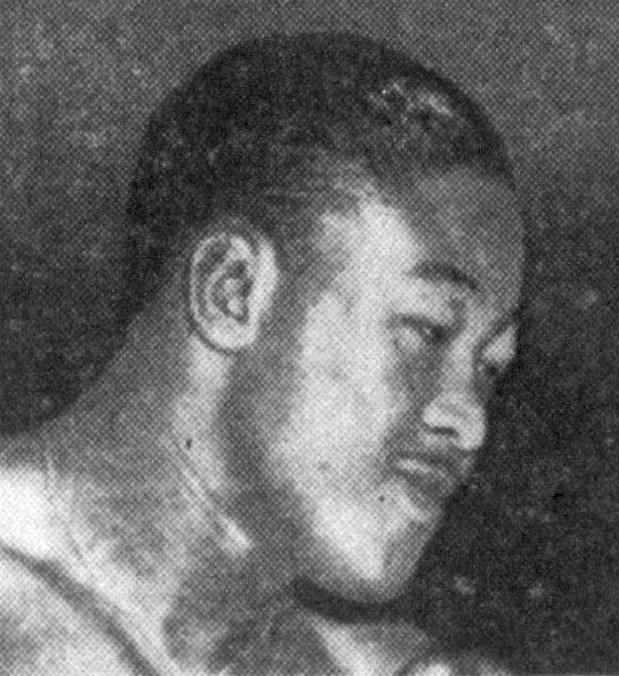
He was born Gerardo González on January 6, 1926, in Camagüey, a city in central Cuba. Boxing News describes the family as poor, and his early working life was spent around the sugar plantations. According to ESPN's obituary, he started boxing at ten and had about sixty amateur bouts before he turned professional.
His ring name came from his manager. Boxing News reports that Fernando Balido ran a bar called El Gavilán, Spanish for "the hawk," and the young fighter took the name. English-language papers later called him "the Cuban Hawk." His professional debut was on June 5, 1943, a four-round decision win over Antonio Díaz in Havana. Sources differ by a year on his age that day: ESPN says 17, Boxing News says 16. Cuba's state encyclopedia EcuRed says he made the move to Havana in 1943 to box full time.
The Bolo Punch
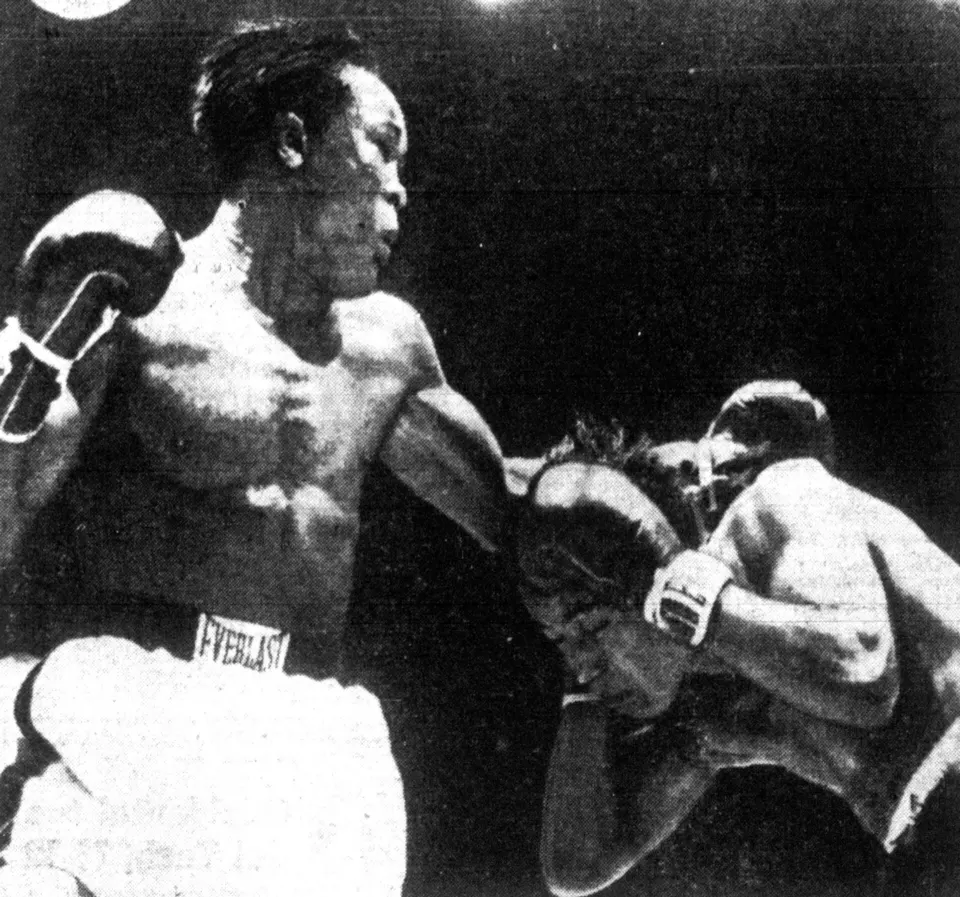
Gavilán's trademark was the bolo punch. It started low and wide, like the wind-up of a softball pitcher, and came up as something between a hook and an uppercut. Both ESPN and Boxing News trace the motion to cutting sugar cane. ESPN connects it to the arc of a machete, and Boxing News says it came from swinging heavy bolo knives in the fields.
Boxing News also points out that the punch looked more dangerous than it was. Gavilán won 28 of his fights by knockout, a low number for someone who fought so often. What he had instead was speed, constant combinations and a showman's sense of how a punch looks to a crowd. He fought in white boots, and the bolo became the move television audiences waited for.
Two Nights With Sugar Ray Robinson
By the late 1940s Gavilán was fighting regularly in the United States, and he ran into the best welterweight of the time. He met Sugar Ray Robinson for the first time on September 23, 1948, at Yankee Stadium in the Bronx, and lost a ten-round decision. Nobody seemed to think less of him for it, and the rematch on July 11, 1949, at Municipal Stadium in Philadelphia was for Robinson's welterweight title.
The challenger went the full 15 rounds, but Robinson kept his belt on a unanimous decision. Boxing News quotes Robinson's later verdict on the Cuban's toughness: "Nobody took a punch on the chin like Gavilan."
Gavilán also had a series of fights with Ike Williams, the lightweight champion. Wikipedia records a ten-round loss to Williams, and Boxing News says Gavilán later beat him twice. ESPN names the Williams and Robinson fights as the ones that made him a television star.
Champion of the Welterweights, 1951–1954
Robinson moved up to middleweight, and the welterweight title came open. On May 18, 1951, at Madison Square Garden, Gavilán beat Johnny Bratton over 15 rounds and won the NBA, New York commission and Ring Magazine belts. Boxing News reports that Bratton suffered a broken jaw in the fight.
Most of his defenses were close. He fought Billy Graham three times, and all three went to a 15-round decision. Boxing News says the August 1951 split decision over Graham caused trouble among fans and talk of underworld involvement. In 1952 he defended against Bobby Dykes at Miami Stadium. ESPN and Wikipedia both describe it as the first fight between a Black boxer and a white boxer in what was then a segregated Miami. On February 11, 1953, he stopped Chuck Davey in the tenth round. ESPN counts seven successful defenses in all.
Syracuse, 1953: Carmen Basilio
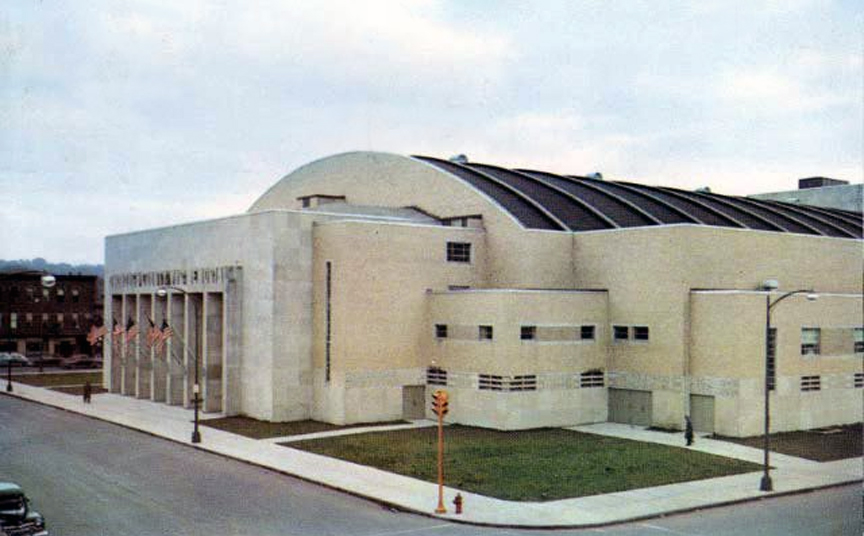
On September 18, 1953, Gavilán defended against Carmen Basilio at the War Memorial Auditorium in Syracuse, New York. It was the first world title fight ever held in that city. Basilio was the son of an onion farmer from nearby Canastota, and the crowd was on his side.
In the second round Basilio dropped the champion with left hooks. The Sweet Science says it was only the second time Gavilán had been knocked down in his career. He held on, got through the round, and slowly worked his way back into the fight while Basilio's left eye swelled shut. The Sweet Science also reports that the judges' cards favored Basilio partway through the fight. The final verdict was a split decision for Gavilán. The arena booed, and the referee needed a police escort out of the building. The Sweet Science also notes that most of the ringside press had Gavilán winning narrowly.
The Hawk on Friday-Night Television
Gavilán's prime came at the same time as the first big boom in network television. NBC's Gillette Cavalcade of Sports broadcast Friday-night fights from Madison Square Garden from 1946 until 1960. Boxing News counts 34 television appearances for Gavilán, 22 of them at the Garden. His fast hands and the bolo made him a natural for the camera at a time when many viewers were watching boxing at home for the first time.
In 1954 he moved up to middleweight to challenge Carl "Bobo" Olson for the title in Chicago and lost a 15-round decision.
Philadelphia, 1954: "The Business"
He lost the welterweight title on October 20, 1954, in Philadelphia, to Johnny Saxton on a unanimous 15-round decision. Most sources place the fight at Convention Hall. Saxton's Wikipedia entry gives a different venue, but every account agrees on the city and the date.
The decision was controversial right away. Saxton's manager was Frank "Blinky" Palermo, a Philadelphia figure tied to organized crime. Wikipedia's article on Palermo reports that bookmakers would not take bets on the fight, that 20 of 22 ringside reporters scored it for Gavilán, and that Gavilán cried afterward and said he had been given "the business." Wikipedia's Saxton entry calls the win unpopular with much of the boxing world. Boxing News also calls the decision dubious, though it puts the fight in 1953, which conflicts with the other records.
The Long Decline and the Final Count
Gavilán never held a title again. Boxing News says he lost 15 of his last 26 fights. His final bout was a ten-round decision loss to Yama Bahama in 1958. He was never knocked out. Totals vary by source: Wikipedia lists 108 wins, 30 losses and 5 draws in 143 fights, and ESPN gives 107-30-6. Both have him at 28 knockouts.
The years after boxing are harder to pin down, and the sources don't always agree. He went back to Cuba and had a small farm. ESPN places it in Camagüey, and EcuRed places it in Bejucal, near Havana. Writing in The Sweet Science in 2005, Robert Cassidy Jr. said Gavilán had backed Fidel Castro's revolution with money, and that the government later ran a highway through the middle of his land and offered him a small pension. Wikipedia says he became a Jehovah's Witness and was jailed under Castro for preaching.
The sources also disagree on when he left. ESPN and Boxing News say he came to the United States in 1968, and Boxing News adds that he had cataracts and could barely see by then. EcuRed puts his departure around 1960. Wikipedia says he sold sausages in Chicago in the 1980s. Boxing News reports he had three strokes, and ESPN says he spent his last four years in an assisted-living facility in Miami. ESPN quotes him on getting through those years: "There were times when things were difficult, but I have faith in God."
Kid Gavilán died of a heart attack in Miami on February 13, 2003, at the age of 77. EcuRed gives the date as February 14. Cassidy wrote that he was buried in an unmarked grave until the veterans' organization Ring 8 raised money for a headstone. By then he had been in the International Boxing Hall of Fame for 13 years. He was inducted in 1990 as part of the first class, along with Sugar Ray Robinson.
Sources
- Kid Gavilán, Wikipedia, accessed October 2026
- Gavilan, 77, former welterweight champ, ESPN Classic, February 14, 2003
- On this day: Gerardo Gonzalez, aka Kid Gavilan, born in 1926, Boxing News
- This Day in Boxing History: Kid Gavilan vs. Carmen Basilio, Kid Hersh, The Sweet Science, September 18, 2016
- Article on Kid Gavilan's later life, Robert Cassidy Jr., The Sweet Science, April 22, 2005
- Kid Gavilán, EcuRed
- Johnny Saxton, Wikipedia, accessed October 2026
- Frank Palermo, Wikipedia, accessed October 2026
- Gillette Cavalcade of Sports, Wikipedia, accessed October 2026


