
How José 'Mantequilla' Nápoles Went From Santiago de Cuba to the Welterweight Throne in Mexico City
José Nápoles left Cuba after professional boxing was banned there and made Mexico City his home. From there he won the world welterweight title twice between 1969 and 1975, challenged Carlos Monzón at middleweight, and fought for the last time against John H. Stracey.

José Ángel Nápoles grew up in Santiago de Cuba and left the island after Fidel Castro's government outlawed professional boxing. He rebuilt his career in Mexico City and became one of the best welterweights the sport has seen. Between 1969 and 1975 he won the world title twice, beat Curtis Cokes and Emile Griffith, moved up to fight Carlos Monzón, and lost for the last time to John H. Stracey in front of a bullring crowd.
A Boy from Santiago de Cuba
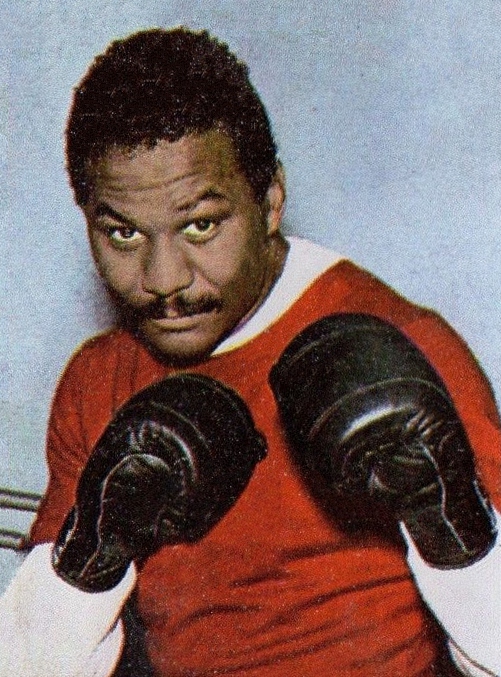
Nápoles was born on April 13, 1940, in Santiago de Cuba, the port city at the island's eastern end. His father, Pedro, was a schoolteacher. ESPN's obituary credits him with an amateur record of 113 wins and one loss, and notes that the figure is sometimes given as 114-1. He was still a teenager when he turned professional on August 2, 1958, knocking out Julio Rojas in the first round. Cleto Reyes, the Mexican equipment maker, places that debut in Havana.
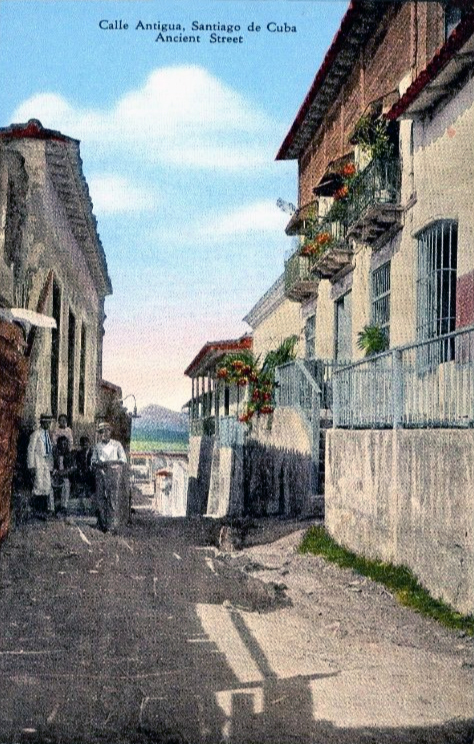
His first 21 professional fights took place in Cuba, mostly against opponents who never became known outside it. He started out at featherweight and lightweight. His style earned him the nickname "Mantequilla," Spanish for butter, because of how smoothly he moved, slipped punches and countered.
The 1961 Ban and a New Life in Mexico City
The Cuban part of his career ended in 1961. Nápoles beat Enrique Carabeo in March of that year, and soon afterwards Castro's government banned professional boxing. Like other Cuban professionals, including Ultiminio Ramos, Nápoles went to Mexico. According to Cleto Reyes, the journalist Cuco Conde represented that group of exiled fighters.
ESPN dates his departure to 1962. He fought again on July 21 of that year in Mexico, stopping Enrique Camarena in two rounds, and won four times before the year was out. Mexico City became his base, and its fans took to him as one of their own. By 1965 he had beaten Carlos "Morocho" Hernández, who went on to win a world title, and Eddie Perkins, a former junior welterweight champion. Reuters reported that Mexico granted him citizenship in 1969, the year he became world champion.
Taking the Crown from Curtis Cokes
The title chance came on April 18, 1969, at the Forum in Inglewood, California. Curtis Cokes of Texas held the WBA, WBC, New York State Athletic Commission and Ring welterweight titles, all of which he had won with a 15-round decision over Manuel González in New Orleans in 1966. The fight with Nápoles went 13 rounds. ESPN reported that cuts and swelling ended it, and Wikipedia's records list it as a retirement in Cokes' corner. Cleto Reyes describes the result differently, as a technical decision over 13 rounds. Whichever label is used, every one of Cokes' belts went to Nápoles.
The rematch on June 29, 1969, was held at the Plaza de Toros México, the huge bullring in Mexico City. This time it ended in the tenth round, again with Cokes unable to continue. At the end of the year The Ring named Nápoles its Fighter of the Year.
Holding Off Emile Griffith
Nápoles went back to Inglewood on October 17, 1969, to face Emile Griffith, a future Hall of Famer. Nápoles beat him on points over 15 rounds. On February 14, 1970, at the same venue, he stopped Ernie "Indian Red" López in the 15th round.
The Backus Cut and the Comeback
Nápoles lost his title on December 3, 1970, at the War Memorial Auditorium in Syracuse, New York. Billy Backus cut him over the eye in the first round, the wound kept bleeding, and the fight was stopped in the fourth. It was considered a major upset.
The rematch took place at the Forum on June 4, 1971, and Nápoles won the title back by stopping Backus. Most records, including the Wikipedia pages for both fighters and Cleto Reyes' profile, put the stoppage in the eighth round. ESPN's obituary says the fourth.
His second reign took him to several countries. He outpointed Hedgemon Lewis over 15 rounds in December 1971, knocked out Ralph Charles in the seventh at Wembley in March 1972, and stopped Adolph Pruitt in two that June. In February 1973 he knocked out Ernie López in seven. He then won 15-round decisions over Roger Ménétrey in Grenoble, France, and over Clyde Gray in Toronto.
A Middleweight Night in Puteaux Against Carlos Monzón
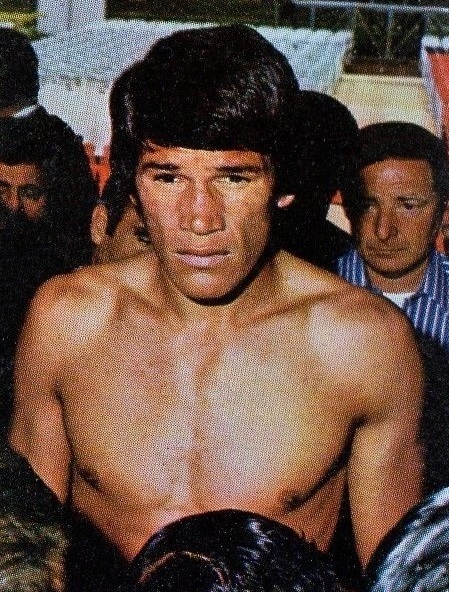
With few challenges left at welterweight, Nápoles moved up to fight middleweight champion Carlos Monzón of Argentina. The French actor Alain Delon promoted the fight. ESPN Deportes reports that it was originally planned for December 1973 and postponed after Monzón developed angina. It finally went ahead inside a circus tent in Puteaux, just outside Paris. Wikipedia dates the fight to February 9, 1974, while ESPN Deportes gives February 8.
Nápoles was a natural welterweight facing a much bigger man. Cleto Reyes says the differences in size and speed decided the fight. After six rounds Nápoles stayed on his stool, and the result was recorded as a seventh-round retirement. ESPN's obituary calls it a sixth-round knockout. The Argentine writer Julio Cortázar later used the fight as the setting for his short story "La noche de Mantequilla."
Last Defenses and the Stracey Fight in the Bullring
The loss to Monzón did not affect his welterweight title, and he went back to defending it. In 1974 he stopped Hedgemon Lewis in the ninth round of a rematch in Mexico City and beat Horacio Saldaño. In 1975 he met Armando Muñiz twice. The first fight, in Acapulco in March, ended in a technical decision after 12 rounds, a result Wikipedia describes as controversial. Nápoles then beat Muñiz clearly on points over 15 rounds in Mexico City that July.
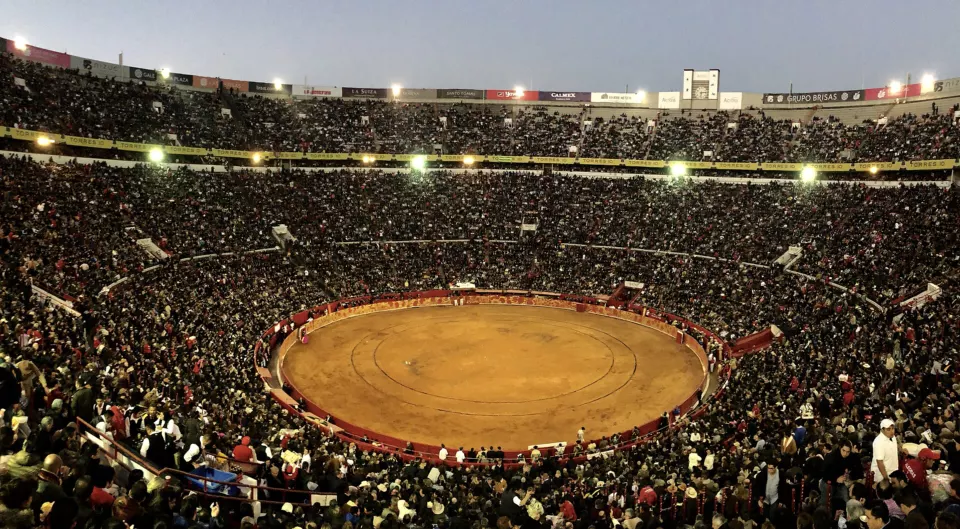
His last fight was on December 6, 1975, at the Plaza de Toros México, against the British challenger John H. Stracey. Reuters put the crowd at about 40,000. Nápoles knocked Stracey down in the first round, but Stracey got up and gradually took control, closing one of the champion's eyes. Referee Octavio Meyran stopped the fight at 2:30 of the sixth round. Wikipedia lists Stracey as winning the WBC and lineal titles that night. Nápoles retired afterwards. He was 35.
Decades later Stracey still spoke warmly of him. When Nápoles died, Stracey told Reuters, "What a magnificent fighter he was and what a great champion."
Record, Honours and a Final Farewell
Nápoles finished with 81 wins, 54 of them by knockout, and seven losses. ESPN counts 13 title defenses across his two reigns. Wikipedia notes that his number of wins in unified championship fights, a record he shared with Muhammad Ali, stood for 40 years. The Ring inducted him into its hall of fame in 1985, and the International Boxing Hall of Fame included him in its first class in 1990. In 1999 the Associated Press ranked him the fourth-greatest welterweight of the 20th century.
Outside the ring he had a co-starring role alongside the masked wrestler El Santo in the 1974 Mexican film "Santo en la venganza de la llorona." He later lived in Ciudad Juárez with his wife, Bertha.
Nápoles died in Mexico City on August 16, 2019, at the age of 79, after a long illness. The WBC reported that its president, Mauricio Sulaimán, and Mexican boxing officials joined the funeral procession, that a WBC green and gold belt was placed on his coffin, and that Stracey sent flowers. He was buried at the Panteón de Dolores in Mexico City.
Sources
- José Nápoles, Wikipedia, accessed October 2026
- Jose Napoles, two-time welterweight champion, dies at 79, ESPN, August 16, 2019
- Two-times welterweight world champion Napoles dead at 79 (Reuters), Dynamite News, August 2019
- Report on the funeral of José Ángel "Mantequilla" Nápoles, World Boxing Council (wbcboxing.com), August 19, 2019
- José Ángel "Mantequilla" Nápoles, Cleto Reyes, accessed October 2026
- Carlos Monzón vs José "Mantequilla" Nápoles: duelo en París, ESPN Deportes, accessed October 2026
- Curtis Cokes; Billy Backus; John H. Stracey; Carlos Monzón, Wikipedia, accessed October 2026


