
Edwin 'Chapo' Rosario the Toa Baja Puncher Won Four World Titles and Died at 34
From the Candelaria barrio of Toa Baja to three lightweight world titles and a fourth at 140 pounds, Edwin Rosario's right hand made him one of boxing's most feared punchers, until Chávez, cocaine and an early death in 1997 cut the story short.

Edwin "Chapo" Rosario came out of the Candelaria barrio of Toa Baja carrying one of the heaviest right hands the lightweight division has seen. He won three world titles at 135 pounds and a fourth at 140, came within a point of beating Hector Camacho, and was taken apart by Julio César Chávez in one of the great performances of the 1980s. He was dead at 34.
A Boy From Candelaria
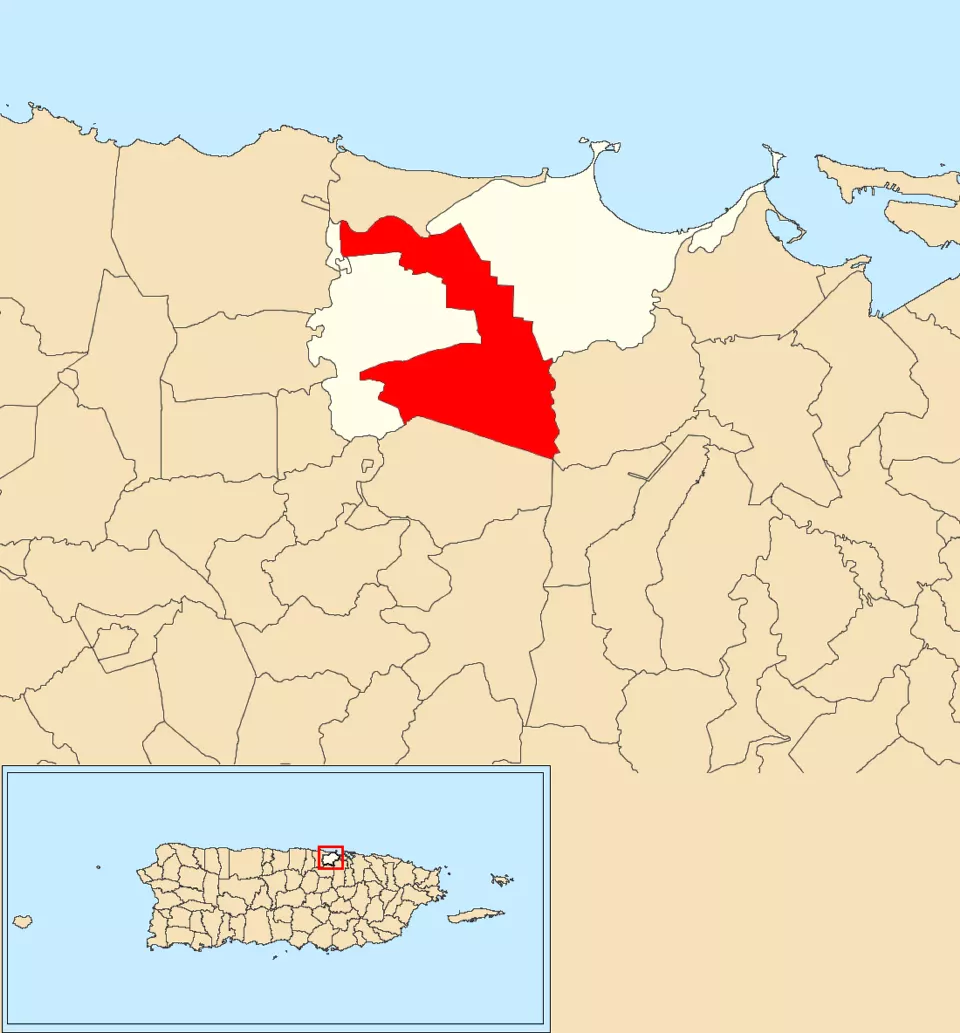
Rosario was born on March 15, 1963, in Candelaria, a barrio of Toa Baja on the north coast of Puerto Rico. The nickname "Chapo" means roughly "Shorty," and it stuck to a fighter who stood about five feet six inches. Boxing was already in the family. His older brother, known as Papo, turned professional before him, but died suddenly two years into his career; Wikipedia's account says the death was reportedly connected to drugs, a detail that would echo grimly later on.
The trainer and manager Manny Siaca Sr. is credited with spotting Edwin's ability when the boy was about eight years old. Rosario went on to build a strong amateur record before turning professional in March 1979, a few days short of his sixteenth birthday.
Twenty-One Fights, Twenty Knockouts
The early professional record reads like a demolition log. Rosario won his first 21 bouts, 20 of them inside the distance. Two of the better-known names went in three rounds apiece in 1982: Young Ezzard Charles in Las Vegas in January, and Edwin Viruet in May. By then the young Puerto Rican was regarded as a genuine danger at lightweight, and a world title shot followed quickly.
WBC Champion at Twenty
On May 1, 1983, in San Juan, Rosario met the Mexican José Luis Ramírez for the vacant WBC lightweight title. It went twelve rounds, and all three judges scored it 115-113 for Rosario. He was 20 years old.
His reign lasted 18 months. In March 1984 he stopped Roberto Elizondo in the opening round. In June 1984, back in San Juan, he faced the 1976 Olympic gold medallist Howard Davis Jr. and kept the belt on a split decision. Then came the rematch with Ramírez in San Juan on November 3, 1984. This time the Mexican got to him first and stopped him in the fourth round, and the title was gone.
The Night at Madison Square Garden
The fight most Puerto Rican fans still argue about came on June 13, 1986, at Madison Square Garden. Rosario challenged his countryman Hector "Macho" Camacho for the WBC lightweight title in a bout carried by HBO in the United States and WAPA-TV on the island. Camacho was paid $500,000; Rosario received $150,000.
Camacho controlled the opening rounds with his jab and movement. Late in the fourth, Rosario found an uppercut, and in the fifth a left to the chin buckled Camacho's knees. Camacho took back control through the middle rounds, but in the eleventh a left hook hurt him again, and Rosario won the twelfth on every card. It was not quite enough. Two judges scored it 115-113 for Camacho and the third had Rosario ahead 114-113, giving Camacho a split decision. Many observers felt Rosario had done enough; Matt Christie of Boxing News later described it as a bout plenty of people thought he deserved to win.
The fight is sometimes dated to 1984, but every source consulted here places it in June 1986.
Two Rounds Against Bramble
Three months after losing to Camacho, Rosario got another shot at a world title. On September 26, 1986, in Miami Beach, he challenged WBA lightweight champion Livingstone Bramble and knocked him out in the second round. Neil Crane, writing for The Fight City, recalled that this quick, brutal win over Bramble was still fresh in people's minds a year later.
The power was the core of Rosario's reputation. He fought aggressively and could end a fight with a single shot, above all his right hand. In 2003 The Ring ranked him 36th on its list of the 100 greatest punchers of all time. In his first WBA defense, in Chicago on August 11, 1987, he knocked out Juan Nazario in the eighth round.
Chávez in Las Vegas, 1987
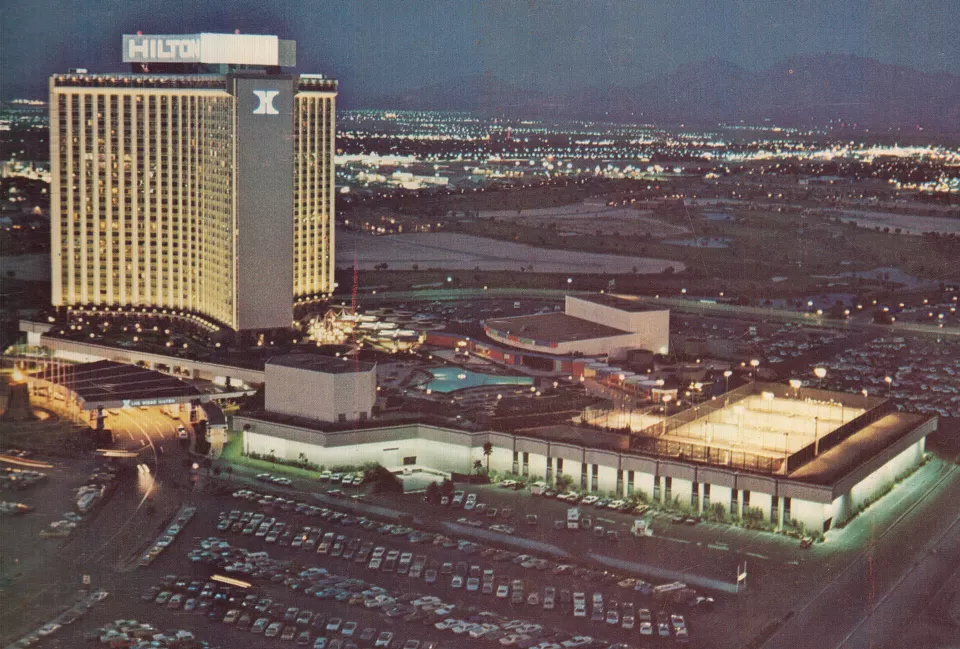
Julio César Chávez had already been the WBC super featherweight champion. After an August 1987 defense he decided to move up to lightweight and go after Rosario's WBA belt. The fight was set for November 21, 1987, at the Las Vegas Hilton. Before it, Rosario talked a lot. He dismissed the quality of Chávez's opposition and claimed that Don King had pressured him into taking the fight, which Chávez denied. Wikipedia's account of the build-up records a remark about sending Chávez back to Mexico in a coffin. Despite being the champion, Rosario went in as a 7-5 underdog.
Chávez came in unbeaten and took the fight apart. He worked his way inside and attacked the body, with the left hook doing most of the damage, then moved up to the head. HBO's punch count credited him with 450 of 743 punches landed, about 61 percent, while Rosario landed 263 of 731. By the eleventh round Rosario's left eye was swollen shut, there was a cut over his right, and he was bleeding from the nose and mouth. Even so, he kept punching back.
With Rosario trapped in a corner, his own corner threw in the towel and referee Richard Steele stopped it at 2:38 of the eleventh. Wikipedia lists the cards at the stoppage as 98-92, 99-91 and 100-92, all for Chávez. Sports Illustrated soon ran a feature calling Chávez perhaps the best fighter in the world, and the win is often called the best performance of his career.
Champion Again, Twice More
That loss did not finish him. On July 9, 1989, in Atlantic City, Rosario stopped Anthony Jones in six rounds to win the vacant WBA lightweight title. That made him a three-time lightweight world champion, which is rare in any division. The reign ended on April 4, 1990, at Madison Square Garden, when Juan Nazario, the man he had knocked out three years earlier, beat him in a rematch after Rosario retired on his stool after eight rounds.
He moved up to 140 pounds. On June 14, 1991, in Sacramento, he stopped Loreto Garza in the third round to win the WBA super lightweight title. It was the last belt he won. He lost it in his first defense, stopped in the opening round by Akinobu Hiranaka in Mexico City on April 10, 1992. Frankie Randall, whom Rosario had outpointed in London in 1985, stopped him in seven rounds in Memphis in January 1993.
Drugs, a Comeback and an Early Death
Cocaine shadowed the second half of his career. He kept fighting into 1997, and his last bout was in Bayamón on September 25, 1997, where he knocked out Harold Bennett in the second round. Rosario's final record, as Wikipedia lists it, was 47 wins with 41 knockouts in 53 fights, with six losses. A rematch with Camacho had been talked about for 1997 but never took place.
On December 1, 1997, a little over two months after that last fight, Rosario was found dead in bed at his parents' home in Toa Baja. Sources give the cause in slightly different terms. Some describe it as acute pulmonary edema, while the autopsy summary in Wikipedia's account records an aneurysm with fluid in the lungs. Doctors said his history of drug and alcohol abuse was a factor, though neither was found in his system when he died. More than 5,000 people reportedly attended the funeral, and several Puerto Rican world champions carried the coffin.
The Hall of Fame and the Legacy
Rosario was inducted into the International Boxing Hall of Fame in 2006. Wikipedia's account notes that he was the sixth Puerto Rican fighter to be enshrined. His career set a punishing pattern of very high peaks and hard falls: an unbeaten start, a split-decision near miss, a two-round destruction of a reigning champion, and then a beating from the best fighter of his era. Through all of it, one clean right hand could still end the night.
Sources
- Edwin Rosario, Wikipedia, accessed October 2026
- Héctor Camacho vs. Edwin Rosario, Wikipedia, accessed October 2026
- Edwin Rosario vs. Julio César Chávez, Wikipedia, accessed October 2026
- Julio César Chávez, Wikipedia, accessed October 2026
- Julio Cesar Chavez may never have been greater than the night he destroyed Edwin Rosario, Matt Christie, Boxing News
- Nov. 21, 1987: Chavez vs Rosario, Neil Crane, The Fight City


