
Micky Ward Was Lowell's Comeback Fighter With the Left Hook to the Body Behind The Fighter
From a 1991 retirement and a rebuilt hand to the WBU title, the Gatti trilogy and a Hollywood film, the life of Lowell's Micky Ward, including his pledge to donate his brain to CTE research.

Micky Ward never held one of boxing's four major world titles, yet few junior welterweights of his era are remembered as warmly. A road-paving mill-town fighter from Lowell, Massachusetts, he walked away from the sport with a 21-7 record in 1991, came back three years later with a rebuilt hand, and turned a left hook to the body into a career that ended with three of the most celebrated fights of the 2000s and a Hollywood film.
A Boy From Lowell and a Brother in the Ring
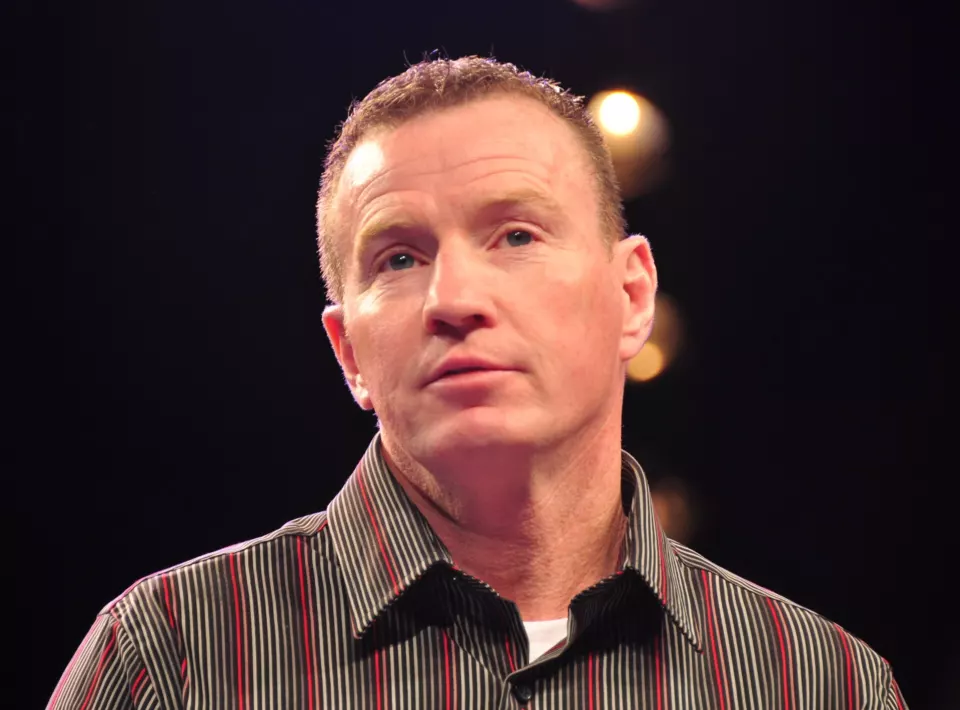
George Michael Ward Jr. was born on October 4, 1965, in Lowell, an old textile city north of Boston. Boxing came to him through family. His older half-brother, Dicky Eklund, born in 1957, was a local fighter of real ability, and their mother, Alice Ward, would later manage Micky in the early years of his professional career.
Eklund's most famous night came on July 18, 1978, at the Hynes Memorial Auditorium in Boston, when he went the full distance against Sugar Ray Leonard. Leonard won a unanimous decision and dropped Eklund twice, but in the ninth round Leonard went down in a tangle; referee Tommy Rawson ruled it a slip, while footage appears to show a punch landing as he fell. Micky, then 12, watched from ringside and later named his brother as the reason he took up boxing.
He had already started young, competing from the age of seven. His amateur record is listed at 62 wins and 10 losses, with New England Golden Gloves titles in 1980, 1981 and 1982 and a New England AAU title at 139 pounds in 1983.
The First Career, 1985-1991
Ward turned professional on June 13, 1985, stopping David Morin in the first round. Eklund, whose own pro record finished at 19-10, became his full-time trainer and worked his corner for 26 fights through 1991. The early results were promising: by the end of 1989 Ward stood at 19-2, and on January 15 of that year he challenged Frankie Warren for the USBA light welterweight title, losing that bid.
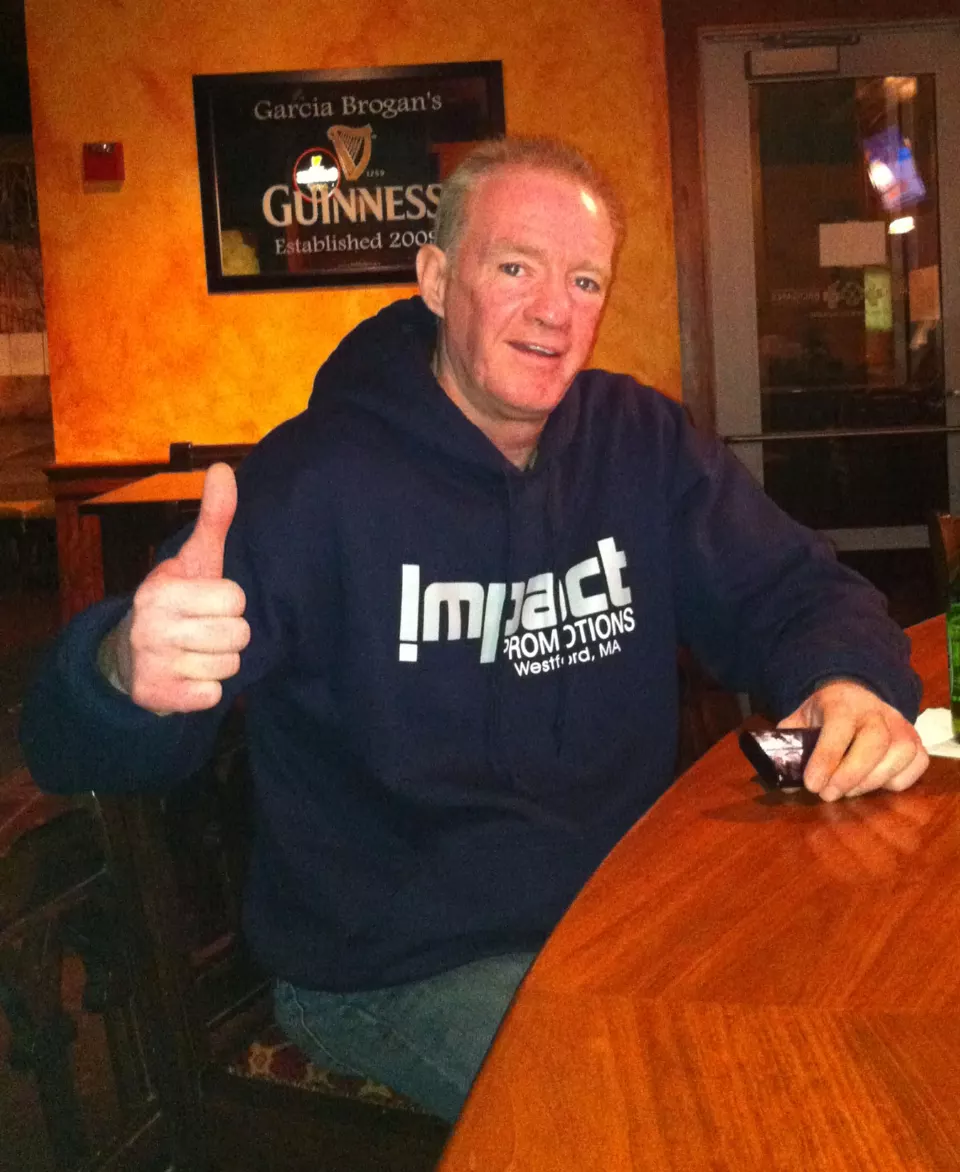
The years that followed were harder. Ward lost a run of fights against capable opposition, and after defeats in May and October 1991 his record stood at 21-7. Meanwhile, Eklund was sinking into crack cocaine addiction, a decline later shown in the HBO documentary High on Crack Street: Lost Lives in Lowell. Eklund was eventually sent to prison for crimes committed to support the habit.
The Break: Paving Roads and a Rebuilt Hand
Ward stepped away from the ring after 1991. He worked on a road-paving crew, served as a correctional officer at the Middlesex House of Correction, and concentrated on raising his daughter, Kasie. He also had surgery on his damaged hand, in which bone taken from his pelvis was used to fuse and strengthen the injured bones.
The return came through Mickey O'Keefe of the Lowell police, who invited him back into the gym. On June 17, 1994, Ward fought again and stopped Luis Castillo in the fifth round. Eklund, after his release from prison in the mid-1990s, returned to his brother's corner and stayed there until the end.
The Left Hook to the Body
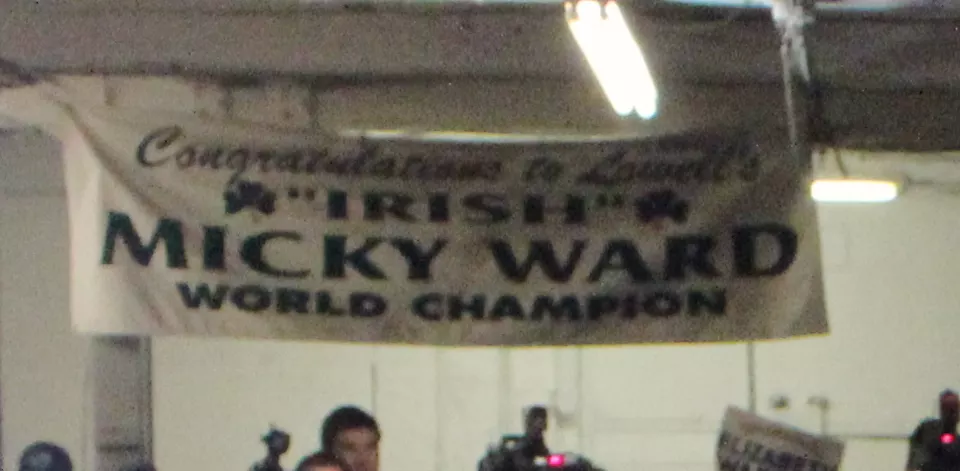
The second career was built on patience and a single punch. Ward fought at close range, absorbed a great deal of punishment, and waited for openings to dig his left hook into the liver. On April 13, 1996, he stopped Louis Veader in the ninth round to win the WBU Intercontinental light welterweight title, then beat him again by unanimous decision that July. On April 12, 1997, he knocked out Alfonso Sanchez in the seventh round, a comeback win that earned him a shot at the IBF champion Vince Phillips.
That fight, on August 9, 1997, ended in the third round when cuts forced a stoppage. ESPN's Brian Campbell noted in 2010 that it was the only stoppage defeat of Ward's career. In June 1998 he lost a 12-round unanimous decision to Zab Judah, but he kept winning fights that television audiences loved, including a 10th-round stoppage of Reggie Green on October 1, 1999.
The peak of the body-punching style arrived on March 11, 2000, at the Olympia in London. Shea Neary of Liverpool came in unbeaten at 22-0 and holding the WBU light welterweight title. In the eighth round Ward landed left hooks to the body that set up uppercuts, Neary was dropped for the first time in his career, and referee Mickey Vann stopped the fight after a second knockdown. The same weapon later produced a first-round knockout of Steve Quinonez.
Three Fights With Arturo Gatti
A unanimous decision win over Emanuel Augustus on July 13, 2001, and a disputed technical decision loss to Jesse James Leija in January 2002 set up the series that defined him. On May 18, 2002, Ward beat Arturo Gatti by majority decision over 10 rounds, a bout in which a left hook to the body put Gatti down in the ninth. Gatti won the rematch on November 23, 2002, and the third fight on June 7, 2003, both by unanimous decision. The first and third meetings were named The Ring's Fight of the Year, and Ward earned roughly $3 million across the trilogy. He retired after the third fight with a final record of 38-13 with 27 knockouts. The rivalry itself is covered in detail in a separate RingTalk feature on the Gatti-Ward series.
Hollywood Arrives: The Fighter (2010)
Ward's story reached a much wider audience on December 17, 2010, with the release of The Fighter, directed by David O. Russell and filmed in Lowell. Mark Wahlberg played Ward, Christian Bale played Eklund, Melissa Leo played their mother and Amy Adams played Charlene Fleming, Ward's partner and later wife. The film received seven Academy Award nominations and won two, for Bale and Leo, and it grossed about $129 million worldwide.
The film takes liberties. It builds to the Neary fight as its climax but places it much earlier in Ward's comeback than the real date of 2000, it shows Ward being knocked down against Neary when that did not happen, and it alters the record and outcome around his loss to Mike Mungin. As a portrait of a family and a city, though, it fixed Ward and Eklund in popular memory.
A Pledge to Brain Research
In December 2010, the same week the film opened, Boston University School of Medicine announced that Ward had pledged to donate his brain after his death to its Center for the Study of Traumatic Encephalopathy and would take part in its long-term research. The university said he joined more than 300 current and former athletes who had made the same commitment, and quoted him: "I regret not knowing of the long-term risks of repeated brain trauma while a boxer." He has since worked with the Concussion Legacy Foundation, and Wikipedia records that the pledge covers his spinal column as well.
Ward has spoken openly about his health. In a 2019 feature, Boxing News reported that he deals with short-term memory problems and sudden mood changes, and that he had undergone neurological testing in 2005. The outlet described him as having been diagnosed with CTE, while also noting that the extent of the disease can only be established by examination after death; other accounts are less categorical, so the precise medical picture should be treated with caution.
Life After the Ring
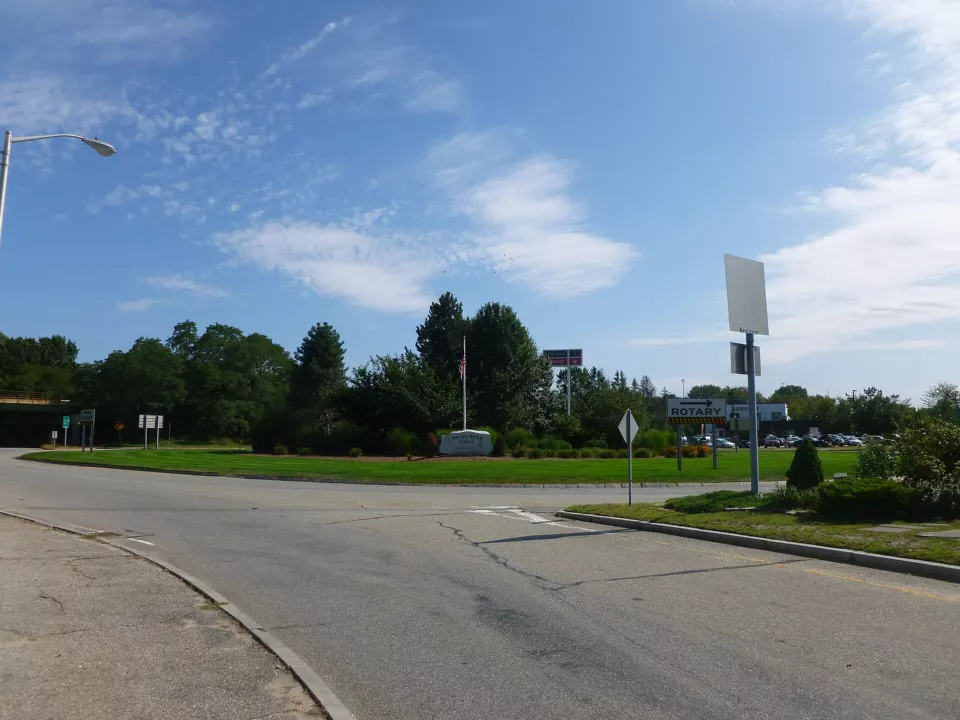
Ward stayed in Lowell. He returned to road paving, co-owns a boxing gym and an outdoor hockey rink in the city, gives motivational talks and founded Team Micky Ward Charities in 2005. A traffic circle in the city, Micky Ward Circle, carries his name. Formal honours followed: the James A. Farley Award in 2010 and inductions into the Connecticut, New Jersey and Atlantic City boxing halls of fame, then the National Boxing Hall of Fame in 2024.
His record shows 13 losses and no major world title, but it also tells a hard story with unusual clarity: a fighter who quit, came back with a rebuilt hand and his brother in the corner, and outlasted almost everyone who doubted him.
Sources
- Micky Ward, Wikipedia, accessed October 2026
- Dicky Eklund, Wikipedia, accessed October 2026
- The Fighter, Wikipedia, accessed October 2026
- Micky Ward recalls his standout fights, ESPN (Brian Campbell), December 22, 2010
- Boxing legend "Irish" Micky Ward to donate brain to research at BUSM, Boston University School of Medicine, December 9, 2010
- Micky Ward: A warrior's brain, Boxing News, May 17, 2019


