
Khaosai Galaxy the Phetchabun Southpaw Ruled the Junior Bantamweights for Seven Years
Khaosai Galaxy went from Muay Thai rings to 19 defenses of the WBA junior bantamweight title between 1984 and 1991, retiring as champion with one loss in 48 fights. His twin, Khaokor, also won a world title, making them boxing's first twin champions.

For seven years, from November 1984 to December 1991, the WBA junior bantamweight title belonged to a southpaw from Phetchabun province named Khaosai Galaxy. He defended it 19 times, stopped 16 of those challengers, lost only once as a professional, and walked away still holding the belt. His twin brother, Khaokor, won a world title of his own, making the Saenkham family the first set of twins to reach boxing's summit.
Sura Saenkham of Ban Cha Lianglab
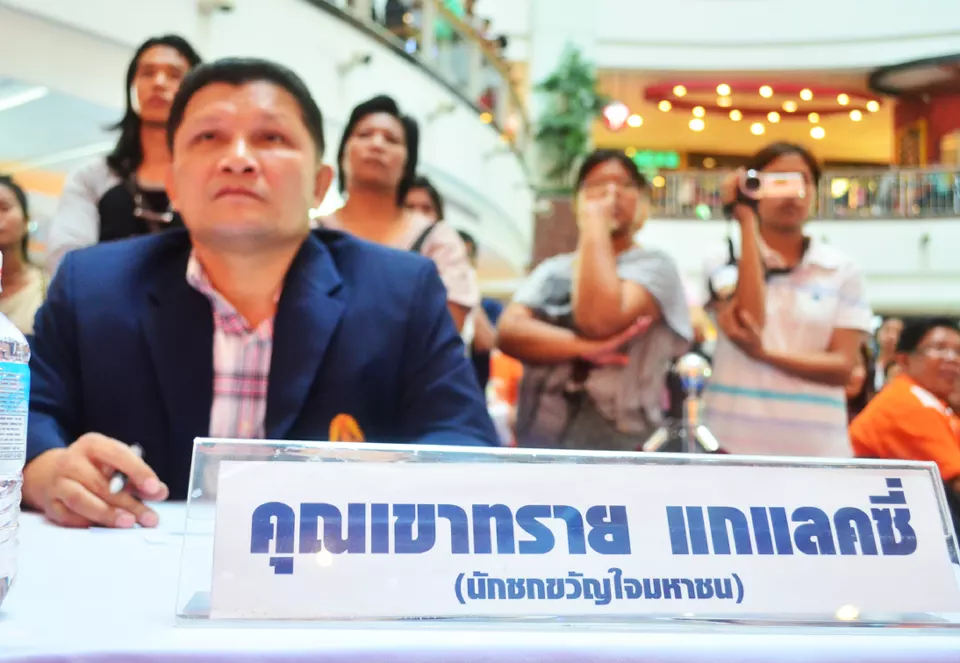
Khaosai Galaxy was born Sura Saenkham on May 15, 1959, in Ban Cha Lianglab, a village in the Mueang Phetchabun district of Phetchabun province, according to his Wikipedia biography. He arrived on the same day as his twin, Surote, who would later box as Khaokor Galaxy. Although Khaosai was the first of the pair to be born, Thai custom regards Khaokor as the elder brother.
The push came from their mother. Wikipedia credits her as Khaosai's first trainer, and says she was inspired by the success of Pone Kingpetch, Thailand's first world champion. Boxing News adds that she handed the boys plastic gloves when they were about five years old and woke them at four in the morning to train before school.
From Muay Thai Rings to the Galaxy Camp
Like most Thai boxers of his era, Khaosai learned his trade in Muay Thai. Boxing News reports that he was fighting professionally by the age of 13, under the ring name Daoden Muang Sri Thep; Wikipedia lists that name alongside a second one, Khaosai Wangchomphu. At 17 he moved to Bangkok and joined the Galaxy camp run by the promoter Niwat, which supplied the surname both twins would make famous.
Even in Muay Thai his reputation rested on one weapon. His Thai nickname translates roughly as the left hand that drills through the intestines, and during his knockout run of the mid-1980s he also became known as "The Thai Tyson."
A Stand-In Debut and a Single Defeat
His switch to international-rules boxing was an accident of scheduling. Boxing News recounts that an opponent failed to appear at Rajadamnern Stadium and Khaosai was drafted in as a late substitute against Pook Sritam. Wikipedia dates that debut to December 17, 1980, and records a fifth-round knockout; the Boxing News account puts the finish in the fourth round.
The only loss of his professional career followed on July 29, 1981, a points decision in a fight for the vacant Thai bantamweight title. Here the sources differ again on a detail: Wikipedia names the winner as Sak Galaxy, while Boxing News gives the name as Sakda Saksuree. Khaosai later told Boxing News that personal problems had broken his concentration before that bout. He did not lose again.
Espinal Falls at Rajadamnern
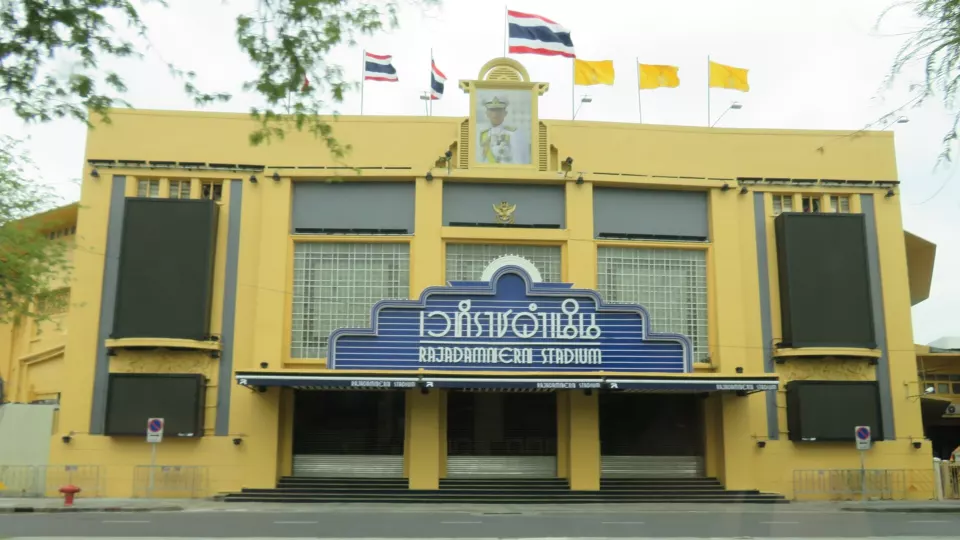
By late 1984 Khaosai had a title shot. On November 21, at Rajadamnern Stadium in Bangkok, he faced Eusebio Espinal for the vacant WBA junior bantamweight championship and knocked him out in the sixth round. The 115-pound division, also called super flyweight, would not have another WBA champion for seven years.
The early defenses set the pattern. According to the title-fight listing at BoxingTitleFights.com, Dong Chun Lee was knocked out in seven rounds in March 1985, former champion Rafael Orono was stopped in five that July, and Edgar Omar Monserrat lasted two rounds that December. All three were in Bangkok.
Road Wins in Curacao and Jakarta
Khaosai rarely needed to travel. Boxing News notes that home crowds and purses above $100,000 made Thailand the most profitable place for him to fight. When he did leave, the trips were memorable. On November 1, 1986, in Willemstad, Curacao, he ended Israel Contreras's challenge in the fifth round; Boxing News says a body shot did the damage.
The biggest away fight came on February 28, 1987, at Senayan Stadium in Jakarta. His opponent was Ellyas Pical, Indonesia's national hero and a two-time IBF champion at the same weight. Both men were southpaws, both stood five feet five, and the bout was promoted as a unification contest, though Wikipedia's account says the IBF did not recognise it, leaving only the WBA belt at stake. Khaosai pressed Pical to the ropes for most of the night, and the referee stopped it at 2:45 of the 14th round. One retrospective in Boxing News describes the result as a decision; the fight records consulted for this article list it as a technical knockout.
The Kongtoranee Controversy
The closest call of the reign came at home. On January 26, 1988, at Lumpinee Stadium, Khaosai made his seventh defense against Kongtoranee Payakaroon, a Muay Thai star who had won nine straight boxing fights and risen to the WBA's number-one ranking. The two men knew each other well: in 1983 Kongtoranee had been Khaosai's sparring partner in the gym of the trainer they shared.
Kongtoranee boxed on the move while Khaosai walked him down. In the fifth round a right cross sent the champion to the canvas, though he got up quickly. The judges scored it for Khaosai unanimously, 118-110, 116-113 and 116-114. Many in the crowd, and Kongtoranee's camp, thought the challenger had won, and the verdict caused a public dispute between the promoters. Kongtoranee returned to Muay Thai afterwards.
Twin Champions: Khaokor's Bantamweight Reign
Four months later the family made history. On May 9, 1988, in Bangkok, Khaokor Galaxy outpointed Wilfredo Vazquez to win the WBA bantamweight title, and the Saenkham brothers became the first twins to hold world boxing championships. Khaokor's reign was short. He lost the belt to Moon Sung-kil on a sixth-round technical decision in Seoul that August, won it back from Moon in Bangkok in July 1989, then lost it to Luisito Espinosa in the first round that October. Wikipedia says Khaokor retired after that loss and a later car accident, finishing with 24 wins and 2 defeats. The twins also fought differently: Khaokor was the tactician, Khaosai the aggressor.
Japan, Korea and a Crocodile Farm
Khaosai kept collecting challengers. BoxingTitleFights.com lists a stoppage of Chang Ho Choi in Seoul in October 1988 and a second-round knockout of Tae-Il Chang in January 1989. He then fought Kenji Matsumura twice in Japan, winning a unanimous decision in Yokohama in April 1989 and stopping him in the 12th round in Kobe that October.
From 1990 the defenses moved around the Thai provinces. Shunichi Nakajima was stopped in Chiang Mai, Yong-Kang Kim in Suphan Buri, and Ernesto Ford in Phetchabun, Khaosai's home province, in December 1990. In 1991 he beat Jae-Sok Park in Samut Songkhram and then David Griman in Samut Prakan, a fight Boxing News places at a crocodile farm. Griman lasted into the fifth round.
Retiring With the Belt
The 19th defense was the last. In December 1991, in Bangkok, Khaosai beat Armando Castro by unanimous decision over 12 rounds. Wikipedia dates the fight to December 22 at the National Stadium; BoxingTitleFights.com lists it a day earlier, on December 21. Either way, Boxing News reports that he announced his retirement straight after it, still champion.
He left with a record of 47 wins and one loss, with 41 knockouts. His 19 defenses remain the most in the history of the junior bantamweight division. His only defeat had come more than ten years earlier, before he had fought for any world title, so he finished unbeaten in world championship fights.
Hall of Fame and Life After Boxing
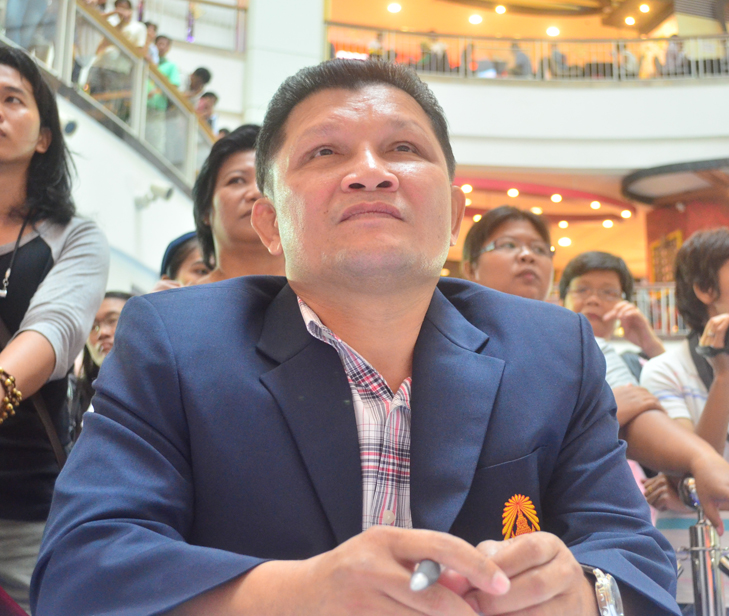
The International Boxing Hall of Fame inducted Khaosai in 1999 in its modern category, and he was the first Thai fighter it honoured. The Ring placed him 19th on its list of the greatest punchers of all time, and Wikipedia notes that BoxRec has rated him the best Thai boxer, pound for pound.
Retirement took him into television commentary, acting and coaching. Wikipedia lists roles in films including The Legend of Suriyothai in 2001, and reports that he runs two Muay Thai gyms, in Bangkok and Phuket, and has worked as a trainer for WBA champions.
Sources
- Khaosai Galaxy, Wikipedia, accessed October 2026
- Khaokor Galaxy, Wikipedia, accessed October 2026
- Khaosai Galaxy vs. Ellyas Pical, Wikipedia, accessed October 2026
- Khaosai Galaxy vs. Kongtoranee Payakaroon, Wikipedia, accessed October 2026
- Khaosai Galaxy: the Thai Tyson, Boxing News, undated retrospective
- Galaxy, Khaosai: world title fights, BoxingTitleFights.com, accessed October 2026


