
How Jimmy Wilde the Mighty Atom Went From the Rhondda Pits to First World Flyweight Champion
A Tylorstown coal miner who learned his trade in fairground booths, Jimmy Wilde became the first world flyweight champion in 1916 and reigned until Pancho Villa stopped him at the Polo Grounds in 1923.

He stood about five feet two, by one account never fought above seven stone ten pounds, and spent his boyhood underground in the Rhondda coalfield. Yet Jimmy Wilde, "The Mighty Atom," became the first man recognised as flyweight champion of the world in 1916, held the honour for more than six years and is still named by many historians as the finest flyweight who ever lived.
From Quakers Yard to the Tylorstown Pits
William James Wilde was born in May 1892 at Quakers Yard, in the Merthyr Tydfil district of South Wales. Even the exact day is disputed: Wikipedia and boxing historian Paul Zanon give 15 May, while the Dictionary of Welsh Biography records 12 May. His parents were James and Margaret Ann Wilde, and the family soon moved east to Tylorstown in the Rhondda Valley. Sources differ on how old he was at the time, with estimates running from four to about six.
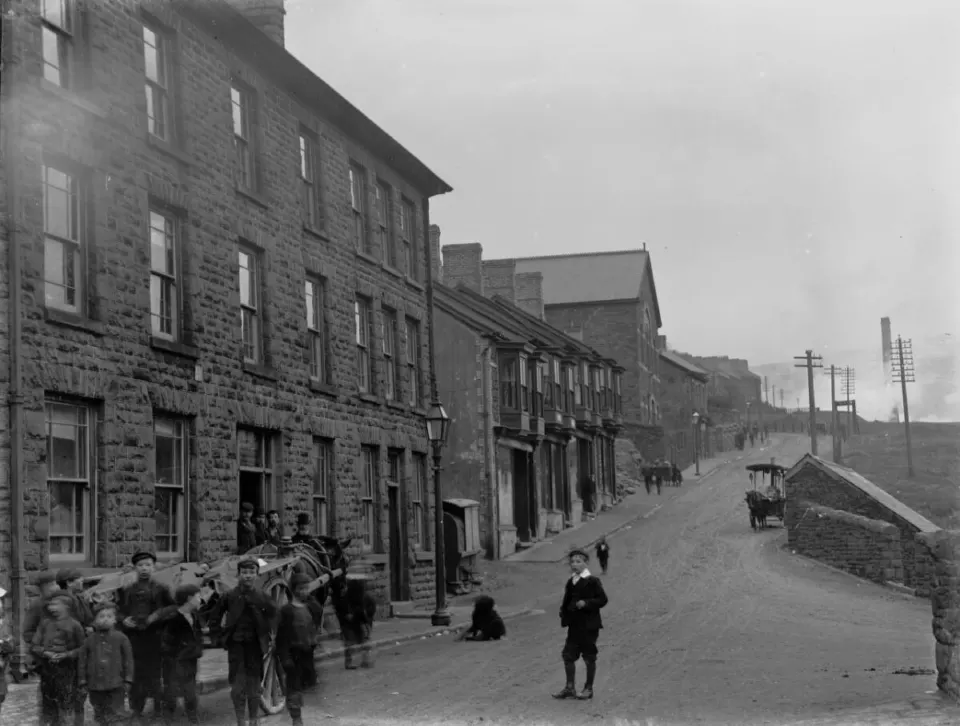
His father was a collier, and the son followed him underground at Tylorstown Colliery. Here Wilde's size worked in his favour: he could squeeze through narrow passages that bigger men could not get into, and writers have long linked that cramped, physical labour to the strength he later carried into the ring. The pit nearly ended his story early. The Dictionary of Welsh Biography records that a work injury at fifteen left him unable to walk for more than a year.
An Attic Gym and the Fairground Booths
The man who shaped Wilde was Dai Davies, described in the Dictionary of Welsh Biography as an old mountain fighter, who coached the youngster in his own attic. Wilde later married Davies's daughter, Elizabeth, in 1910. Their son David was born the same year and went on to box briefly as a professional in the 1930s.
His first real stage was the boxing booth, the travelling tent shows of the South Wales fairgrounds where local men paid to try their luck against the house fighters. The Welsh biography names Jack Scarrott, a booth proprietor, as the man who gave him his opening. Wilde was about sixteen when he began, and stories from those years describe a slight teenager knocking down challengers far heavier than himself, some of them said to weigh around 200 pounds.
A Record Nobody Can Pin Down
Wilde's official professional career is usually dated from 1911. Zanon lists his debut as a third-round knockout of Ted Roberts on 1 January that year, followed by 27 bouts in 1911 alone, most of them in Pontypridd. Wikipedia notes evidence that he was fighting for money as early as 1907. He kept working at the colliery until 1913, when boxing became his full-time trade.
His total number of fights depends on whom you ask. The Dictionary of Welsh Biography puts the figure at 864 contests, and Wilde himself claimed more than 800. BoxRec, as summarised by Wikipedia, lists about 150 recorded bouts, with roughly 130 to 137 wins depending on whether newspaper decisions are counted, about 100 of them inside the distance, and only three or four defeats. The booth fights, mostly unrecorded, explain the gap. What the sources agree on is a long unbeaten run at the start of his career, put at 93 fights by some accounts and 103 in Britain by others.
Tancy Lee and the First Defeat
The streak ended in January 1915 at the National Sporting Club in London, where the Scottish boxer Tancy Lee stopped him in the 17th round of a scheduled 20. Wikipedia reports that Wilde was suffering from influenza that night. The sources also disagree about the date and about what was at stake: Wikipedia calls it a fight for the vacant British title and dates it 15 January, Zanon gives 25 January, and the Dictionary of Welsh Biography says Wilde had already won the British title from Joe Symonds in November 1914 and lost it to Lee.
Whatever the paperwork, 1916 was the year he settled every argument. On 14 February he beat Symonds in 12 rounds at the National Sporting Club to take the British flyweight title. On 26 June, at the same venue, he got his revenge on Tancy Lee with an 11th-round stoppage.
First Flyweight Champion of the World
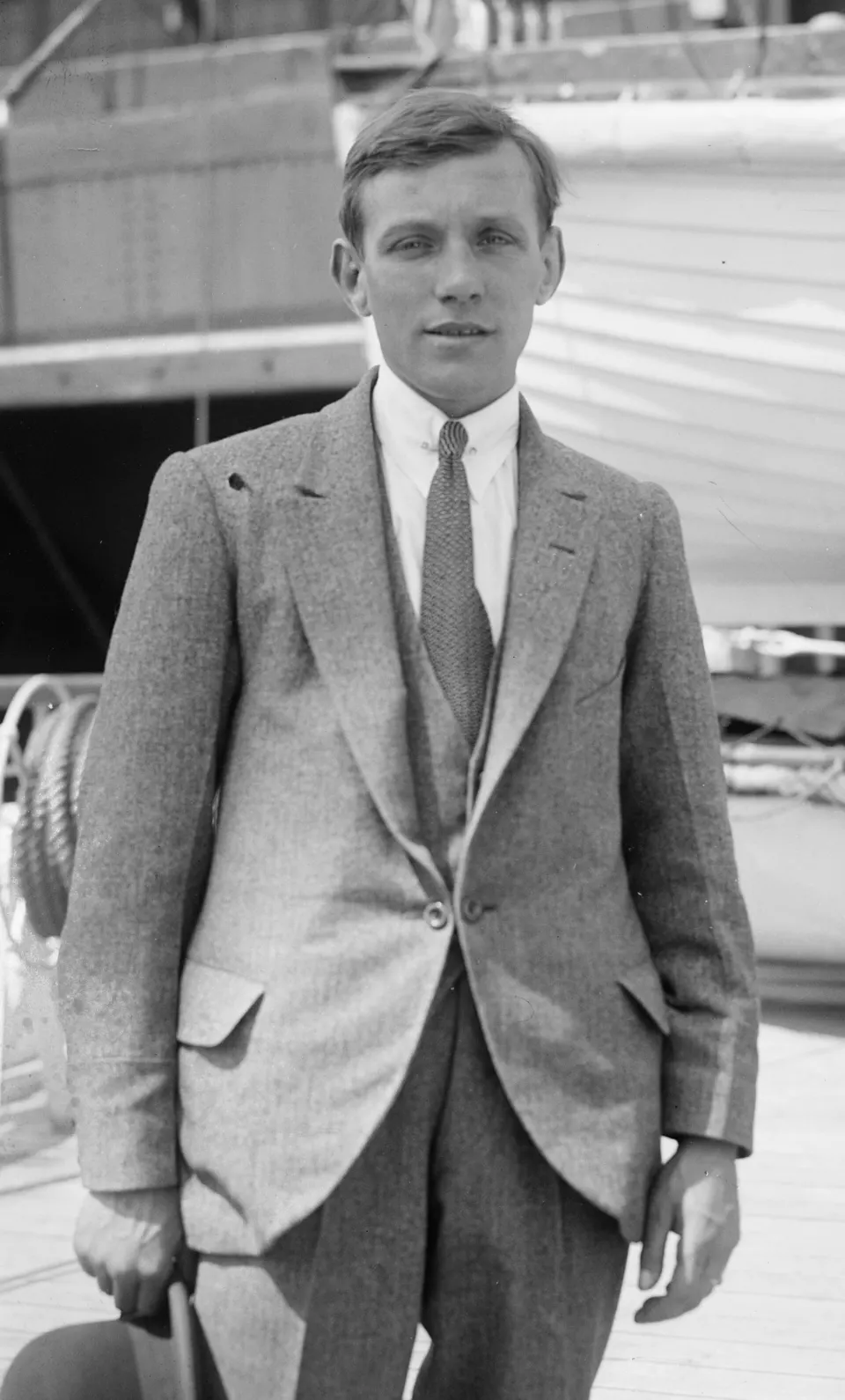
By late 1916 Britain was at war and Wilde was serving as an army physical training instructor. On 18 December 1916 at the Holborn Stadium in London, he faced the American Young Zulu Kid. The visitor's corner retired him in the 11th round, and Wilde was recognised as the first world flyweight champion, a title he would keep until 1923 while also holding the British crown.
His reputation rested on punching that seemed out of proportion to his frame. His fighting weight, according to the Welsh biography, never went above seven stone ten pounds. Even so, he regularly took on bantamweights and featherweights and knocked many of them out. That is where his nicknames came from: "The Mighty Atom," "The Tylorstown Terror" and "Ghost with the Hammer in His Hand."
America and Pete Herman
In January 1920 Wilde sailed for the United States, and the Dictionary of Welsh Biography describes the tour as a success. Not every result went his way, though. Wikipedia records a ten-round newspaper-decision loss to Jackie Sharkey in Milwaukee, which it dates to December 1919.
The most serious setback came at home. On 13 January 1921 at the Royal Albert Hall, he fought the American Pete Herman and was stopped in the 17th round. Wilde then went into semi-retirement and was out of the ring for more than two years.
Pancho Villa at the Polo Grounds, 1923
He came back for one last defence. On 18 June 1923, at the Polo Grounds in New York, the 31-year-old Wilde met Pancho Villa, the Filipino whom promoter Tex Rickard had brought to the United States the year before. Accounts of the crowd vary widely. Wikipedia's article on Villa says more than 20,000 attended, while a 2014 retrospective by Patrick Connor for Queensberry-Rules puts the figure near 40,000 and says Wilde earned about $60,000.
The fight was one-sided. Connor writes that Villa landed a heavy punch as the second round ended and that Wilde's seconds had to help him back to the corner. Wilde had his best moments in the third and fourth, but the Wikipedia account of Villa has him dropped in the fourth and fifth before a right hand to the jaw finished him in the seventh. Most sources, including the Dictionary of Welsh Biography, give the seventh round; Zanon's account says the fifth. Villa became the first world champion from the Philippines. Wilde, who suffered a severe concussion according to Zanon, never boxed again, and his retirement was confirmed on 1 January 1924.
Life After the Ring
Wilde did not disappear from boxing. He refereed, wrote a weekly boxing column for the News of the World for many years and in 1938 published an autobiography, Fighting Was My Business. Wikipedia says he considered a comeback in 1927 but changed his mind after seeing a specialist in head injuries. He put his ring earnings into business, including cinemas and a café at Barry Island named after his nickname.
His later years were hard. Wikipedia records that his London home was burgled in 1936 and nearly all his trophies and medals were taken, and that he was badly concussed in a car crash the same year. After the Second World War he lived in Cadoxton, Barry. He was attacked on a Cardiff railway platform, in 1960 according to Wikipedia and in 1965 according to other accounts, and he never fully recovered. Elizabeth died in 1967. Wilde died at Whitchurch Hospital, Cardiff, in March 1969, aged 76. Sources disagree on whether it was the 10th or the 11th.
The Greatest Flyweight
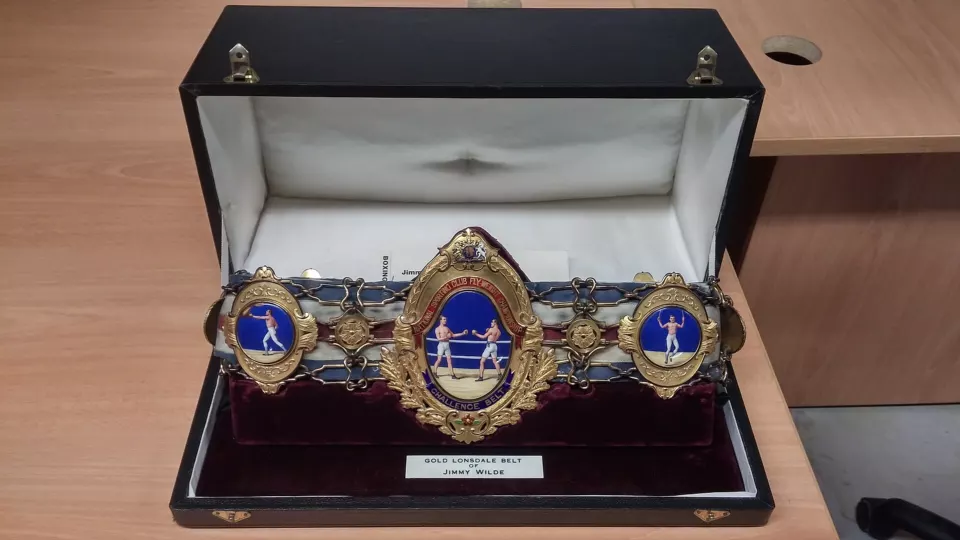
Wilde's standing has only grown since. The Ring has named him the greatest flyweight of all time and ranked him third on its list of the greatest punchers. The International Boxing Research Organization placed him first among flyweights in 2006, and Nat Fleischer was among the writers who ranked him above every other flyweight. He was part of the first class of the International Boxing Hall of Fame (Wikipedia gives 1990, Zanon 1992) and joined the Welsh Sports Hall of Fame in 1992. More than a century after Holborn, the Rhondda boy who never fought above seven stone ten is still the standard every flyweight is measured against.
Sources
- Jimmy Wilde, Wikipedia, accessed October 2026
- Pancho Villa (boxer), Wikipedia, accessed October 2026
- Wilde, William James (Jimmy) (1892-1969), boxer, world flyweight champion, William Morgan Rogers, Dictionary of Welsh Biography, 2001
- The Tylorstown Terror: The Jimmy Wilde Story, Paul Zanon, British Vintage Boxing, 31 January 2021
- Throwback Thursday: Pancho Villa Irons Out Jimmy Wilde, Makes History, Patrick Connor, Queensberry-Rules, 3 April 2014


