
How Ike Quartey Went From Bukom to the WBA Welterweight Title and a Split Decision Ghana Never Accepted
Ike 'Bazooka' Quartey went from Accra's Bukom district and the 1988 Seoul Olympics to four years as WBA welterweight champion, and then lost the disputed 1999 split decision to Oscar De La Hoya. This is his career through the Vargas loss, a five-year layoff and a comeback that ended in 2006.

Ike Quartey came out of the fighting streets of Bukom in Accra, went to the 1988 Seoul Olympics, and held the WBA welterweight title for four years without losing in the ring. He was also unbeaten when he walked in against Oscar De La Hoya in 1999, and he left Las Vegas on the wrong end of a split decision. He still says that verdict was political, and the record books have never quite settled the matter.
Bukom, the Youngest of Twenty-Seven
Isufu Quartey was born in Accra on November 27, 1969, into a Ga family. His father reportedly had several wives, and Ike was the last of 27 children. An older brother, Isaac Quartey, had already won an Olympic silver medal for Ghana in 1960.
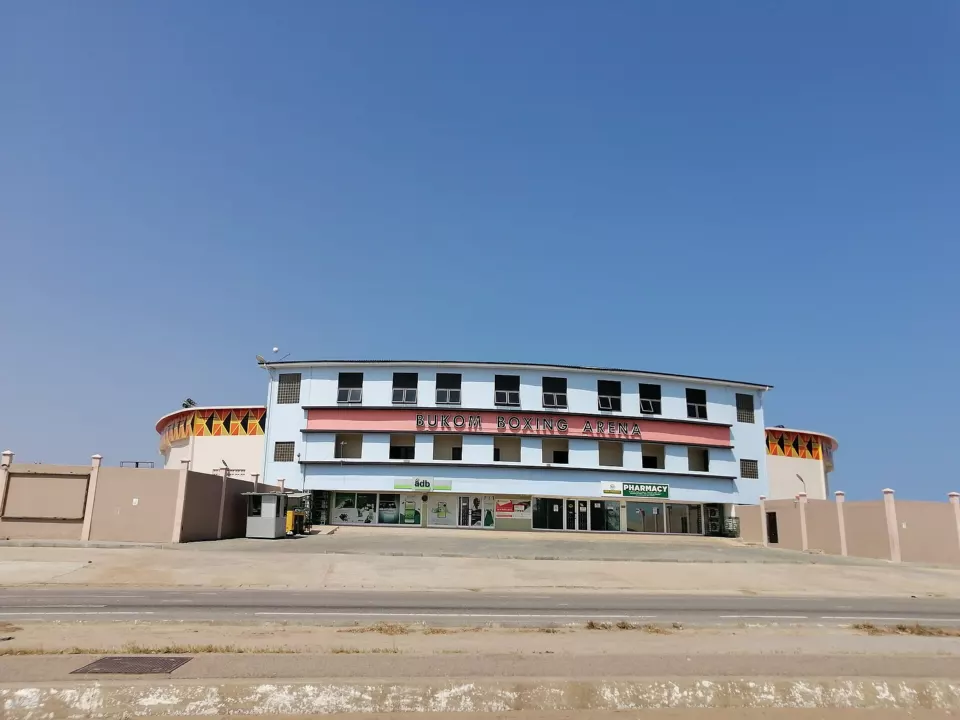
He grew up in Bukom, the Accra district where street fighting passed for recreation, and trained in the same gym as Azumah Nelson. Later accounts in the Ghanaian press would place Quartey second only to Nelson among the country's fighters.
Seoul 1988 and a Professional Debut the Same Year
As an amateur, Quartey is credited with 50 wins and only four defeats. He represented Ghana at light welterweight at the 1988 Summer Olympics in Seoul. Ghana's Daily Graphic says his tournament ended in the quarterfinals.
He turned professional within weeks of the Games. On November 26, 1988, the day before his nineteenth birthday, he knocked out Mama Mohamed in the second round in Accra. His first manager, Yoofi Boham, also guided the Ghanaian flyweight Alfred Kotey, and Boham gave the pair their ring names: Kotey became "Cobra" and Quartey became "Bazooka." The Daily Graphic reports that Quartey joined Ringcraft Promotions in 1990. He fought mostly at home before moving his base to France.
Levallois-Perret, June 1994: The WBA Title
Quartey was 25-0 when he got his title shot on June 4, 1994, against the Venezuelan WBA welterweight champion Crisanto España at the Palais des Sports Marcel-Cerdan in Levallois-Perret, outside Paris. The fight was close. Wikipedia's account says that when it was stopped in the eleventh round, one judge had Quartey ahead, one had him behind and the third had it level. The stoppage settled it, and the WBA belt went to Accra.
Looking back in 2020, Quartey told the Daily Graphic that it had been the hardest fight of his career and that he had won it for his country and for himself.
Four Years as Champion and the López Draw
He stopped Alberto Cortes in five rounds at Carpentras, France, in October 1994. In April 1996 he finished Vince Phillips in the third round on Sint Maarten. In October 1996 he beat Oba Carr by majority decision at the Paramount Theater in New York. His jab came to be rated among the best in the sport. Defensively he kept a tight, high guard, holding his gloves against his cheeks and his elbows over his ribs, so that a lot of punches landed on his arms.
Sources do not agree on how many times he defended the title. Wikipedia counts seven successful defenses, and the Daily Graphic's 2020 career retrospective says eight. The fight that hurt his reputation most was not even a loss. On October 17, 1997, at Foxwoods Resort Casino in Ledyard, Connecticut, he faced José Luis López of Mexico. The result was first announced as a Quartey win. It was changed to a majority draw after an error was found in the scoring. Quartey had been down twice, but most observers still thought he had done enough.
After the López fight he went more than a year without boxing. Personal, business and health problems kept him out, and in 1998 several planned fights fell through. Quartey later blamed illness, which he described as malaria or flu, for missing a mandatory defense. The WBA stripped him of the title on August 19, 1998.
Thomas and Mack Center, February 1999: The De La Hoya Split Decision
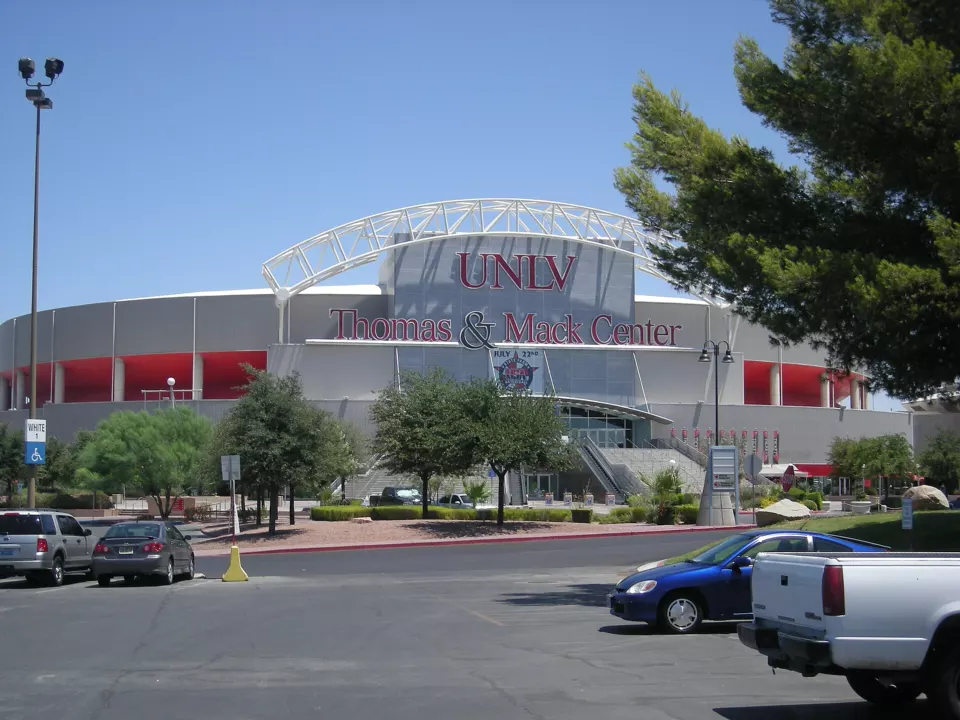
His next fight was against Oscar De La Hoya for the WBC welterweight title. A November 21, 1998 date was postponed after De La Hoya was cut in sparring. The two finally met on February 13, 1999, at the Thomas & Mack Center in Las Vegas, with roughly 12,000 people in the arena. De La Hoya was unbeaten. Quartey was unbeaten too, apart from the López draw. He had been out of the ring for about 16 months.
For five rounds it was a patient boxing match built around the jab. The sixth round changed that. De La Hoya dropped Quartey with a left hook in its first seconds, Quartey got up quickly, and before the round was over he put De La Hoya on the canvas as well. The Associated Press described the punch as a right to the head. Wikipedia's fight article calls it a left hook. De La Hoya called it the first real test of his career.
The twelfth round decided the result. Twelve seconds in, De La Hoya knocked Quartey down with a left hook and then threw punches nonstop for about a minute before he tired. Quartey took a standing eight count and lasted to the final bell.
The decision was split. Larry O'Connell of England scored it 115-114 for Quartey, and the other two judges went for De La Hoya. The two main records disagree on those cards. The AP report published the day after the fight gives them as 115-113 from John Keane and 115-112 from Ken Morita, while Wikipedia lists 116-112 and 116-113. HBO's unofficial scorer, Harold Lederman, had Quartey winning 114-113.
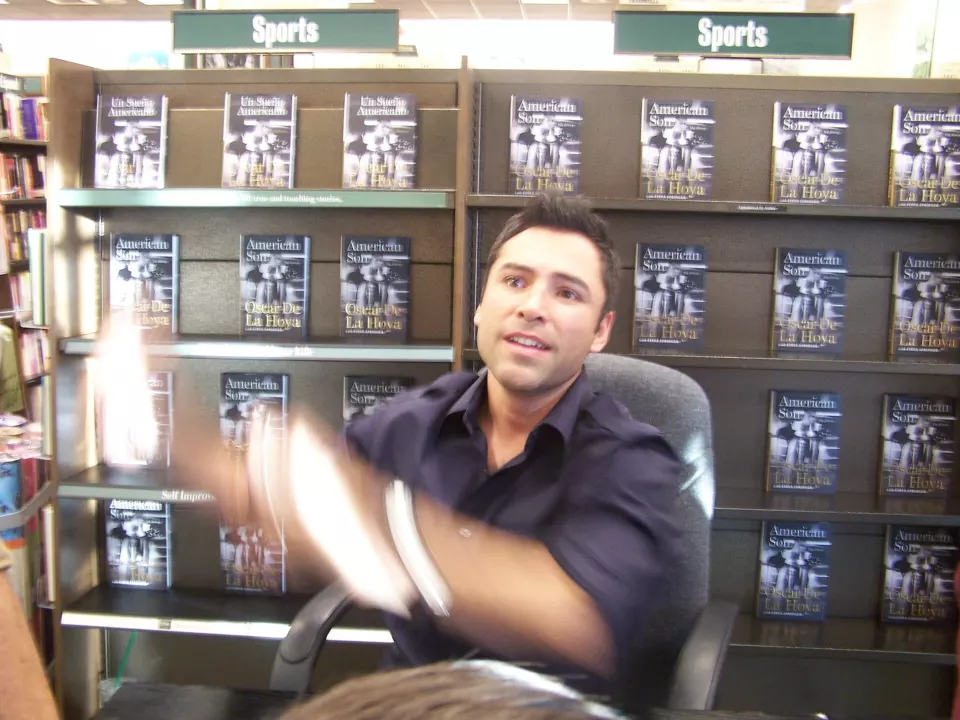
Two decades later, Quartey's view had not changed. "I won that fight and everyone knows it," he told the Daily Graphic in 2020, putting the result down to boxing politics. In the same interview he said the defeat drained his enthusiasm for the sport.
Mandalay Bay, April 2000: Vargas and a Five-Year Silence
Fourteen months later Quartey moved up to light middleweight to challenge Fernando Vargas, the 22-year-old IBF champion, on April 15, 2000, at the Mandalay Bay Events Center in Las Vegas. The promotion was billed as "Two Warriors, One War." Vargas, unbeaten and a 2-to-1 favorite, was much the stronger man in the opening rounds. In the middle of the fight Quartey's jab and counterpunches won him a spell of control. Vargas finished harder. There were no knockdowns. The judges scored it 116-111, 116-111 and 114-113 for Vargas, and CompuBox had him landing 389 punches to Quartey's 272.
Vargas told reporters that his own win had not been close, unlike De La Hoya's. It was only the second loss of Quartey's 12 years as a professional. He would not box again for almost five years.
The Comeback, the Forrest Verdict and the Last Bell
Quartey came back in January 2005 with an eighth-round stoppage of Clint McNeil in Accra. He outpointed Verno Phillips over ten rounds in Memphis that June and stopped Carlos Bojorquez in the tenth on December 3, 2005, in Las Vegas.
On August 5, 2006, at Madison Square Garden in New York, he met former welterweight champion Vernon Forrest in a ten-round light middleweight bout. Forrest hurt Quartey with a right uppercut in the third round, and he lost a point for a low blow in the ninth. CompuBox counted 201 punches landed for Quartey and 184 for Forrest, even though Forrest threw far more. The judges still gave Forrest a unanimous decision, 95-94, 95-94 and 96-93. The crowd booed, HBO's commentators objected, and Quartey and his promoter Lou DiBella went along press row arguing their case.
His final fight was on December 2, 2006, at the St. Pete Times Forum in Tampa, against Winky Wright, the former undisputed light middleweight champion, who was boxing in his home area. Wright dropped Quartey late in the second round and won a unanimous decision over twelve rounds at middleweight. Quartey retired after that fight.
The Record and What Came After
Quartey finished with 37 wins, 32 of them inside the distance, four losses and one draw in 42 professional fights. Two of the losses, against De La Hoya and Forrest, are still argued over. He went straight from the ring into business at home. The Daily Graphic reported in 2020 that he had built two hotels in Accra, had a hospital most of the way to completion, and was serving as technical director of the Ghana Boxing Authority.
Sources
- Ike Quartey, Wikipedia, accessed October 2026
- Oscar De La Hoya vs. Ike Quartey, Wikipedia, accessed October 2026
- Fernando Vargas vs. Ike Quartey, Wikipedia, accessed October 2026
- Split decision: De La Hoya beats Quartey, Deseret News (Associated Press), February 14, 1999
- Vargas wins in unanimous decision, Deseret News (Associated Press), April 16, 2000
- I lost interest in boxing – Ike Quartey, Daily Graphic (Ghana), June 9, 2020
- Feature: Why Ike Quartey's boxing career is worth celebrating, Daily Graphic (Ghana), June 8, 2020
- Vernon Forrest wins, but a lot of people thought he lost, The Sweet Science, August 6, 2006
- Winky Wright can go home again, The Sweet Science, October 12, 2006


