
How David Haye Went From Bermondsey to Cruiserweight King and Heavyweight Champion
The career of David Haye, who unified the cruiserweight titles by beating Jean-Marc Mormeck and Enzo Maccarinelli, outpointed Nikolai Valuev for the WBA heavyweight belt, lost to Wladimir Klitschko in Hamburg and bowed out after two defeats to Tony Bellew.

David Haye came out of Bermondsey in south-east London with fast hands, a loud mouth and a puncher's instinct. Over sixteen years as a professional he unified the cruiserweight division, took a world heavyweight belt from a man who towered over him, lost his biggest night to Wladimir Klitschko and ended his career on the floor against Tony Bellew. His final record, 28 wins and 4 losses with 26 knockouts, tells only part of the story.
A Bermondsey Amateur Who Reached a World Final
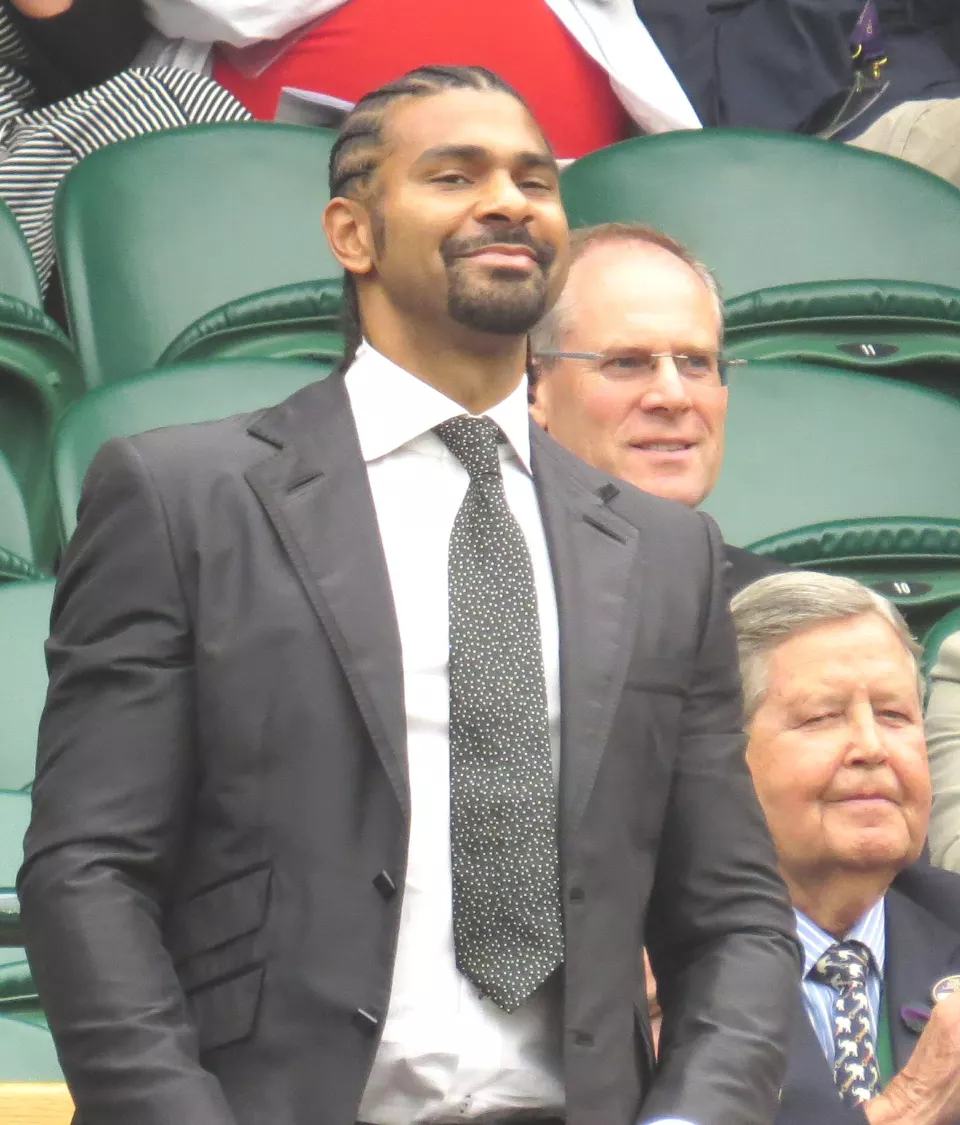
Haye was born on 13 October 1980 in Bermondsey, on the south bank of the Thames. As an amateur he boxed at heavyweight, and his best result came at the 2001 World Amateur Boxing Championships in Belfast. He fought his way to the final, where the Cuban Odlanier Solís stopped him in the third round. The silver medal marked him out as one of the brightest British prospects of his generation.
He turned professional in December 2002, aged 22, and dropped down to cruiserweight. His debut at York Hall, the old east London venue, ended in the second round when Tony Booth's corner pulled their man out.
The Carl Thompson Setback at Wembley, 2004
The first real test came on 10 September 2004 at Wembley Arena against the veteran Carl Thompson. Haye was ahead on all of the scorecards, but he had spent heavily in the early rounds and was tiring. Thompson caught him with a run of punches in the fifth, and Haye's corner threw in the towel. For Haye it became a lesson in pacing, and he rebuilt with a string of wins that set up a title opportunity abroad.
Paris, 2007: Taking the Belts From Jean-Marc Mormeck
On 10 November 2007 Haye travelled to the Palais des Sports Marcel-Cerdan in Paris to challenge Jean-Marc Mormeck, the Frenchman who held the WBA and WBC cruiserweight titles along with The Ring's championship. Fighting in Mormeck's home city meant Haye could not count on the judges, and the night nearly went wrong. Mormeck put him down in the fourth round.
Haye got up and kept working. In the seventh, as Mormeck pressed forward trying to overwhelm him, Haye landed a right uppercut, a left and a right hook in sequence. Mormeck went down and the fight was waved off. He came home with two world belts and the lineal title. Writing in 2018, Boxing News ranked the Paris win among the most overlooked title triumphs by any British fighter.
The O2, 2008: Unifying the Cruiserweights Against Enzo Maccarinelli
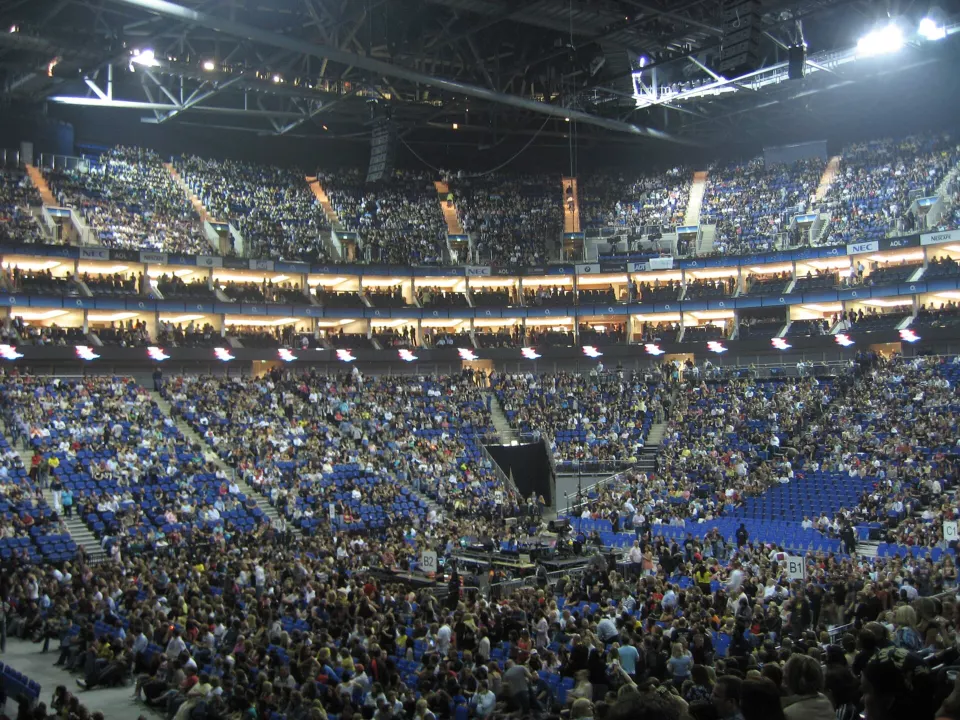
The next step was a domestic showdown with the Welshman Enzo Maccarinelli, who held the WBO title. They met on 8 March 2008 at the O2 Arena in London, and the contest drew comparisons with the Chris Eubank and Nigel Benn rivalry of an earlier era. It did not last long. Haye knocked Maccarinelli out in the second round, collecting the WBO strap and leaving himself with every major cruiserweight title. Boxing News later described his approach that night as one of reckless confidence, and the London crowd loved it.
That same year Haye launched his own promotional company, Hayemaker Promotions. He also decided the cruiserweight limit had become too tight for his ambitions and moved up to heavyweight.
Heavyweight: Monte Barrett and the Road to Nuremberg
His heavyweight debut proper came against the American Monte Barrett on 15 November 2008, and Haye stopped him in the fifth round. A year later he was in Germany to face Nikolai Valuev, the Russian who held the WBA heavyweight title.
The physical mismatch was the headline. Valuev stood around seven feet tall, and Boxing News put the gap at roughly seven stone in weight and nine inches in height. Valuev came in with a record of 50 wins and one loss; Haye was 22 and 1. The fight on 7 November 2009 at the Nuremberg Arena, watched by about 8,000 spectators, was more tactical than many expected. Haye moved in and out of range, picked his shots and avoided the big Russian's attempts to trap him. He almost finished it in the twelfth round and later said he had broken a hand during the bout.
The judges scored it a majority decision for Haye: 116-112 twice and 114-114. He was the new WBA heavyweight champion. Valuev never boxed again.
Two Defences in Manchester: Ruiz and Harrison
Haye made his first defence on 3 April 2010 in Manchester against John Ruiz, the former WBA champion, and stopped him in the ninth round. On 13 November 2010, again in Manchester, he faced fellow Briton Audley Harrison in a fight that had been heavily promoted and proved one-sided. Haye stopped Harrison in the third.
Hamburg, 2011: The Klitschko Fight and the Broken Toe
The fight Haye had chased for years finally arrived on 2 July 2011 in Hamburg. Wladimir Klitschko held the IBF, WBO and IBO belts, and the winner would leave with four titles. The build-up was bitter and the purses were enormous; Wikipedia's account of the event puts each man's earnings at roughly 32 million dollars.
The fight itself was a disappointment for Haye. Klitschko controlled the distance with his jab and his size, and Haye never found a way through. After twelve rounds the three judges scored it 117-109, 118-108 and 116-110 for the Ukrainian.
In the ring afterwards Haye took off his shoe to show a swollen foot and said he had broken a toe in training three weeks earlier. According to an Associated Press report, he explained that he had believed he could still win. The explanation did him few favours. Klitschko, in the same report, said: "It's called a sore loser." Boxing News later argued that the excuse hurt Haye's standing more than the defeat did.
Chisora, the Long Layoff and a 2016 Comeback
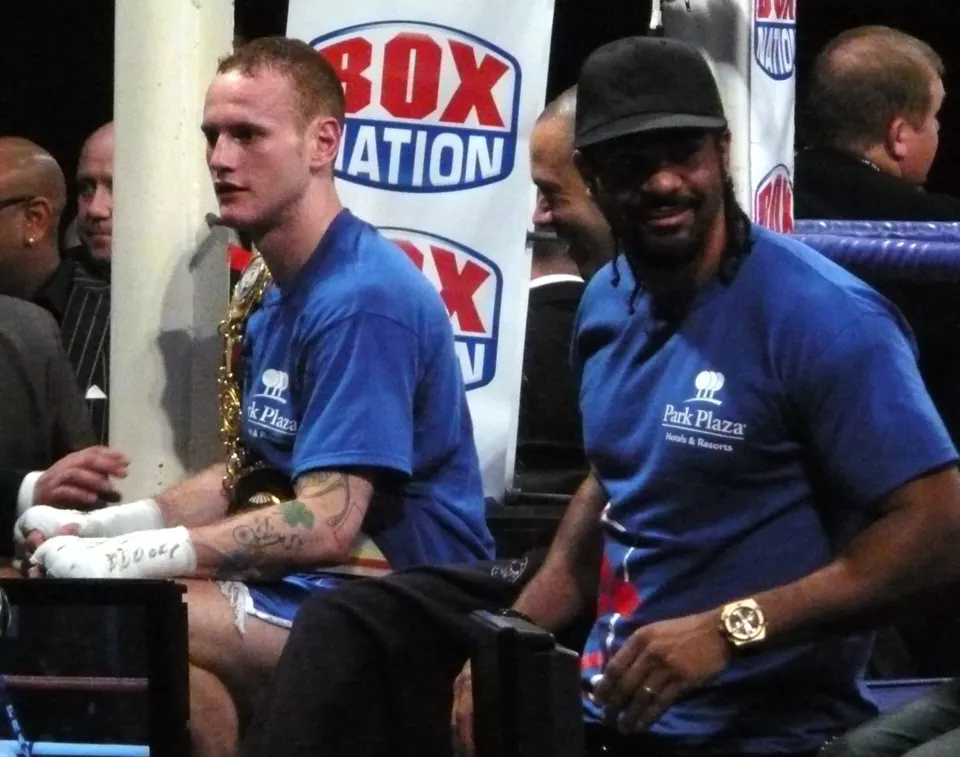
Haye's next fight came on 14 July 2012 at Upton Park, the home of West Ham United, against Derek Chisora. More than 40,000 people watched him stop Chisora in the fifth round. Then he disappeared from the ring for three and a half years. When he announced his retirement in 2018, he revealed that he had undergone spinal surgery in March 2015.
He returned on 16 January 2016 and needed just 113 seconds to stop the Australian Mark de Mori. In January 2017 Hayemaker Promotions joined with Richard Schaefer's Ringstar Sport to form Hayemaker Ringstar.
Tony Bellew, Part One: The Achilles Injury, 2017
Haye's comeback led to a grudge match with Tony Bellew, the Liverpool fighter who had been a world champion at cruiserweight and was stepping up in weight. They met at the O2 Arena on 4 March 2017. In the sixth round Haye ruptured his right Achilles tendon and went down twice. He refused to quit and carried on, largely on one leg, until late in the eleventh round, when Bellew knocked him through the ropes. Haye got back to his feet, but his corner threw in the towel. According to Wikipedia, Haye took 4.2 million pounds of a 7 million pound purse.
Tony Bellew, Part Two: The Final Fight, 2018
The rematch, marketed as "Repeat or Revenge", took place at the O2 Arena on 5 May 2018. This time there was no injury to explain the outcome. Bellew dropped Haye twice in the third round, first with a left-right combination and then with a left hook, then sent him down again with a left hook in the fifth. Referee Howard Foster stopped the fight 2 minutes and 14 seconds into the round. Boxing News's 2018 career verdict dates the rematch to April, but Wikipedia's fight records give 5 May.
On 12 June 2018 Haye announced his retirement on social media. Boxing News noted that, for all his trash talk across the years, he had handled the two defeats to Bellew with dignity.
Legacy: A Cruiserweight Great Who Gambled at Heavyweight
Haye finished with 28 wins, 4 losses and 26 knockouts. At cruiserweight he did something few British fighters have done, beating a champion in his own city and then unifying the division in front of a home crowd. At heavyweight he won a world title by outthinking a giant on German soil, and he defended it twice. The loss to Klitschko and the two defeats to Bellew complicate the picture, but they do not erase the nights in Paris, London and Nuremberg that made his name.
Sources
- David Haye, Wikipedia (accessed October 2026)
- David Haye and his place in history: the BN verdict, Boxing News, 11 June 2018
- On this day: David Haye defeats gargantuan Nikolay Valuev in Germany, Boxing News
- Klitschko beats Haye on points, Bangor Daily News (Associated Press), 3 July 2011
- Tony Bellew vs. David Haye II, Wikipedia (accessed October 2026)


